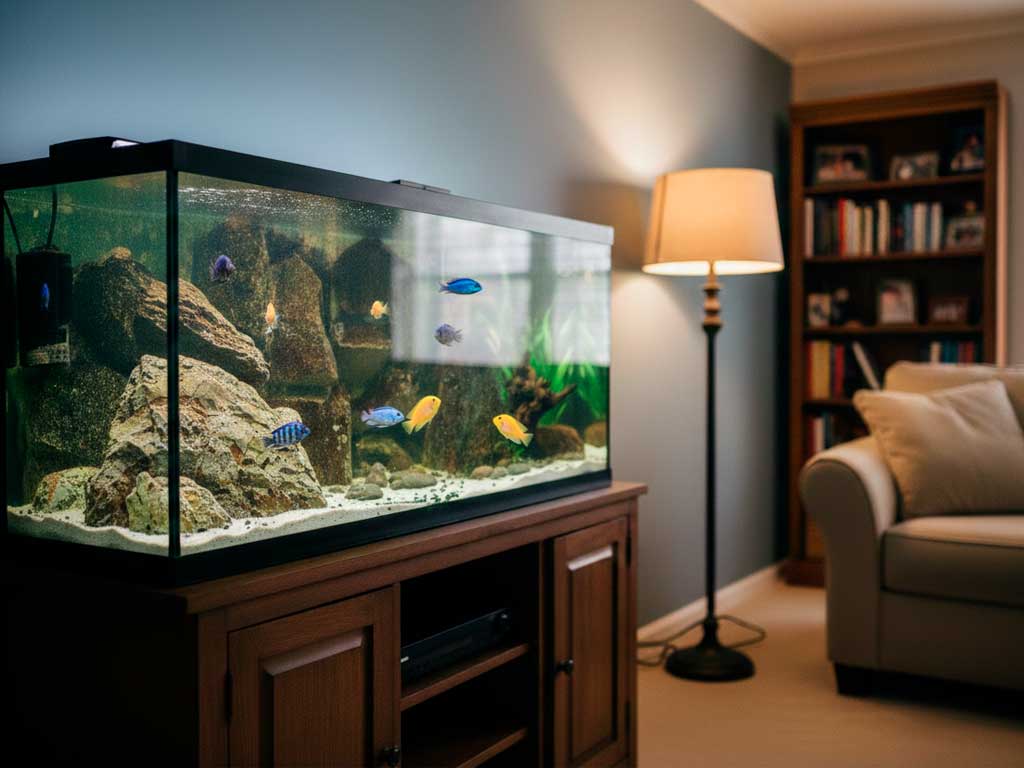
Community Aquarium Fish by Zone: Surface, Middle and Bottom
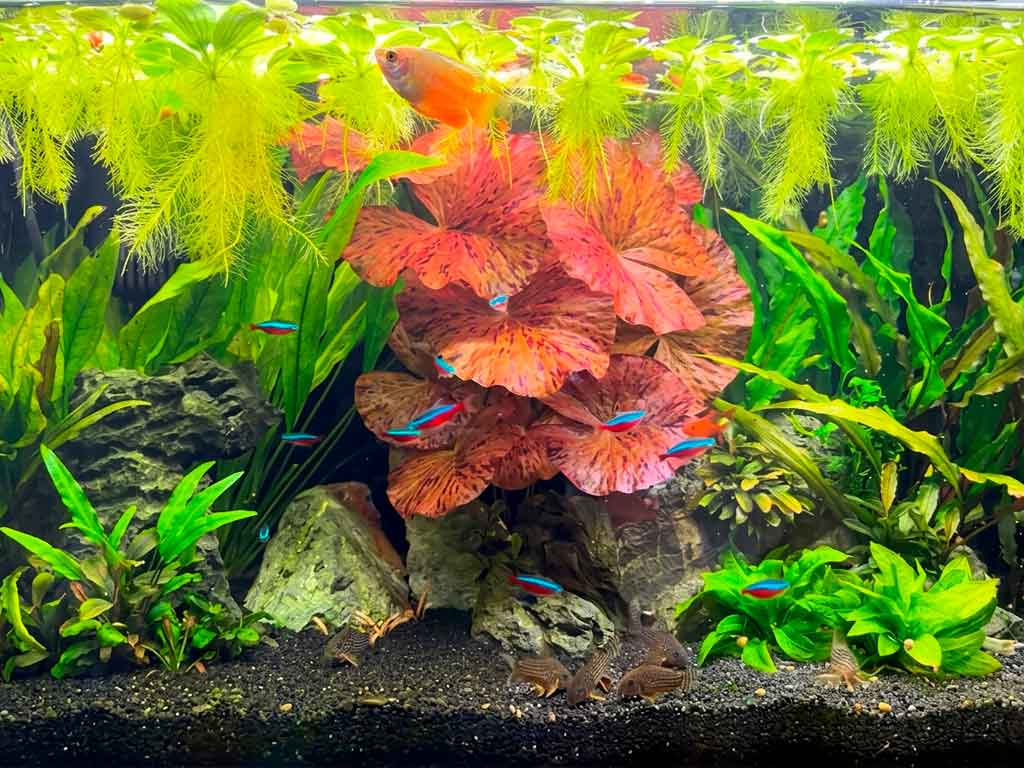
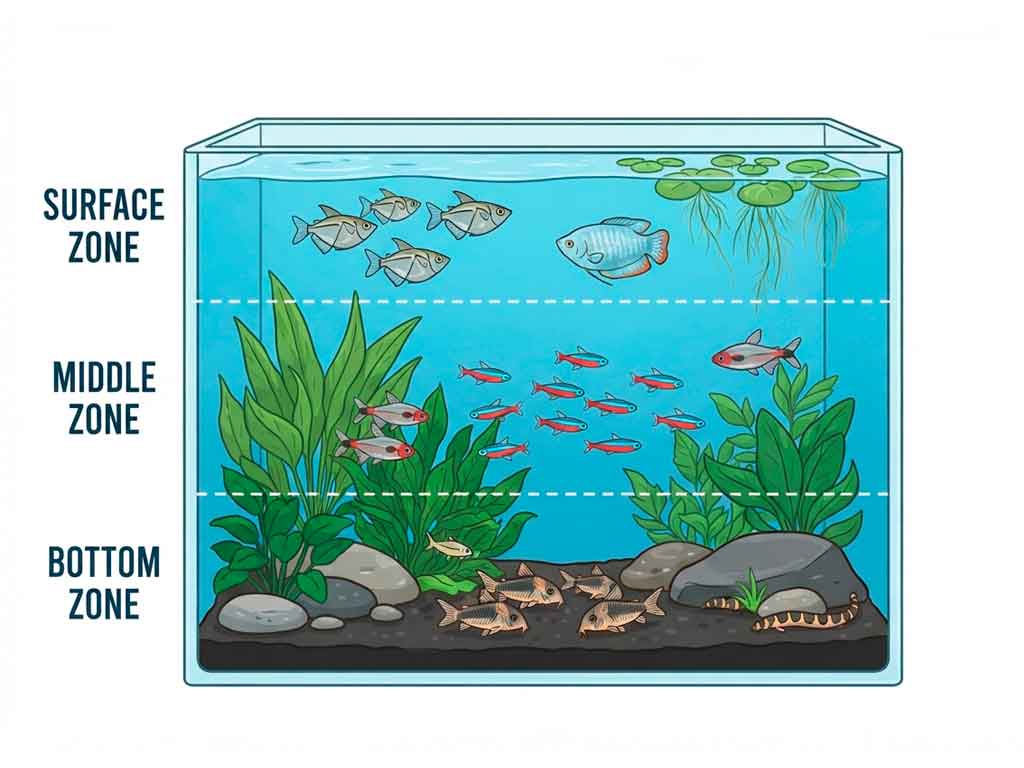
Stock a freshwater community tank in three layers: surface, middle and bottom. Match peaceful fish that share the same temperature, tank size and feeding zone. When each layer has its own activity, the tank looks full without becoming a traffic jam.
Most stocking guides stop at tank size and compatibility. Vertical zoning is the missing piece. Three schooling fish that all prefer the same 15 cm (6 in) of midwater do not create a community; they create competition.
This guide covers community aquarium fish by zone, with combinations that work, small and large setups, calculator limits, introduction steps and tank ideas.
Community Tank Fish List by Zone
The table below is the short version. Each zone gets its own section with the trade-offs.
| Zone | Fish to consider |
|---|---|
| Surface | Honey gourami, marbled hatchetfish, clown killifish, pencilfish, guppy, Endler’s livebearer |
| Middle | Rummy nose tetra, neon tetra, cardinal tetra, ember tetra, cherry barb, harlequin rasbora, Kubotai rasbora |
| Bottom | Panda cory, pygmy cory, kuhli loach, Apistogramma, German blue ram |
The Aquarium Industries community fish guide makes the same point: choose fish that prefer different levels so they do not compete for space, food or territory. That is the principle behind every combination below.
How to Build the Three Layers
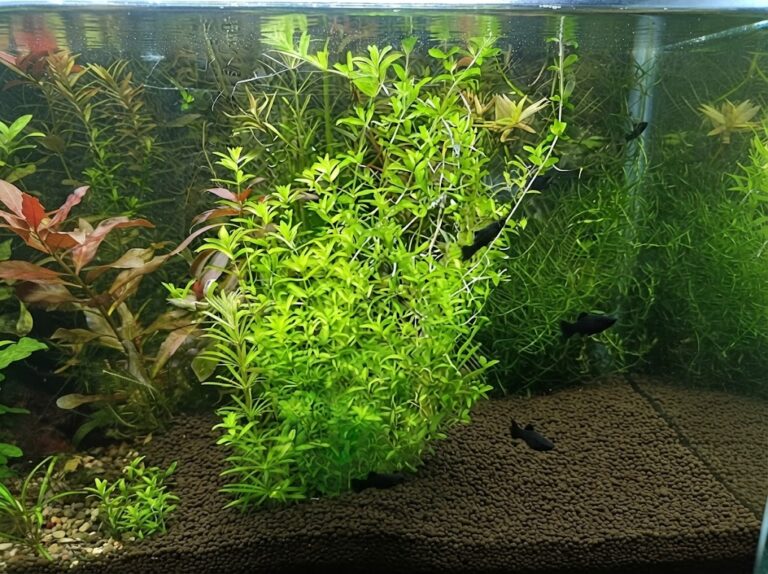
The layout decides which zones exist. A tank with tall plants across the middle has no open swimming lane, so the midwater school has nowhere to go. Build the hardscape first, then choose fish that fit the spaces you created.
- Place tall plants and driftwood along the back and sides.
- Leave an open lane through the center for the midwater school.
- Add floating plants or tall stems that bend across the surface.
- Use fine sand if the bottom group includes corydoras or loaches.
- Keep the filter outlet below the waterline so the surface stays calm.
- Cycle the filter before adding the first fish.
A community aquarium fish plan starts with the tank, not the fish list. Once the three layers exist, the stocking choices become easier to narrow.
Surface Zone: Fish That Use the Top Third
Surface community aquarium fish face the most exposed part of the tank. Many fish avoid it because they expect predators from above. If the top looks empty, the fix is cover first and fish second.
- Add floating plants such as dwarf water lettuce, frogbit or Salvinia.
- Let tall stems bend across the waterline.
- Keep the surface current gentle, because strong flow pushes surface fish down.
- Use a tight lid, because surface fish are the most likely to jump.
| Fish | Why it works |
|---|---|
| Honey gourami | Calm centerpiece, breathes air at the surface, uses the upper third |
| Marbled hatchetfish | True surface schooler, tight lid required |
| Clown killifish | Small surface dweller, peaceful, lid required |
| Pencilfish | Hangs near the surface and among stems |
| Guppy or Endler’s | Active upper-water fish, hardy, breeds freely |
| Betta | Centerpiece with individual temperament, not always community-safe |
The honey gourami is the safest centerpiece for a small community because it stays calm and does not claim the whole tank. Marbled hatchetfish is the most reliable true surface schooler, but it needs a lid with no gaps and a group of six or more.
Bettas are hit or miss. Some ignore everything; others attack anything with a fin. A betta belongs in a tank that is planned around it, not added last to a busy community.
Midwater Zone: The Visual Center
The middle is where most community aquarium fish live, and where most stocking mistakes happen. A tank does not need five schools. It needs one or two species with different habits and colors.
| Fish | Why it works |
|---|---|
| Rummy nose tetra | Tight school, soft water, strong red nose |
| Neon tetra | Classic color, prefers the cooler end |
| Cardinal tetra | Warmer water, stronger blue-red contrast |
| Ember tetra | Small, peaceful, orange, good for nano tanks |
| Cherry barb | Hardy, colorful, more active than a tetra |
| Harlequin rasbora | Bold schooling fish with a distinctive shape |
| Kubotai rasbora | Small green schooler for planted tanks |
The rummy nose tetra is the tightest schooler of the group. Cherry barbs are the better choice if you want movement and color without a delicate fish. Pick one main school, then add a second only if the tank is long enough.
Leave an open swimming lane through the center. Cluster tall plants and hardscape along the back and sides. If the middle is full of stems and decorations, the school has nowhere to move and the tank looks busier than it is.
Bottom Zone: Fish That Work the Substrate
A community tank without bottom activity feels incomplete. Bottom community aquarium fish also expose feeding mistakes, because food that sinks is not automatically eaten.
| Fish | Why it works |
|---|---|
| Panda cory | Hardy, social, sifts sand, group of six |
| Pygmy cory | Small, peaceful, mid-bottom swimmer |
| Kuhli loach | Shy, nocturnal, needs sand and cover |
| Apistogramma | Cave territory, works well as a pair |
| German blue ram | Warm water, sensitive, not for a new tank |
The panda cory is the most forgiving beginner bottom fish: peaceful, active and happy in a group. Use fine sand, not sharp gravel, because corydoras and loaches use delicate barbels to find food.
Target-feed the bottom. Drop sinking pellets behind the midwater feeding area, or use a tube to place food near the substrate. Do not assume the corydoras will survive on leftovers from faster fish.
Aquarium Supplies
Tetra LED 55 Gallon Complete Fish Tank Kit for Freshwater Fish
Aquarium Kit Includes LED Light, 55 Gallon Glass Tank With Hinged Hood, Filter, Filter Cartridge, Décor, For Freshwater Fish
Shop on Amazon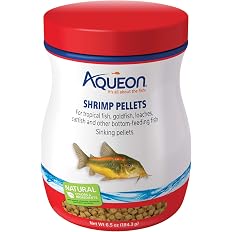
Aqueon Shrimp Pellets Sinking Food for Tropical Fish, 6.5 oz
Bottom feeder fish food, approx. 9mm fish food pellets for catfish, loaches, cory catfish and South American cichlids.
Shop on Amazon
Tetra TetraMin Tropical Granules
Highly digestible ingredients for use as staple food for your mid-feeding tropical fish.
Shop on Amazon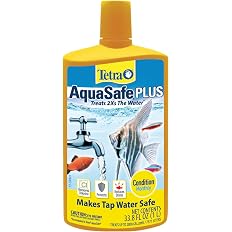
Tetra AquaSafe Plus Water Conditioner & Dechlorinator For Aquarium
Treats 2X the Water as Standard AquaSafe, Makes Tap Water Safe, Reduces Fish Stress, Removes Chlorine, Use Monthly
Shop on AmazonAs an Amazon Associate, Happy Pet Zone earns from qualifying purchases, at no extra cost to you.
Community Aquarium Fish Combinations Chart
The chart below groups fish by temperament and water type. It is a starting point, not a guarantee. This community aquarium fish chart cannot see individual personality, and the Ocean Floor Store combination guide makes the same caveat: breeding aggression can override any chart.
| Fish group | Usually compatible with |
|---|---|
| Peaceful tetras | Other small tetras, rasboras, corydoras, honey gourami |
| Livebearers | Peaceful tetras, corydoras, platies; avoid fin nippers |
| Barbs | Robust tetras, corydoras; some species nip |
| Surface fish | Peaceful mid and bottom fish; tight lid required |
| Dwarf cichlids | Quiet tetras, corydoras; one male per territory |
| Corydoras | Most peaceful community fish; sand substrate |
| Loaches | Peaceful community fish; secure lid |
| Angelfish | Larger peaceful fish; can eat small tetras |
| African cichlids | Species tank, not a general community |
| Goldfish | Cool-water species tank, not a tropical community |
Zone-by-Zone Compatibility Rules
Compatibility is a set of checks, not a single score. Run these before you buy.
- Surface: same temperature range, a tight lid and gentle flow.
- Midwater: one main school, similar adult size and no fin nippers.
- Bottom: fine sand, target feeding and no sharp gravel.
- Across zones: no fish small enough to fit in another fish’s mouth.
This mix also needs one water type. Cool-water white clouds and warm-water discus do not belong in the same tank, even if both are peaceful.
Small Community Aquarium Fish Combinations
Small tanks fail when the fish list is based on body length alone. These combinations use adult size, swimming zone and group size, not the old one-inch-per-gallon rule.
| Tank size | Combination |
|---|---|
| 57 L (15 US gal) | 8 ember tetras + 4 pygmy corydoras |
| 75 L (20 US gal) | 8 cherry barbs + 6 panda corydoras + 1 honey gourami |
| 100 L (26 US gal) | 10 rummy nose tetras + 8 ember tetras + 6 panda corydoras |
| 150 L (40 US gal) | 12 rummy nose tetras + 10 cherry barbs + 8 panda corydoras + 2 honey gourami |
These are starting points for a mature filter, not a cycling plan. Add the school in one group, wait two to four weeks, then add the next group. A 57 L tank with eight ember tetras and four pygmy corys is already close to its comfortable limit.
Filtration, Bioload and the One-Inch Rule
The one-inch-per-gallon rule ignores body mass, waste, activity and adult size. A 30 cm (12 in) fish is not three 10 cm (4 in) fish. Use adult size and the filter’s capacity for waste, not a ruler against the front glass.
- Stock for adult size, not the size of the fish in the bag.
- Choose a filter rated above the tank volume, not exactly at it.
- Keep nitrate below 40 ppm and aim lower for sensitive species.
- Change 25 to 30% of the water every week.
- Leave room for growth instead of stocking to the limit.
A community aquarium fish list is only as good as the filter behind it. Heavy waste producers, messy eaters and growing fish all raise the load. Test the water, not the fish count.
Stocking Order That Prevents Trouble
Add the least territorial fish first and the most territorial fish last. That gives the peaceful groups time to settle before the tank gains a centerpiece with opinions.
- Cycle the tank, then add the bottom group.
- Wait two to four weeks and add the midwater school.
- Add the surface centerpiece after the school is feeding well.
- Add a dwarf cichlid or other territorial fish last.
- Quarantine every group before it enters the display tank.
This order also spreads the bioload. The filter catches up between additions instead of facing the whole community at once.
Large Peaceful Community Fish
Large peaceful community aquarium fish need more than space. They need a tank that can handle their waste, a lid that can hold them and tank mates that cannot be eaten.
| Species | Minimum tank |
|---|---|
| Pearl gourami | 120 L (32 US gal) |
| Severum | 200 L (53 US gal) |
| Discus | 200 L (53 US gal), advanced |
| Angelfish | 110 L (29 US gal), can eat small tetras |
| Silver dollar | 200 L (53 US gal), eats plants |
| Rainbowfish | 120 L (32 US gal), active schooler |
Pearl gourami and rainbowfish are the easiest large peaceful options. Discus and severum are not beginner community fish, and silver dollars will eat soft plants. Angelfish can be peaceful for years and then eat a neon tetra overnight.
Aquarium Fish Compatibility Calculator: Use It Carefully
A community aquarium fish calculator can check adult size, tank volume, temperature, pH and a temperament label. It cannot see individual personality, breeding aggression, territory, flow preference or the chance that a fish eats its tankmates.
Use a calculator to reject obvious mismatches, then verify the final list against care sheets. A score of 80% is not a guarantee. The last check is always behavior in the actual tank.
The 5-Minute Compatibility Check
Before you buy, run six checks. They catch most bad pairings faster than a calculator.
- Adult size: will the fish stay small enough for the tank and the tankmates?
- Temperature: do both species share the same range all year?
- Water chemistry: will pH and hardness stay stable for both?
- Temperament: is one species known to nip, chase or eat smaller fish?
- Swimming zone: will they compete for the same layer or the same food?
- Group size: can the tank hold the minimum school for each species?
If one answer is no, the pairing fails no matter how good it looks in a photo.
Fish Compatibility Chart With Pictures: What Photos Miss
A chart with pictures helps you identify fish. It does not tell you how they behave. Juveniles look different from adults, color morphs vary, and a peaceful species can become territorial when it breeds.
Photos also hide size. A fish that looks small in a store photo may reach 20 cm (8 in) and eat the school you planned around it. Check adult size and temperament first, then use the photo to confirm the species.
How to Introduce New Fish to Tank With Other Fish
Introduction is where a good stocking plan fails. A new fish brings stress, pathogens and a new social position. Slow down and use a quarantine tank.
- Quarantine new fish for two to four weeks before they meet the community.
- Test temperature, pH, ammonia and nitrate in both tanks.
- Turn the lights off and float the bag for 15 to 20 minutes.
- Drip-acclimate for 30 to 45 minutes, then net the fish into the tank.
- Never pour store water into the tank.
- Add the new fish at night, after the resident fish have settled.
- Rearrange decor before adding a territorial fish, so old territories break.
- Watch for 48 hours and keep a hospital tank ready.
Community Fish Tank Ideas That Actually Work
Community aquarium fish ideas work when the layout matches the fish. A blackwater Amazon tank and a hard, fast Asian stream need different plants, flow and water chemistry.
- Amazon blackwater: rummy nose tetras, cardinal tetras, panda corys and a pair of Apistogramma.
- Asian stream: harlequin rasboras, Kubotai rasboras and a honey gourami under floating plants.
- Planted nano: ember tetras, chili rasboras and pygmy corys in a 57 to 75 L tank.
- Surface-heavy: marbled hatchetfish, pencilfish and floating plants with a tight lid.
- Large peaceful: pearl gourami, rainbowfish and a group of panda corys in 150 L or more.
Feeding by Zone
Food should reach the fish that are built to eat it. A single floating meal feeds the surface fish and leaves the bottom hungry.
| Zone | Food and method |
|---|---|
| Surface | Floating flakes, micro pellets, fruit flies; turn off the filter briefly |
| Middle | Slow-sinking granules, frozen daphnia, brine shrimp |
| Bottom | Sinking pellets or wafers, placed away from the midwater feed |
Feed two small meals a day, and vary the menu. Target feeding is not optional in a mixed community. The fastest fish will always eat first.
Common Stocking Mistakes
- Putting three schooling species in the same midwater band.
- Using the one-inch-per-gallon rule as a law.
- Mixing cool-water and warm-water fish in one tank.
- Adding a predator with fish that fit in its mouth.
- Skipping quarantine and losing the group to disease.
- Using sharp gravel with corydoras or loaches.
- Buying fish before the filter is cycled.
Frequently Asked Questions
Pick one surface fish, one midwater school and one bottom group. Add them in stages, quarantine each group and test the water between additions. The tank looks balanced because each layer has a job, not because it holds more species.
What to Check Before You Stock
Test the tank first. Ammonia and nitrite must be zero, nitrate should be low, and the filter must be mature. Then check the adult size, temperature range and temperament of every fish on your list.
Compare the profiles in the freshwater fish library before you buy. A balanced tank is built in layers, not in one shopping trip.