Honey Gourami Care: Tank Size, Diet & Tank Mates
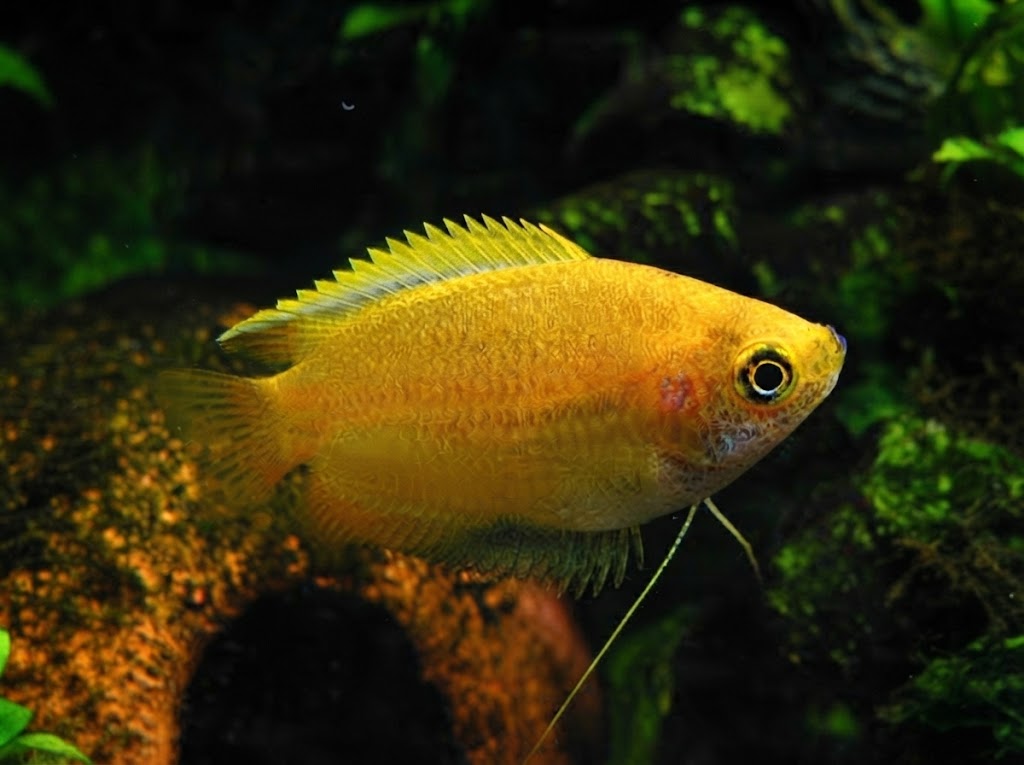
The honey gourami (Trichogaster chuna) reaches about 2 inches (5 cm) long and spends most of its time in the upper part of the aquarium. It is a peaceful, small-bodied labyrinth fish from South Asia, known for its warm golden coloration and calm behaviour. A planted tank with gentle water movement and easy access to the surface suits it well.
Honey gourami care is manageable for many aquarists, including beginners, when the aquarium is stable and its tank mates are chosen carefully. This fish is shy around boisterous companions and can struggle to get enough food when faster fish dominate feeding time.
This guide explains the recommended tank size, water parameters, diet, behaviour, breeding, and six compatible tank mates, with practical advice for building a peaceful community aquarium.
Honey Gourami: Quick Care Facts
| Care Requirement | Recommendation |
|---|---|
| Scientific name | Trichogaster chuna |
| Common name | Honey gourami |
| Adult size | Around 2 inches (5 cm) |
| Minimum tank size | 15 gallons recommended for a comfortable setup |
| Temperature | 72–82°F (22–28°C) |
| pH | 6.0–7.5 |
| Water hardness | Approximately 2–15 dGH |
| Temperament | Peaceful, shy, and generally gentle |
| Swimming level | Upper and middle water column |
| Social needs | Can be kept singly; pairs or groups need careful planning |
| Diet | Omnivorous, with a preference for small animal-based foods |
| Care level | Beginner to intermediate |
| Typical lifespan | Often around 4–8 years with good care |
| Aquarium style | Mature, planted tank with gentle flow |
| Special requirement | Access to the water surface and a secure lid |
These values are practical guidelines. Different care references give slightly different temperature and tank recommendations, so focus on stable conditions within a suitable range rather than making frequent adjustments to chase an exact number.
What Does a Honey Gourami Look Like?
The honey gourami has a compact, laterally compressed body, small fins, and long, thread-like pelvic fins that it uses to explore its surroundings. Its colour varies with sex, age, mood, and breeding condition.
Males often develop a golden yellow to orange body, with more intense colour during courtship. A breeding male may show a darker throat and underside. Females are generally paler, often with a brownish horizontal stripe along the body.
The honey gourami is sometimes confused with colour varieties of other gouramis. When buying one, check the scientific name and look for the characteristic body shape and colouring rather than relying only on a shop label such as “red honey gourami” or “sunset gourami.”
Male vs Female Honey Gourami
| Feature | Male | Female |
|---|---|---|
| Colour | Often brighter yellow, orange, or honey-coloured | Usually more subdued and brownish |
| Breeding appearance | May develop a dark throat and underside | Usually retains a lighter underside |
| Dorsal fin | Often more pointed at the rear | Often more rounded |
| Body shape | Usually slimmer | Often fuller-bodied |
| Behaviour during breeding | Builds and guards a bubble nest | May be chased during courtship |
Sexing young honey gouramis can be difficult because their colours and body shapes may not be fully developed. A fish that looks pale in a shop may simply be stressed or not in breeding condition.
Tank Size and Aquarium Setup
A 15-gallon aquarium is a practical starting point for honey gourami care, especially if you plan to keep the fish with a small community of peaceful companions. A 10-gallon tank may be workable for a carefully planned single-fish setup, but the extra space in a 15- or 20-gallon aquarium gives you more room for plants, stable water conditions, and compatible tank mates.

FROM AMAZON.COM
Tetra 20 Gallon Complete Tropical Fish Tank Kit
Everything included: 20-gallon glass tank with hinged hood, LED light, filter, filter cartridge, and décor. Ready for freshwater fish.
Buy on Amazon.comAs an Amazon Associate, Happy Pet Zone earns from qualifying purchases, at no extra cost to you.
Honey gouramis use the upper and middle water levels, so a tank with a good horizontal footprint is useful. They prefer calm surroundings and appreciate cover that allows them to retreat when they feel exposed.
What Should the Aquarium Include?
| Aquarium Feature | Recommendation |
|---|---|
| Plants | Live plants, including tall stems and leafy plants |
| Floating plants | Useful for shade, security, and bubble-nest sites |
| Hardscape | Driftwood and smooth decorations that create shelter |
| Substrate | Sand or fine aquarium gravel |
| Filtration | Reliable biological filtration with gentle flow |
| Water movement | Gentle to moderate; avoid a strong current |
| Lighting | Moderate lighting with shaded areas |
| Surface access | Keep open areas where the fish can reach the surface |
| Lid | Secure, with room above the water for warm, humid air |
Floating plants such as Amazon frogbit or water lettuce can soften bright lighting and give honey gouramis a sense of security. Leave some open surface area so the fish can breathe air freely.
Honey gouramis have a labyrinth organ, which allows them to take oxygen from the air at the water surface. They still need clean, oxygenated water, but access to the surface is an essential part of their normal behaviour.
Why Does Gentle Water Flow Matter?
Honey gouramis naturally inhabit still or slow-moving waters. Strong filter output can make it difficult for them to rest, feed, and explore comfortably.
To reduce excessive current:
- Use a sponge filter or a filter with adjustable output.
- Direct the outlet toward the glass if the flow is too strong.
- Add plants and hardscape to create calmer areas.
- Make sure filtration remains sufficient for the aquarium’s stocking level.
The aim is clean water without turning the tank into a fast-flowing environment.
Should You Use a Tank Lid?
Yes. A secure lid helps prevent jumping and maintains a warmer, more humid layer of air above the water. Avoid sealing the aquarium in a way that prevents normal gas exchange, and leave enough space above the water for the fish to reach the surface.
Water Parameters for Honey Gourami
Honey gouramis tolerate a reasonably broad range of freshwater conditions. Stable water quality matters more than repeatedly adjusting pH or hardness when the aquarium is already within a suitable range.
| Water Parameter | Recommended Range |
|---|---|
| Temperature | 72–82°F (22–28°C) |
| pH | 6.0–7.5 |
| General hardness (GH) | Approximately 2–15 dGH |
| Ammonia | 0 ppm |
| Nitrite | 0 ppm |
| Nitrate | Preferably below 20 ppm |
| Water changes | Often 20–30% weekly, adjusted to test results |
| Water movement | Gentle, with adequate filtration |
The temperature range allows some flexibility, but avoid abrupt changes. Warmer water may encourage breeding behaviour, while cooler conditions within the suitable range can reduce courtship activity.
How to Maintain Stable Water Quality
- Test the water. Monitor temperature, pH, ammonia, nitrite, and nitrate, especially after introducing new fish.
- Perform regular water changes. Replace a portion of the water with dechlorinated water at a similar temperature.
- Maintain the filter. Clean mechanical media when needed and preserve the beneficial bacteria in biological media.
- Avoid overstocking. More fish mean more waste and more competition for space and food.
- Keep the surface accessible. Floating plants are helpful, but do not let them completely cover the aquarium.
A fully cycled aquarium is essential. Never introduce honey gouramis to a tank that is still experiencing ammonia or nitrite spikes.
What Do Honey Gouramis Eat?
Honey gouramis are omnivores that naturally feed on small insects, insect larvae, and other tiny invertebrates. In captivity, they usually accept quality dry foods, but a varied diet that includes frozen or live foods helps maintain condition and encourages natural feeding behaviour.
They feed deliberately and may be slower than active schooling fish. In a community aquarium, make sure food reaches them before faster tank mates consume it.
Best Foods for Honey Gourami
| Food Type | How to Use It |
|---|---|
| Quality micro-pellets | A convenient daily staple sized for the fish’s small mouth |
| Crushed flakes | Useful when broken into small, easy-to-eat pieces |
| Frozen daphnia | Adds variety and provides appropriately sized prey |
| Frozen brine shrimp | Suitable as part of a varied diet |
| Frozen bloodworms | Offer occasionally as a richer food |
| Live daphnia or small larvae | Useful when sourced safely and offered in appropriate portions |
| Small insect foods | Can supplement a varied diet when suitable for aquarium fish |
A mix of high-quality prepared food and suitable frozen or live options is more useful than relying on a single food.
How Often Should You Feed Honey Gouramis?
Offer small portions once or twice a day, adjusting the amount to what the fish can eat within a short feeding period. Remove uneaten food before it begins to decompose.
Watch the fish during feeding. If other fish rush in and consume everything, use a second feeding spot or place food near the honey gourami’s preferred area.
Signs that the fish is eating well include:
- A healthy body shape without a hollow belly.
- Regular interest in food.
- Normal swimming and exploration.
- Consistent body condition over time.
If a honey gourami hides constantly or refuses food, check water quality and review whether its tank mates are making it feel unsafe.
Behaviour and Temperament
Honey gouramis are usually peaceful and curious, though they can be shy in bare tanks or around fast-moving companions. They often pause among plants, explore with their thread-like pelvic fins, and return to the surface periodically to breathe air.
They are not schooling fish in the same way as tetras or rasboras. A single honey gourami can live successfully in an appropriate aquarium. Pairs and small groups are also possible, but space, sex ratio, and individual temperament matter because males may chase females or compete with other males.
Can Honey Gouramis Live Alone?
Yes. A single honey gourami can be a good choice for a peaceful community aquarium, especially if the tank has plants and calm tank mates.
If you want to keep more than one, provide enough space and visual barriers so individuals can avoid each other. Watch for repeated chasing, hiding, or one fish being prevented from feeding. A larger, well-planted aquarium gives them more options to establish separate areas.
Are Honey Gouramis Aggressive?
They are generally peaceful, but no fish is guaranteed to be completely compatible with every individual. Males can become territorial during breeding, and even normally gentle fish may chase companions around a bubble nest.
Avoid fin-nipping species and highly active fish that continually disturb them. Their slow, deliberate feeding style also makes them poor companions for fish that monopolise food.
Six Compatible Tank Mates for Honey Gourami
Honey gouramis do best with peaceful fish that share similar water conditions and will not harass them. The following six species are potential tank mates for a planted community aquarium, provided each species has enough space and is kept in its own suitable group.
The list is intentionally limited to six species. It does not mean all six should be combined in one tank. Choose companions based on aquarium size, adult size, schooling needs, and feeding behaviour.
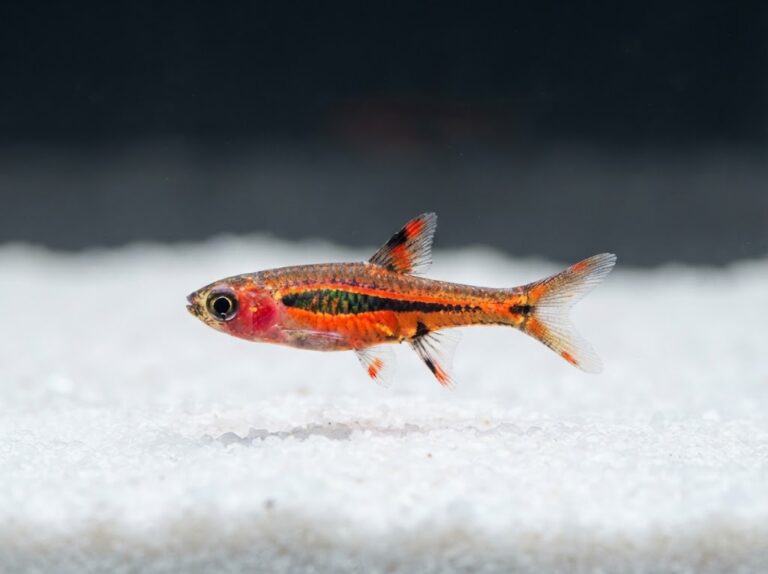
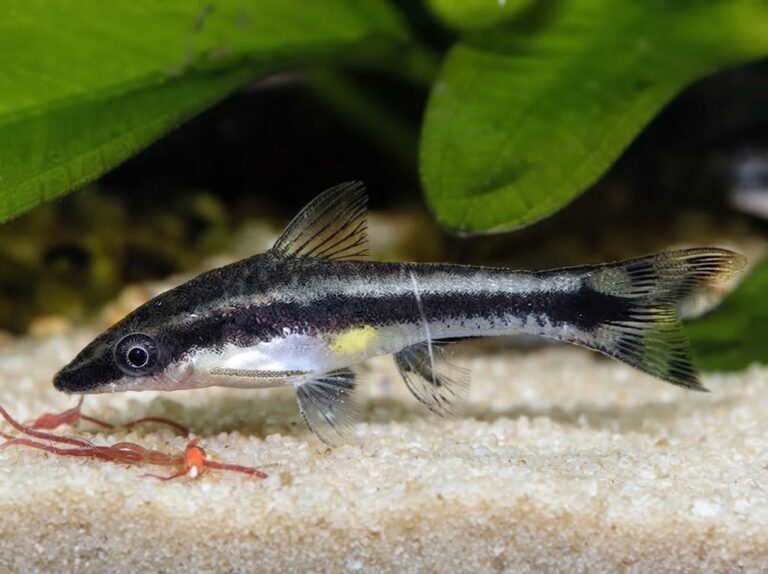
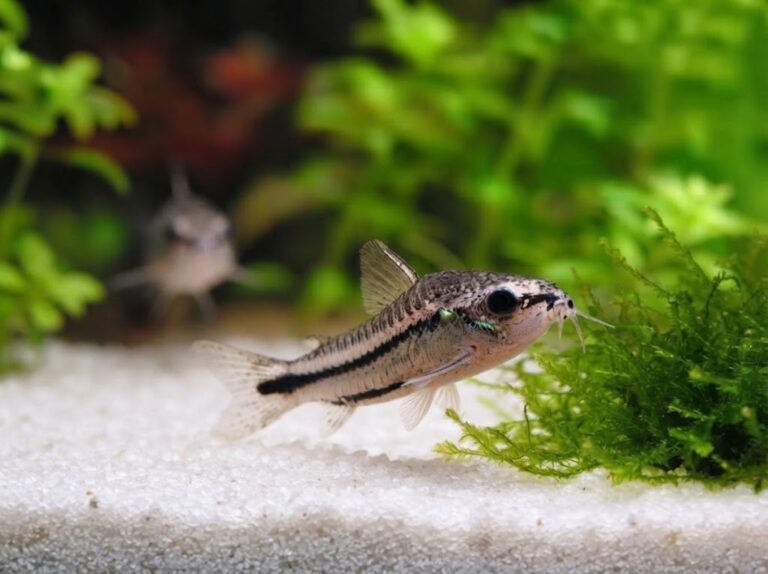
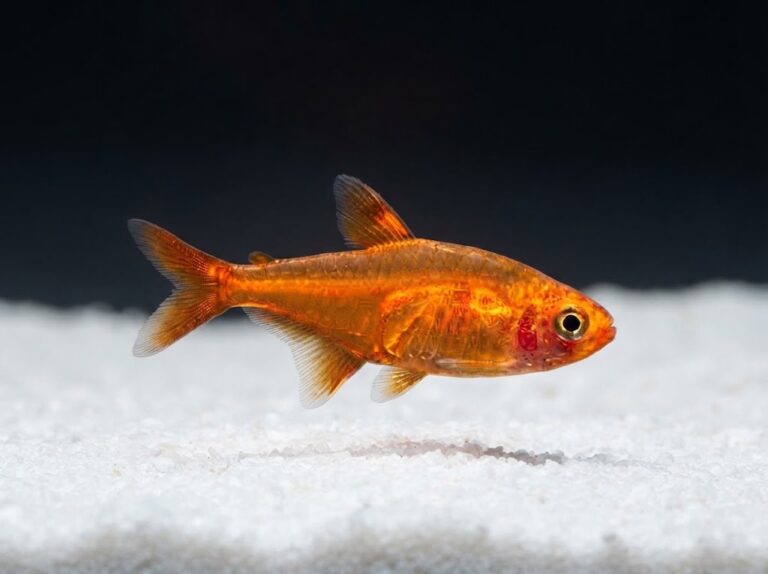
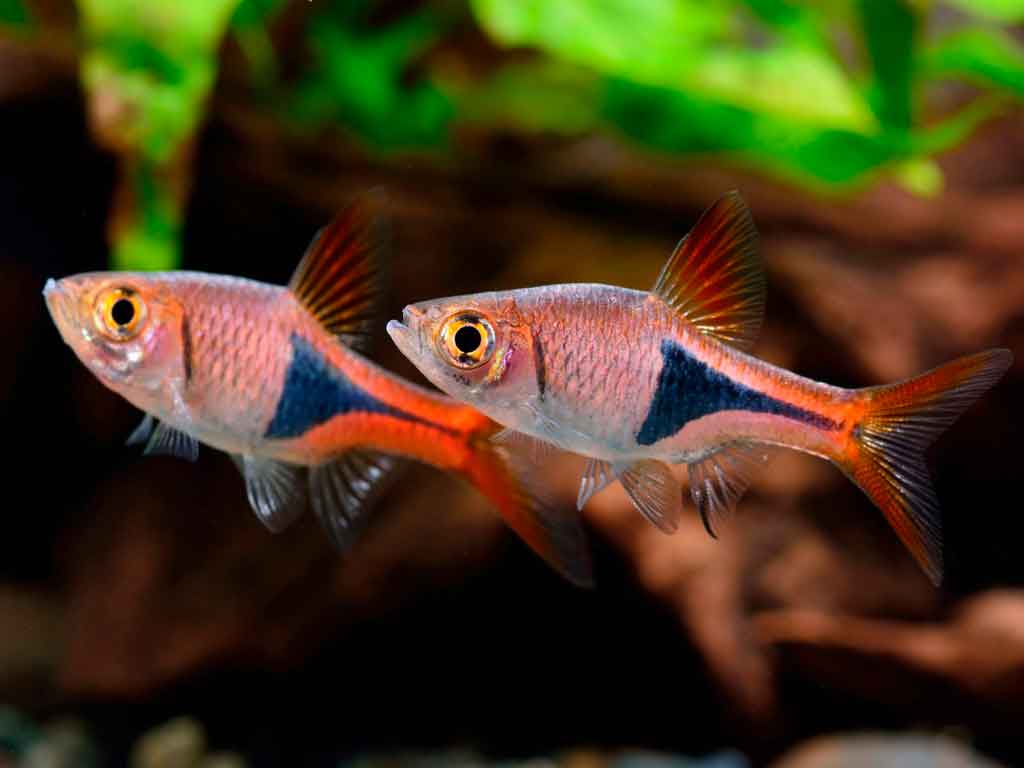
Honey Gourami Tank Mate Summary
| Compatible Species | Why It Can Work |
|---|---|
| Ember Tetra (Hyphessobrycon amandae) | Small, peaceful schooling fish with compatible community-tank needs |
| Harlequin Rasbora (Trigonostigma heteromorpha) | Generally calm midwater fish for planted aquariums |
| Chili Rasbora (Boraras brigittae) | Tiny, peaceful fish suited to quiet, planted tanks |
| Pygmy Corydoras (Corydoras pygmaeus) | Small bottom and midwater fish that can share space when feeding is managed |
| Otocinclus (Otocinclus spp.) | Peaceful algae grazers that use plants and hardscape |
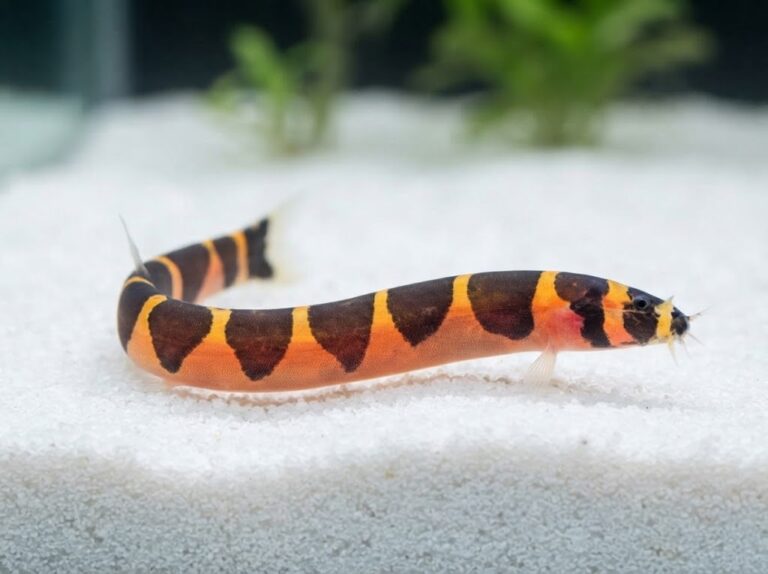
| Kuhli Loach (Pangio spp.) | Shy bottom dwellers that generally avoid surface-dwelling gouramis |
Compatibility tip: These species have different group sizes, feeding needs, and space requirements. A 15-gallon aquarium may suit one honey gourami with a carefully selected companion species, while a larger tank is more appropriate for multiple schools or bottom-dwelling groups.
Which Fish Should You Avoid?
Avoid aggressive fish, persistent fin-nippers, and highly active species that prevent honey gouramis from feeding comfortably. Large predatory fish can injure or eat them, while boisterous tank mates may keep them hidden for much of the day.
Use caution with other territorial fish that occupy the same upper water levels. Male bettas and other gouramis may be poor choices because individual aggression and competition for surface territory can be difficult to predict.
Can You Breed Honey Gouramis?
Honey gouramis are bubble-nest builders. During breeding, the male creates a floating nest from bubbles, often beneath floating plants or another sheltered area at the surface.
The male courts the female and collects the eggs after spawning, placing them in the nest. He then guards the eggs and young fry. During this period, he may become more territorial, so a separate breeding aquarium can make it easier to manage the pair safely.
How to Prepare a Breeding Aquarium
- Use a mature, stable aquarium with gentle filtration.
- Add floating plants or other suitable cover at the surface.
- Offer varied foods to condition the adults.
- Keep the water warm within the species’ suitable range.
- Provide enough space for the female to retreat if the male chases her.
After spawning, monitor the female closely. If the male repeatedly harasses her, separate her once spawning is complete. When the fry hatch and begin swimming freely, the male may need to be removed to protect the young.
What Do Honey Gourami Fry Eat?
Newly free-swimming fry are tiny and require appropriately sized foods, such as infusoria or commercial first foods designed for small fry. As they grow, their diet can be expanded to other suitable small foods.
Keep water quality stable because fry are sensitive to waste and sudden changes. Feed small amounts frequently while removing excess food carefully.
Common Honey Gourami Care Mistakes
Many problems can be avoided by setting up the aquarium around the fish’s behaviour and feeding habits.
- Keeping them in strong currents: Excessive flow can make resting and feeding difficult.
- Leaving the tank bare: A lack of plants and cover often makes them hide.
- Choosing boisterous tank mates: Fast or aggressive fish can stress them and outcompete them for food.
- Blocking the water surface: Honey gouramis need access to air above the water.
- Using a tank without a lid: They may jump, so a secure cover is important.
- Overfeeding: Uneaten food can increase waste and reduce water quality.
- Assuming every gourami sold under a colour name is a honey gourami: Verify the species before buying.
- Ignoring breeding behaviour: A male may chase a female or another male more often when preparing a bubble nest.
A good routine includes observing the fish at feeding time, testing water quality, and checking whether the aquarium’s layout still offers calm areas and hiding places.
Health and Signs of Stress
Healthy honey gouramis usually swim calmly, explore their surroundings, and respond to food. A new fish may hide for a while after introduction, but persistent hiding combined with appetite loss or abnormal swimming deserves attention.
Watch for:
- Refusing food over repeated feedings.
- Rapid breathing or persistent surface gasping beyond normal air-breathing visits.
- Clamped fins, damaged fins, or unusual spots.
- Loss of balance or difficulty swimming.
- Progressive weight loss.
- Repeated chasing that prevents a fish from resting or feeding.
Begin by checking ammonia, nitrite, nitrate, temperature, and filtration. Consider whether the current is too strong or tank mates are causing stress. Avoid adding medication without a reasonable idea of the problem, especially in a community aquarium where different inhabitants may respond differently to treatments.
If symptoms are severe, persist, or affect several fish, seek advice from a qualified aquatic veterinarian or experienced fish-health professional.