Pygmy Corydoras Care: Tank Size, Diet & Tank Mates
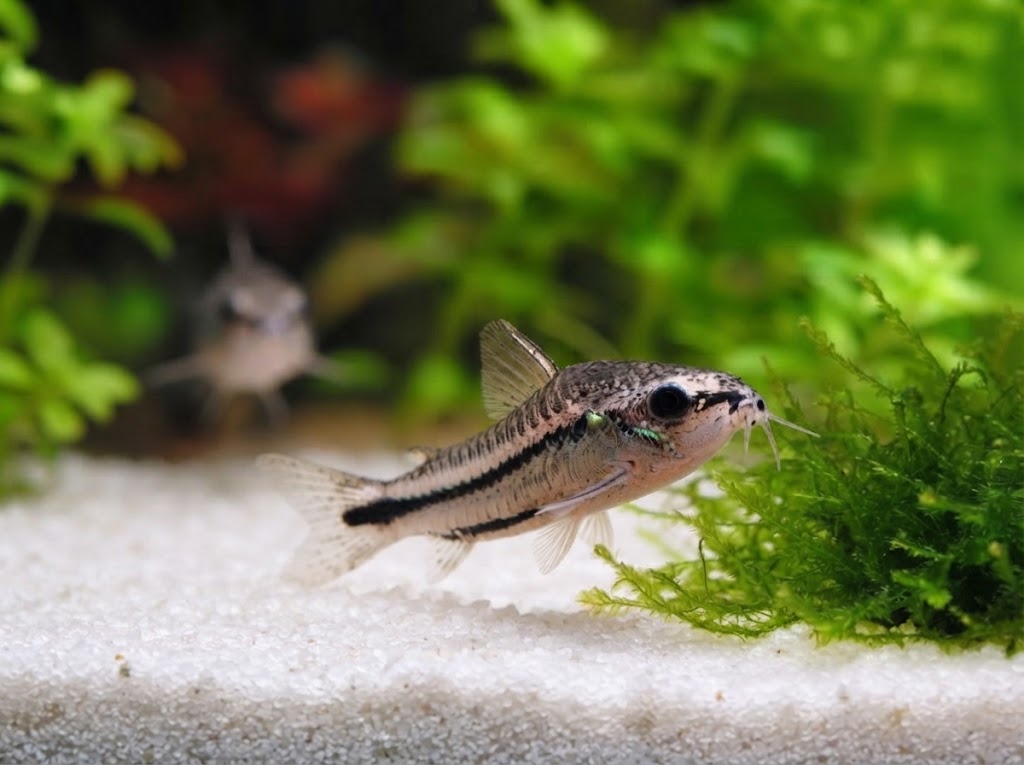
The pygmy corydoras (Corydoras pygmaeus) is a tiny, peaceful freshwater catfish that brings movement to planted aquariums. Unlike many larger corydoras that spend most of their time near the substrate, pygmy corydoras frequently swim in the middle of the water column, sometimes hovering together like a small school of tetras.
Their small size makes them appealing for nano aquariums, but they need a suitable group, stable water conditions, and tank mates that will not eat them or outcompete them for food.
Successful pygmy corydoras care starts with an established, fully cycled aquarium, a group of at least six fish, gentle filtration, and appropriately sized food.
A 10-gallon aquarium is a practical starting point, while a longer 15-gallon or larger tank provides additional swimming room and more flexibility when planning a community aquarium.
Pygmy Corydoras Quick Facts
| Attribute | Details |
|---|---|
| Common name | Pygmy Corydoras, Pygmy Cory |
| Scientific name | Corydoras pygmaeus |
| Adult size | Approximately 1–1.2 inches (2.5–3 cm) |
| Minimum tank size | Around 10 US gallons; more space is preferable |
| Recommended group | At least 6; 8–12 or more is a useful target |
| Temperature | 72–79°F (22–26°C) |
| pH | Approximately 6.4–7.4 as a practical target |
| Water hardness | Soft water is preferred; stability matters |
| Temperament | Peaceful and social |
| Swimming level | Middle and lower areas of the aquarium |
| Diet | Omnivore |
| Lifespan | Often around 3–5 years with good care |
| Care level | Suitable for beginners with a mature aquarium |
Care references differ slightly in their recommended minimum tank size and group size. Aquarium Co-Op recommends a 10-gallon or larger aquarium and a group of around 8–12 pygmy corydoras, while AquariumStocking lists a 15-gallon minimum. The practical lesson is to provide enough horizontal swimming space for a social group rather than choosing a tank solely because the fish are small.
What Is a Pygmy Corydoras?
The pygmy corydoras is a small member of the armored catfish family, Callichthyidae. It is native to the Madeira River basin in Brazil, where it inhabits freshwater environments with vegetation and sheltered areas.
Its body is silvery to gray, with a distinctive dark horizontal stripe running along the side. This stripe helps distinguish it from other dwarf corydoras, including Corydoras habrosus, which has a spotted appearance, and Corydoras hastatus, which has a distinctive mark near the base of the tail.
One of the species’ most interesting characteristics is its swimming behavior. Pygmy corydoras do not stay exclusively on the bottom. They often hover in the middle of the aquarium, swim in loose groups, and rest on plant leaves or other surfaces. This behavior makes them especially interesting in planted community tanks.
Their small size is also their main vulnerability. Larger fish may view them as prey, while fast-feeding tank mates can prevent them from getting enough food. A peaceful temperament does not guarantee that a fish is safe in every community aquarium.
Pygmy Corydoras Tank Size and Setup
A 10-gallon aquarium can work for a suitable group of pygmy corydoras, but a longer aquarium of 15 gallons or more gives them additional room to swim and makes it easier to maintain stable water conditions. A larger footprint is often more useful than extra height alone.
Essential Aquarium Setup
- A mature biological filter: Fully cycle the aquarium before adding fish. Ammonia and nitrite should remain at zero.
- Fine sand or smooth substrate: A fine, smooth surface allows natural foraging and helps protect their delicate barbels.
- Live plants: Java moss, Java fern, Anubias, and Cryptocoryne provide cover and resting places.
- Open swimming space: Leave room in the middle and lower parts of the aquarium for the group to move together.
- Gentle water flow: Choose filtration that maintains clean water without creating an excessively strong current.
- Shaded areas: Floating plants and planted sections help create shelter and reduce harsh lighting.
- A secure lid: A cover helps prevent fish from jumping out if startled.
Avoid filling every available space with decorations. Pygmy corydoras need shelter, but they also benefit from open areas where they can swim together. Broad plant leaves, driftwood, and suitable aquarium decorations provide resting places without taking up the entire footprint.
Do not buy pygmy corydoras as a substitute for a cleanup crew. They are active, social fish that need their own food and suitable living conditions.
Pygmy Corydoras Water Parameters
Pygmy corydoras generally do well in warm, soft to moderately soft water. A stable environment is more important than making frequent adjustments to achieve a precise pH reading. Their small size also means that ammonia spikes and sudden changes can have serious consequences.
| Water parameter | Practical guidance |
|---|---|
| Temperature | 72–79°F (22–26°C) |
| pH | Around 6.4–7.4 |
| Ammonia | 0 ppm |
| Nitrite | 0 ppm |
| Nitrate | Keep low through testing and maintenance |
| Water hardness | Soft water is preferred |
| Water flow | Gentle to moderate |
| Water changes | Often 20–30% weekly, adjusted to water tests and stocking |
Use a reliable aquarium thermometer and water test kit. Clear water can still contain ammonia or nitrite, so appearance alone cannot confirm that the aquarium is safe.
When performing a water change, use an appropriate water conditioner if necessary and avoid sudden temperature changes. If your tap water is very hard or alkaline, test it before purchasing the fish and develop a consistent plan for maintaining suitable conditions.
Do not change pH rapidly with chemical products simply to reach a target number. Sudden shifts can stress fish, particularly when the aquarium is already established.
What Do Pygmy Corydoras Eat?
Pygmy corydoras are omnivores. In the wild, they feed on small invertebrates and other tiny food items. In an aquarium, they accept a variety of prepared, frozen, and live foods, provided the pieces are small enough for their mouths.
Although they are often described as bottom-feeding catfish, pygmy corydoras also catch food as it falls through the water. Their feeding behavior means that food must be accessible in both the middle and lower areas of the aquarium.
Suitable Foods for Pygmy Corydoras
- Nano sinking pellets: Choose small pellets that the fish can swallow easily.
- Finely crushed flakes: Crush them into small particles before feeding.
- Frozen baby brine shrimp: A suitable protein-rich food when offered in an appropriate size.
- Daphnia: Small frozen or live daphnia provide dietary variety.
- Cyclops: These tiny crustaceans are suitable for small fish.
- Other appropriately sized live or frozen foods: Use foods from reliable sources and include them as part of a varied diet.
Feed small portions once or twice daily, adjusting the amount to the number and condition of the fish. They should have enough time to find and eat their food without leaving large amounts to decay.
Prevent Feeding Competition
One of the most important parts of pygmy corydoras care is making sure they actually get enough to eat. They can lose out to faster or larger fish even when no aggression occurs.
To reduce competition:
- Use food small enough for pygmy corydoras to eat comfortably.
- Observe the fish during feeding rather than assuming food has reached them.
- Offer food in more than one area if other fish dominate a single feeding spot.
- Consider feeding after the aquarium lights dim if the fish are shy and the food remains accessible.
- Avoid keeping them with fast, boisterous species that consume everything before the pygmy corydoras can feed.
A fish that slowly loses weight may be underfed even when the aquarium appears clean and the other fish look healthy. Check feeding behavior regularly, especially after adding new tank mates.
Six Compatible Pygmy Corydoras Tank Mates
Pygmy corydoras can live with peaceful, small fish that share suitable water conditions and will not treat them as prey. The following six species are potential companions for a carefully planned community aquarium.
Compatibility depends on the aquarium’s size, adult fish size, individual temperament, and feeding behavior. Keep schooling species in appropriate groups of their own, and make sure pygmy corydoras receive enough food.
1. Ember Tetra (Hyphessobrycon amandae)
Ember tetras are small, peaceful schooling fish that can work well with pygmy corydoras in a planted aquarium. Their orange coloration contrasts with the pygmy corydoras’ silvery body and dark stripe. Both species benefit from cover, stable water, and appropriately sized food.
Because ember tetras often feed in the middle of the water column, observe feeding carefully to ensure that food also reaches the pygmy corydoras.
2. Neon Tetra (Paracheirodon innesi)
Neon tetras are peaceful community fish that can share a suitably sized aquarium with pygmy corydoras when their water requirements overlap. Their blue and red markings create a striking contrast with the catfish’s subtle coloring.
Keep neon tetras in a proper school, and avoid large or aggressive tank mates that might threaten either species. Ensure that the aquarium is large enough to provide swimming space for both groups.
3. Chili Rasbora (Boraras brigittae)
Chili rasboras are tiny, peaceful fish suited to planted nano aquariums. Their small size and calm behavior make them potential companions for pygmy corydoras when the water conditions and aquarium setup suit both species.
Because both species are small, choose tank mates carefully and make sure food particles are appropriate for their mouths. Dense plant cover can help the fish feel secure.
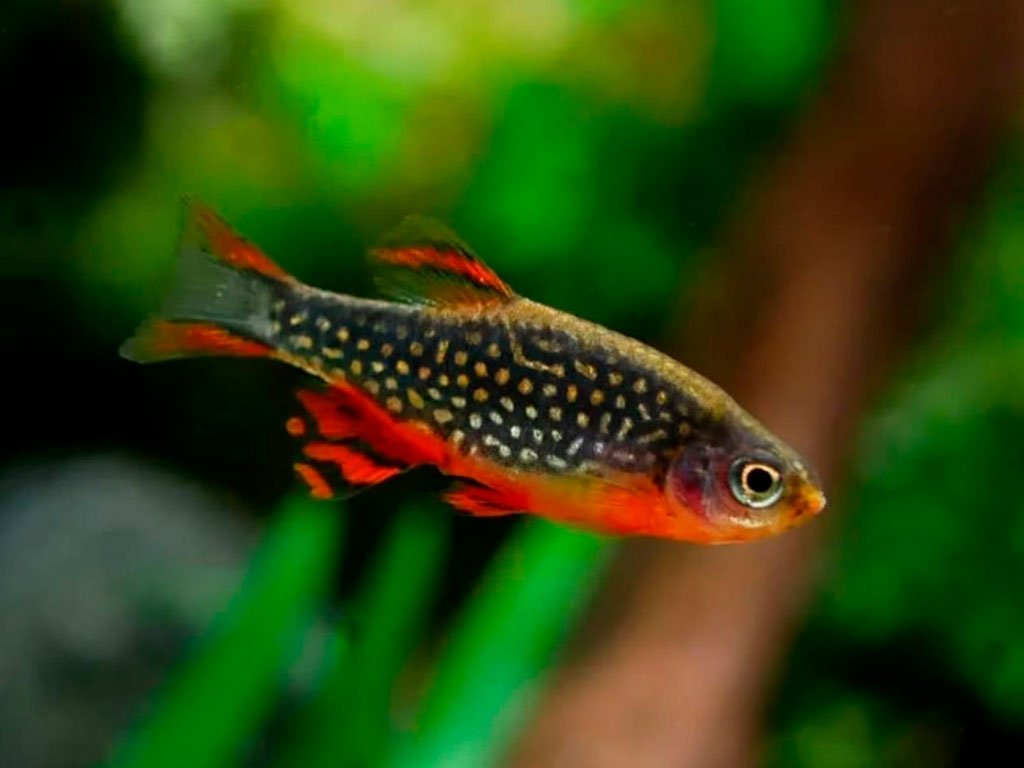
4. Celestial Pearl Danio (Danio margaritatus)
Celestial pearl danios are small, attractive fish that can work in a planted community aquarium with suitable water conditions and enough space. They use different areas of the aquarium and appreciate cover from plants and hardscape.
Their compatibility with pygmy corydoras depends on maintaining suitable conditions for both species and ensuring that the danios do not dominate feeding. Keep them in a group and monitor their behavior after introduction.
5. Otocinclus Catfish (Otocinclus species)
Otocinclus are small, peaceful algae-grazing catfish that can be suitable companions in a mature planted aquarium. They are not a replacement for regular maintenance and need access to grazing surfaces and suitable supplementary foods.
Do not introduce otocinclus to a newly established tank simply to control algae. Their nutritional needs and the pygmy corydoras’ feeding needs must both be met.
6. Harlequin Rasbora (Trigonostigma heteromorpha)
Harlequin rasboras are peaceful schooling fish that can be considered for a larger community aquarium. Their orange and black markings create a different visual effect from the pygmy corydoras.
However, harlequin rasboras are larger and more active than the other fish on this list. Choose a sufficiently spacious aquarium, monitor feeding competition, and avoid combining them with pygmy corydoras in an overcrowded setup.
Tank Mates to Avoid
Avoid large predatory fish, aggressive species, and fast-feeding fish that could swallow pygmy corydoras or prevent them from getting enough food. Angelfish, large gouramis, large cichlids, and boisterous fish are poor choices for an aquarium containing these tiny catfish.
Before combining species, compare their adult size, temperature requirements, water chemistry, temperament, and feeding habits. Similar water parameters alone do not guarantee compatibility.
Pygmy Corydoras Behavior and Schooling
Pygmy corydoras are peaceful, social fish that often swim in groups in the middle and lower parts of the aquarium. Their midwater behavior is one of the main reasons aquarists choose them instead of larger corydoras species.
Keep at least six together, with a group of eight to twelve or more being a useful target when space and filtration allow. Larger groups often appear more confident and make the fish easier to observe.
A planted aquarium provides hiding places and resting surfaces. Pygmy corydoras may perch on broad plant leaves, swim through open spaces, or explore the substrate for food. These behaviors are normal as long as the fish remain active and feed consistently.
Do not mistake persistent hiding, loss of appetite, or progressive weight loss for ordinary shyness. These signs can indicate stress, unsuitable tank mates, poor water quality, or inadequate feeding.
Breeding Pygmy Corydoras
Pygmy corydoras can breed in home aquariums under suitable conditions. Like other corydoras, they lay eggs and do not provide parental care. Adults may eat the eggs, so a dedicated breeding aquarium can improve the chances of raising fry.
Basic Breeding Considerations
- Maintain a healthy group with a suitable male-to-female balance.
- Condition the adults with a varied diet of appropriately sized foods.
- Provide plants or suitable spawning surfaces for egg attachment.
- Keep water conditions stable and monitor the fish closely.
- Protect the eggs from adult fish after spawning if raising fry is the goal.
- Prepare appropriately sized first foods before the fry hatch.
The eggs and newly hatched fry are very small. Raising them requires careful feeding and excellent water quality. Do not assume that fry will survive in a community aquarium, where eggs and young fish may be eaten by adult fish.
If breeding is your goal, research the requirements of a dedicated fry-rearing setup before attempting it.
Common Pygmy Corydoras Health Problems
When pygmy corydoras appear unwell, start by checking water quality, temperature, oxygenation, and feeding behavior. Stress from transport, unsuitable tank mates, poor water conditions, and insufficient food can all contribute to health problems.
| Warning sign | What to check |
|---|---|
| Weight loss | Food size, feeding competition, and possible illness |
| Rapid breathing | Oxygenation, temperature, ammonia, nitrite, and possible disease |
| Faded coloration | Stress, water quality, lighting, or illness |
| Persistent hiding | Bullying, unsuitable tank mates, stress, or poor conditions |
| Clamped fins or abnormal swimming | Water quality, injury, stress, or possible disease |
| Damaged barbels | Substrate condition, injury, or possible infection |
| Loss of appetite | Food particle size, water conditions, stress, or illness |
These signs are not diagnoses. Several conditions can look similar, so do not assume that a particular symptom identifies a specific disease.
Test the water promptly and correct any confirmed water-quality problem. If the fish remain unwell, consider an appropriate quarantine setup and seek advice from a qualified aquatic veterinarian or fish-health professional. Avoid medicating the entire aquarium without a clear reason.
Health note: This guide provides general aquarium-care information and cannot diagnose fish disease. Persistent symptoms, unexplained deaths, or suspected contagious illness warrant appropriate professional assessment.
Pygmy Corydoras Care Mistakes to Avoid
- Keeping too few fish. Pygmy corydoras are social. Plan for at least six and consider a larger group if the aquarium can support it.
- Choosing tank mates that are too large. Their tiny size makes them vulnerable to fish that may eat them or intimidate them.
- Assuming they will find enough food. They need appropriately sized foods and may lose out to faster fish. Watch them eat rather than relying on leftover food reaching the substrate.
- Using rough substrate. Sharp or abrasive materials can damage their delicate barbels. Fine sand or smooth substrate is a practical choice.
- Adding them to an uncycled aquarium. Confirm that the biological filter is established and that ammonia and nitrite remain at zero.
- Creating excessive water flow. Strong currents can make swimming and feeding more difficult. Diffuse the filter outlet if necessary.
- Treating them as a cleanup crew. Pygmy corydoras need a suitable diet and regular care. They should not be purchased to replace aquarium maintenance.