Pearl Weed Care Guide: Carpet, Light & CO2

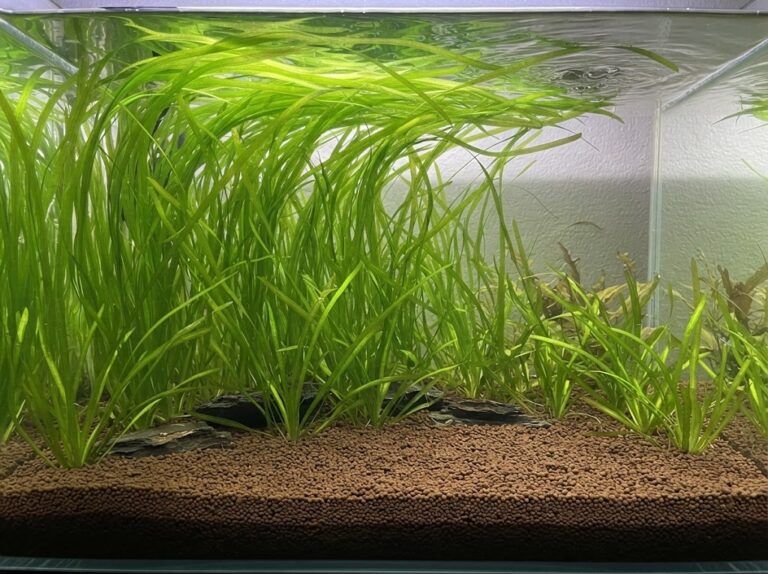
Pearl weed can become a compact carpet, a rounded midground bush, or a taller background group in a planted aquarium.
The difference usually comes down to light, planting technique, trimming, and how consistently the plant receives carbon and nutrients.
This guide explains how to grow pearl weed from the first planting through long-term maintenance. You will find practical targets for lighting, CO2, water conditions, substrate, trimming, propagation, and common problems, plus a clear approach for growing it in a low-tech aquarium.
What Is Pearl Weed?
Pearl weed is a fast-growing freshwater stem plant commonly sold under the scientific name Micranthemum micranthemoides. Older aquarium references may also use the name Hemianthus micranthemoides.
It has small, bright-green leaves on flexible stems and is useful because the same plant can fill several aquascaping roles.
With regular trimming, the stems can form a dense foreground carpet. Left taller, pearl weed becomes a bushy midground plant or a vertical background mass.
That flexibility makes it especially useful when you want a planted aquarium that can change shape as it matures.
Pearl Weed Care Requirements
| Light | Medium light is a good starting point. Stronger light helps keep growth compact, while weak light can produce taller, more open stems. |
| CO2 | Optional. Pearl weed can survive without injected CO2, but added CO2 usually makes dense carpet growth easier and faster. |
| Temperature | About 68–82°F (20–28°C). |
| pH | About 6.0–7.5. |
| Hardness | Roughly 3–15 dGH is a useful general range. |
| Substrate | Works in inert gravel or sand when nutrients are supplied elsewhere; nutrient-rich planted substrates make carpeting easier. |
| Growth rate | Fast under favorable conditions. Expect regular trimming once established. |
| Planting position | Foreground, midground, or background depending on pruning. |
These are practical starting ranges rather than rigid rules. A stable aquarium with consistent maintenance is more important than chasing a single perfect number.
How Much Light Does Pearl Weed Need?
Medium light is usually enough to grow healthy pearl weed. Aquarium Co-Op lists roughly 20–35 PAR as a medium-light target for the plant, while other planted-tank growers use medium to medium-high light when they want a tighter carpet.
The visual response is useful here. If the stems are stretching upward with long gaps between leaves, the plant may be receiving too little light for the shape you want. If growth is compact and the lower portions stay leafy, your lighting is closer to the right level.
Avoid increasing light dramatically just because the carpet is slow. Higher light also increases the aquarium’s demand for carbon, nutrients, and maintenance. Make changes gradually and watch how the entire tank responds.
Does Pearl Weed Need CO2?
No. Pearl weed can grow without injected CO2, which is one reason it works well in low-tech planted aquariums. The tradeoff is that a dense, fast carpet is generally easier to achieve when carbon availability is high and stable.
If you run a CO2-injected aquarium, consistency matters. Large swings between very low and high CO2 availability can make the plant harder to manage and may contribute to algae problems when light and nutrients are also out of balance.
For a non-CO2 setup, keep expectations realistic. Give the plant enough light, avoid overcrowding it at planting time, maintain stable water conditions, and trim gradually as it fills in.
How to Plant Pearl Weed
Pearl weed is commonly sold as a potted plant or as a bunch of individual stems. Remove the growing material around the roots, separate the stems into small groups, and strip the lower leaves from the section that will go into the substrate.
- Divide a large portion into several small clumps rather than planting one dense mass.
- Push the lower stem section into the substrate deeply enough that the plant stays anchored.
- Angle the stems slightly if they tend to float upward after planting.
- Leave small gaps between clumps so new growth has room to spread.
- Give recently planted portions time to establish before aggressive trimming.
For a carpet, planting small groups about 1 inch apart is a useful starting point. As the stems grow horizontally and branch, the gaps gradually disappear.
Pearl Weed Carpet: How to Keep It Low
A pearl weed carpet is created through repeated trimming and replanting. The plant naturally grows upward, so the carpet shape comes from encouraging lateral density and removing the taller growth before it dominates.
Once the plant has established roots, trim the upper growth and replant healthy cuttings into open areas. Over several cycles, this creates more planting points and a wider, thicker mat.
Keep the carpet reasonably thin. If the mat becomes several inches deep, the lower stems can receive less light and circulation. Regular maintenance is easier than waiting for the whole carpet to become overgrown.
How to Trim Pearl Weed
Pearl weed responds well to regular pruning because it branches after cutting. For a low carpet, trim the upper portion before the stems become tall and shade the lower growth. Remove loose clippings so they do not collect in filters, hardscape, or other plants.
A simple routine is to inspect the carpet every week or two and trim only where growth is becoming too tall or uneven. The exact schedule depends on light, CO2, nutrients, and how dense you want the planting to look.
Healthy cuttings can be replanted. This turns routine maintenance into propagation and lets you expand the carpet without buying additional plants.
How to Grow Pearl Weed as a Bush
You do not have to keep pearl weed as a carpet. Allowing the stems to grow taller produces a rounded bush that works well in the midground. Trim the top portions regularly to encourage branching and remove the longest stems when they begin to dominate the group.
This form can be particularly useful around rocks or driftwood because the fine leaves soften hardscape edges. If the stems become too tall and sparse, cut them back and replant the healthiest tops.
Substrate and Fertilizer
Pearl weed can grow in inert gravel, but the aquarium still needs a reliable nutrient supply. Stem plants take nutrients from the water column, while their roots can also benefit from a nutrient-rich substrate.
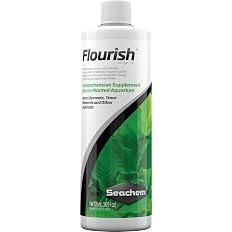
If your substrate contains little nutrition, a complete liquid fertilizer can be useful when the aquarium’s stocking and water changes do not already provide enough nutrients. Seachem Flourish Comprehensive is one example of a general micronutrient supplement; the product information supplied for this site describes it as providing nutrients such as calcium, magnesium, iron, vitamins, and amino acids without adding nitrogen or phosphorus.
FROM AMAZON.COM
Seachem Flourish Freshwater Plant Supplement
A comprehensive plant supplement with minerals, trace elements, and vitamins to support healthy growth in freshwater planted tanks.
Buy on Amazon.comHappy Pet Zone may earn a commission when you click through to Amazon.com, at no extra cost to you. As an Amazon Associate, we earn from qualifying purchases.
That distinction matters. A general micronutrient product does not automatically solve every deficiency. Nitrogen, phosphorus, potassium, iron, and trace elements play different roles, so fertilizer decisions should follow the aquarium’s actual conditions rather than a fixed dosing routine.
If you use a nutrient substrate, root tabs are usually unnecessary for pearl weed when the plant is getting enough nutrients through the water column. In an inert setup, however, root-zone nutrition can still be useful as part of a broader fertilization plan.
Why Is My Pearl Weed Turning Yellow or Brown?
Yellowing or browning can have several causes, including nutrient shortages, poor light, acclimation stress, or older lower leaves being shaded by dense new growth. The pattern matters more than the color alone.
- Lower leaves yellowing while new growth looks healthy can point toward shading or an imbalance affecting older tissue.
- Pale new growth can make an iron or micronutrient issue worth investigating.
- Rapid deterioration soon after planting may be related to the transition from emersed to submerged growth.
- Brown, melting portions after a major change can occur during acclimation, especially with newly purchased plants.
Before adding more fertilizer, check water parameters, recent maintenance, lighting, plant density, and whether other plants show similar symptoms. Aquarium Co-Op notes that yellow or brown pearl weed can be associated with nutrient deficiency and recommends checking nitrate as part of the diagnosis.
Why Is My Pearl Weed Growing Up Instead of Carpeting?
The most common explanation is that the plant is not receiving the combination of light, carbon, and trimming needed for compact growth. Low light encourages taller stems, while a lack of regular pruning allows the vertical shoots to dominate.
Start by checking the basics. Make sure the light is appropriate for the aquarium depth, the plant is not shaded by taller species, and the stems are planted with enough space to spread. If CO2 is available, stable delivery can help with dense growth.
Then trim and replant. A carpet usually develops through several maintenance cycles rather than one aggressive cut.
Pearl Weed Propagation
Propagation is simple: cut healthy stem tips and replant them. Remove a few lower leaves, insert the bare portion into the substrate, and keep enough space between cuttings for new branches to develop.
The more established the original group becomes, the easier it is to produce enough cuttings to expand a carpet. Avoid using damaged, melting, or heavily algae-covered stems as your primary propagation material.
Pearl Weed vs. Dwarf Baby Tears
Pearl weed and dwarf baby tears can both be used as foreground plants, but they behave differently. Pearl weed has slightly larger, more elongated leaves and tends to grow upward more readily, while dwarf baby tears can form a finer, lower-looking carpet under favorable conditions.
Pearl weed is often the more forgiving choice when you want a plant that can serve as both a carpet and a bush. If your priority is an extremely fine foreground texture, dwarf baby tears may be worth considering, but it generally benefits from strong conditions for a dense carpet.
Pearl Weed vs. Dwarf Hairgrass
Dwarf hairgrass creates a grass-like foreground with narrow blades, while pearl weed produces a leafy green texture. They can even be used together when the different leaf shapes help separate areas of an aquascape.
If you want a leafy carpet that can also be trimmed into a bush, pearl weed offers more flexibility. If you prefer a lawn-like foreground, dwarf hairgrass is the more natural fit. See our Dwarf Hairgrass Care Guide for its planting and maintenance requirements.
Common Pearl Weed Problems
- Leggy growth: Check light intensity and duration, then review CO2 stability and trimming frequency.
- Floating stems: Plant the stems deeper, use smaller portions, or temporarily anchor them until roots establish.
- Algae on the carpet: Check whether dense growth is trapping debris and whether light, nutrients, and CO2 are balanced.
- Melting after planting: Newly purchased plants may lose emersed leaves while producing submerged growth.
- Uneven carpet: Trim taller patches and replant healthy tops into bare areas instead of cutting the entire carpet at once.
For broader planted-aquarium guidance, our aquarium lighting guide and aquarium water guide cover the environmental factors that affect plant growth across the whole tank.
Frequently Asked Questions
Pearl weed is a flexible stem plant that rewards consistent maintenance. Start with medium light, stable water conditions, adequate nutrients, and careful planting. Add CO2 if you want faster, denser carpeting, then use regular trimming to keep the foreground low and replant healthy cuttings into bare areas.
If you are building a new carpet, patience is useful. Give the stems time to root, make small adjustments rather than changing several variables at once, and judge progress by the new growth you see each week.