Betta Fish Care Guide: Wild Origins, Myths & Real Care
“He’ll be fine in a bowl, they live in puddles in the wild.” If you’ve spent any time around betta fish, you’ve heard some version of that line, usually from someone trying to justify a sale rather than someone who has actually watched a betta thrive. It’s a half-truth wearing a full lie’s clothing, and untangling it is the best place to start this guide.
Yes, wild bettas survive in shallow, oxygen-poor water. No, that does not mean a plastic cup on a desk is a home.
There’s a real difference between a species that evolved to tolerate a rough environment and a species that thrives in one, and almost everything people get wrong about betta care traces back to confusing the two.
Quick answer: Betta splendens need a minimum of 5 gallons, heated to 76-82 degrees F, with gentle filtration, hiding spots, and a secure lid, despite their reputation for surviving in small bowls. They are carnivores that need protein-rich food, not flakes made for other species. Betta splendens is just one of over 70 wild Betta species, and understanding where it actually comes from explains most of what good care looks like.
Meet the Real Betta: More Than One Species
Every betta sold in a pet store is Betta splendens, but that’s just one branch of a genus with more than 70 recognized wild species, including Betta imbellis, Betta mahachaiensis, and Betta smaragdina.
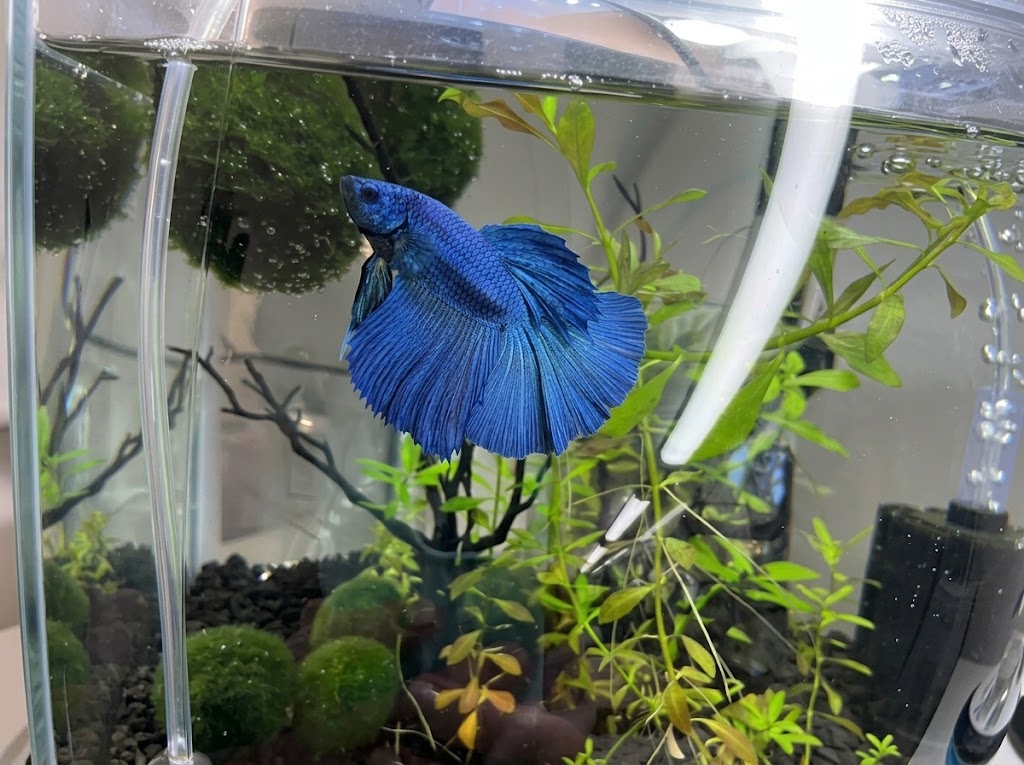
The flowing fins and saturated colors you see in stores are the product of centuries of selective breeding in Thailand, originally for organized fighting matches, which is where the “Siamese fighting fish” name comes from. Wild bettas look far more modest: shorter fins, duller color, built for survival rather than display.
In the wild, Betta splendens lives in shallow rice paddies, drainage ditches, and slow-moving streams across Thailand, often in water that’s warm, still, and genuinely low in oxygen.
To survive there, the species evolved a labyrinth organ, a specialized structure that lets it gulp air directly from the surface instead of relying on gills alone. This single adaptation is the entire reason the bowl myth exists.
A betta CAN survive low-oxygen water that would suffocate most other fish. That’s not the same as saying it should have to.
The Bowl Myth, and Why It Persists
Here’s the part the myth conveniently skips: a rice paddy, even a shallow one, is a genuinely large volume of water connected to more water, with a constant supply of insects, algae, and microorganisms, and no walls concentrating waste in one place.
A one-gallon bowl on a shelf is none of those things. It’s a closed system where ammonia from waste and uneaten food builds up fast, with no filtration to process it and often no heater to keep temperature stable.
The math is simple once you see it: smaller volumes of water swing faster and harder. A missed feeding, a slightly overfed portion, a few days without a water change, all of it hits a one-gallon bowl far harder than it hits a five-gallon tank.
Counterintuitively, a bigger tank is genuinely easier to keep stable, not harder, which is the opposite of what the bowl marketing implies. A betta can technically survive in poor housing for a surprisingly long time. Surviving and thriving are different standards, and this guide is written for people who want the second one.
What a Betta Actually Needs
Five gallons is the realistic minimum for a single betta, and it’s the size where the tank starts working with you instead of against you. A well-equipped starter kit removes a lot of the guesswork for a first setup.
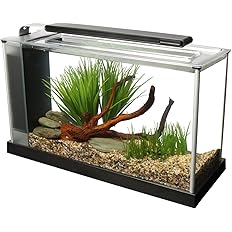
The Fluval SPEC Freshwater Kit bundles LED lighting and three-stage filtration into a compact 2.6-gallon footprint, a good option if space is genuinely limited, though sizing up to 5 gallons or more whenever you can will make ongoing care noticeably easier.
A lid is not optional. Bettas jump, often when startled by something as simple as a loud noise or a sudden reflection, and an open tank is a genuine, common way to lose one. Leave the water surface itself unobstructed, though, since your betta needs regular access to gulp air at the top using that labyrinth organ covered above.
FROM AMAZON.COM
Fluval SPEC Aquarium Kit, 5-Gallon
Compact all-in-one kit with powerful LED lighting and a 3-stage filtration system. A clean, modern setup for betta fish or small freshwater species.
Buy on Amazon.comAs an Amazon Associate, we earn from qualifying purchases. Happy Pet Zone may earn a commission when you click through to Amazon.com, at no extra cost to you.
Filtration: Gentle Is the Whole Game
Bettas are not strong swimmers, and their long, heavy fins make a powerful current exhausting rather than just inconvenient.
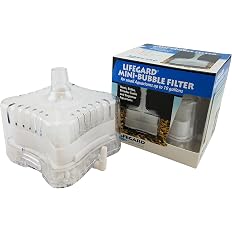
If your aquarium doesn’t come with a complete setup, the Lifegard Aquatics Mini-Bubble Filter is a simple option that provides biological filtration with gentle water movement.
If you’re using a standard filter with stronger output, you can soften the current by adding a sponge to the outflow or redirecting it against the glass.
FROM AMAZON.COM
Lifegard Aquatics Mini-Bubble Filter — Up to 10 Gallon
Compact sponge-based bubble filter for nano and small tanks. Gentle flow makes it safe for fry, shrimp, and bettas while providing reliable biological filtration.
Buy on Amazon.comAs an Amazon Associate, we earn from qualifying purchases. Happy Pet Zone may earn a commission when you click through to Amazon.com, at no extra cost to you.
Heat: Non-Negotiable for a Tropical Fish
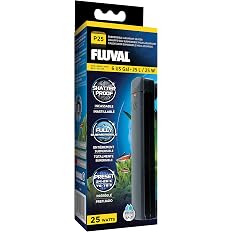
Room temperature is not betta temperature. Keep the water steady between 76 and 82 degrees F using a small, adjustable heater with a built-in thermostat, and verify the reading with an independent thermometer rather than trusting the heater’s display alone. Our heaters and thermometers guide covers sizing a heater correctly for a small tank, where oversizing is a real risk.
FROM AMAZON.COM
Fluval P25 Submersible Aquarium Heater
Compact 25W submersible heater with precise temperature control and an auto-shutoff safety feature. Ideal for nano and small freshwater tanks up to 6 gallons.
Buy on Amazon.comAs an Amazon Associate, we earn from qualifying purchases. Happy Pet Zone may earn a commission when you click through to Amazon.com, at no extra cost to you.
Water Parameters and Cycling
Bettas do best in slightly acidic to neutral water, roughly 6.5 to 7.5 pH, with ammonia and nitrite both at zero and nitrate kept low through regular water changes. The underlying biology, the nitrogen cycle that converts toxic waste into safer compounds, works exactly the same way it does in any other freshwater tank, covered in full in our water chemistry guide.
FROM AMAZON.COM
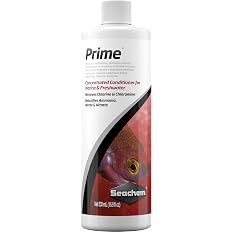
Seachem Prime 500 mL / 17 fl. oz.
Concentrated water conditioner that removes chlorine, chloramine, and detoxifies ammonia and nitrite. A staple product for every freshwater and saltwater tank.
Buy on Amazon.comAs an Amazon Associate, we earn from qualifying purchases. Happy Pet Zone may earn a commission when you click through to Amazon.com, at no extra cost to you.
Cycle your tank before adding your betta whenever possible, giving beneficial bacteria time to establish. A bacterial starter like Seachem Stability can help establish and support the aquarium’s biological filtration, though testing before you trust it is still the safer habit. Always treat tap water with a dechlorinator like Seachem Prime before it touches your tank, since chlorine and chloramine are both harmful to your betta and can damage the beneficial bacteria you’re trying to establish.

FROM AMAZON.COM
Seachem Stability 500 mL / 17 fl. oz.
Blend of aerobic and anaerobic bacteria that establishes and stabilizes the nitrogen cycle fast. Safe for new tanks and after water changes or filter replacements.
Buy on Amazon.comAs an Amazon Associate, we earn from qualifying purchases. Happy Pet Zone may earn a commission when you click through to Amazon.com, at no extra cost to you.
Feeding Your Betta Correctly
This is a spot where good intentions go wrong constantly. Bettas are carnivores built to eat insects and larvae off the water’s surface in the wild, and they need a genuinely protein-rich diet to match. Generic flakes formulated for other species, or food built around plant matter, simply doesn’t meet that need long-term, no matter how eagerly your betta eats it.
Look specifically for pellets labeled for bettas, with a fish meal, shrimp, or insect-based protein listed first on the ingredient panel. Aqueon Nutrinsect Betta Pellets is a solid example, built around insect-based protein instead of fillers, closer to what a betta actually eats in the wild than a generic tropical flake.
Feed 2 to 4 small pellets once or twice a day, only what your betta finishes in a couple of minutes. Their stomach is roughly the size of their eye, smaller than it looks, and overfeeding is one of the most common causes of bloating and constipation in this species. Freeze-dried or frozen bloodworms and brine shrimp make an excellent occasional treat on top of a pellet-based routine.
Building a Habitat, Not Just a Tank
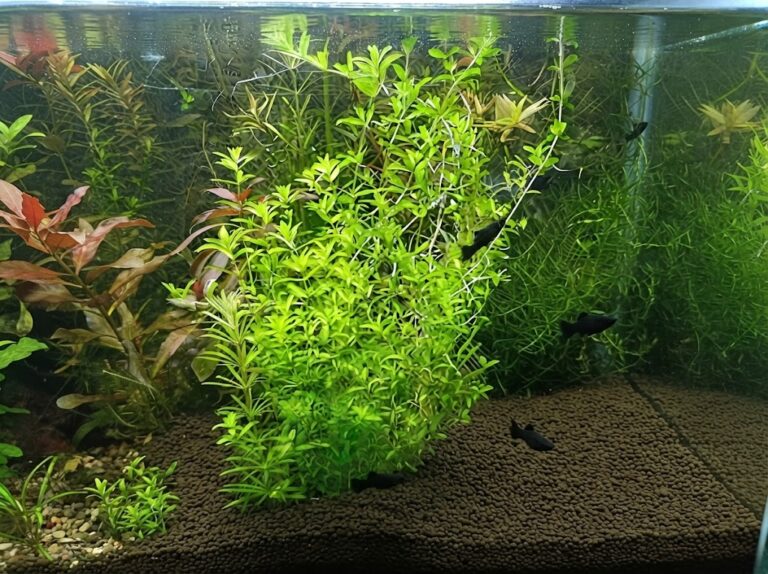
Plants and hiding spots aren’t decoration, they’re a direct answer to what a betta’s wild habitat actually looks like: dense, cluttered, full of places to retreat. Live plants like Java fern or Anubias tolerate low light and add real water-quality benefits alongside the security they provide. If you go with artificial plants, choose silk over hard plastic, and run the “pantyhose test”: drag a piece of pantyhose across the leaf or edge, and if it snags, it will snag your betta’s fins too.
Give your betta a consistent day and night light cycle rather than constant illumination, and keep the tank out of direct sunlight, which spikes both temperature and algae growth fast in a small volume of water.
Bringing Your Betta Home: Acclimation Matters
The trip from store to tank is more stressful on a betta than most new owners realize. Float the sealed bag in your tank for about 15 minutes to match temperature, then gradually add small amounts of your tank water to the bag every few minutes over the next 20 to 30 minutes before releasing your betta.
This slow introduction gives it time to adjust to your water’s temperature and chemistry instead of being dropped into an abrupt change that can trigger real shock.
Don’t be surprised if your new betta hides or refuses food for the first day or two. That’s a normal stress response to a new environment, not a sign something is wrong, and most settle in within the first week once the tank starts feeling familiar.
Common Health Problems: The Short Version
Most betta health problems trace back to one of two root causes: unstable water quality or physical damage to those long, delicate fins. Fin rot, a bacterial or fungal infection that eats away at fin tissue leaving ragged, sometimes discolored edges, is by far the most common issue, and it’s almost always tied to poor water conditions rather than bad luck.
Ich shows up as small white spots across the body, velvet gives the skin a fine gold or rust-colored dust, and dropsy, a much more serious condition tied to organ failure, causes visible bloating and scales that stand out from the body like a pinecone.
Fin and tail damage specifically deserves its own deeper look, since different tail types are prone to different problems and the treatment approach isn’t always identical across them. We’ll cover that in a dedicated guide. For now, the single best prevention for nearly everything on this list is the boring answer: stable temperature, clean water, and a tank that isn’t smaller than your fish’s fins.
Choosing a Healthy Betta
A healthy betta swims toward you with curiosity, flares readily when it notices its own reflection or another fish, holds bright, saturated color, and has fins free of tears or ragged edges.
A struggling one sits listless at the bottom of its cup, shows dull or patchy color, breathes heavily, or has fins that look shredded rather than simply long. Buying a visibly sick betta to “rescue” it is a generous impulse, but understand going in that recovery isn’t guaranteed, and it takes real commitment to nurse a fish back from that starting point.
Frequently Asked Questions
Once the basics are solid, the fun part starts: the sheer variety within Betta splendens itself. Tail shape and color pattern are where this fish turns into a genuine collector’s hobby.
Start with our veiltail betta guide, the most common tail type and the one you’re most likely to bring home first, or our halfmoon betta guide if the dramatic full-circle spread is what caught your eye. Our crowntail betta guide covers the spiky, reduced-webbing look and the fin-biting tendency that comes with it, and our plakat betta guide covers the short-finned variety closest to the original wild and fighting-fish form.
If you want the halfmoon’s full flare without the fin-health tradeoffs, our halfmoon plakat (HMPK) guide covers the hybrid breeders created to solve exactly that. And if the dramatic double-finned look caught your eye, our double tail betta guide covers the honest genetic tradeoff behind that trait before you buy one. Between these six guides, you’ve got the full picture of every major tail type in the trade today.
We’re also working on dedicated guides to the color and pattern genetics behind the wildest-looking bettas out there, mustard gas, koi, dragon scale, and more, which will link here as they go live.