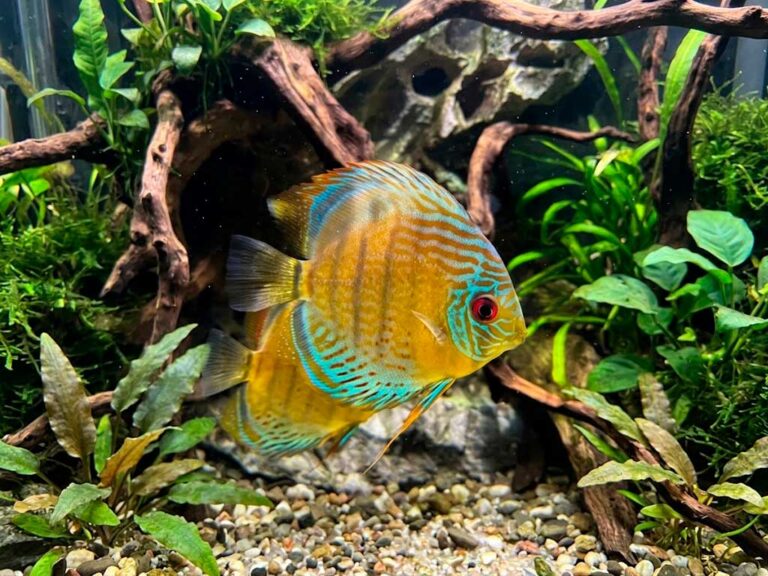
Neon Tetra Care: Tank Size, Diet & Tank Mates
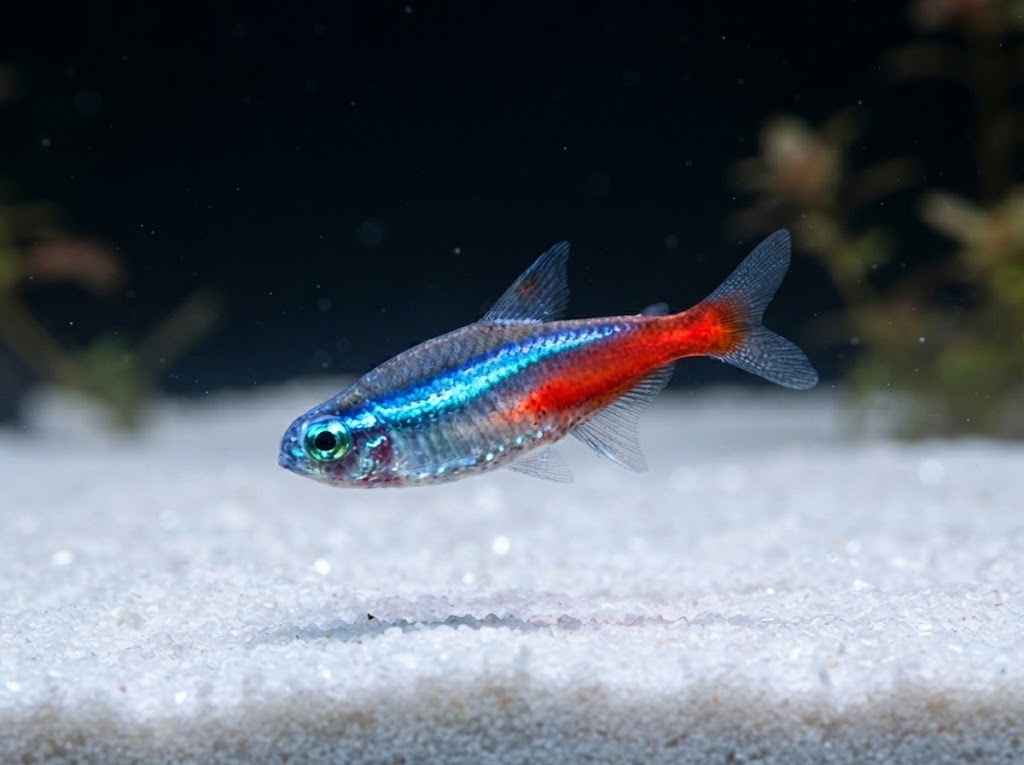
The neon tetra (Paracheirodon innesi) is a small, peaceful freshwater fish known for its bright blue stripe and red coloring. It is a popular choice for community aquariums, but proper neon tetra care requires stable water conditions, a suitable school, and compatible tank mates.
Although these fish are relatively easy to keep in an established aquarium, they can struggle in newly set-up tanks or with larger fish that see them as prey.
For a healthy school, provide a fully cycled aquarium, gentle filtration, plants or other cover, and a varied diet. A 15–20 gallon aquarium offers useful swimming space for a group and gives you more flexibility if you plan to keep other peaceful fish.
Neon Tetra Quick Facts
| Attribute | Details |
|---|---|
| Common name | Neon Tetra |
| Scientific name | Paracheirodon innesi |
| Adult size | About 1.2 inches (3 cm) standard length |
| Minimum tank size | Around 10 US gallons for a small school; larger is preferable |
| Recommended group | At least 6; 10 or more is often better |
| Temperature | 70–77°F (21–25°C) |
| pH | Around 6.0–7.0 as a practical target |
| Water hardness | Soft to moderately hard water |
| Temperament | Peaceful and social |
| Swimming level | Middle of the aquarium |
| Diet | Omnivore |
| Lifespan | Often around 5 years or longer with good care |
These values are practical guidelines rather than rigid limits. Neon tetras are associated with soft, acidic habitats, but captive-bred fish may adapt to a reasonable range when acclimated carefully. Stable conditions are more important than repeatedly adjusting the water to achieve an exact number.
What Is a Neon Tetra?
The neon tetra is a small characin native to South American freshwater habitats, including parts of Brazil, Colombia, and Peru. In the wild, it inhabits streams and tributaries associated with the Amazon basin. Some of these environments have soft, acidic water influenced by decomposing leaves and other organic material.
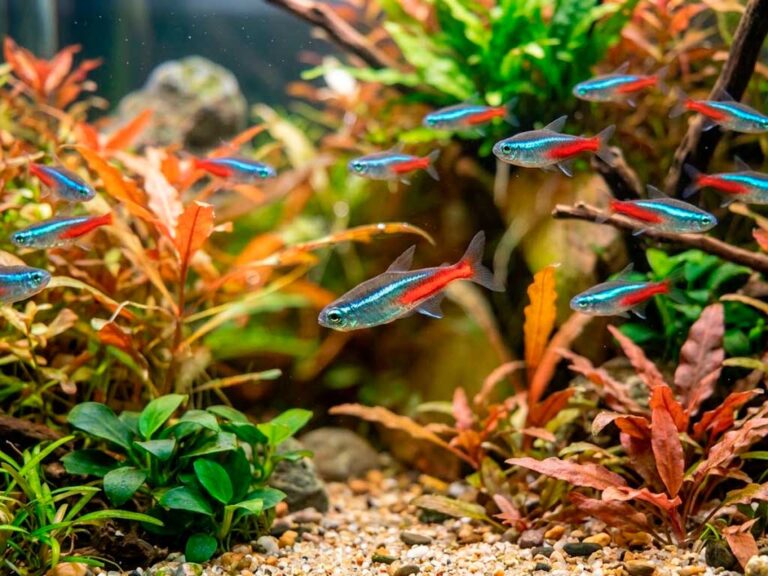
Its appearance makes it easy to recognize. A blue-green iridescent stripe runs along the body, while a red stripe extends from the middle of the body toward the tail. The cardinal tetra looks similar, but its red stripe generally extends farther forward toward the head.
Neon tetras are social fish that feel more secure when kept in a group of their own species. A single fish or a pair may survive for a time, but it does not provide the social environment these fish need. Keep at least six together, and consider a larger school if your aquarium has sufficient space and filtration.
Neon Tetra Tank Size and Setup
A 10-gallon aquarium is often cited as a minimum for a small school of neon tetras. However, a 15–20 gallon tank offers more swimming space and greater flexibility, especially if you intend to create a community aquarium.
The tank’s footprint matters as well as its total volume. Neon tetras swim in the middle of the water column, so a longer aquarium is generally more useful than a tall, narrow one.
Essential Aquarium Setup
- Biological filtration: Use a properly cycled filter to process fish waste and help maintain safe water conditions.
- Live plants: Java fern, Java moss, Anubias, and other suitable plants provide cover and resting areas.
- Open swimming space: Leave room for the school to move together without obstruction.
- Gentle water movement: Choose filtration that keeps the water clean without creating an excessively strong current.
- Moderate lighting: Plants and shaded areas help create a comfortable environment.
- Secure lid: A well-fitting cover helps prevent fish from jumping out.
A natural-looking aquarium can include driftwood, smooth stones, and leaf litter, provided these materials are suitable for aquarium use. These additions are optional. Avoid introducing decorations or untreated materials that could release harmful substances or cause sudden changes in water chemistry.
Before adding neon tetras, make sure the aquarium is fully cycled. The filter should have an established population of beneficial bacteria, and reliable tests should show zero ammonia and zero nitrite.
Neon Tetra Water Parameters
Neon tetras generally do well in stable, clean water. Although they are associated with soft and acidic conditions in nature, sudden changes in temperature, pH, or hardness can be stressful even when the new readings fall within a commonly recommended range.
| Water parameter | Practical guidance |
|---|---|
| Temperature | 70–77°F (21–25°C) |
| pH | Around 6.0–7.0 |
| Ammonia | 0 ppm |
| Nitrite | 0 ppm |
| Nitrate | Keep low through maintenance and water changes |
| Water hardness | Soft to moderately hard water |
| Water changes | Often 20–30% weekly, adjusted to test results and stocking |
Use a reliable aquarium thermometer and water test kit. Clear water is not necessarily safe water, because ammonia and nitrite are invisible.
When changing water, use a suitable water conditioner if needed and try to match the temperature of the aquarium. Avoid large, sudden changes in pH and hardness. If your tap water is very hard or alkaline, test it before buying the fish and plan a consistent water-management approach.
What Do Neon Tetras Eat?
Neon tetras are omnivores. In the wild, they feed on small invertebrates and other tiny food items. In an aquarium, they usually accept quality flakes, micro pellets, and suitably sized frozen or live foods.
Suitable Foods for Neon Tetras
- High-quality tropical flakes, crushed into small pieces.
- Micro pellets small enough for their mouths.
- Frozen or live daphnia.
- Baby brine shrimp.
- Small cyclops and other appropriately sized foods.
Offer small portions once or twice daily, depending on the food and the condition of the fish. Feed only what the group can consume within a few minutes, and remove uneaten food where practical.
A varied diet helps provide a broader range of nutrients. Watch the whole school during feeding to make sure smaller or more timid fish get enough food. Excess food can break down and increase waste, so avoid feeding more simply because the fish gather eagerly at the front of the aquarium.
Six Compatible Neon Tetra Tank Mates
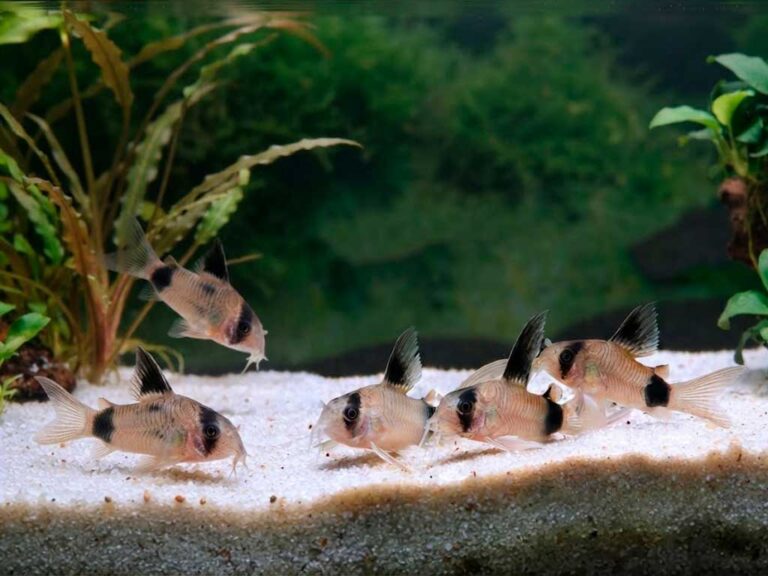
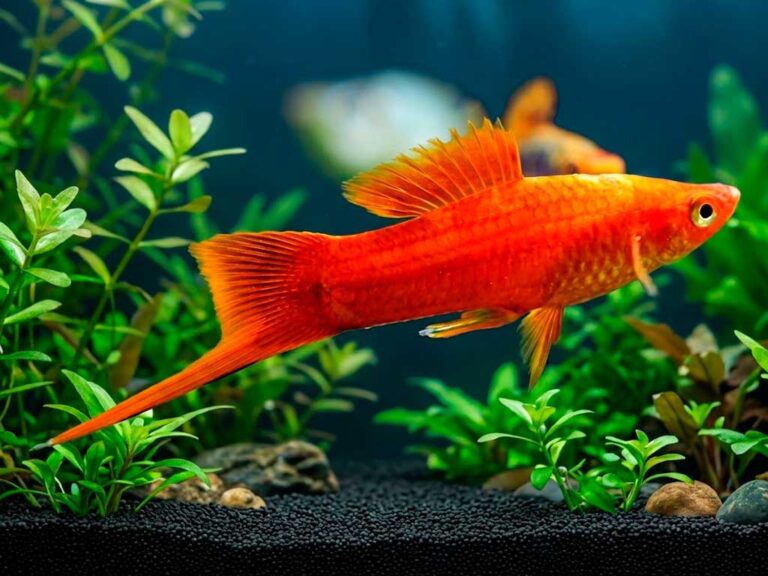
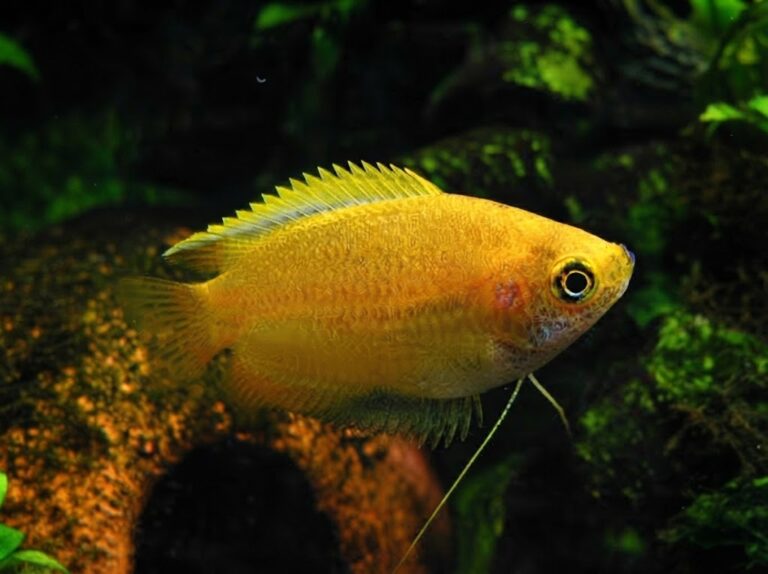
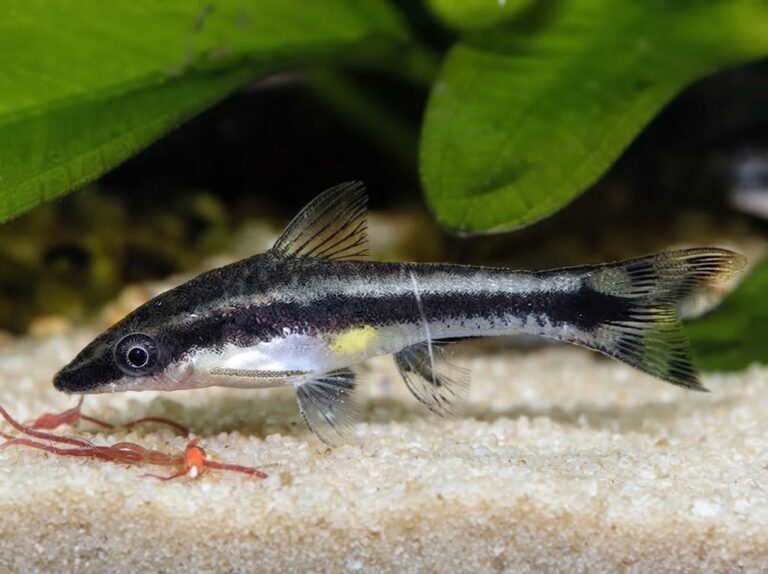
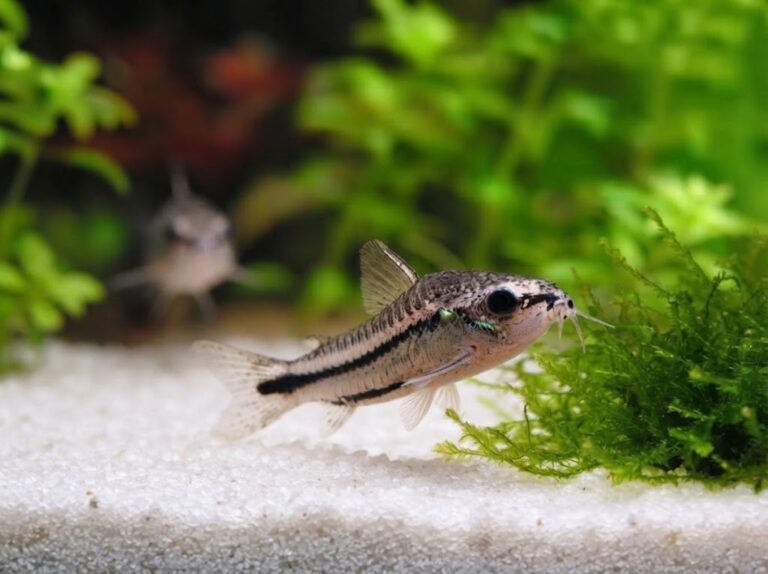
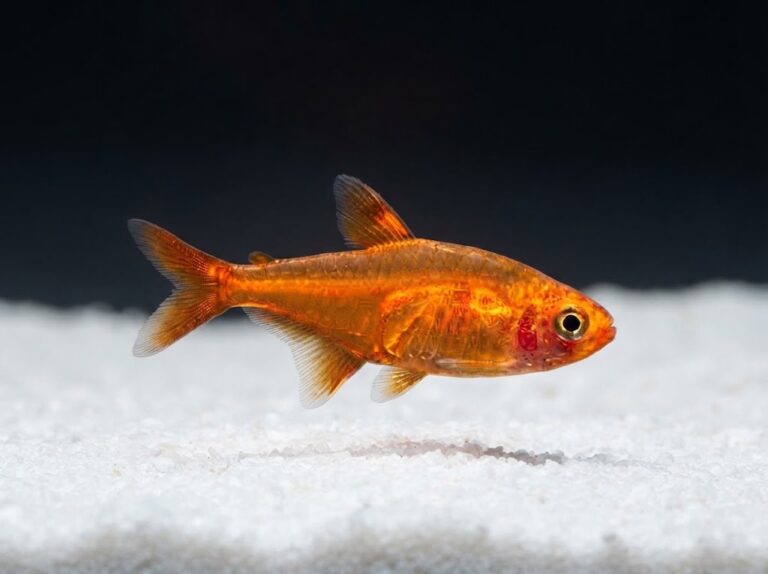
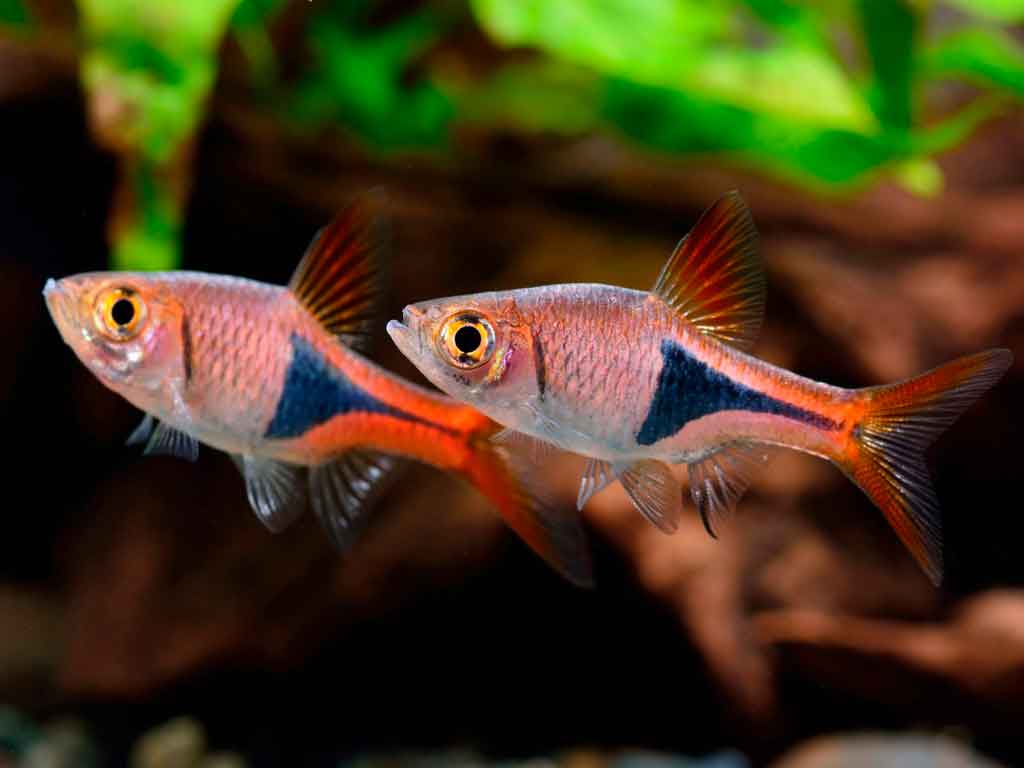
Neon tetras can live with peaceful fish that are small enough not to view them as prey and that share similar water requirements. The following six species are potential tank mates for a carefully planned community aquarium.
Compatibility is never guaranteed. Tank size, adult fish size, individual temperament, water parameters, and feeding needs all matter. Keep each schooling species in an appropriate group of its own.
Fish to Avoid Keeping With Neon Tetras
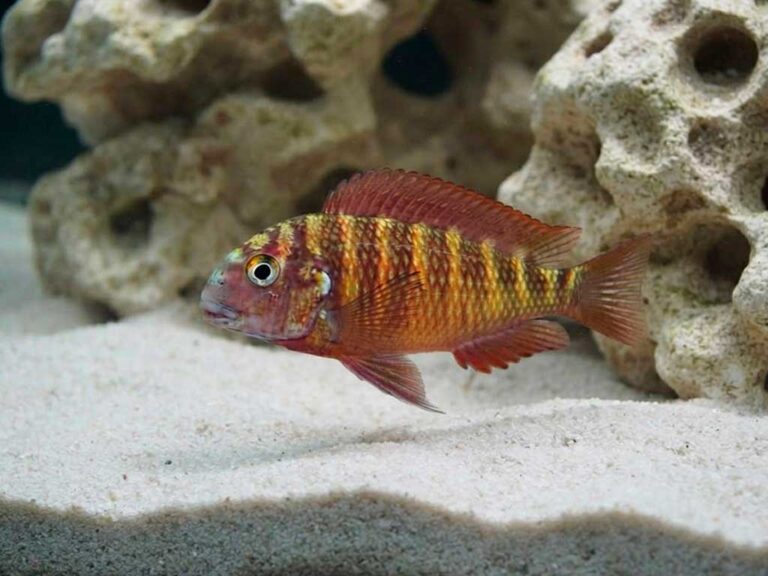
Avoid large predatory fish that can swallow neon tetras, as well as aggressive species likely to chase or injure them. Large cichlids, including oscars, are unsuitable companions. Angelfish may also eat smaller fish as they grow, so they are not a dependable choice for a neon tetra aquarium.
Some fin-nipping fish can stress neon tetras even if they cannot swallow them. Before combining species, compare adult size, temperament, temperature, water chemistry, and social requirements. Similar water parameters alone do not guarantee compatibility.
Neon Tetra Behavior
Neon tetras are peaceful shoaling fish that usually occupy the middle water column. In a suitable group, they may swim together more confidently and spend less time hiding. A group of six is a practical minimum, while a school of ten or more often creates a more natural-looking display when the aquarium has enough room.
A planted tank with shaded areas gives neon tetras places to retreat. Avoid repeatedly startling them by tapping the glass, abruptly switching on bright lights, or frequently rearranging their environment.
Breeding Neon Tetras
Neon tetras can be bred in captivity, but successful breeding requires more preparation than simply keeping a healthy community aquarium. They scatter eggs rather than guarding them like many cichlids, and adults may eat the eggs.
A dedicated breeding setup is often used to provide suitable water conditions and protect the eggs. Fine-leaved plants or an appropriate spawning medium can help, while subdued lighting may be useful because the eggs are sensitive to light.
After spawning, the eggs need protection from adult fish. Raising the fry requires very small foods at first and careful attention to water quality. If breeding is your goal, research the requirements of a dedicated breeding tank before attempting it in a community aquarium.
Common Neon Tetra Health Problems
When neon tetras appear unwell, begin by checking water quality and observing their behavior. Stress from poor water conditions, transport, unsuitable tank mates, and inadequate acclimation can contribute to health problems.
| Warning sign | What to check |
|---|---|
| Faded coloration | Stress, water quality, lighting changes, or illness |
| Rapid breathing | Temperature, oxygenation, ammonia, nitrite, and possible disease |
| Loss of appetite | Water conditions, stress, food size, and other symptoms |
| White spots | Possible ich or another condition; spots alone do not confirm a diagnosis |
| Persistent pale patches or muscle changes | Possible serious disease, injury, or infection |
| Fish hiding or separating from the school | Bullying, poor conditions, stress, or illness |
Neon tetra disease is a serious condition associated with a microsporidian parasite. However, pale patches, loss of color, and unusual swimming are not enough to diagnose it. Other diseases and water-quality problems can cause similar signs.
If a fish becomes ill, test the water promptly, check oxygenation and temperature, and consider moving the fish to an appropriate quarantine aquarium if this can be done without causing additional stress.
Do not medicate the whole aquarium indiscriminately. Persistent symptoms, unexplained deaths, or suspected contagious disease warrant advice from a qualified aquatic veterinarian or fish-health professional.
Health note: This guide provides general aquarium-care information and cannot diagnose fish disease. Correct identification matters because different conditions can look similar and require different responses.
Neon Tetra Care Mistakes to Avoid
Adding fish before the aquarium is cycled. A tank can look ready long before its biological filtration is mature. Confirm that ammonia and nitrite remain at zero before introducing the school.
- Keeping too few neon tetras. A single fish or a pair does not provide the social conditions this species needs. Plan the school size before purchasing the fish.
- Choosing tank mates by appearance alone. Similar colors do not mean similar care requirements. Compare adult size, temperament, temperature, and feeding behavior.
- Making sudden water changes. Large shifts in temperature or water chemistry can stress fish. Prepare replacement water carefully and monitor parameters.
- Overfeeding. Excess food breaks down and increases waste. Small portions and regular observation help keep the aquarium stable.
- Ignoring signs of illness. Watch for abnormal swimming, visible lesions, severe thinness, or fish that remain isolated. Quarantine new arrivals when possible to reduce the risk of introducing disease to an established aquarium.