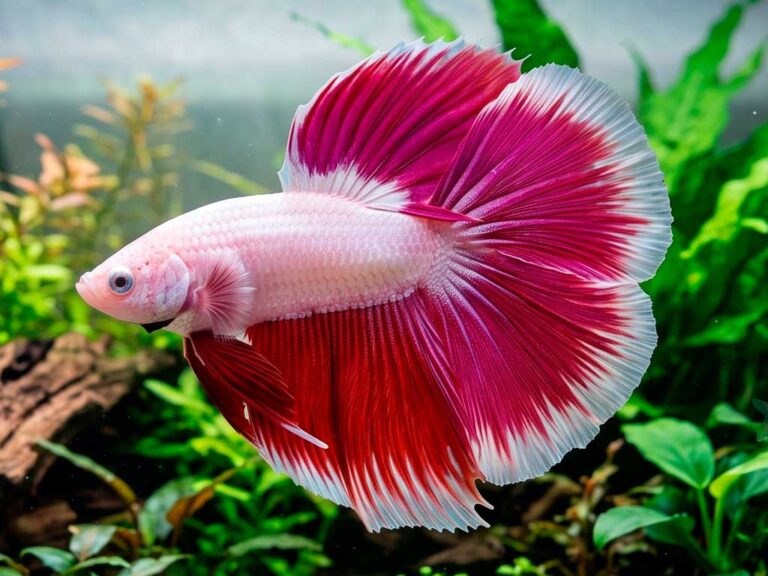
Guppy Care Guide: Tank Size, Water Parameters, and Compatible Fish
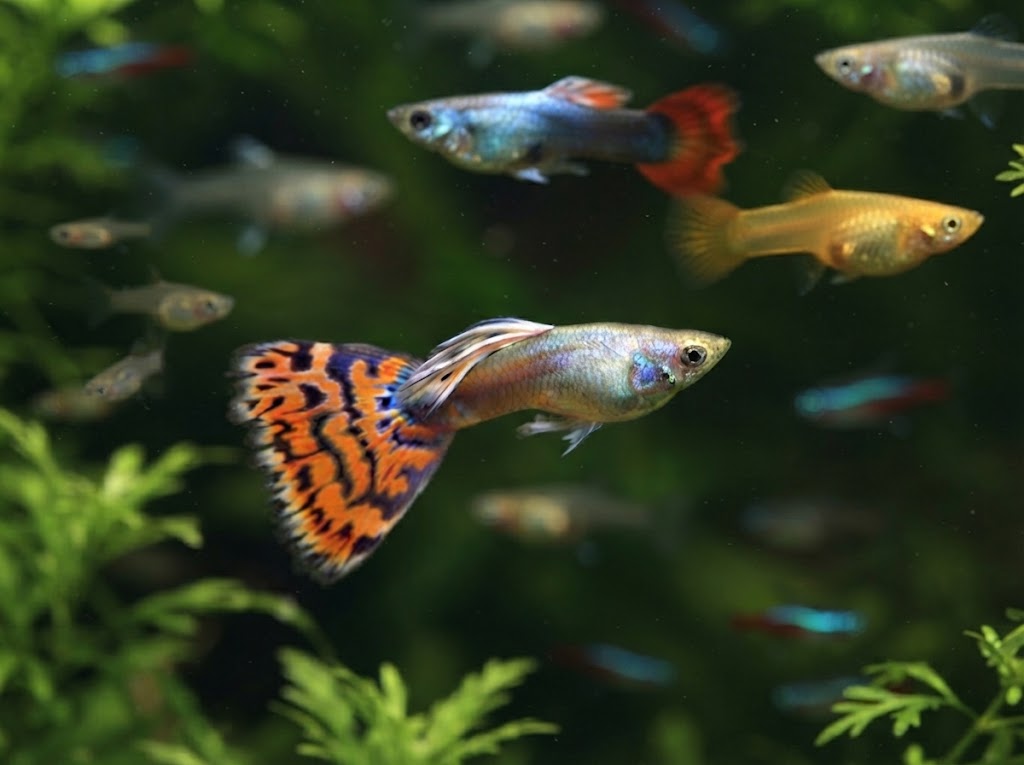
The Guppy (Poecilia reticulata) is small, colorful, active, and far more demanding of stable water than its beginner-friendly reputation suggests.
Guppy care works best in a planted, filtered aquarium with warm water, a sensible male-to-female ratio, and a plan for fry before the first babies arrive.
The numbers don’t lie: most Guppy losses come from overcrowding, unstable temperature, or a tank that was never cycled properly. Start with a mature 10-gallon aquarium for a small same-sex group, or use 20 gallons if you intend to keep males and females together.
Guppy Care at a Glance
| Care factor | Target |
| Scientific name | Poecilia reticulata |
| Adult size | 1.5–2.5 inches |
| Lifespan | 2–3 years |
| Temperament | Peaceful and active |
| Minimum tank size | 10 gallons for a small group |
| Recommended community tank | 20 gallons or larger |
| Temperature | 74–80°F |
| pH | 7.0–8.0 |
| General hardness | 8–20 dGH |
| Diet | Omnivore |
| Swimming level | Upper and middle water column |
| Social needs | Keep in groups |
| Breeding type | Livebearer |
What Makes Guppies Different?
A Guppy is a livebearing fish, meaning females give birth to fully formed, free-swimming fry instead of laying eggs. That single detail changes how you should stock the aquarium.
A mixed Guppy group can grow very quickly. One female may give birth every few weeks, and she can retain sperm after a previous mating. In practice, an aquarium that looked lightly stocked in January can feel crowded before spring.
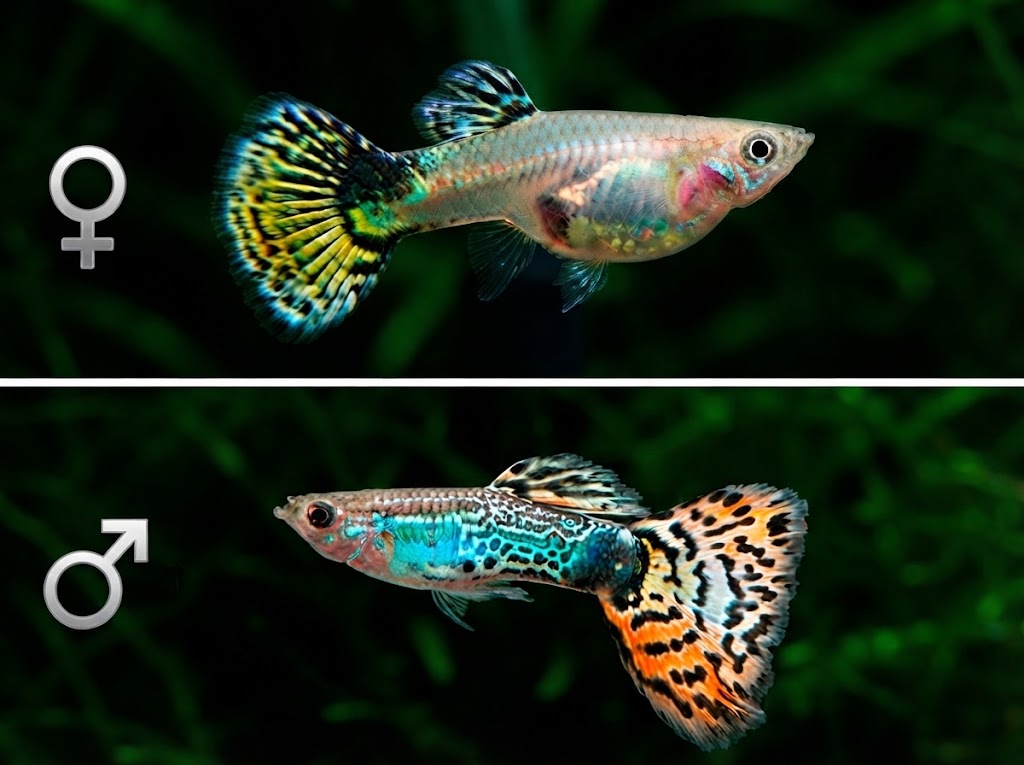
Male Guppies are usually the show fish. Their tails carry the dramatic color, pattern, and fin shape that make the species so recognizable. Females tend to be larger, rounder, and more understated. Their calmer appearance does not make them less important; females need dense planting and a healthy ratio so they are not constantly chased.
Guppy Tank Size and Setup
A 10-gallon tank is the practical minimum for a small male-only group. It offers enough water volume to avoid rapid swings, but it leaves little room for breeding or additional species.

FROM AMAZON.COM
Tetra 20 Gallon Complete Tropical Fish Tank Kit
Everything included: 20-gallon glass tank with hinged hood, LED light, filter, filter cartridge, and décor. Ready for freshwater fish.
Buy on Amazon.comAs an Amazon Associate, Happy Pet Zone earns from qualifying purchases, at no extra cost to you.
A 20-gallon long aquarium is a much better starting point for a community. The extra horizontal space improves swimming room, makes maintenance easier, and gives you breathing room if fry appear.
| Aquarium element | What works best |
| Filter | Sponge filter or gentle hang-on-back filter |
| Water flow | Mild to moderate |
| Heater | Adjustable heater set to 76–78°F |
| Substrate | Sand, gravel, or planted substrate |
| Plants | Java fern, hornwort, water sprite, Guppy grass, floating plants |
| Lighting | Moderate, based on plant needs |
| Lid | Recommended; Guppies can jump |
Guppies do not need a decorative jungle to survive, but they benefit from one. Floating plants soften the light, give females a break from male attention, and create cover for fry. A bare aquarium may be easier to clean, yet it often produces a more stressful social environment.
Avoid high current. Long-finned strains have to work harder against strong flow, and that can leave them hiding near the filter intake or resting more than usual.
Water Parameters for Guppies
Guppies tolerate a broad range of conditions, but tolerance is not the same as thriving. Stable, moderately hard water usually suits them better than very soft and acidic water.
| Water parameter | Recommended range |
| Temperature | 74–80°F |
| pH | 7.0–8.0 |
| GH | 8–20 dGH |
| KH | 4–12 dKH |
| Ammonia | 0 ppm |
| Nitrite | 0 ppm |
| Nitrate | Below 20 ppm |
Do not chase a perfect pH number if the tank is stable. A Guppy kept at pH 7.4 consistently is generally better off than one exposed to frequent chemical adjustments in pursuit of pH 7.8.
Test ammonia and nitrite whenever the tank is new, after adding fish, or when Guppies begin clamping their fins. Both readings should remain at zero. Nitrate is less immediately dangerous, though it still needs managing with regular water changes.
A 25% weekly water change is a sensible baseline for most Guppy tanks. Heavily stocked or breeding tanks may need more frequent maintenance.
Feeding Guppies
Guppies are omnivores. They will eagerly accept flakes, pellets, frozen foods, live foods, and small portions of vegetable matter. Their enthusiasm can fool new keepers into feeding too much.
Feed once or twice daily, offering only what the fish can eat within about two minutes. Small meals keep waste lower and make it easier to notice a fish that has lost its appetite.
| Food type | Best use |
| Quality micro pellets or flakes | Daily staple |
| Spirulina-based food | Regular plant matter |
| Frozen brine shrimp | Conditioning and variety |
| Daphnia | Digestion and occasional treat |
| Baby brine shrimp | Fry growth |
| Blanched zucchini or peas | Small occasional vegetable portion |
A varied diet improves condition and color, but it will not correct poor water quality. Clean water is still the foundation.
Guppy Behavior and Social Groups
Guppies are peaceful community fish, although males can be relentless toward females. If you keep both sexes, aim for at least two females per male. Three females per male is even easier on the group.
| Group type | Practical recommendation |
| Male-only tank | 5–6 males in a planted 10-gallon or larger |
| Mixed-sex group | One male for every 2–3 females |
| Breeding colony | 20 gallons or larger, with an outlet plan for fry |
| Community tank | 20 gallons or larger |
An all-male aquarium is often the simplest way to enjoy Guppy color without managing fry. Some minor displaying and chasing is normal, especially at feeding time. Torn fins, persistent hiding, or one fish being pushed away from food are not.
Four Compatible Fish for Guppies
Compatibility is about more than temperament. Water chemistry, adult size, tank footprint, feeding style, and fin-nipping risk all matter.
These four species already have their own Happy Pet Zone guides and can work with Guppies when the aquarium is large enough and the water is stable.
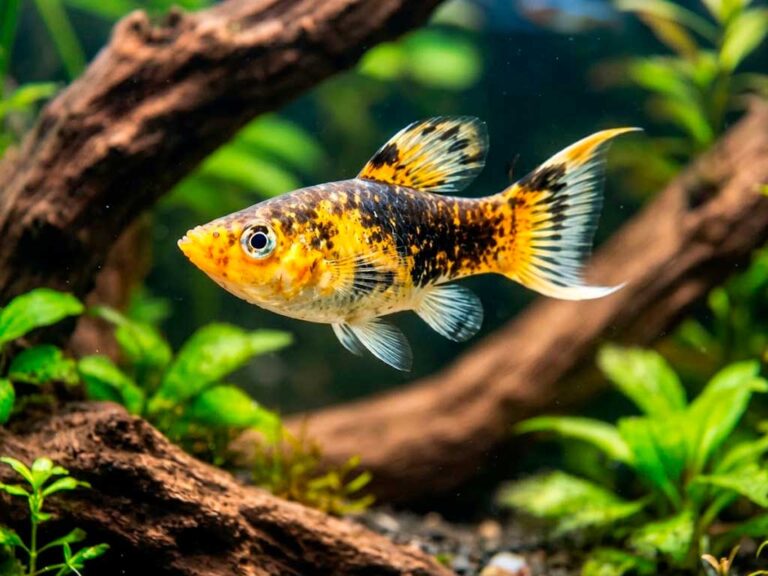
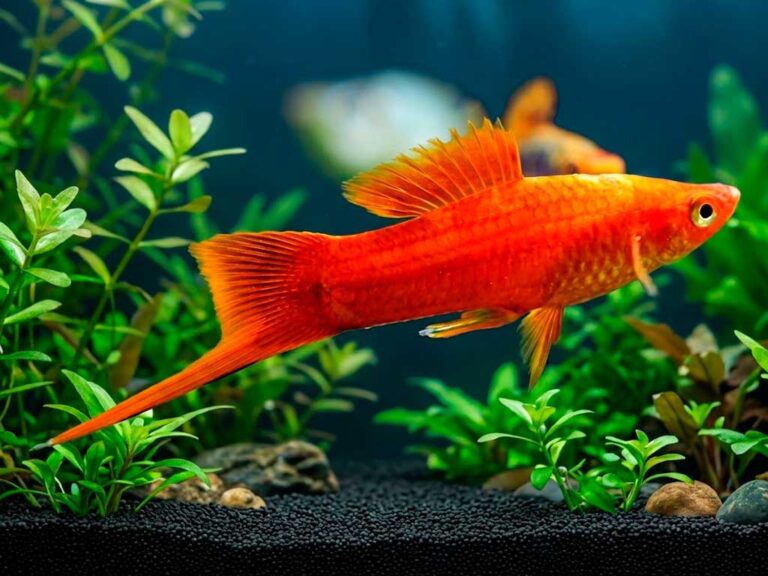
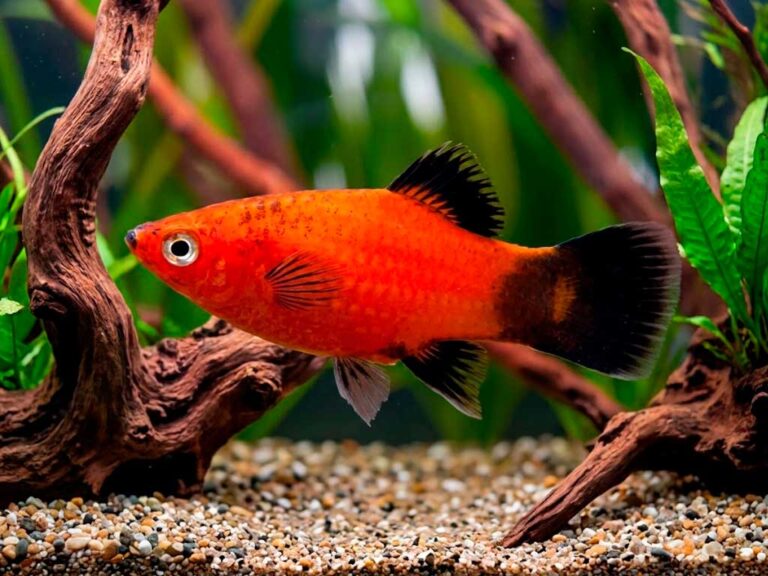
Platies are the easiest match because their care overlaps so closely with Guppies. Mollies and Swordtails need more room, so a 20-gallon tank is the realistic floor for those combinations.
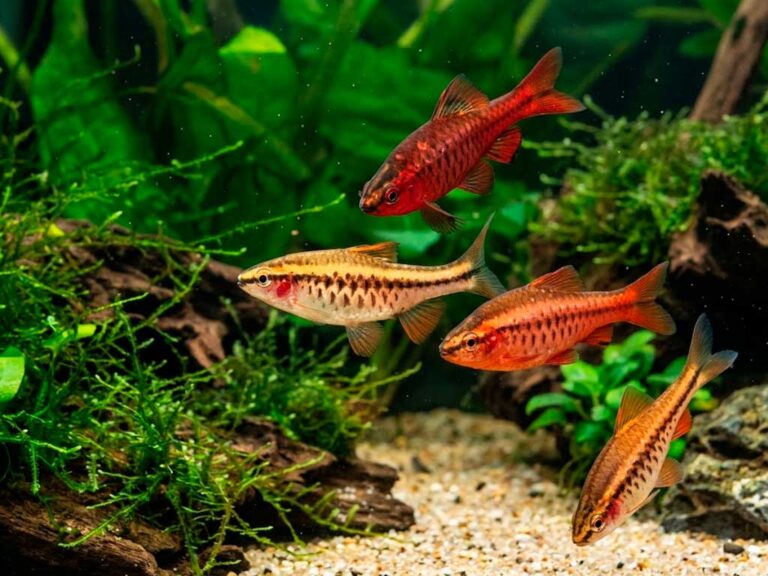
Cherry Barbs are peaceful, but do not use them as an excuse to force a water compromise. Choose captive-bred fish, keep a proper school, and keep the community tank stable rather than trying to push every parameter to an extreme.
Avoid known fin nippers such as Tiger Barbs. Also avoid large cichlids, Angelfish, and predatory fish. A Guppy’s bright tail makes it a target.
Breeding Guppies Without Overcrowding
Guppies can breed before a keeper realizes a female was already pregnant. A gravid female may develop a darker spot near the rear of her abdomen, but this alone is not a reason to isolate her.
Breeding boxes often cause unnecessary stress. A planted aquarium with floating cover is usually the better option if you want some fry to survive naturally.
| Breeding concern | Practical response |
| Too many fry | Keep males only, separate sexes, or arrange homes in advance |
| Female harassment | Maintain at least 2–3 females per male |
| Fry predation | Add dense plants and floating cover |
| Poor fry growth | Feed tiny foods in small, frequent portions |
| Rising nitrate | Increase water changes and reduce stocking |
Here’s what actually matters: do not keep breeding Guppies unless you have space for the adults they will become. Fry are small for a few weeks. Their bioload does not stay small.
Common Guppy Problems
A healthy Guppy is alert, feeds readily, holds its fins open, and swims with purpose. A fish that isolates itself, gasps at the surface, clamps its fins, or rocks in place needs attention.
| Symptom | First thing to check |
| Clamped fins | Ammonia, nitrite, temperature swings |
| Gasping at surface | Oxygen, ammonia, filter function |
| Frayed tail | Fin nipping, water quality, infection |
| Hiding constantly | Aggression, strong current, illness |
| White spots | Quarantine and diagnose before treatment |
| Sudden deaths after purchase | Acclimation, disease, uncycled tank |
Health note: medication should follow a clear diagnosis, especially in a community aquarium. Test the water before treating for disease. Many apparent illnesses begin with ammonia, nitrite, temperature instability, or stress from overcrowding.
Frequently Asked Questions
A Guppy tank succeeds when its numbers stay under control. Start with stable water, test before adding fish, and treat 20 gallons as the sensible community-tank baseline.