Best Saltwater Fish for Beginners: Top 10 Hardy Picks
For decades, the standard advice for a new saltwater tank was “start with damsels.” They’re cheap, colorful, and tough as nails.
They’re also territorial and aggressive, and a lot of species that look charming as juveniles turn into small terrors that attack every new fish you add later. That advice has aged badly, and the good news is you no longer need to follow it.
The marine hobby has quietly gone through a golden era of captive breeding. Fish that used to only be available wild-caught, and were fragile and disease-prone as a result, now come from commercial breeders as noticeably hardier stock.
That shift changes the entire beginner fish conversation. This guide covers what actually makes a fish beginner-friendly, ten solid picks, and a few popular species worth skipping until your tank has some experience under its belt. If you’re still setting up, start with our saltwater aquarium setup guide for beginners first.
Quick answer: Ocellaris clownfish, blue-green chromis, royal gramma, banggai cardinalfish, and neon or watchman gobies are among the most reliable beginner saltwater fish. Look for captive-bred stock wherever possible, since it’s consistently hardier and more disease-resistant than wild-caught fish of the same species, and avoid classic damsels, whose aggression causes more beginner headaches than their hardiness is worth.
What Actually Makes a Fish Beginner-Friendly
Hardiness alone isn’t the whole picture. A genuinely good starter fish checks several boxes at once.
- Tolerant of a new tank’s rougher edges: Early tanks swing more in temperature and water chemistry than mature ones, covered in our water chemistry guide. Good starter fish handle that without falling apart.
- Available captive-bred: Captive-bred fish are consistently hardier and more disease-resistant than wild-caught individuals of the same species, since they never had to survive collection and long-distance shipping stress.
- Peaceful, or at least predictable: A fish that’s merely hardy but aggressive just trades one problem for another once you start adding tankmates.
- Appropriately sized for a first tank: A fish that outgrows a beginner-sized aquarium within a year just sets you up for a bigger problem later.
The Top 10 Best Saltwater Fish for Beginners
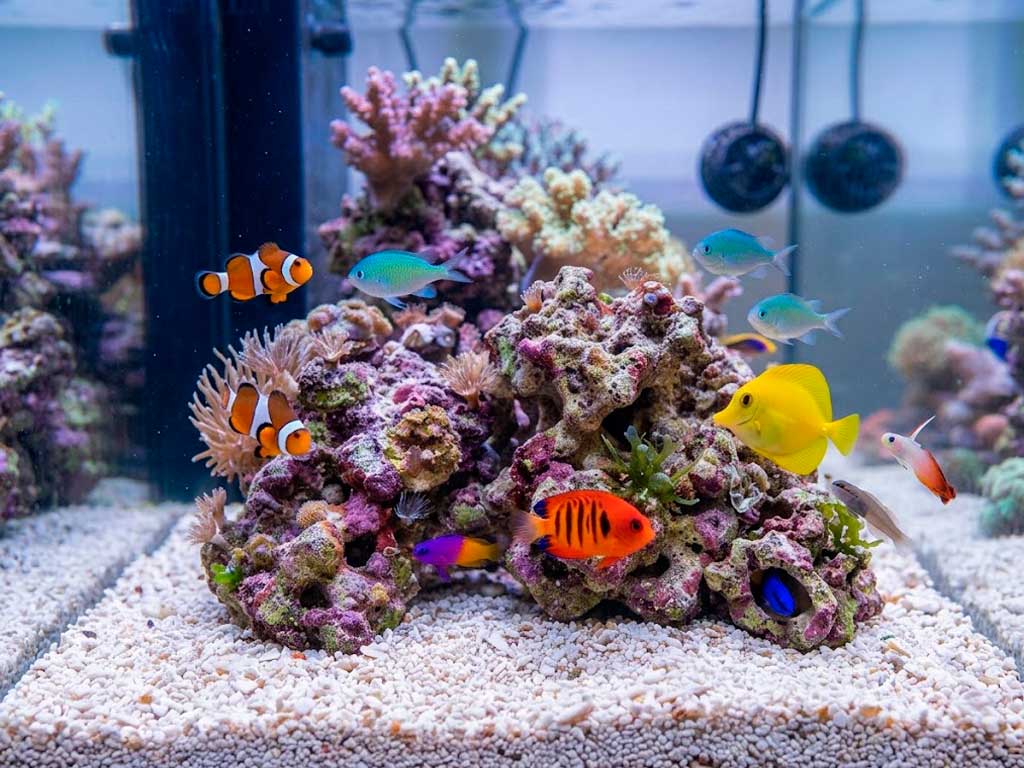
- Ocellaris Clownfish: The iconic starter fish, and for good reason. Captive-bred ocellaris are exceptionally hardy and adaptable. Add two young fish together and they’ll typically pair up naturally, with the more dominant fish becoming female. Stick to a single species and size, since clowns of different species often fight, and avoid adding two mature females together.
- Blue-Green Chromis: A peaceful alternative to the aggressive damsels beginners are so often steered toward, and reef safe toward every other species in the tank. Just know that groups of four to six in a modest tank often thin out over time as a dominance hierarchy forms; a single fish or a genuinely large group in a bigger tank tends to work out better long term.
- Royal Gramma: A genuinely easy, strikingly colored fish that spends its time near caves and overhangs, covered by our live rock and sand guide. They defend a small territory with a bluff display but rarely follow through with real aggression. Just double check you’re buying the real thing, since a more aggressive lookalike is sometimes sold under a similar name.
- Banggai Cardinalfish: A striking spotted and striped fish that’s easily bred in captivity, so there’s no good reason to buy wild-caught stock, which also carries real conservation concerns due to a naturally limited habitat. Give them an overhang to retreat to if reef lighting feels too bright.
- Yellow Watchman Goby: Hardy, peaceful, and endlessly entertaining once paired with a pistol shrimp, which digs a shared burrow while the goby stands guard. Add the shrimp only after your tank has been stable for a few months, not on day one.
- Neon Goby: A tiny, hardy, captive-bred staple of the hobby. Just make sure any overflow openings in your tank are too small for them to swim into, since their small size makes this a real risk.
- Captive-Bred Fang Blenny: Free-swimming blennies that cruise the water column rather than sitting on rock. They carry a venom gland for defense but stay peaceful toward tankmates, and captive-bred individuals handle new-tank conditions well.
- Lawnmower Blenny: A genuinely useful algae grazer that spends its day picking at film algae on rock and glass, doing real cleanup work most fish on this list won’t touch. Just introduce it to an established tank, not a brand-new one, since it can run out of food faster than you’d expect.
- Diamond Watchman Goby: A sand-sifting goby that constantly moves sand through its gills, helping keep the sand bed aerated and detritus-free while it forages. Give it a fine, sugar-sized sand bed to work with.
- Six Line Wrasse: Hardy, active, and useful for picking off small pests like flatworms. Add it later rather than first, since its semi-territorial streak can make it harder for shyer fish to settle in afterward.
Fish to Avoid as a Beginner
- Most damsels: Hardy, yes, but their aggression toward every fish added afterward causes more problems than their toughness solves, especially in smaller first tanks.
- Mandarin dragonets: Beautiful, but they feed almost exclusively on live copepods and typically starve in a tank that hasn’t built up a mature pod population over many months.
- Tangs in small tanks: Many tangs need significant swimming room and stable, low-nitrate water to avoid disease, conditions a brand-new small tank usually can’t offer yet.
- Anthias: Stunning in a display, but many species are picky eaters that need multiple small feedings a day and don’t tolerate the parameter swings of a young tank well.
Stocking Order and Pacing
Once your tank has fully cycled, confirmed by ammonia and nitrite both reading zero, add one or two fish at a time rather than stocking everything at once. Wait several weeks between additions to confirm your tank stays stable with the added bioload before introducing more.
Every new fish should also spend time in a separate quarantine tank first, the same practice covered in our setup guide, since even hardy captive-bred fish can carry parasites picked up after leaving the breeder.
Generally peaceful fish like gobies, blennies, and royal grammas do well added early. Anything with a semi-territorial streak, like a six line wrasse, settles in more smoothly if it’s not the first or only fish claiming territory in an empty tank.
How to Choose a Healthy Fish at the Store
A hardy species can still be a poor individual choice if it is already stressed or sick before it ever reaches your tank. Spend a few minutes actually watching a fish before buying it, not just admiring its color.
- Watch it breathe. Rapid, labored, or uneven gill movement often signals stress, parasites, or poor water quality at the store.
- Check the fins. Clamped fins held tightly against the body, rather than spread naturally, are one of the most reliable early signs something is wrong.
- Ask to see it eat. A fish that readily takes food in front of you is a strong sign it has already adjusted to captivity and store conditions.
- Look at the whole tank, not just the fish. If other fish in the same system look sick or there are visible dead animals, skip that entire tank, even for a fish that looks fine, since it may already be exposed.
Building a Beginner-Friendly Community
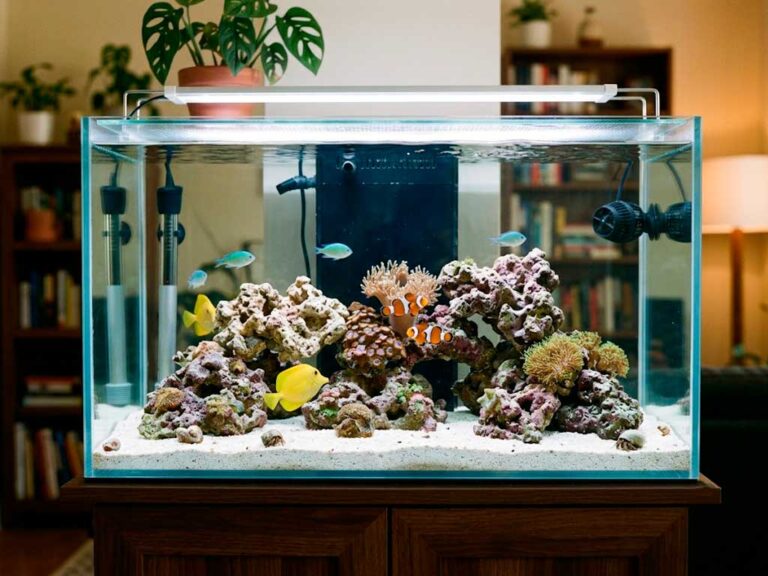
Rather than picking fish one at a time with no plan, it helps to sketch out a small community before you buy anything. A classic, low-drama beginner combination looks something like this: a pair of ocellaris clownfish for the display, a small group of blue-green chromis for movement and color, a royal gramma or goby to use the lower and mid-level rock structure, and a lawnmower blenny to help with algae.
Every fish in that list is captive-bred-friendly, peaceful toward the others, and sized appropriately for a first tank in the 30 to 40 gallon range.

FROM AMAZON.COM
Tetra 55 Gallon Glass Aquarium, Rectangular Fish Tank
48″W × 13″D × 20″H. Tank only — hood, filter, heater, lighting, and accessories sold separately.
Buy on Amazon.comAs an Amazon Associate, Happy Pet Zone earns from qualifying purchases, at no extra cost to you.
Add the more peaceful, retiring species first, gobies, blennies, and the royal gramma, so they can claim a corner of the tank without competition. Add the clownfish and chromis a little later, since they tend to settle in confidently regardless of what is already established. Save anything with a semi-territorial streak, like a six line wrasse, for last.
Frequently Asked Questions
The best beginner fish list looks completely different than it did a decade ago, mostly because captive breeding changed what hardy actually means. Build your stocking list around captive-bred, genuinely peaceful species, pace your additions, and skip the fish that only look easy on paper. Your tank, and the fish already in it, will thank you.