Six Line Wrasse Care Guide: Diet, Behavior & Compatibility
Our best saltwater fish for beginners guide recommends adding the six line wrasse later rather than first, and that single piece of stocking order advice matters more for this fish than for almost anything else on the list.
Small, gorgeous, and a genuinely effective pest hunter, it also has a well-earned reputation for turning a peaceful community tank into a stressful one if you get the sequence wrong.
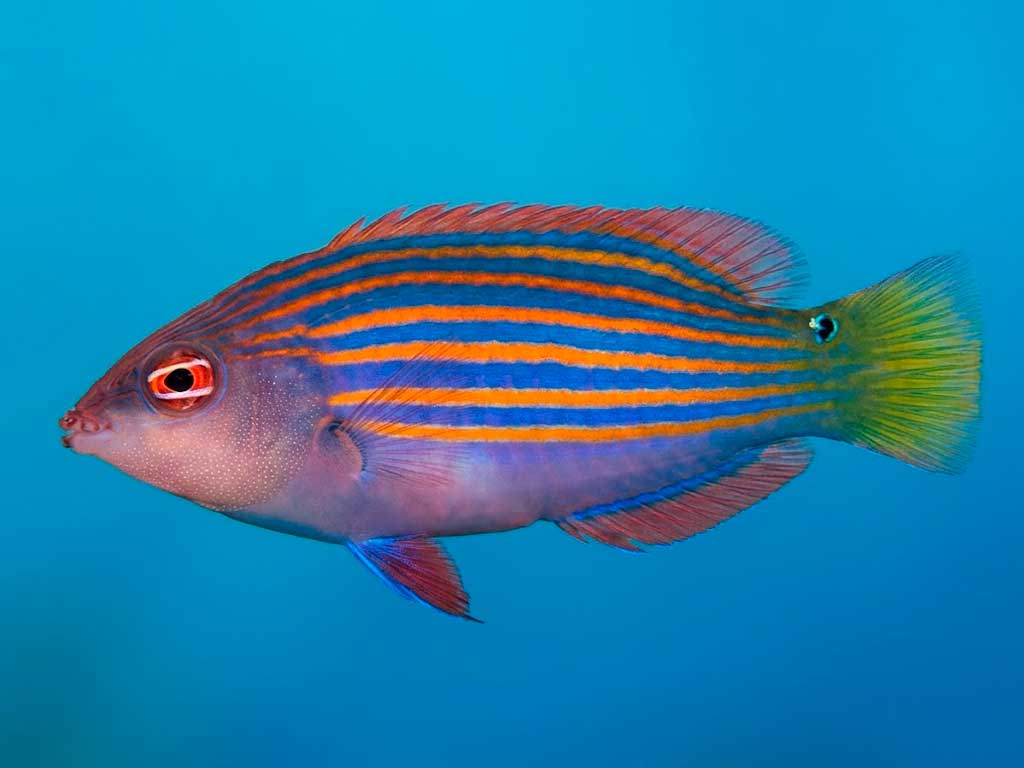
Quick answer: The six line wrasse (Pseudocheilinus hexataenia) is a small, hardy, reef-safe wrasse suited to tanks 30 gallons and up. It’s an excellent hunter of flatworms and pyramidellid snails, but it can also relentlessly harass other fish, especially other wrasses, if introduced too early. Add it last to your stocking order, after other fish already have an established territory, and keep only one per tank.
Quick Facts: Six Line Wrasse
- Scientific name: Pseudocheilinus hexataenia
- Also called: 6 line wrasse, pyjama wrasse
- Size: About 3 inches (7.5 cm)
- Minimum tank size: 30 gallons
- Diet: Carnivore, small invertebrates
- Reef safe: Yes, toward corals
- Temperament: Bold and territorial despite its small size
Small Fish, Genuinely Big Attitude
This is the detail most beginner stocking lists gloss over: a fish this small and this shy on the reef can become a genuine bully in a home aquarium. Six line wrasses compete aggressively for food and territory, and their aggression toward other wrasses in particular is intense enough that keeping different wrasse species together, or even two six lines, usually ends badly unless the tank is very large. Slower or more timid tankmates can get relentlessly harassed, sometimes to the point of real harm, even though this same fish spends most of its time in the wild darting nervously between coral heads.
The fix is simple and well established: make the six line wrasse the last fish you add. Without an established territory to defend yet, it has far less incentive to attack whatever comes along next. Add it early or into an empty tank, and it will often claim the whole aquarium as its own before anything else gets the chance.
A Genuinely Useful Pest Hunter
The aggression comes with a real upside. Six line wrasses hunt small invertebrates constantly, picking through live rock most of the day, and they’re genuinely effective against several pests that frustrate reef keepers. Pyramidellid snails, a parasitic nuisance that targets clams and snails, are a favorite target. Flatworms, including the kind that damage Acropora coral colonies, are readily hunted too, backed by published research on their effectiveness against this specific pest.
That same appetite has a downside worth knowing before you buy: beneficial copepods and amphipods get hunted just as readily as pests do, and some individuals will go after ornamental shrimp or small crabs, occasionally starting this behavior well after initially ignoring them. If you’re keeping delicate invertebrates specifically, research compatibility with your exact species before adding this fish.
A Strange and Wonderful Sleeping Habit
Here’s a detail worth knowing just because it’s fascinating. At night, a six line wrasse wedges itself into a rock crevice and secretes a mucus cocoon around its body, thought to mask its scent from predators while it sleeps. Come morning, the cocoon gets shed, and the fish often eats it on its way out. Occasionally you’ll spot the shed cocoon drifting through the tank instead. It’s completely normal behavior, not a sign of illness, and one of the more genuinely surprising things a beginner fish does in a home aquarium.
Tank Requirements
Provide at least 30 gallons with abundant live rock, covered in our live rock and sand guide, arranged with real caves and crevices for the fish to dart into when startled. Despite being shy by nature, this species darts confidently through open water while hunting, so a mix of dense structure and open swimming lanes works best. Keep water parameters stable, detailed in our water chemistry guide, and use a tight-fitting lid, since wrasses in general are known jumpers.
Diet and Feeding
A healthy six line wrasse spends much of the day hunting invertebrates directly off your live rock, which naturally supplements whatever you feed. Still, supplement regularly rather than relying on natural hunting alone.
- Frozen mysis and brine shrimp
- Quality marine flakes and pellets
- Finely chopped meaty foods
Compatibility and Tank Mates
Reef safe toward corals and generally left alone by other fish given its size, the six line wrasse pairs reasonably well with peaceful, similarly sized community fish including clownfish, royal grammas, and gobies, provided it’s introduced last. Avoid keeping it with other wrasse species or a second six line, since intraspecific and interspecific wrasse aggression is particularly intense in this genus. Research any ornamental shrimp or crab species carefully before combining them, since compatibility varies and can change unpredictably over time.
Related Species
The four line and five line wrasses (Pseudocheilinus tetrataenia and P. pentataenia) are close relatives with similar size, care, and temperament, distinguished mainly by stripe count and subtle color differences. Treat them with the same stocking caution as the six line.
Breeding
Unlike several fish on our beginner list, this species is not reliably captive-bred, and most individuals in the trade are still wild-caught. Six line wrasses are protogynous hermaphrodites, born female and capable of transitioning to male if the dominant male in a group is lost, similar to the royal gramma but the reverse direction of the change seen in clownfish. Breeding in captivity remains rare, partly due to this species’ territorial nature toward its own kind, and partly because the eggs are pelagic, drifting in open water rather than being laid in a nest, which makes rearing them at home genuinely difficult.
Frequently Asked Questions
Is the six line wrasse aggressive?
It can be, despite its small size and shy natural behavior. It competes aggressively for food and territory, particularly against other wrasses, and can harass slower tankmates if introduced too early.
Why should I add the six line wrasse last?
Adding it before other fish gives it time to claim the entire tank as its own territory, which it will then defend aggressively against anything added afterward. Introducing it last removes that head start.
Is the six line wrasse reef safe?
Yes, toward corals specifically. It won’t nip coral tissue, though it will hunt small invertebrates on your rock, including some you may want to keep for other reasons.
What does a six line wrasse eat in the wild?
Small invertebrates make up the bulk of its natural diet, including flatworms, bristleworms, copepods, and amphipods, along with pest snails like pyramidellids.
Why does my six line wrasse disappear at night and leave a strange blob in the tank?
It’s sleeping in a mucus cocoon it secretes each night, wedged into a rock crevice. The shed cocoon, occasionally visible floating in the tank in the morning, is completely normal and not a health concern.
Can I keep two six line wrasses together?
It’s best avoided in most home tanks. They’re territorial toward their own kind, and only a very large aquarium gives two individuals enough space to coexist without serious conflict.
Will a six line wrasse eat my cleaner shrimp?
Possibly, and unpredictably. Some coexist fine with shrimp and crabs indefinitely, while others hunt them from the start or develop the behavior later. Research your specific invertebrate species and monitor the relationship closely.
Get the stocking order right, and the six line wrasse rewards you with genuine pest control, constant activity, and one of the stranger bedtime rituals in the entire hobby. Get the order wrong, and this same small fish can undo months of careful, peaceful community building in a matter of days.