Fang Blenny Care Guide: Venom, Mimics & Tank Setup
Our best saltwater fish for beginners guide recommends captive-bred fang blennies for their peaceful, easy-to-keep nature, and that reputation is well earned, for the right species.
“Fang blenny” also covers a genuinely dangerous reef bully that has nothing to do with the fish beginners should be stocking, so getting the identification right matters here more than with most fish on that list.
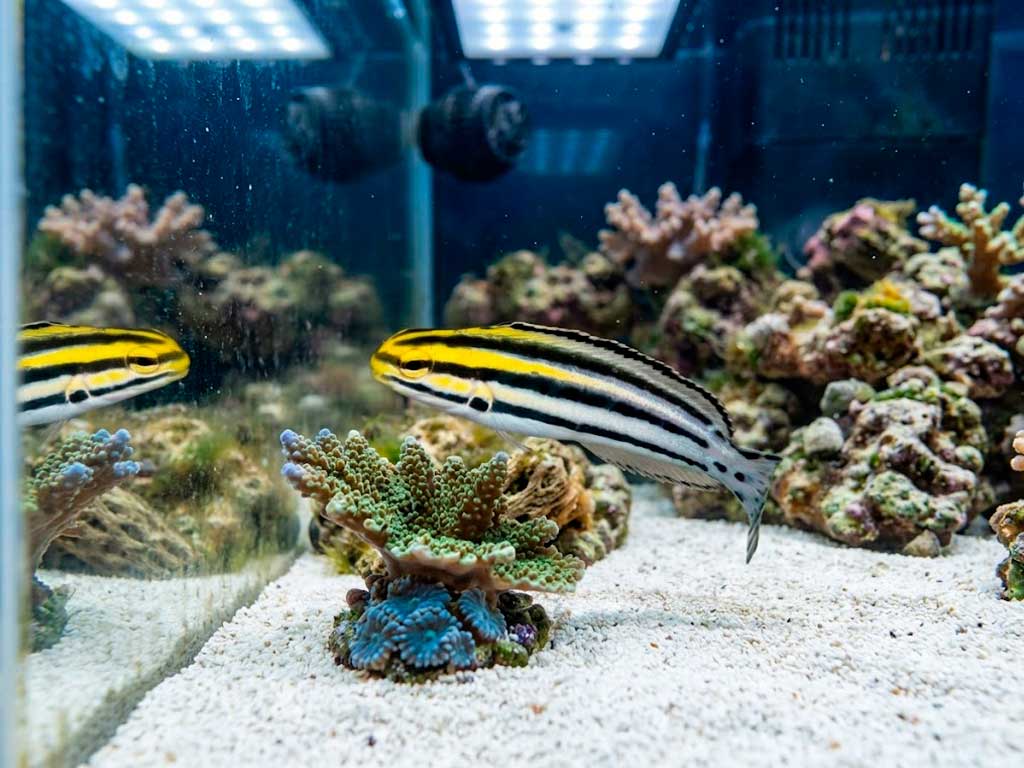
Quick answer: Captive-bred fang blennies from the genus Meiacanthus, like the striped, canary, and yellowtail fang blenny, are peaceful, venomous-but-defensive reef fish suited to tanks 30 gallons and up. Their venom exists purely for self-defense against predators, not for attacking tankmates. Keep only one per tank, since they’re naturally solitary and will fight their own kind, and never confuse them with Plagiotremus fang blennies, an unrelated, genuinely aggressive group that bites chunks of flesh from other fish.
Quick Facts: Captive-Bred Fang Blenny (Meiacanthus spp.)
- Genus: Meiacanthus
- Common species: Striped fang blenny (M. grammistes), canary blenny, yellowtail fang blenny
- Size: Up to 4 inches (10 cm), varies by species
- Minimum tank size: 30 gallons
- Diet: Carnivore, plankton and small crustaceans
- Reef safe: Yes, ignores corals and invertebrates
- Temperament: Peaceful toward other species, solitary and intolerant of its own kind
Not All Fang Blennies Are the Same Fish
This is the single most important thing to know before buying one. The name “fang blenny” gets applied loosely to several genera with wildly different temperaments, and mixing them up ruins a reef tank fast.
Meiacanthus species, the ones covered in this guide, use their fangs purely for defense against predators or territorial rivals and are genuinely peaceful toward other tankmates. Plagiotremus species are a different story entirely: several are aggressive mimics that impersonate harmless cleaner wrasses to get close to larger fish, then dart in and bite off scales or chunks of flesh before retreating. These are not reef community fish, and they should never be confused with the captive-bred Meiacanthus species recommended for beginners.
If you’re shopping for one, confirm the species name, not just the common name “fang blenny,” before buying.
The Venom, and a Fascinating Case of Mimicry
Meiacanthus blennies carry a pair of grooved, venom-linked canine teeth, a genuine defensive adaptation that evolved because they swim more exposed in open water than most blennies, which mostly hug the substrate. Their bold striped coloration functions as a warning sign, similar to how a wasp’s stripes warn predators before they ever get stung. Once a predator learns the hard way that this fish bites back, it tends to leave every similarly patterned fish alone afterward.
That reputation is valuable enough that other, harmless species have evolved to copy it. At least one blenny species mimics the striped fang blenny’s exact pattern despite carrying no venom at all, borrowing the protection that comes with looking dangerous. A cardinalfish species and even the juvenile form of an unrelated bream show similar copycat patterning. It’s a genuine example of Batesian mimicry playing out among reef fish you can actually keep at home.
For you, the risk is minor but worth knowing honestly. A bite typically causes only mild, localized pain, and the fish’s small mouth makes actually delivering venom during a bite fairly unlikely in the first place. The exception is anyone with a known sensitivity to bee or wasp venom, who should treat this fish with the same caution as a lionfish and avoid handling it directly or netting it aggressively.
Tank Requirements
Unlike most blennies, which perch on rock most of the day, Meiacanthus species are semi-pelagic and actually hover and swim in open water, so they need real swimming room in addition to hiding spots. Plan for at least 30 gallons, with more open water than a typical bottom-dwelling blenny would require.
Provide plenty of rocky crevices as boltholes, covered in our live rock and sand guide. This species often backs into a hideaway tail-first and pokes its head out to watch its surroundings, and the more nooks available, the more confident and visible it tends to be. Keep flow low to moderate and water parameters stable, detailed in our water chemistry guide, since this fish can be sensitive during acclimation even though it’s hardy once settled. Acclimating in dim light and leaving the tank lights off for several hours afterward helps reduce that initial stress.
Keep only one per tank unless your system is large. These fish are naturally solitary on the reef and will use those same fangs against each other in territorial disputes, which can end fatally in a smaller aquarium.
Diet and Feeding
In the wild, these blennies feed on small planktonic organisms and tiny crustaceans picked from the water column and rock surfaces. Captive individuals adapt readily to a varied diet.
- Frozen mysis and enriched brine shrimp
- Finely chopped meaty foods
- Freeze-dried and flake foods as a supplement
Offer several small feedings a day rather than one large meal, matching how they graze naturally. A mature tank with established live rock and its natural plankton population helps this species settle in and feed more confidently.
Compatibility and Tank Mates
Toward other species, Meiacanthus blennies are genuinely peaceful and rarely harass tankmates, coexisting well with clownfish, royal grammas, and gobies. They ignore sessile invertebrates and corals entirely. Avoid keeping more than one, or any other fish with a similar pattern, in a smaller tank, since the resemblance alone can trigger territorial aggression. Handle with care during transfers or netting, since the same defensive bite meant for predators works just as well on an unsuspecting hand.
Breeding
Captive breeding of Meiacanthus species happens, though captive-reared juveniles remain less common than the wild-collected adults typically sold. Males prepare a hiding place, often a length of PVC pipe in a breeding setup, and entice a female inside to lay adhesive eggs, which the male then fertilizes and guards until they hatch, usually in under two weeks. One male often mates with several females in sequence. Sexual dimorphism is visible if you look closely: males tend to have larger, more elaborate tail and pelvic fins than females. Larvae start on rotifers before graduating to baby brine shrimp.
Frequently Asked Questions
Are all fang blennies aggressive?
No. Meiacanthus species, the ones commonly sold as captive-bred fang blennies, are peaceful toward tankmates and only bite defensively. Plagiotremus species are a separate, genuinely aggressive group that bites chunks of flesh from other fish and should not be confused with the peaceful captive-bred options.
Is a fang blenny’s bite dangerous to humans?
Usually it’s just mild, localized pain, and the fish’s small mouth makes venom delivery unlikely in most bites. People with known bee or wasp sting allergies should still exercise real caution, since they’re more susceptible to a serious reaction.
Can I keep two fang blennies together?
Not in most home tanks. This species is naturally solitary and will fight its own kind, sometimes fatally, in anything smaller than a large aquarium.
What size tank does a fang blenny need?
At least 30 gallons, with more open swimming space than most blennies need, since Meiacanthus species hover in the water column rather than staying glued to rock.
What is the difference between Meiacanthus and Plagiotremus fang blennies?
Meiacanthus species use venom purely for self-defense and are peaceful toward tankmates. Plagiotremus species include aggressive scale and flesh-eating mimics that pose a genuine threat to other fish and are not suitable community reef fish.
Is the fang blenny reef safe?
Yes, Meiacanthus species ignore corals and invertebrates entirely and are considered fully reef safe.
Why does another fish in my tank look just like my fang blenny?
A few harmless species, including a mimic blenny and even a cardinalfish, have evolved to copy the fang blenny’s warning coloration without carrying any venom themselves, borrowing the protection that comes with looking dangerous.
A captive-bred Meiacanthus fang blenny brings real personality, a genuinely interesting evolutionary story, and almost none of the risk its name suggests, as long as you keep just one, give it room to swim, and know exactly which genus you’re actually bringing home.