Neon Goby Care Guide: Tank Setup, Diet & Cleaning Behavior
Our best saltwater fish for beginners guide flags the neon goby mainly as a tiny, hardy staple worth watching for gaps in your overflow.
That’s true, but it undersells a genuinely remarkable fish: a two-inch cleaner that wild predatory fish line up to visit, and one of the earliest marine species the hobby successfully bred in captivity on a commercial scale.
Quick answer: The neon goby (Elacatinus oceanops) is a tiny, hardy, fully captive-bred-friendly cleaner fish reaching about 2 inches, suited to tanks 10 gallons and up. It’s monogamous, forms genuine cleaning stations where larger fish line up to be serviced, and is one of the easiest marine fish to keep and even breed at home.
Quick Facts: Neon Goby
- Scientific name: Elacatinus oceanops (formerly Gobiosoma oceanops)
- Size: Up to 2 inches (5 cm)
- Minimum tank size: 10 gallons
- Native range: Central and western Atlantic, Florida and Texas to Belize
- Diet: Carnivore, cleaner species
- Reef safe: Yes
- Temperament: Peaceful
A Cleaner Fish, Not Just a Pretty Stripe
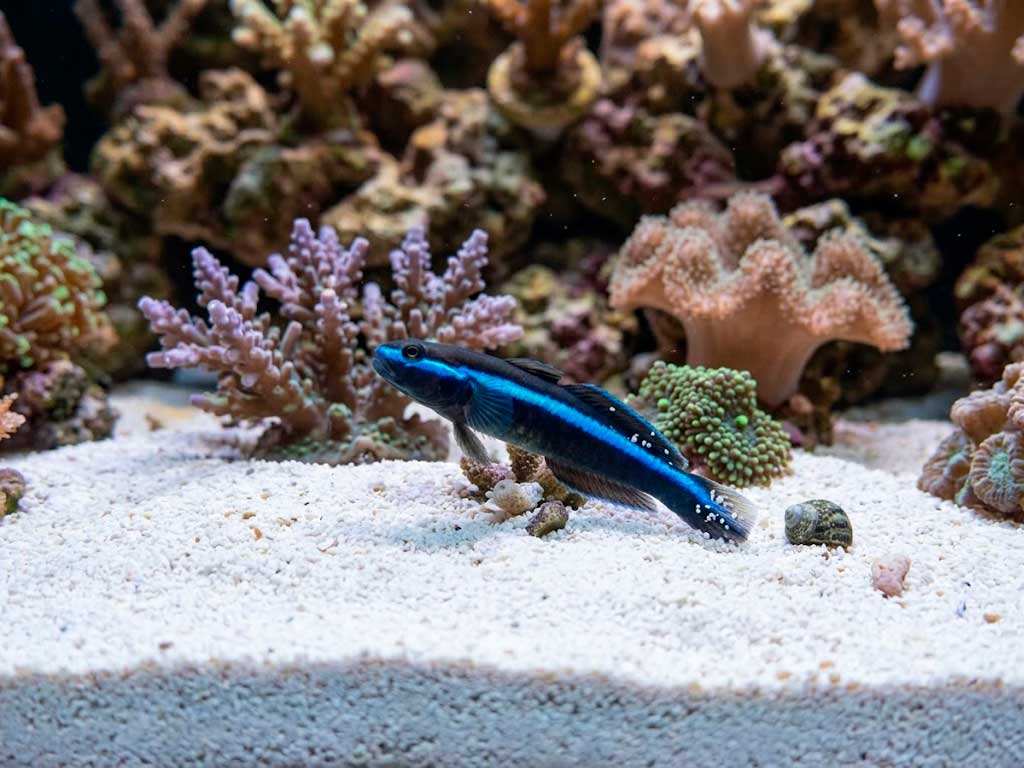
The neon goby’s dark blue-black body with a bright electric blue stripe running from eye to tail makes it instantly recognizable, but the more interesting trait is behavioral. In the wild, this species sets up cleaning stations on the reef, fixed spots where larger fish, including predators that would happily eat almost anything else that size, actually line up and wait their turn to be serviced. The goby picks parasites and dead skin off its visitors, gets a meal, and the larger fish leaves healthier for it. Neither side attacks the other; the relationship is a genuine, mutually beneficial truce.
You likely won’t see full cleaning-station behavior in a home aquarium the way you would on a wild reef, since your other fish aren’t as parasite-burdened, but neon gobies often still pick at tankmates occasionally, and it’s a genuinely fun detail to know about a fish this small.
Recreating Cleaner Behavior in Your Tank
If you specifically want to see cleaning behavior play out, a few things help. Choose tankmates with visible surface area for the goby to work, larger, calm fish rather than tiny, fast-moving ones, since a cleaning interaction only happens when the client fish holds still and cooperates. Fish that are new, stressed, or recovering from an ailment often seek out cleaners more actively than a perfectly healthy fish would, so you may notice more cleaning activity after adding new stock or during a period of mild stress in the tank, which is itself a useful thing to watch for as an early health signal.
Do not expect a guaranteed show, though. Some tanks never display obvious cleaning interactions even with a healthy neon goby present, and that is not a sign anything is wrong. The behavior depends on the specific fish involved and how much genuine cleaning demand exists in your system, which is naturally much lower than on a parasite-rich wild reef.
Tank Requirements
A neon goby’s tiny size makes it suitable for tanks as small as 10 gallons, and it does well in nano reef setups where larger fish simply wouldn’t fit. That same small size is also the main safety concern: check that any overflow openings, intake screens, or gaps around equipment are too small for this fish to swim into, since it’s an easy species to lose that way.
Beyond that, care is straightforward. Provide live rock for shelter, covered in our live rock and sand guide, and keep water parameters stable, detailed in our water chemistry guide. This species tolerates typical reef conditions well and doesn’t demand anything unusual in terms of flow or lighting.
Diet and Feeding
Neon gobies are small carnivores that eat readily once settled.
- Finely chopped or small frozen mysis and brine shrimp
- Small marine pellets sized appropriately for its mouth
- Naturally occurring parasites and dead skin picked from tankmates as a supplement, not a primary food source
Feed small portions once or twice daily. Given its size, this fish can lose out to faster, larger tankmates at feeding time, so make sure food reaches it directly if you’re keeping it in an active community tank.
Compatibility and Tank Mates
Neon gobies are peaceful and reef safe, coexisting well with clownfish, royal grammas, and other calm community fish. Avoid large or aggressive tankmates that could view a 2-inch fish as a snack, and be mindful that overly boisterous feeders may consistently out-compete it at mealtime.
Breeding: An Easy, Historic Success Story
Neon gobies are monogamous, pairing with a single partner and sticking with it to breed repeatedly over their lifetime. That reliable pair bond, combined with a genuinely easy breeding process, made this species one of the first marine aquarium fish successfully bred commercially in captivity, decades before captive-bred marine fish became the norm they are today. A settled pair will lay eggs on a flat surface or cave ceiling, guard them until hatching, and the whole process asks relatively little of the hobbyist compared to most marine species.
If you’re interested in breeding, start with a confirmed pair rather than a random group, provide a stable low-stress environment, and expect the pair to bond and spawn on their own timeline without much intervention required.
Frequently Asked Questions
Is a neon goby the same fish as a Stiphodon neon goby?
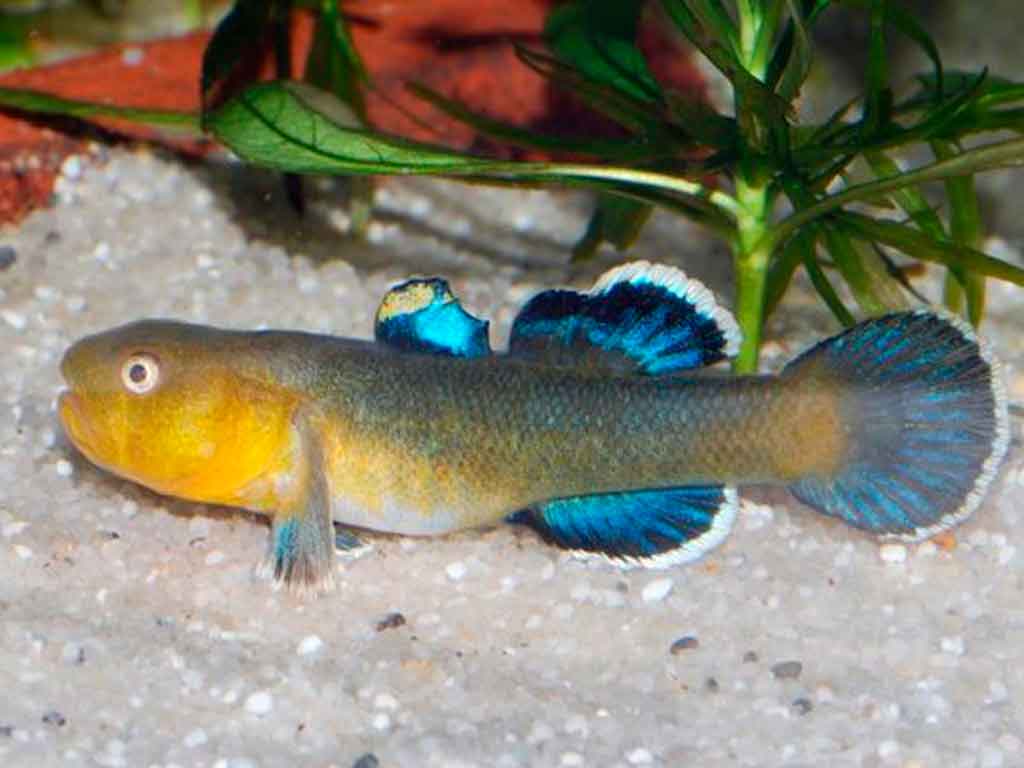
No, and this is a common point of confusion. The marine neon goby covered here (Elacatinus oceanops) is a Caribbean reef fish. Stiphodon gobies, sometimes also called “neon” for their bright coloration, are freshwater and brackish species from Asian streams, kept in entirely different tank setups with different care requirements.
Do neon gobies actually clean other fish?
Yes, in the wild they establish cleaning stations where larger fish, including predators, wait to have parasites and dead skin removed. In a home aquarium, you may see occasional cleaning behavior, though a full cleaning station is less likely without the parasite load a wild reef has.
What size tank does a neon goby need?
As small as 10 gallons, making it one of the few marine fish genuinely suited to true nano reef setups.
Why did my neon goby disappear?
Its small size means it can swim into overflow boxes, intake screens, or small equipment gaps that would stop a larger fish. Check every opening in your tank is too small for a 2-inch fish before adding one.
Are neon gobies easy to breed?
Yes, relative to most marine fish. They’re monogamous and pair-bond reliably, which is part of why this species became one of the first marine fish successfully bred commercially in captivity.
Is the neon goby reef safe?
Yes, completely. It ignores corals and invertebrates and poses no risk to a reef tank.
Can neon gobies live with clownfish?
Yes, they’re peaceful toward each other and occupy different roles in the tank, making them a solid community pairing.
Is Gobiosoma oceanops the same fish as Elacatinus oceanops?
Yes. Gobiosoma oceanops is an older scientific name for the same species now classified as Elacatinus oceanops.
Few fish pack this much genuine biological interest into two inches. Easy to keep, easy to breed, and a living reminder that not every reef relationship is predator and prey, the neon goby earns its spot on a beginner list for reasons well beyond its hardiness.