Guppy Grass Care Guide: 7 Essential Tips for Healthy Growth
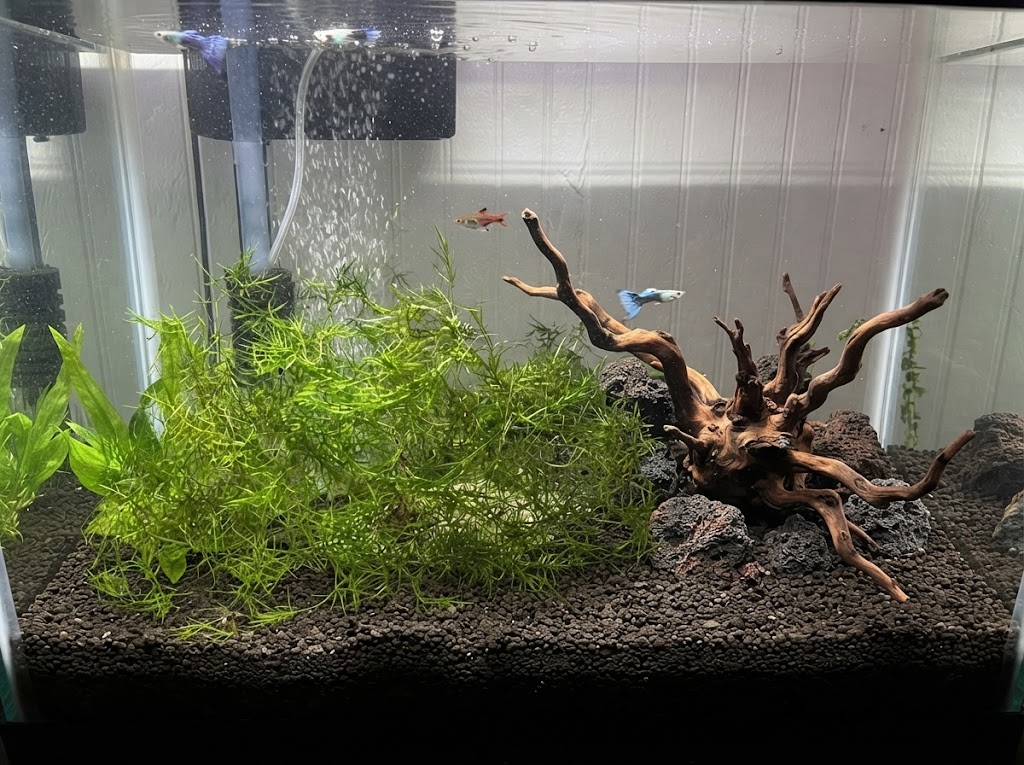
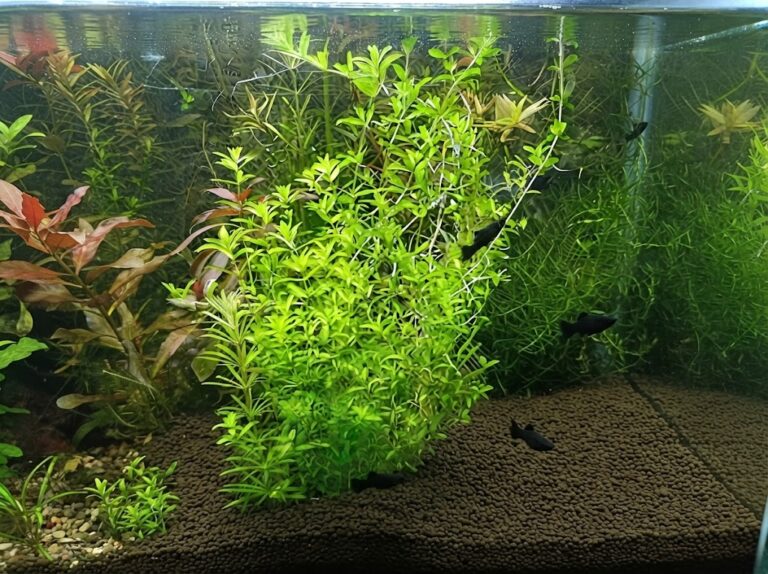
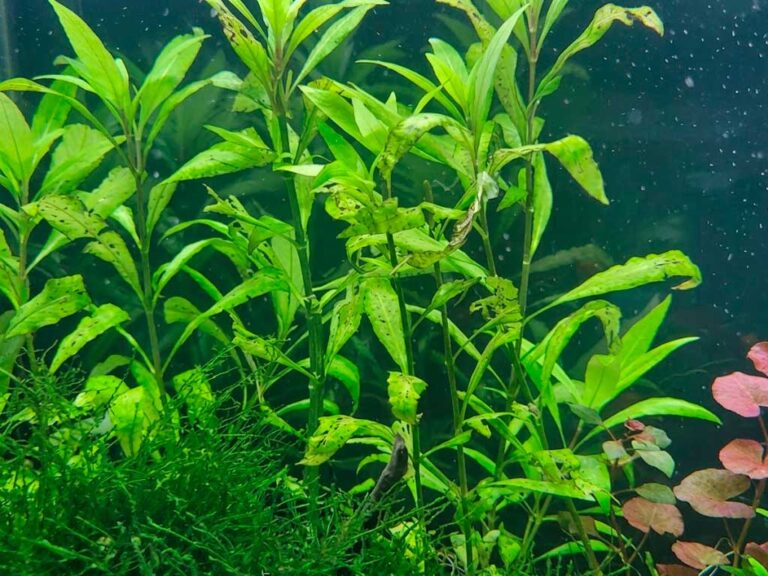
Guppy grass (Najas guadalupensis) is a fast-growing freshwater aquarium plant that provides excellent shelter for baby fish and requires very little equipment to thrive.
You can let it float freely, keep it in a loose background clump, or use it to create a protected nursery for guppies, endlers, and other livebearers.
The main challenge is controlling its growth. Once established, small pieces can spread throughout the tank, so good guppy grass care depends on managing the plant as much as growing it.
This guide explains the lighting, water conditions, planting options, fertilization, trimming, and propagation techniques that help you get the most from this adaptable aquatic plant.
Guppy Grass at a Glance
| Care requirement | Recommended approach |
|---|---|
| Scientific name | Najas guadalupensis |
| Common names | Guppy grass, Najas grass, common water nymph |
| Difficulty | Beginner-friendly |
| Growth rate | Fast |
| Lighting | Low to moderate is usually sufficient |
| CO₂ injection | Not required |
| Placement | Floating or loosely planted |
| Substrate | Optional |
| Propagation | Stem fragments and cuttings |
| Best use | Fry shelter, shrimp cover, and fast-growing greenery |
| Water conditions | A broad range of freshwater conditions; stability matters |
The accepted botanical name is Najas guadalupensis, a species native to the Americas. Its flexible growth habit makes it useful in aquariums where shelter and easy maintenance matter more than a perfectly arranged aquascape. Kew Science recognises the species and documents its native distribution.
1. Why Keep Guppy Grass in Your Aquarium?
Guppy grass is particularly valuable in breeding tanks because its fine leaves and tangled stems create small spaces where newly born fish can hide. Adult fish have difficulty navigating the densest growth, giving fry more opportunities to avoid being eaten.
It can also provide cover for dwarf shrimp and other small aquarium inhabitants. In community tanks, the plant adds a loose, natural-looking green mass without requiring a complex substrate or pressurised CO₂ system.
Another advantage is its fast growth. As the plant produces new tissue, it takes up nutrients from the surrounding water. Removing excess growth also removes some of the nutrients stored in that plant material. This can complement regular water changes and filtration, although guppy grass does not replace either one.
There is a trade-off: rapid growth and fragile stems make it untidy in a small display tank. Pieces can break during maintenance and establish elsewhere. Choose it because you want its benefits, not because you expect a compact plant that will remain exactly where you put it.
2. Lighting and CO₂ Requirements
Guppy grass does not need high-intensity lighting or injected carbon dioxide to grow. Low to moderate aquarium lighting is generally a sensible starting point, particularly in a breeding tank where the goal is healthy cover rather than maximum growth.
How much light does it need?
Begin with your aquarium’s normal lighting schedule and observe the plant over the following weeks. If the stems remain green and produce new growth, there is no reason to increase the intensity.
Stronger lighting can accelerate growth. However, it may also make the plant fill the aquarium more quickly, increasing the amount of trimming required. Floating portions receive light near the surface and can grow faster than shaded material underneath.
If the lower portion of a thick floating mass becomes brown or loses leaves, check whether the upper growth is blocking too much light. Thinning the mass can help the remaining stems receive better illumination.
Does guppy grass need CO₂?
No. Guppy grass can grow without a pressurised CO₂ system, making it suitable for low-tech aquariums. Additional CO₂ is not a necessary purchase for this species.
If you already run a CO₂-injected planted tank, you can keep guppy grass there, but monitor its growth. The extra resources available in a well-maintained planted aquarium may increase the frequency of thinning and removal.
3. Water Parameters for Guppy Grass
Guppy grass adapts to a broad range of freshwater conditions. AquariumStocking lists a temperature range of approximately 64–86°F (18–30°C), pH 6.0–8.0, and hardness of 2–20 dGH. These are broad reference ranges, not a reason to push a tank toward the limits.
For a typical tropical community aquarium, aim for stable conditions suited to the fish and invertebrates living there. Guppy grass is usually more forgiving of ordinary variation than sensitive aquatic plants, but abrupt changes can still trigger deterioration.
- Temperature: Keep the water temperature appropriate for the aquarium’s inhabitants. Avoid sudden temperature shifts when transferring the plant between tanks.
- pH and hardness: Do not adjust pH or hardness solely to suit guppy grass if the existing water is suitable for the fish. Stability is more useful than chasing a particular number.
- Water changes: Continue your normal maintenance routine. A rapidly growing plant can absorb nutrients, but it cannot make waste management unnecessary.
- Water movement: Gentle to moderate circulation is generally manageable. Avoid positioning loose stems where the filter intake can pull them against the strainer.
The key is to avoid making several changes at once. If the plant starts melting after a transfer or water change, consider recent temperature, pH, and hardness differences before adding fertiliser.
4. How to Plant Guppy Grass
One of the easiest parts of guppy grass care is that planting is optional. Unlike many aquarium plants, it can grow while floating freely in the water.
Option A: Keep it floating
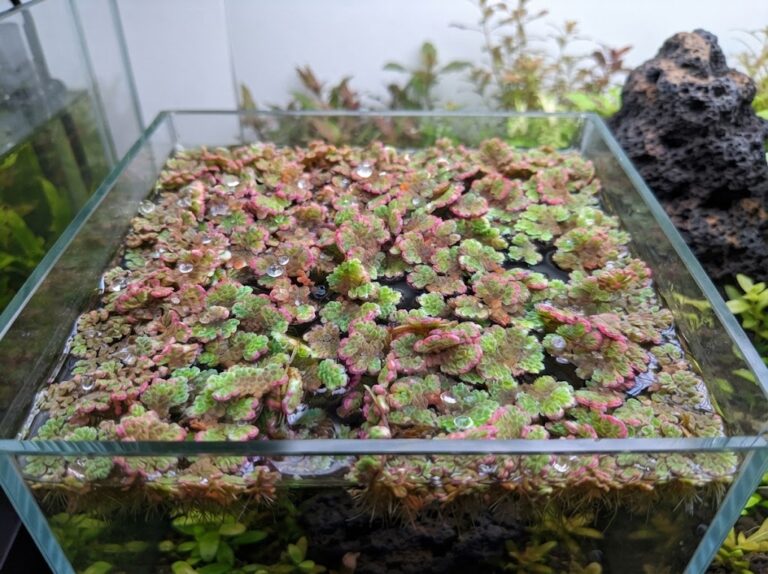
For a breeding tank, floating is often the most useful arrangement. The stems form a loose mass near the surface, creating cover for fry and small shrimp.
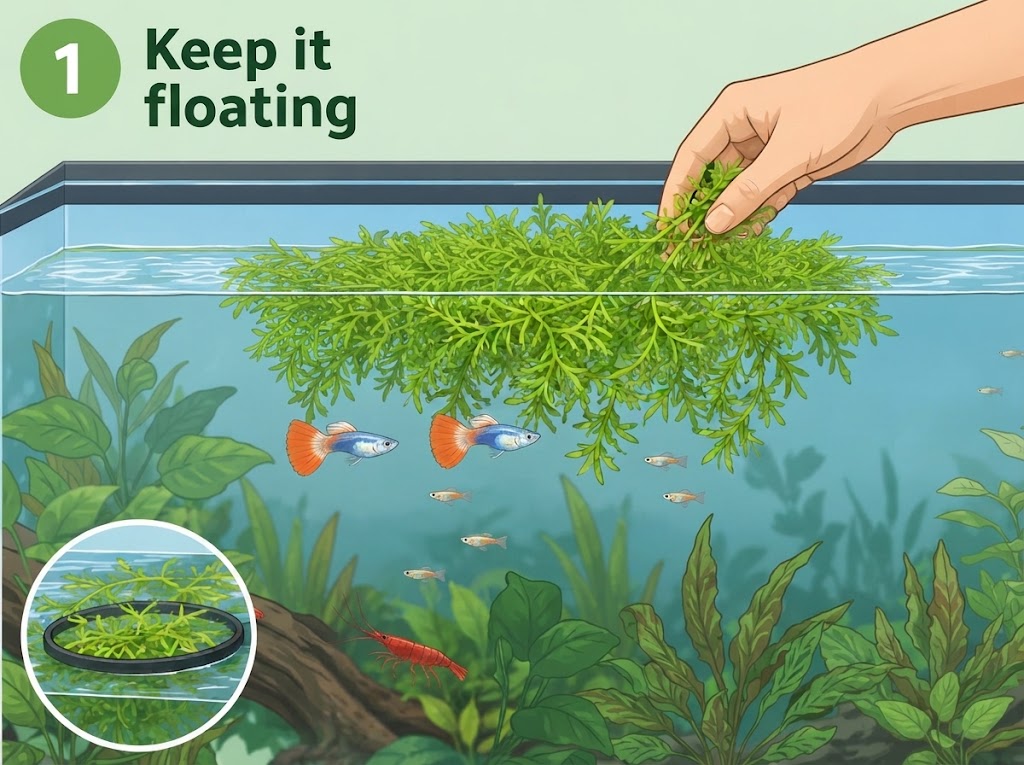
Gently rinse the plant using suitable aquarium water, remove badly decayed pieces, and place the healthy stems in the tank. A floating ring or a simple plant corral can keep the mass in one area if you want to leave open swimming space elsewhere.
This arrangement also makes maintenance easier because you can lift out a portion without disturbing the substrate.
Option B: Keep it in a background clump
If you prefer a planted appearance, gather several stems and tuck them loosely behind a rock or piece of driftwood. The hardscape can help hold the plant in place.
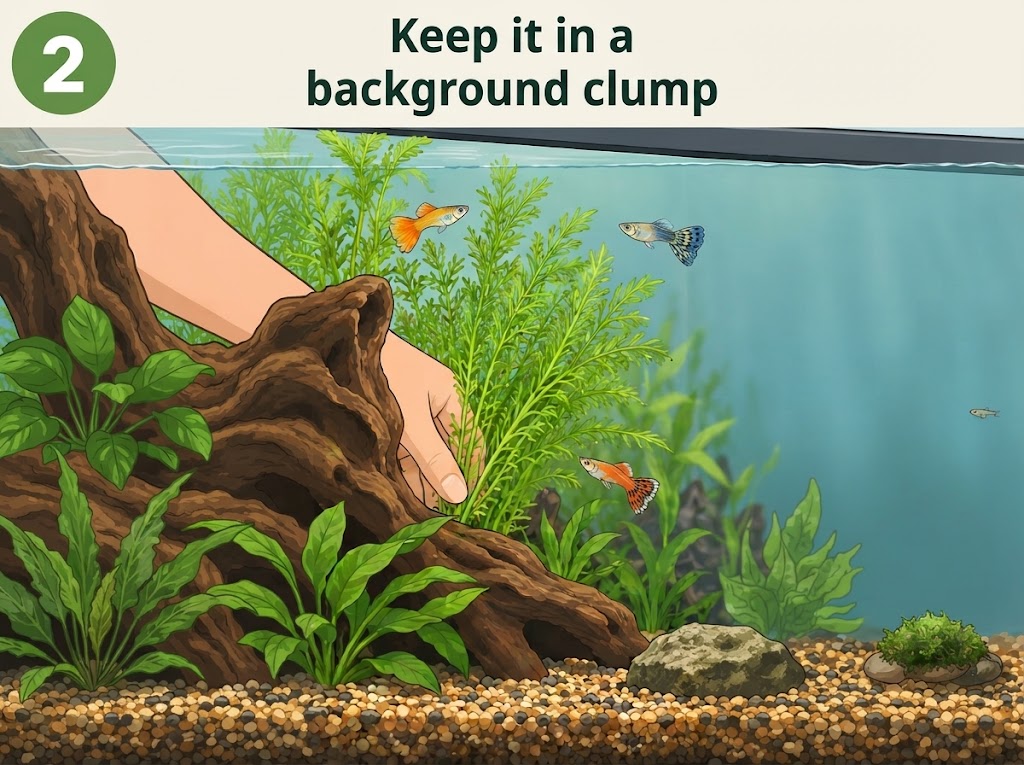
Do not expect a permanent, precisely shaped bush. Guppy grass has delicate stems, and handling can cause breakage. Some pieces will eventually drift away or grow beyond the original clump.
Option C: Push the stems into the substrate
You can place the lower ends of healthy stems shallowly into gravel or another aquarium substrate. However, the plant does not depend on a rich root zone in the same way that many rooted aquarium plants do.
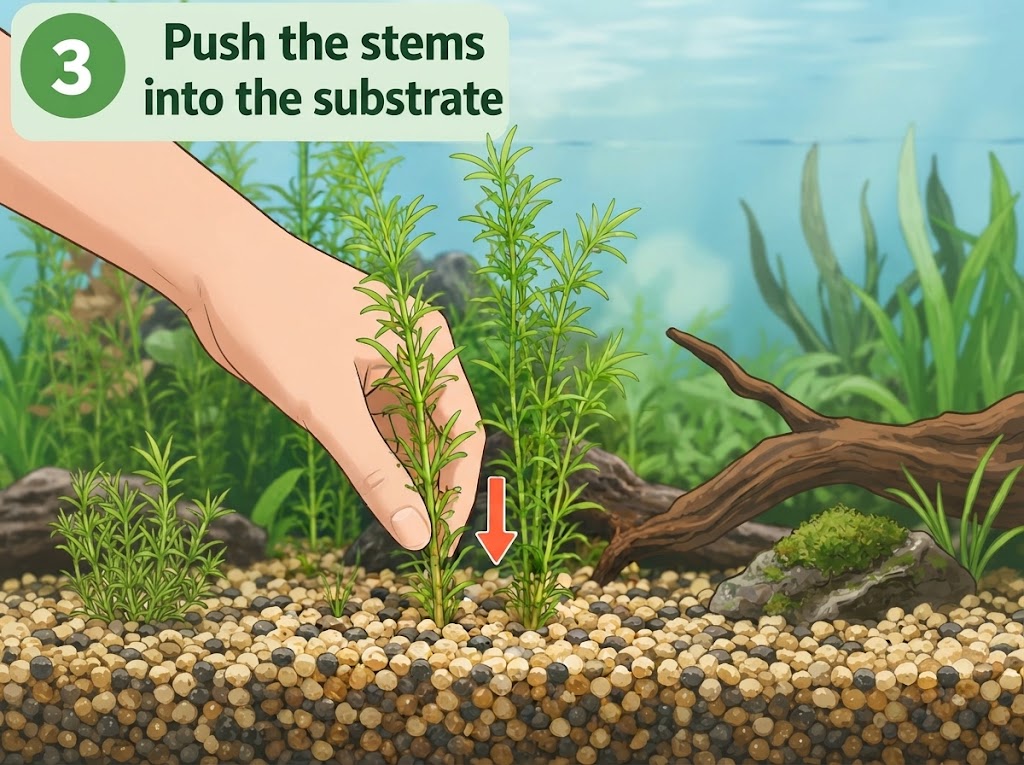
If the stems repeatedly come loose, floating them or securing them gently behind hardscape may be more practical than repeatedly replanting them.
Preparing new plants before introduction
New aquatic plants can carry unwanted snails, algae, or other organisms. Inspect and quarantine them when practical, especially if you are setting up a dedicated fry tank where small pests can be difficult to remove later. Follow a plant-safe quarantine method rather than using chemicals that could harm the plant or aquarium inhabitants.
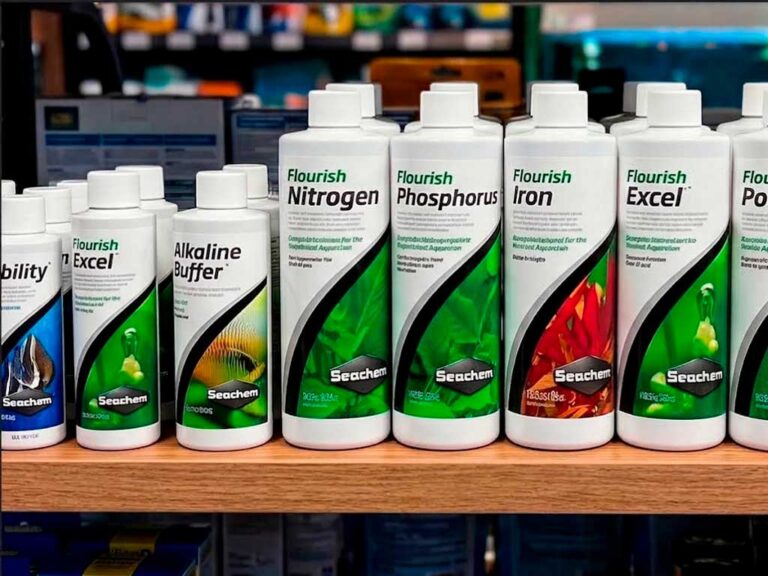
5. Fertilisation: Does Guppy Grass Need Seachem?
Guppy grass absorbs nutrients through its leaves and stems, so a specialised nutrient substrate is not necessary. In many aquariums, nutrients from fish food, waste, and regular water changes may be enough to support growth.
A heavily planted aquarium with strong nutrient uptake can be different. If guppy grass becomes pale or produces weak growth, assess the overall nutrient supply before buying a supplement. Check other plants and available water-test results where possible, and consider whether the aquarium is under-fertilised or whether another problem is responsible.
Seachem Flourish: a general micronutrient option
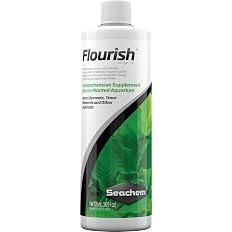
Seachem Flourish supplies a range of micronutrients and trace elements, including calcium, magnesium, and iron. It may be useful in a planted aquarium that needs general micronutrient supplementation. It is not a mandatory product for guppy grass, and it should not be expected to correct every possible nutrient deficiency.
FROM AMAZON.COM
Seachem Flourish Freshwater Plant Supplement
A comprehensive plant supplement with minerals, trace elements, and vitamins to support healthy growth in freshwater planted tanks.
Buy on Amazon.comHappy Pet Zone may earn a commission when you click through to Amazon.com, at no extra cost to you. As an Amazon Associate, we earn from qualifying purchases.
Seachem Flourish Nitrogen: only when needed
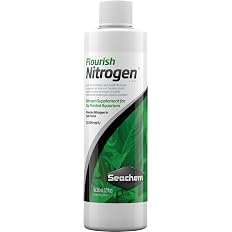
Nitrogen is essential for plant growth, but adding more is not automatically beneficial. Consider a nitrogen supplement only when the available evidence suggests the aquarium is deficient. Excess nutrients that plants cannot use may contribute to algae problems.
FROM AMAZON.COM
Seachem Flourish Nitrogen 250 mL / 8.5 fl. oz.
Nitrogen supplement providing nitrate and urea nitrogen for planted freshwater tanks. Supports lush, fast growth without spiking ammonia levels.
Buy on Amazon.comAs an Amazon Associate, we earn from qualifying purchases. Happy Pet Zone may earn a commission when you click through to Amazon.com, at no extra cost to you.
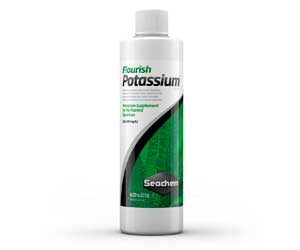
Seachem Flourish Potassium: a targeted supplement
Potassium supports plant growth, and deficiency can produce symptoms such as yellowing or small dead spots in older leaves. Those symptoms are not exclusive to potassium deficiency, however. Check the broader growing conditions before deciding that a supplement is needed.
FROM AMAZON.COM
Seachem Flourish Potassium 500 mL / 17 fl. oz.
Concentrated potassium supplement for planted freshwater tanks. Supports strong stem growth and helps prevent deficiency without affecting pH.
Buy on Amazon.comHappy Pet Zone may earn a commission when you click through to Amazon.com, at no extra cost to you. As an Amazon Associate, we earn from qualifying purchases.
The practical priority is to establish whether the plant actually needs additional nutrients. A healthy, fast-growing clump does not need every product in a fertiliser range.
6. Trimming and Controlling Fast Growth
The biggest maintenance task is keeping guppy grass from occupying more space than intended. In good conditions, it can grow into a dense mass, shade itself, obstruct equipment, and interfere with other plants.
Check the aquarium regularly rather than waiting until the entire surface is covered. In a productive tank, weekly inspections may be useful, although the actual trimming interval depends on light, nutrients, and how much plant cover you want.
When thinning the plant, lift out a manageable handful of healthy stems. Remove brown or decaying material and inspect the remaining mass for small fragments.
Pay particular attention to three areas:
- The filter intake: Loose stems can accumulate against the strainer and restrict water flow. A suitable sponge pre-filter can help, but it still needs regular cleaning.
- The lower part of the floating mass: Dense upper growth can shade older material. Remove enough growth to let light reach the remaining stems.
- Open swimming areas: Leave clear space for fish to move and feed. Fry need shelter, but a completely crowded tank is harder to maintain.
Avoid aggressive handling. Guppy grass is brittle, and cutting or pulling it apart can produce fragments that spread through the aquarium. Collect loose pieces during maintenance rather than leaving them to drift into equipment or unwanted corners.
7. How to Propagate Guppy Grass
Propagation is straightforward because healthy stem fragments can continue growing. You do not need seeds, special rooting hormones, or a dedicated propagation substrate.
To expand an existing clump, select several green stems with healthy leaves. Move them to the desired location, either floating or loosely held in place. Keep the water stable and give the new pieces time to adjust.
The original plant will also continue growing, so propagation can quickly produce more material than you need. Share healthy excess growth with another aquarist or discard unwanted pieces responsibly.
Never release aquarium plants into ponds, streams, lakes, or other natural waterways. Even small fragments can spread beyond the aquarium. Follow local rules for disposal, particularly where aquatic plants are regulated.
Common Guppy Grass Problems
The plant is melting after introduction
A sudden change in temperature, hardness, or pH can cause substantial deterioration. Remove decaying material, retain any healthy green stems, and keep conditions stable while monitoring recovery.
Do not immediately add several fertilisers. A plant adjusting to a transfer may need time rather than a new chemical treatment.
The stems keep breaking
Fragility is a normal characteristic of guppy grass. Reduce unnecessary handling, avoid repeatedly moving the same clump, and use a floating ring or hardscape to keep it where you want it.
Growth is pale or weak
Check lighting, general plant nutrition, and recent changes in water conditions. In a heavily planted tank, another plant may be consuming available nutrients rapidly. Test and assess the aquarium before selecting a specific supplement.
The plant has taken over the aquarium
Thin it regularly and remove excess growth from the system. Pay attention to material trapped near filter intakes and under floating mats. If you need a more controlled layout, reduce the amount you keep or choose a slower-growing plant for that area.
Is Guppy Grass Suitable for Your Aquarium?
Guppy grass is a strong choice if you want low-maintenance greenery, cover for fry, or a fast-growing plant that can be kept without CO₂ injection. It is particularly useful in breeding tanks and informal freshwater setups.
It may be a poor match if your priority is a carefully sculpted aquascape that must hold a precise shape. Its stems break easily, and it spreads too quickly for some small display tanks.
For a wider range of plant choices, visit the Aquarium Plants: The Complete Guide to Freshwater Tanks. Compare plants by growth rate, placement, and the amount of maintenance you are prepared to do.
Frequently Asked Questions
Start with a modest amount of guppy grass, keep it floating or loosely grouped, and avoid changing several aquarium conditions at once.
Check the filter intake and thin the plant regularly. For most aquariums, those simple habits matter more than adding CO₂ equipment or buying multiple fertilisers.