Common Aquarium Problems: Causes, Fixes & Seachem Solutions
A tank that turns white overnight, water that suddenly looks rusty, or a dog collar’s worth of worms crawling on the glass every one of these has a specific, identifiable cause.
Common aquarium problems aren’t random bad luck; they’re the tank telling you exactly what’s out of balance, if you know how to read it.
This guide breaks down the most frequent issues by symptom, with the Seachem product that actually addresses each one.
I’ve run into every one of these at some point, usually right after a water change or a new piece of equipment. In practice, the fix is almost never guesswork once you know what the discoloration, cloudiness, or crawling thing is actually telling you.
The Most Common Culprits at a Glance
Most tank problems fall into one of four buckets: a bacteria population that’s out of sync, excess nutrients feeding algae or worms, mineral content in your source water, or leftover chlorine and chloramine from tap water.
Once you know which bucket you’re in, the fix is usually a single product, not a guessing game.
Frequently Asked Questions
White Clouding: The Bacterial Bloom Problem
White clouding shows up when bacteria multiply faster than the tank can stabilize new setups, recent big water changes, and overstocked tanks are the usual triggers.
It looks like a fine white haze, almost like skim milk stirred into the water.
Matrix and Stability both speed up the bacteria colonization that eventually settles this on its own, while Seachem Clarity works faster by flocculating the free-floating particles so your filter can pull them out.
For a tank that’s white-clouded during its first few weeks, Clarity plus patience solves it in under 48 hours in most cases.
Green Clouding: When Algae Take Over
Green clouding is floating algae, not bacteria, and it points to a nutrient problem rather than a stability one. Too much nitrate, too much phosphate, or too many hours of light are the three usual drivers.
PhosGuard and PhosNet pull phosphate directly out of the water column, cutting off one of algae’s main fuel sources.
Clarity helps clear the immediate haze, but if the tank keeps turning green every few weeks, the lighting schedule or the phosphate source needs attention.
FROM AMAZON.COM
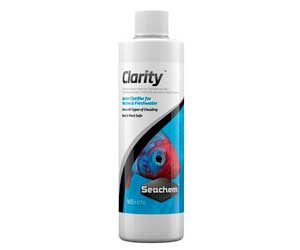
Seachem Clarity
Flocculates free-floating particles so your filter can pull them out fast — safe to use in an established tank with fish present, no need to remove anything first.
Buy on Amazon.comHappy Pet Zone may earn a commission when you click through to Amazon.com, at no extra cost to you. As an Amazon Associate, we earn from qualifying purchases.
White or Tan Worms on the Glass and Substrate
A population boom of tiny white or tan worms usually planaria is almost always tied to overfeeding or excess organic debris, sometimes combined with an overstocked tank or a filter that isn’t keeping up. They’re not directly harmful to fish, but their presence is a reliable early-warning sign that something upstream needs attention.
Cutting back feeding and removing uneaten food promptly starves the population out within a week or two. Matrix and Purigen speed up the process by processing the organic waste the worms are feeding on, and Stability helps rebuild a bacteria colony that’s fallen behind.
FROM AMAZON.COM
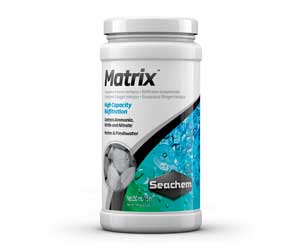
Seachem Matrix
Porous biological filter media that builds a strong bacteria colony and even hosts anaerobic bacteria to help process nitrate — a standing baseline for most filters.
Buy on Amazon.comHappy Pet Zone may earn a commission when you click through to Amazon.com, at no extra cost to you. As an Amazon Associate, we earn from qualifying purchases.
FROM AMAZON.COM
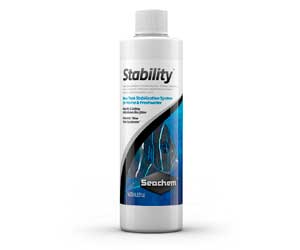
Seachem Stability
A liquid bacteria supplement that speeds up colonization and helps a lagging bacteria colony catch up — useful anytime the tank’s biological filtration needs a boost.
Buy on Amazon.comHappy Pet Zone may earn a commission when you click through to Amazon.com, at no extra cost to you. As an Amazon Associate, we earn from qualifying purchases.
Red or Rust-Colored Water
Unlike the other problems on this list, red or rust discoloration usually isn’t a bacteria or nutrient issue at all it’s mineral-rich source water, most often well water with a high iron content. Oxidizing iron particles tint the water, and the same minerals that cause the color also feed algae growth and buffer the water against pH adjustment.
This is one case where Clarity won’t help much on its own. A chemical filter media designed to pull iron and silicate, run alongside a purification step like reverse osmosis for consistently mineral-heavy source water, is the more reliable long-term fix.
Fish Gasping After a Water Change
If fish start breathing heavily or gasping at the surface right after a water change, the tap water itself is almost always the cause specifically chlorine or chloramine, both commonly added to municipal water as disinfectants.
Beyond stressing gills directly, these chemicals also kill the beneficial bacteria your biological filtration depends on.
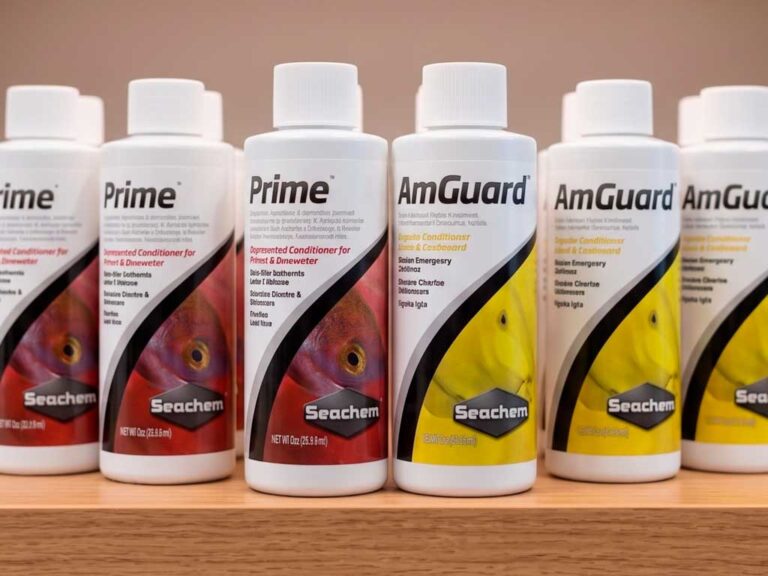
This is exactly what Seachem Prime exists to prevent: one dose neutralizes chlorine, chloramine, and any ammonia released in the process. If you’re seeing this reaction after every water change, it usually means the water isn’t being conditioned before or during the change, not that anything is wrong with the fish.
Ammonia and Nitrite: The Bacteria Colony Problem
Ammonia and nitrite are the two readings that actually matter for fish safety, and they come from unstable or insufficient beneficial bacteria colonies not from anything you’re doing wrong day to day.
A cycling tank, an overstocked tank, or one that just had its filter media replaced all show this pattern.
Matrix and Stability rebuild and support the bacteria colony itself, Prime detoxifies ammonia and nitrite temporarily while that colony catches up, and Ammonia Alert gives you a continuous visual readout instead of relying on test kits alone.
If your readings won’t drop no matter what you try, our guide to a stalled aquarium cycle covers the deeper troubleshooting this chart doesn’t.
Nitrate: The Slow Buildup
Nitrate is the natural end product of fish waste breaking down, and unlike ammonia or nitrite, it accumulates gradually rather than spiking. A steady climb usually means water changes aren’t frequent enough, or the tank needs extra media for anaerobic denitrifying bacteria.
Matrix handles the anaerobic side directly its porous structure hosts bacteria that process nitrate in oxygen-poor pockets. Purigen and Stability round out the response by pulling dissolved organics before they break down into nitrate at all.
Detritus and Organic Slime
A thin layer of detritus is completely normal. An excessive buildup means the tank doesn’t have enough beneficial bacteria to break down organic waste as fast as it accumulates usually in newer tanks or ones running light filtration for their bioload.
Matrix, Purigen, and Pristine each attack a different stage of this: Matrix builds the bacteria base, Purigen removes the organics before they decay, and Pristine breaks down existing waste directly.
Building a Simple Response Kit
Here’s what actually matters if you want to stop diagnosing from scratch every time: keep Prime on hand for every water change, Clarity for the occasional haze, and Matrix in your filter as a standing baseline.
Add PhosGuard only if algae becomes a recurring pattern, and check your source water for iron if rust-colored tinting shows up in a brand-new setup.
That’s a simple kit that covers most of what’s on this list without buying anything speculative. For the general water-parameter fundamentals behind all of this, our aquarium water guide and water chemistry guide cover the baseline this chart builds on.
This guide covers general water-quality troubleshooting and isn’t a substitute for testing your specific parameters if ammonia or nitrite readings won’t drop after following these steps, ongoing exposure is genuinely harmful to fish, so don’t wait it out.