Royal Gramma Care Guide: Tank Setup, Diet & Compatibility
Our best saltwater fish for beginners guide calls the royal gramma a genuinely easy pick, and that holds up. But there’s a purple-and-yellow fish sold in some stores under a similar name that behaves nothing like it, and mixing the two up is a stocking mistake worth avoiding entirely.
This guide covers full care, that lookalike distinction, and the cave-dwelling habits that make this species such a rewarding addition to a reef community.
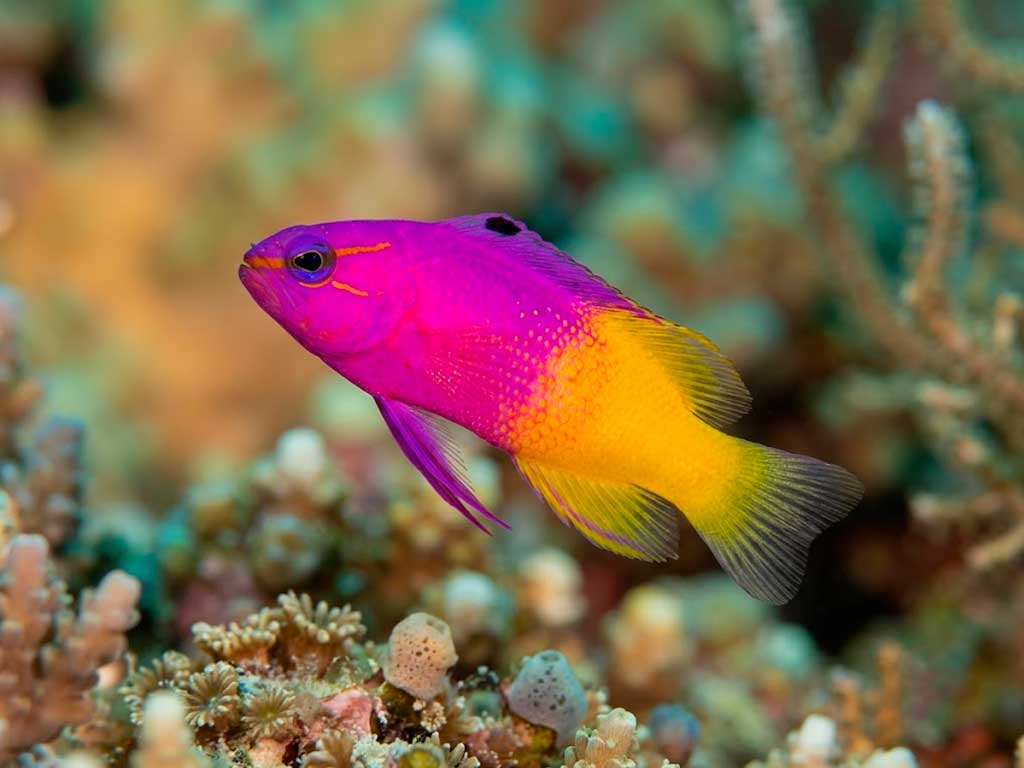
Quick answer: The royal gramma (Gramma loreto) is a hardy, fully reef-safe Caribbean basslet, purple in front and golden yellow behind, that claims a cave or overhang as its territory rather than roaming the tank. It needs at least 30 gallons, plenty of rockwork with hiding spots, and a tight-fitting lid. Don’t confuse it with the royal dottyback, a similarly colored but far more aggressive lookalike sold under a different family entirely.
Quick Facts: Royal Gramma
- Scientific name: Gramma loreto
- Also called: Fairy basslet
- Size: About 3 inches, occasionally closer to 4
- Minimum tank size: 30 gallons (single fish)
- Temperature: 72-80°F (22-27°C)
- Lifespan: 5 to 6 years typically, sometimes longer
- Reef safe: Yes, fully
- Temperament: Peaceful, but territorial over its chosen cave
Royal Gramma vs. Royal Dottyback: Don’t Get These Confused
This is the single most important thing to know before buying one. The royal dottyback, sometimes sold as the false gramma or bicolor dottyback, shares a similar purple-to-yellow color split and gets mistaken for a royal gramma constantly, including occasionally at the store. The two are not remotely related. Royal grammas belong to the Grammatidae family. Royal dottybacks belong to Pseudochromidae, a family known for scrappy, territorial temperaments.
A dottyback will chase, harass, and often dominate an entire community tank of small peaceful fish, which is the exact opposite of what most people are hoping for when they picture a fairy basslet. Look closely at the color transition to tell them apart: a true royal gramma has a soft, blended purple-to-yellow gradient, while a dottyback’s color split tends to look sharper and more defined. When in doubt, ask your local shop to confirm the species before you buy.
Natural Habitat and Behavior
Royal grammas come from the Caribbean, Gulf of Mexico, and western Atlantic, where they live along steep reef walls at depths of roughly 1 to 60 meters, tucked into shaded ledges and crevices rather than swimming out in open water. That habitat explains almost everything about how they behave in a tank: they want cover, they dislike harsh direct lighting, and they dart out to feed before retreating right back to their chosen spot.
One quirk catches new owners off guard: royal grammas orient their bellies parallel to whatever surface is nearest them, which means they’ll often hang upside down along a cave ceiling. It looks strange the first time you see it, but it’s completely normal behavior, not a sign of illness or stress.
In the wild, they’re also known to pick parasites off larger fish, functioning as an informal cleaner species. Don’t rely on a captive gramma to fill that role in your tank, though; treat any parasite-picking behavior you observe as a bonus, not a substitute for proper quarantine and disease management.
Tank Requirements and Aquascaping
A single royal gramma needs at least 30 gallons. A male-female pair needs considerably more room to establish separate territory, generally 50 to 60 gallons at minimum, with distinct caves for each fish and a visual break between them. Keeping more than a pair together gets unpredictable fast, since two mature fish competing for the same limited territory tend to fight, so most home tanks do best with one gramma or a confirmed pair rather than a group.
Aquascape specifically with this fish in mind. It wants a shaded cave or overhang as a home base, a nearby escape route, and enough separation from other cave-loving fish that territorial disputes don’t become a daily event. Our live rock and sand guide covers building that kind of structure. Keep flow moderate near the cave entrance rather than blasting it directly, and if your reef lighting is bright for the sake of corals, make sure genuinely shaded retreats exist elsewhere in the tank.
A tight-fitting mesh lid is not optional. Royal grammas jump readily when startled, and losses often happen through gaps around overflow boxes, plumbing, or cords that seemed too small to matter.
Keep water parameters stable within the ranges above, covered in more depth in our water chemistry guide. This species tolerates normal reef variation reasonably well, but sudden swings in salinity or temperature still reliably trigger hiding and reduced feeding.
Diet and Feeding
In the wild, royal grammas feed on drifting zooplankton and phytoplankton. In captivity, most captive-bred individuals adapt to prepared foods quickly, while wild-caught fish sometimes take a little longer to settle into a routine.
- Frozen mysis and brine shrimp
- Finely chopped marine shrimp
- Quality marine pellets and flakes
Feed once or twice daily, only what the fish can finish in two to three minutes. If your gramma is shy at first, feed near its cave entrance rather than in the open water column; once it learns the routine, it typically grows bolder and comes out more readily.
Compatibility and Tank Mates
Royal grammas coexist well with fish that use a different part of the tank than they do. Clownfish claiming a rock or coral, gobies staying near the sand, and cardinalfish hovering in open water all avoid direct competition for the gramma’s cave, covered in our ocellaris clownfish care guide. Peaceful wrasses and reef-safe invertebrates like shrimp and snails are safe additions too, since the gramma ignores them entirely.
Avoid large predatory fish that could view a 3-inch basslet as food, and be cautious with other cave-dwelling species that might compete for the same rockwork, including other basslets and, as covered above, the royal dottyback specifically. A short chase away from its cave entrance is normal territorial behavior; a fish being pinned in a corner or prevented from eating is not, and signals the tank needs more separation or a stocking change.
Breeding Basics
Royal grammas are protogynous, meaning the dominant individual in a pair develops into the male, the reverse direction of the sex change seen in clownfish, where the dominant fish becomes female instead. A settled male-female pair will breed readily in captivity. The male builds a small nest from bits of rock and algae, courts the female with jaw-locking and fin-flaring displays, and fertilizes the eggs once she lays them in his nest. Eggs typically hatch within 5 to 7 days.
Raising the larvae afterward is a separate, more advanced challenge requiring dedicated equipment and live food. For most home aquarists, the practical takeaway is simpler: nesting and courtship behavior noticeably increases territorial activity around the chosen cave, so don’t mistake breeding behavior for aggression toward tank mates.
Frequently Asked Questions
What is the difference between a royal gramma and a royal dottyback?
They belong to entirely different fish families and look similar only at a glance. Royal grammas are peaceful, cave-dwelling basslets, while royal dottybacks (sometimes sold as false gramma) are considerably more aggressive and territorial toward tankmates.
Is a royal gramma aggressive?
No, it’s a peaceful fish overall, though it will defend its chosen cave with short chases or a mouth-gaping display. That’s normal territorial behavior, not true aggression toward the rest of the tank.
Can royal gramma live with clownfish?
Yes, they pair well together in most community reef tanks. Clownfish typically claim a rock, coral, or anemone as their territory, while the gramma claims a cave, so the two rarely come into conflict.
Is the royal gramma reef safe?
Yes, completely. It doesn’t nip corals, clams, or anemones, and it ignores reef-safe invertebrates like shrimp and snails entirely.
What size tank does a royal gramma need?
At least 30 gallons for a single fish. A confirmed male-female pair needs more space, generally 50 to 60 gallons, to establish separate territories without constant conflict.
Why does my royal gramma swim upside down?
It’s normal. Royal grammas orient their belly toward the nearest surface, which means they often hang upside down along cave ceilings. It isn’t a sign of illness.
Can I keep more than one royal gramma together?
A confirmed male-female pair works in a large enough tank with separate caves. Two mature fish of uncertain or matching sex, especially two males, are far more likely to fight over the same territory.
Why is my royal gramma hiding and not eating?
A few days of hiding after introduction is normal. Hiding for weeks or refusing to eat usually points to a recent water quality change, an aggressive tank mate, or insufficient shaded cover, and is worth investigating rather than waiting out.
How long do royal grammas live?
Around 5 to 6 years is typical with stable care, and some individuals live longer in well-established, low-stress systems.
Do royal grammas need a lid on the tank?
Yes. They jump readily when startled, and a tight-fitting mesh lid that covers gaps around overflows and plumbing is essential to prevent losses.
Give a royal gramma the cave-and-ledge habitat it actually evolved for, confirm you’re buying the real thing rather than a dottyback in disguise, and this small, strikingly colored basslet settles into a reef community with very little drama.