Lawnmower Blenny Care Guide: Diet, Tank Size & Compatibility
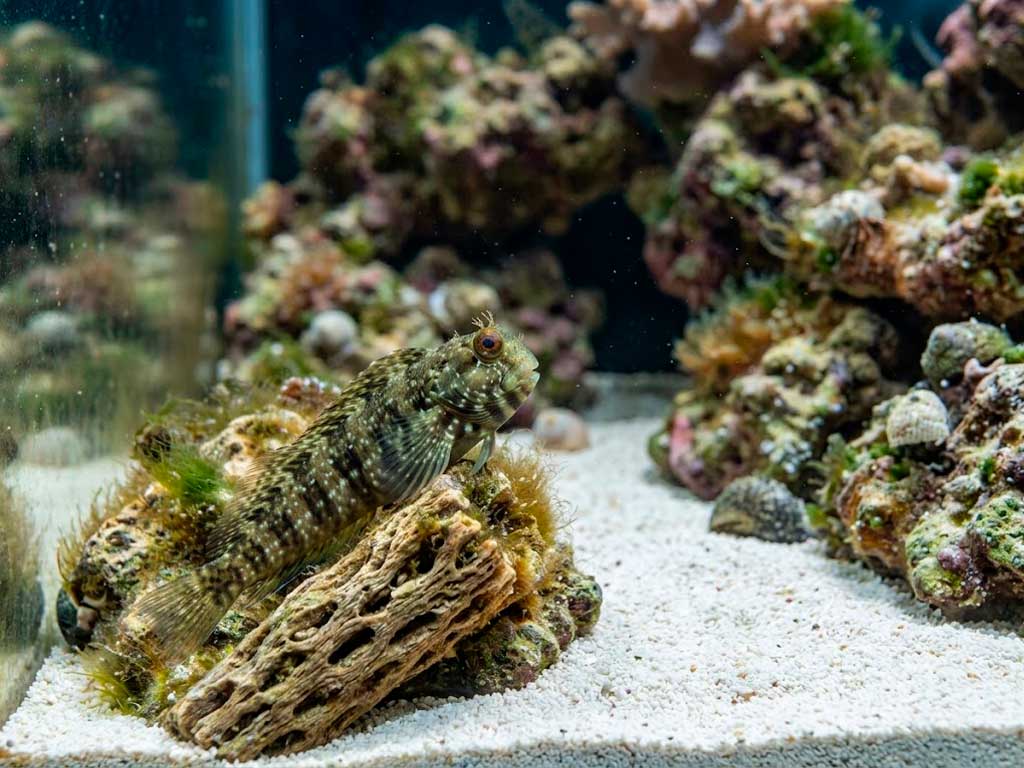
Our best saltwater fish for beginners guide calls the lawnmower blenny a genuinely useful algae grazer, and it is, almost too good at the job. This is one of the rare beginner fish where doing its job too well can become the actual problem.
This guide covers what it really eats, how to avoid the most common way this species dies in captivity, and which tankmates to keep it away from.
Quick answer: The lawnmower blenny (Salarias fasciatus) is a hardy, reef-safe algae and detritus grazer suited to tanks 30 gallons and up, ideally at least several months established with a healthy microalgae film. Its biggest risk isn’t disease, it’s starvation: this fish can strip a tank’s algae supply bare within weeks, and many individuals never learn to accept prepared foods afterward. Keep only one per tank and avoid pairing it with seahorses or pipefish, which it’s known to nip.
Quick Facts: Lawnmower Blenny
- Scientific name: Salarias fasciatus
- Also called: Jeweled blenny, algae blenny
- Size: Up to 5 inches (13 cm)
- Minimum tank size: 30 gallons, ideally 55+ if relying mainly on natural algae
- Diet: Primarily detritus, plus algae and diatoms
- Reef safe: Generally yes, rare exceptions noted below
- Temperament: Peaceful toward most fish, aggressive toward other blennies
What It Actually Eats: A Common Myth Corrected
“Algae eater” undersells this fish and sets up unrealistic expectations. Research on wild populations found that detritus, organic material settled on rock and rubble, actually makes up the bulk of this species’ natural diet, with filamentous algae, diatoms, and tiny crustaceans rounding it out. It pounds hard surfaces with its jaws almost continuously throughout the day, taking upward of 3,000 bites daily and stripping a measurable amount of material off rock with each pass.
That relentless grazing is exactly why it decimates a hair algae problem so effectively, and exactly why it can just as quickly run out of food in a small or well-maintained tank. Understanding that its diet is broader than “algae” also explains why it stirs up so much sediment while feeding, which is a genuine side benefit: that disturbed detritus becomes available for your mechanical filtration to remove.
The Starvation Risk: What Actually Kills This Fish
This is the single most important thing to know before buying one. A lawnmower blenny can strip a tank’s algae supply down to nothing within a matter of weeks, and individual fish vary enormously in whether they’ll accept prepared foods once that happens. Some readily switch to frozen or pellet foods. Others simply won’t, and starve in a tank that looks perfectly clean, which is exactly the outcome that makes this fish’s effectiveness a double-edged sword.
Introduce this species only into a tank that’s been established for several months with a healthy film of microalgae already present, never a freshly cycled one. Check on its condition regularly by looking at its belly and the muscle along its back. A pinched-in, concave look means it isn’t getting enough to eat, and you need to either offer more food immediately or move it to a tank with a better algae supply.
If your tank’s algae is genuinely running low, several feedings a day of appropriate foods becomes necessary rather than optional. Some individuals grow reluctant to eat hair algae specifically once they’re used to being hand-fed easier foods, so if pest algae control is your goal, resist over-supplementing early on.
Tank Requirements
Plan for 30 gallons minimum, and closer to 55 gallons or more if you’re hoping natural algae alone will sustain it long-term. Provide plenty of live rock, covered in our live rock and sand guide, both as a grazing surface and as retreat spots, since this fish darts into crevices when startled and often leaves just its head poking out to watch its surroundings. Keep water parameters stable, detailed in our water chemistry guide.
A secure lid is essential. This species jumps out of open tanks readily and will also leap into overflow boxes, so check every gap before adding one.
Diet and Feeding
- Established live rock with a natural microalgae and detritus film, the ideal ongoing food source
- Herbivore-formulated frozen foods, if the individual accepts them
- Sinking pellets some individuals learn to pluck off the substrate
- Meatier foods like brine or mysis shrimp as a supplement once settled
There’s genuine individual variation here. One fish may eat anything offered; another may refuse everything except what it grazes naturally. Never assume yours will accept prepared food until you’ve actually seen it happen.
Compatibility and Tank Mates
Keep only one lawnmower blenny per tank unless your system is genuinely large. This species is territorial and will fight its own kind and other blenny species almost without exception, chasing intruders regardless of size. It’s considerably more tolerant of unrelated fish, generally ignoring species that don’t look or behave like a blenny, including clownfish and most community reef fish.
A specific warning worth taking seriously: this species has a documented history of nipping seahorses and pipefish, along with occasional nips at tangs, rabbitfish, and other herbivores it may view as feeding competition. Avoid housing it with delicate, slow-moving tankmates for this reason.
It’s considered reef safe overall, generally leaving corals and clams alone, though an occasional individual nips at these anyway, and feeding activity can knock snails onto their backs where they become vulnerable to other tankmates. These are documented but uncommon behaviors, not a reason to avoid the species outright.
Frequently Asked Questions
What does a lawnmower blenny actually eat?
Primarily detritus, with filamentous algae, diatoms, and small crustaceans making up the rest. It’s more accurately described as an omnivorous grazer than a pure algae eater.
Why is my lawnmower blenny not eating?
If your tank’s algae supply has run low, it may simply have nothing left to graze and hasn’t learned to accept prepared foods. Check its belly for a pinched, concave look, a sign of starvation that needs immediate attention.
How do I know if my lawnmower blenny is starving?
Look at its belly and the muscle along its back. A healthy fish looks full-bodied; a starving one looks pinched and concave. Check regularly, especially in a tank with limited algae growth.
Is the lawnmower blenny reef safe?
Generally yes. It leaves corals and clams alone in the vast majority of cases, though rare individuals nip at them, and its feeding activity can occasionally knock snails over.
Can I keep a lawnmower blenny with seahorses?
It’s best avoided. This species has a documented history of nipping seahorses and pipefish, so they don’t make a safe pairing.
Can I keep two lawnmower blennies together?
Only in a very large tank, generally 180 gallons or more. In smaller systems, they will fight their own kind and other blenny species almost without exception.
What size tank does a lawnmower blenny need?
30 gallons as a minimum, though 55 gallons or larger gives it a better chance of sustaining itself on natural algae growth alone if it turns out to be a picky eater of prepared foods.
Few beginner fish reward a genuinely established tank the way this one does. Wait until your live rock has a real algae film, keep an eye on its belly, and the lawnmower blenny earns its keep as one of the hardest-working, most entertaining utility fish in the hobby.