Diamond Goby Care Guide: Sand Sifting & Tank Setup
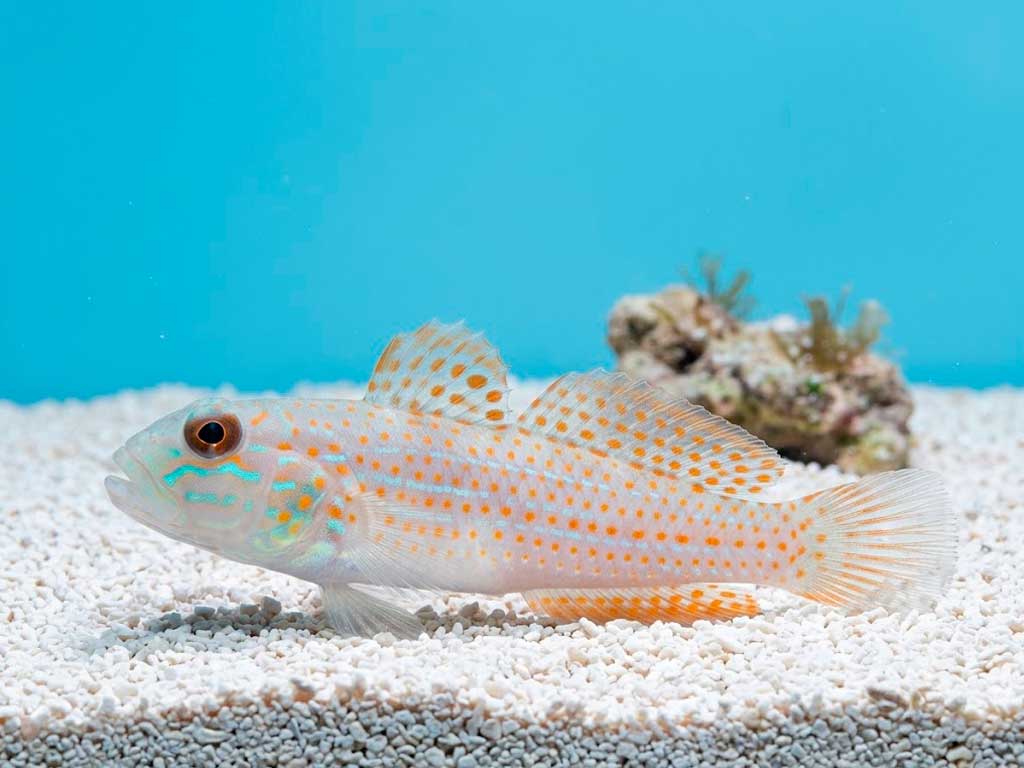
Our best saltwater fish for beginners guide lists the diamond goby among the sand-sifting cleanup crew, and it genuinely earns that reputation.
It also shares a well-known failure mode with a couple of other fish on that list: it can run out of food in a tank that looks perfectly fine, and knowing why prevents most of the losses this species is known for.
Quick answer: The diamond goby (Valenciennea puellaris) is a peaceful, timid, sand-sifting reef fish suited to tanks 30 gallons and up with several inches of fine to mixed-grain sand. It constantly processes sand through its gills to extract tiny food organisms, which keeps your sand bed clean but also means it can starve in a small or heavily established tank that’s already been picked clean of that food source. It’s also despite the name, not the same fish as the yellow watchman goby and doesn’t pair with pistol shrimp.
Quick Facts: Diamond Goby
- Scientific name: Valenciennea puellaris
- Also called: Orange-spotted diamond goby, diamond watchman goby, diamond sleeper goby
- Size: Up to 5 inches (13 cm)
- Minimum tank size: 30 gallons
- Substrate: Several inches of fine to mixed-grain sand
- Diet: Carnivore, sand-dwelling microfauna and small crustaceans
- Temperament: Peaceful, timid
Not the Same Fish as the Yellow Watchman Goby
The name “diamond watchman goby” causes real confusion, since it shares the word “watchman” with an entirely different species. Our yellow watchman goby guide covers a Cryptocentrus species that pairs with a pistol shrimp in a shared burrow. The diamond goby belongs to the genus Valenciennea instead, doesn’t form that shrimp partnership, and spends its time actively sifting open sand rather than guarding a burrow entrance. Both are excellent, peaceful sand-associated fish, just with genuinely different lifestyles.
How Sand Sifting Actually Works
A diamond goby scoops mouthfuls of sand almost constantly throughout the day, passes it through its gills to extract tiny worms, copepods, and other minute organisms living in the substrate, then spits the cleaned sand back out. This is genuinely useful housekeeping: it keeps the sand bed turned over, aerated, and free of the detritus buildup that can otherwise settle and rot undisturbed.
Expect real volumes of sand to move overnight, sometimes enough to shift a light aquascape element or partially bury something planted too close to its foraging area. This isn’t a malfunction, it’s just how the fish makes a living, and it’s worth planning your sand bed and nearby decor with that in mind.
The Starvation Risk Behind Its “Sudden Death” Reputation
This species has a genuine reputation in the hobby for dying unexpectedly weeks or months after being introduced, and the most common explanation isn’t disease. A small sand bed, or one that’s already been thoroughly picked over, simply runs out of the microfauna this fish depends on. Since it’s a specialized sand-sifter rather than a generalist eater, many individuals are slow to switch to prepared foods even when they’re clearly running low on natural forage, and a fish that looks perfectly healthy can decline quickly once its food source is exhausted.
A larger, well-established sand bed with real depth gives this species a genuinely sustainable food supply. In smaller or newer tanks, plan to supplement with sinking foods regularly rather than assuming the sand alone will keep it fed indefinitely, and keep an eye on its body condition the same way you would with a lawnmower blenny, a hollow or pinched look is an early warning sign worth acting on immediately.
Acclimation and Settling In
Diamond gobies are naturally timid, and it is common for a newly introduced individual to bury itself in the sand for the first day or two rather than actively foraging where you can see it. This is a normal stress response, not a sign of illness, and most individuals become noticeably bolder within a week as they settle into a routine. If a fish is still hiding constantly after several weeks and showing no interest in food, that is worth investigating rather than waiting out indefinitely.
A tank with established live rock and a mature sand bed, rather than one still finishing its initial cycle, gives a diamond goby the best odds of a smooth transition. Introducing this species too early, before the sand bed has developed a real population of microfauna, compounds the starvation risk covered above right from day one.
Tank Requirements
Provide at least 30 gallons with several inches of fine to mixed-grain sand, deep enough for the fish to burrow into at night and forage through comfortably. Our live rock and sand guide covers sand depth and grain size in more detail. Keep water parameters stable, detailed in our water chemistry guide, and use a tight-fitting lid. This species jumps when startled, a common trait among sand-associated gobies.
Diet and Feeding
- Established live sand with a healthy population of copepods and other microfauna, its primary natural food source
- Sinking frozen foods like mysis or finely chopped meaty foods, as a regular supplement
- Sinking pellets, once an individual learns to accept them
Feed directly onto the sand where the fish forages, and don’t assume natural sand fauna alone will sustain it in anything smaller than a large, mature system.
Compatibility and Tank Mates
Diamond gobies are peaceful and generally timid, coexisting well with calm community fish including clownfish and royal grammas. Avoid boisterous or aggressive tankmates that might bully a naturally shy fish out of feeding confidently. Multiple diamond gobies can sometimes be kept together in a large enough tank with plenty of sand to go around, though a single specimen is the safer default for most home aquariums.
Frequently Asked Questions
Is the diamond goby the same as the yellow watchman goby?
No. They’re different genera with different lifestyles. The diamond goby (Valenciennea puellaris) actively sifts open sand and doesn’t pair with a pistol shrimp, while the yellow watchman goby forms a burrow-sharing partnership with one.
Why do diamond gobies die suddenly?
The most common cause is starvation once the sand bed’s natural microfauna runs out, particularly in smaller or older, well-picked-over tanks. Regular supplemental feeding of sinking foods prevents this in most cases.
What size sand bed does a diamond goby need?
Several inches of fine to mixed-grain sand, deep enough to burrow into and forage through comfortably. A larger sand bed also sustains a bigger natural food supply.
Will a diamond goby rearrange my aquascape?
It can move real volumes of sand while foraging, which occasionally shifts light decor or partially buries items placed too close to its favorite spots. Plan your aquascape with that natural behavior in mind.
Is the diamond goby reef safe?
Yes. It ignores corals and invertebrates and poses no threat to a reef tank.
Does a diamond goby jump out of tanks?
It can, particularly when startled. A tight-fitting lid is a simple, worthwhile precaution.
Give a diamond goby real sand depth, keep supplemental feeding in the routine rather than an afterthought, and this quiet, constantly working fish does more for your sand bed’s health than almost anything else you could add to the cleanup crew.