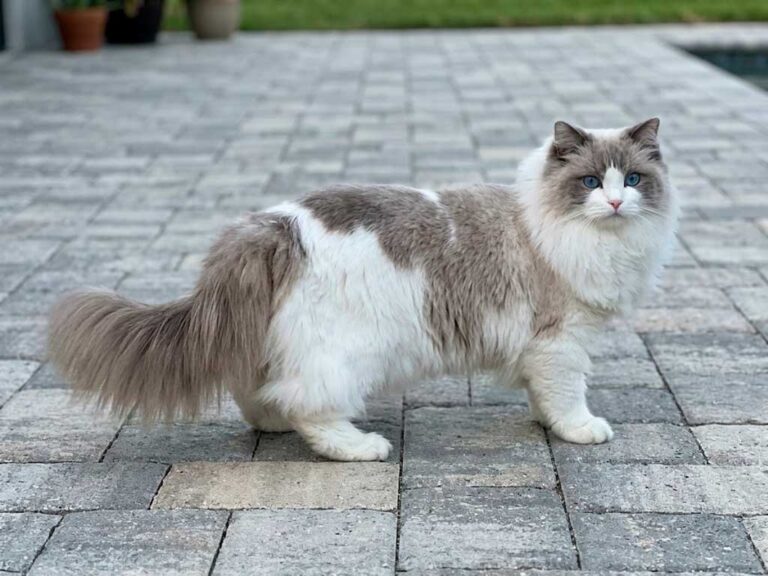
Best Hypoallergenic Cat Breeds: 9 Breeds to Consider if You Have Allergies
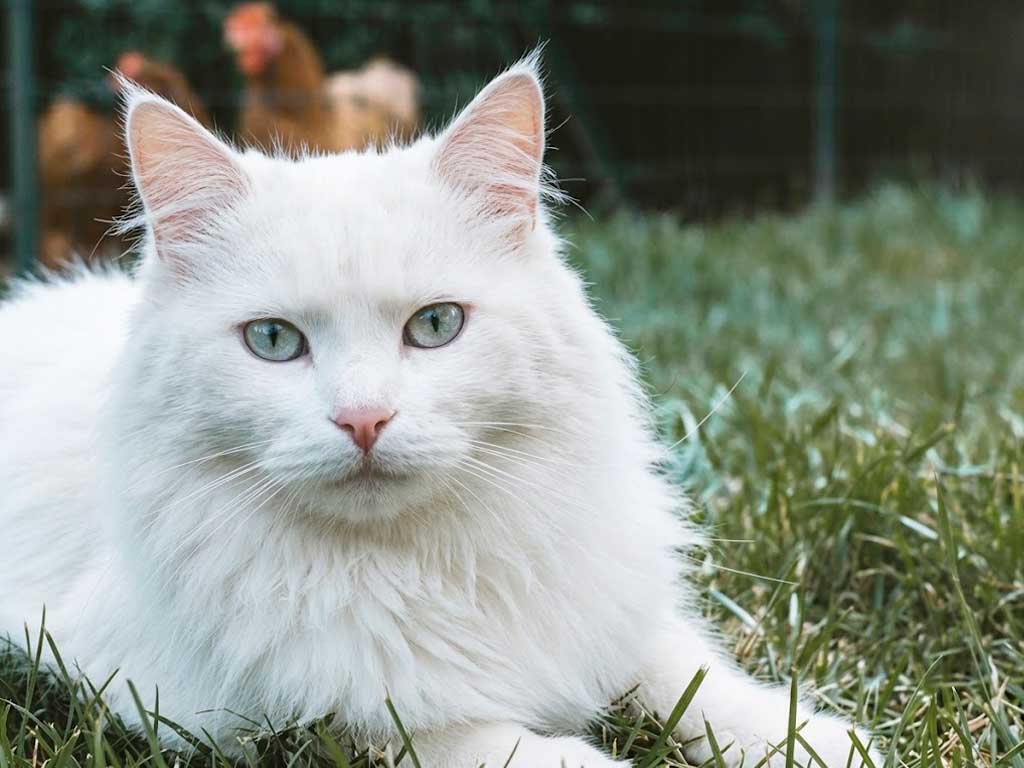
If someone in your house sneezes around cats, you’ve probably heard about hypoallergenic cat breeds. The idea sounds perfect: choose the right cat and the allergy goes away.
Unfortunately, no cat breed has been scientifically proven to be completely hypoallergenic. Some individual cats may produce different amounts of certain allergens, though, and understanding that difference can help you make a more informed decision.
Siberian, Balinese, Bengal, Siamese, and several other breeds frequently appear on lists of cats for people with allergies. Their reputations can be a useful starting point, but coat type and breed alone cannot predict how your body will respond.
This guide explains what hypoallergenic really means, what researchers know about the main cat allergen, which nine breeds are worth learning about, and how to approach cat ownership when allergies are a concern. If you or someone in your household has asthma or significant allergy symptoms, speak with an allergist before bringing a cat home.
What Does “Hypoallergenic” Actually Mean?
The word hypoallergenic means less likely to cause an allergic reaction. The prefix hypo- comes from Greek and means “under” or “less than usual.” It does not mean that something is entirely free of allergens.
That distinction matters when choosing a cat. A breed described as hypoallergenic may still trigger sneezing, itchy eyes, congestion, or other symptoms. The label should never be treated as a promise that you can live with that cat without a reaction.
Some breeders and pet websites use the term to describe cats with particular coats or reputations for producing fewer allergens. Those descriptions may help you decide which breeds to investigate, but they do not replace scientific evidence or an assessment of your own sensitivity.
What Causes Cat Allergies?
Cat allergies are caused by proteins produced by cats. One of the best-known is Fel d 1, a major cat allergen found primarily in secretions from the salivary and sebaceous glands.
When cats groom themselves, saliva spreads across their coats. Allergen-containing material can then transfer to skin flakes, fur, furniture, clothing, and household dust. Some particles become airborne, while others settle on surfaces and remain there after the cat has left the room.
Fel d 1 is particularly important because more than 90% of people with cat allergies have been reported to show sensitivity to it. Research reviews also describe Fel d 1 as responsible for a substantial share of the allergenic activity associated with cat dander.
It is not the only protein that can cause a reaction. Other cat allergens, including Fel d 2 and Fel d 4, can affect some people as well. This helps explain why a strategy that reduces exposure to one protein may not eliminate symptoms for everyone.
How Common Are Cat Allergies?
Studies in Europe and the United States have reported sensitization to animal allergens in approximately 10% to 14% of the general adult population. Sensitization means the immune system recognizes an allergen; it does not necessarily mean that every sensitized person experiences noticeable symptoms.
Reactions vary widely. One person may develop a few sneezes after petting a cat, while another may experience persistent nasal symptoms or worsening asthma. The amount of allergen encountered and a person’s individual sensitivity both matter.
Fel d 1 can also travel beyond the home. It can cling to clothing and hair, allowing cat allergens to reach places where no cat lives. For someone who is highly sensitive, avoiding direct contact with cats may not eliminate every possible exposure.
Can Some Cats Produce Fewer Allergens Than Others?
Yes. Research has found differences in Fel d 1 levels between individual cats. However, those differences do not establish that a particular breed will consistently produce less allergen or prevent allergic reactions.
A small 2014 study examined samples from six cats described as normal and eight cats described as hypoallergenic. The researchers reported lower Fel d 1 levels in some samples from the latter group. The findings are interesting, but the study was small and cannot establish that an entire breed is reliably safer for people with allergies.
A 2024 scientific review concluded that there was no convincing scientific evidence for the existence of a genuinely hypoallergenic cat breed. It also noted that even hairless Sphynx cats produce Fel d 1.
In other words, the amount of allergen produced by an individual cat may be more relevant than its breed label. That variation is one reason why allergy sufferers can report very different experiences with cats that supposedly belong to the same low-allergen category.
9 Best Hypoallergenic Cat Breeds to Consider
The following nine breeds frequently appear in searches for hypoallergenic cats. Each has characteristics that may appeal to prospective owners, but none is guaranteed to cause fewer allergic reactions.
1. Siberian Cat
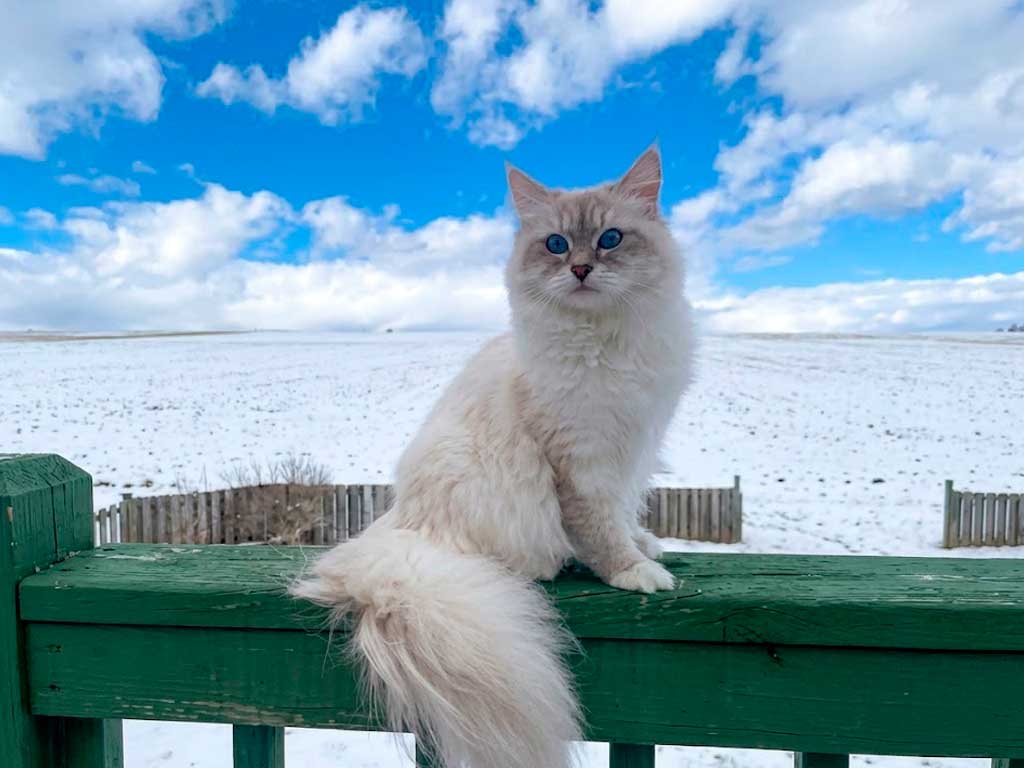
The Siberian is a sturdy, long-haired cat with a thick coat, a bushy tail, and a substantial build. It often appears near the top of lists featuring cats described as hypoallergenic.
Some claims about Siberians focus on the possibility that certain individuals produce lower levels of Fel d 1. Researchers have investigated allergen production and genetic factors in these cats, but the available evidence does not establish the breed as reliably hypoallergenic.
Their dense coats require regular grooming, especially during periods of heavier shedding. If you prefer a cat with a fluffy appearance, be prepared for the coat maintenance that comes with it.
What allergy sufferers should know: A Siberian may be worth investigating if you are comparing breeds, but its reputation cannot predict your reaction. Spend time with the individual cat when possible and discuss your allergy risk with a healthcare professional before committing.
2. Balinese Cat
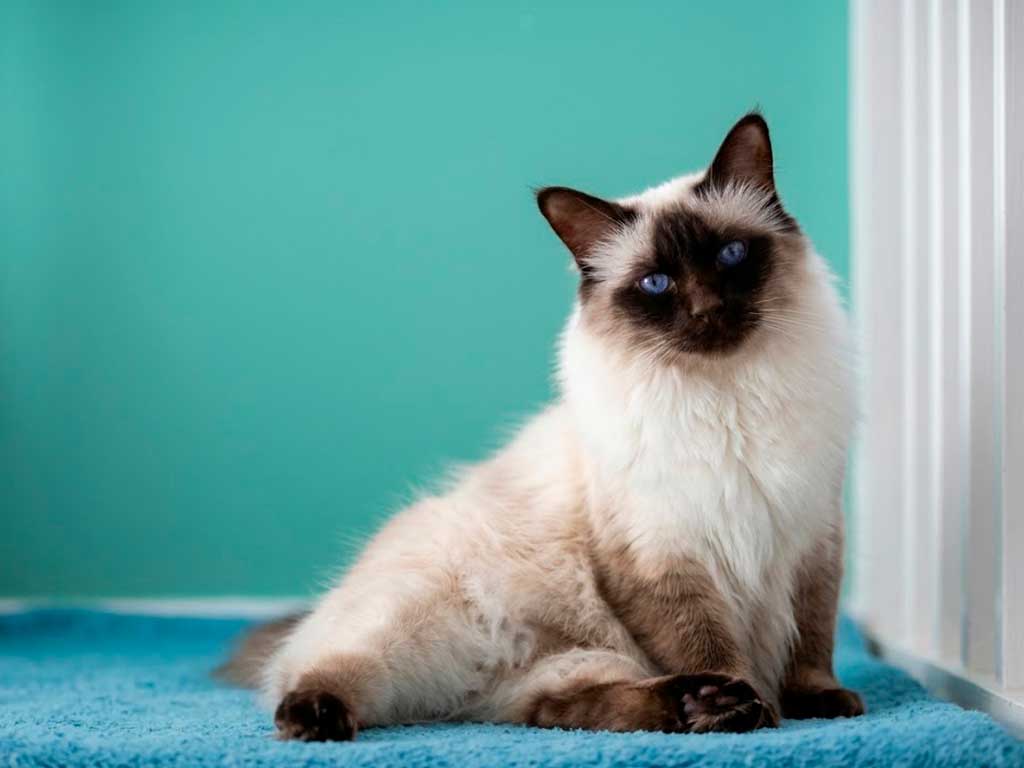
Balinese cats have a long, silky coat, a slender body, and a distinctive pointed colour pattern. They are closely related to Siamese cats and are often described as active, vocal, and socially engaged.
Despite their coat length, Balinese cats frequently appear on lists of allergy-friendly breeds. However, those descriptions do not prove that they consistently produce lower levels of clinically relevant allergens.
Their coat may be manageable with regular brushing, but grooming needs and allergen production are separate matters. A cat that looks tidy and sheds relatively little visible fur can still trigger symptoms.
What allergy sufferers should know: Consider the Balinese for its appearance and personality, rather than relying on the claim that it is hypoallergenic. Your response to an individual cat is what matters.
3. Bengal Cat
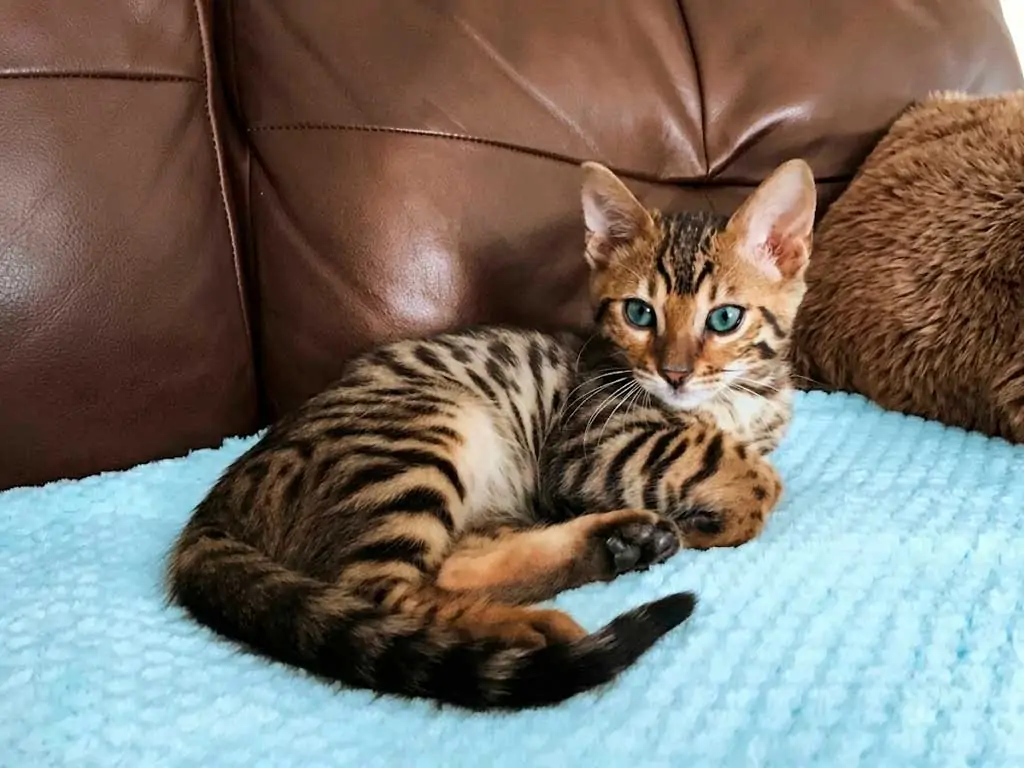
Bengal cats have a short, sleek coat, a muscular build, and distinctive spotted or marbled markings. Their appearance resembles that of a small wild cat, although domestic Bengals are companion animals.
Because their coats are short and their shedding may be less noticeable than that of some long-haired breeds, Bengals are sometimes included in lists of cats for people with allergies.
The important distinction is that shedding and allergen production are not the same thing. Visible fur is only one way allergen-containing material can spread around a home, and a short coat does not make a cat allergen-free.
Bengals are also energetic and generally need plenty of play, enrichment, and interaction. Their activity level should be part of your decision, particularly if you want a quieter companion.
What allergy sufferers should know: Do not use a Bengal’s short coat as evidence that it will cause fewer symptoms. Consider both your likely allergen exposure and whether the breed suits your household.
4. Siamese Cat
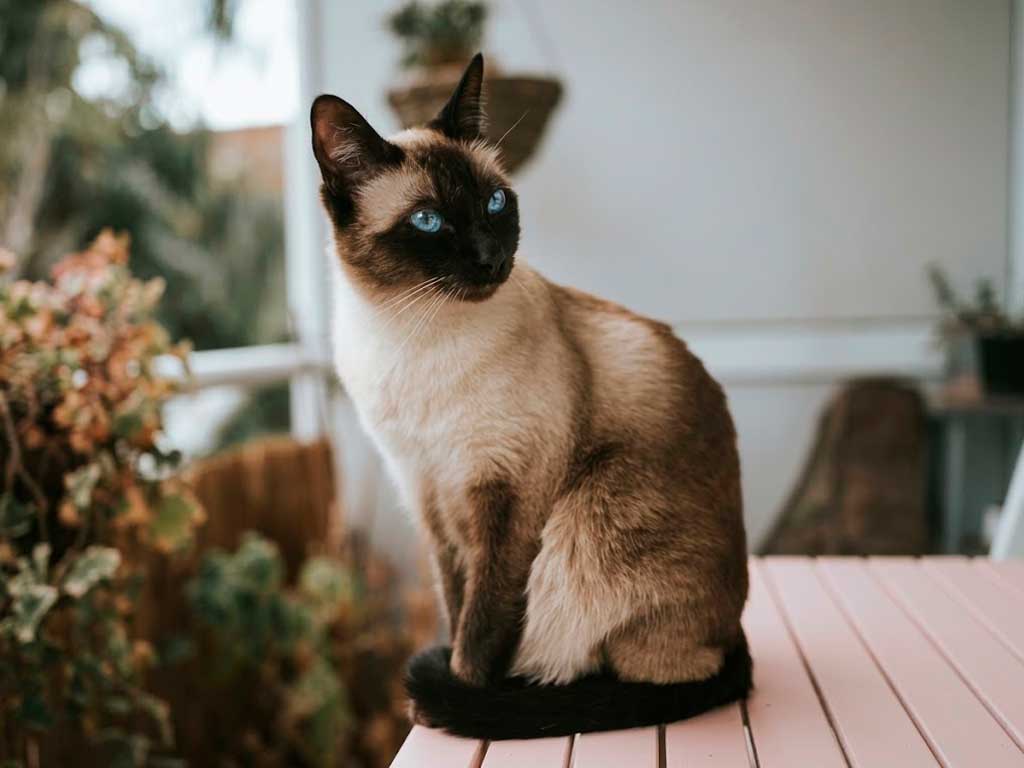
Siamese cats are recognised by their sleek bodies, short coats, blue eyes, and pointed colouring. Many are vocal, social, and eager to participate in household activities.
Their short hair makes grooming relatively straightforward. However, the idea that Siamese cats are hypoallergenic because they have less fur is not supported by sufficient scientific evidence.
Allergens are proteins produced by the cat, not simply loose hairs. A short-haired Siamese can still distribute allergen-containing material through grooming and ordinary contact with people and furniture.
What allergy sufferers should know: A Siamese may suit someone who enjoys an interactive, people-oriented cat. Its coat does not guarantee a lower risk of allergic reactions.
5. Maine Coon Cat
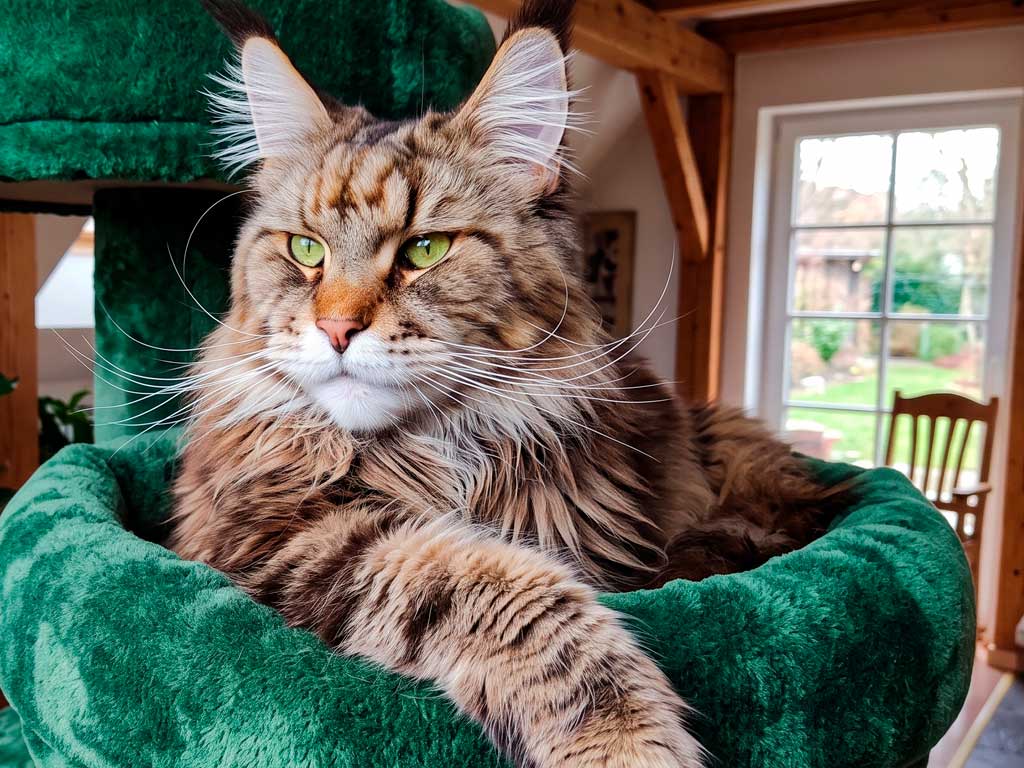
The Maine Coon is a large, long-haired breed with a substantial tail, tufted ears, and a thick coat adapted to cold conditions. Many are known for their sociable nature and relaxed presence around familiar people.
Their coat requires regular maintenance to help prevent tangles and mats. Because Maine Coons have considerable fur, some people assume they must be especially difficult for allergy sufferers. Others wonder whether their reputation as gentle companions makes them a suitable choice.
Neither assumption answers the allergy question. Coat length and temperament do not establish how much allergen a particular cat produces.
What allergy sufferers should know: Consider the Maine Coon if its size, personality, and grooming needs suit your household. Do not select it, or rule it out, solely because of its coat.
6. Ragdoll Cat
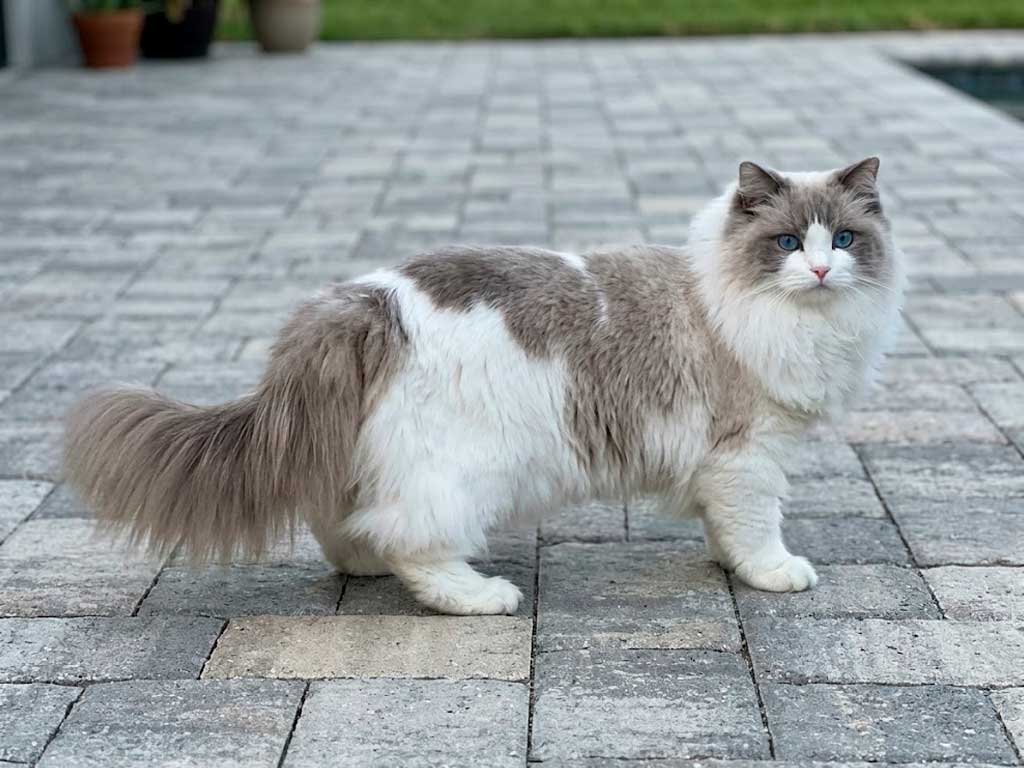
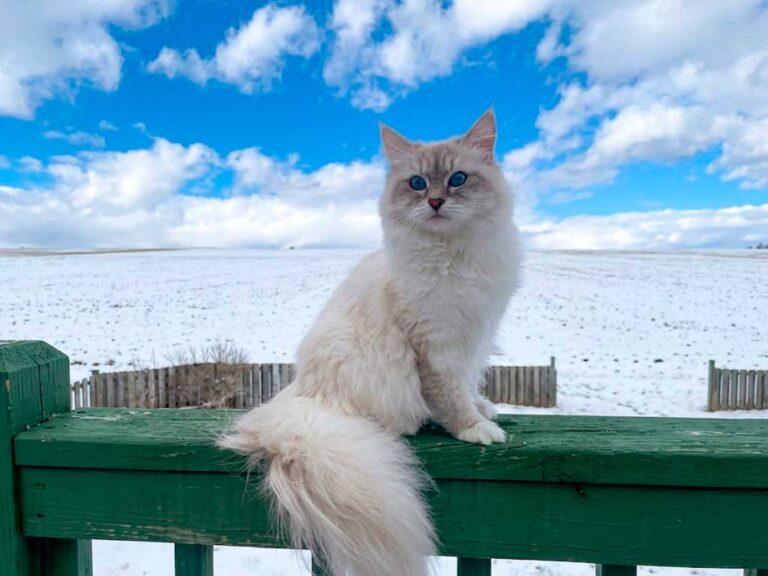
Ragdolls are large, semi-long-haired cats known for their blue eyes, pointed colouring, and often affectionate temperament. Their soft coats benefit from regular brushing.
Ragdolls appear in some lists of hypoallergenic cats, but there is no reliable scientific basis for promising that they will cause fewer allergic reactions.
Their coats can shed, leaving fur on clothing, furniture, and other household surfaces. Even if a particular Ragdoll sheds less than expected, that alone would not establish its allergen levels.
What allergy sufferers should know: A Ragdoll may appeal to people looking for a sociable companion, but its reputation as an allergy-friendly breed should not be treated as a medical recommendation.
7. Russian Blue Cat
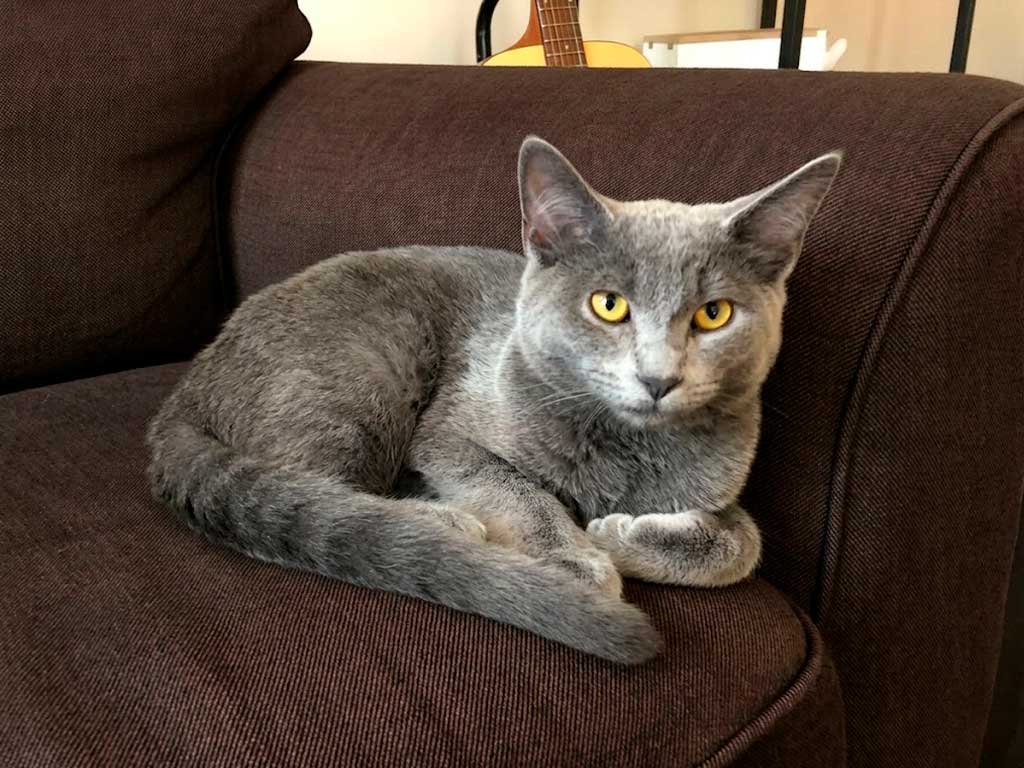
The Russian Blue has a short, dense coat, a blue-grey appearance, and vivid green eyes. Many are described as reserved with strangers but affectionate with familiar people.
The breed is often marketed as hypoallergenic. However, the claim that Russian Blues consistently produce fewer allergens has not been established by strong scientific evidence.
Their dense double coat can shed, and even a cat that leaves relatively little visible fur around the house can still spread allergens through grooming and ordinary contact.
What allergy sufferers should know: If you like the Russian Blue’s appearance and temperament, consider meeting an individual cat. Its coat and breed reputation cannot guarantee that it will be comfortable for someone with allergies.
8. Devon Rex Cat
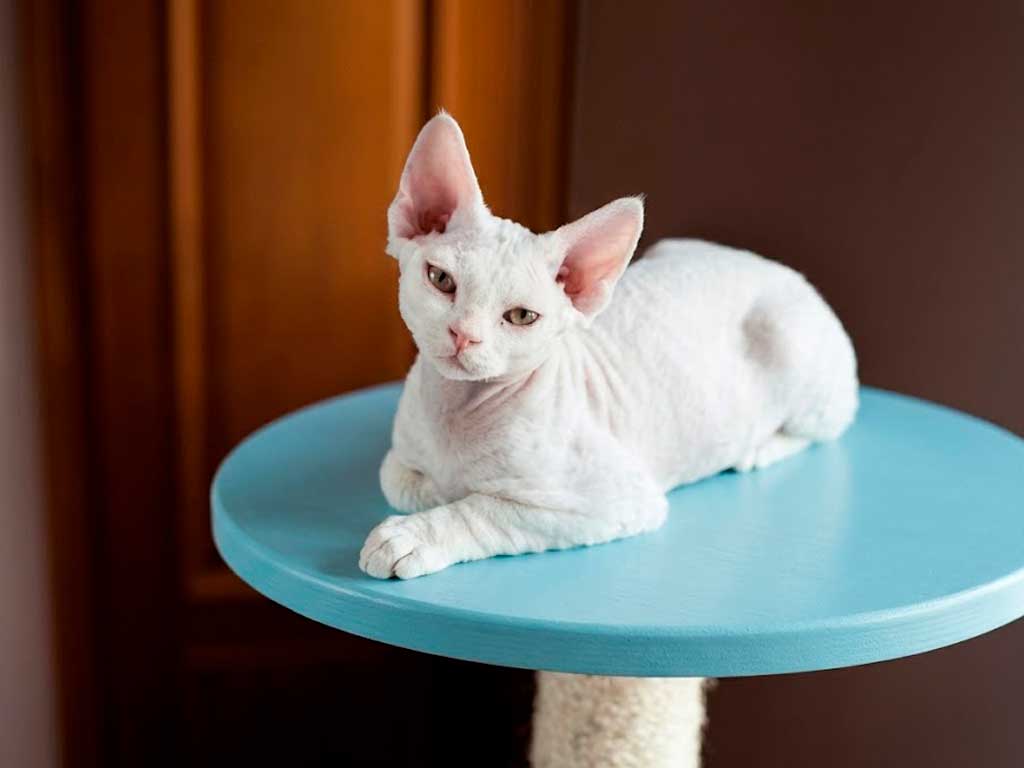
The Devon Rex has a distinctive appearance, with large ears, prominent cheekbones, and a short, wavy coat. These cats are often active, playful, and interested in interacting with people.
Their coat may shed less noticeably than that of many other breeds, which helps explain why they appear in some hypoallergenic cat lists.
However, a coat that sheds less does not necessarily produce less Fel d 1. Devon Rex cats still produce allergens, and people with allergies can react to them.
Their coat and skin may also require care suited to the individual cat. Ask a veterinarian or reputable breeder about appropriate grooming rather than assuming that less fur means less maintenance.
What allergy sufferers should know: The Devon Rex may be worth considering because of its personality and coat, but there is no guarantee that it will cause milder symptoms.
9. Sphynx Cat
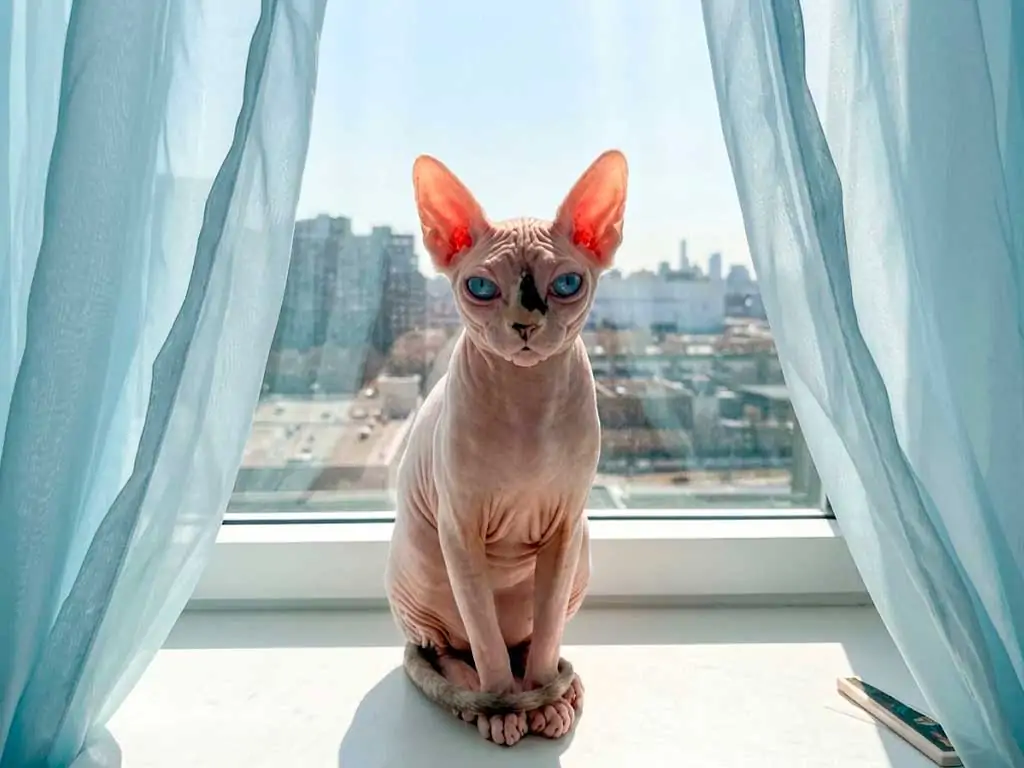
The Sphynx is famous for its largely hairless appearance, large ears, and wrinkled skin. It can be an appealing choice for someone who dislikes finding fur on clothing and furniture.
Yet hairlessness does not make a cat allergen-free. Sphynx cats still produce Fel d 1 and other allergens, including proteins associated with saliva and skin secretions.
Because they lack a conventional coat, their skin may need regular care to manage oil buildup. They also need protection from excessive cold and sun exposure.
What allergy sufferers should know: A Sphynx may reduce the amount of loose fur around the house, but it is not a reliable solution to cat allergies. It can still trigger symptoms.
Hypoallergenic Cats vs. Low-Shedding Cats
These terms are often used as though they mean the same thing. They describe different characteristics.
A low-shedding cat may leave less visible fur on furniture, clothing, and floors. A cat described as hypoallergenic is supposed to be less likely to trigger allergies.
The problem is that the amount of fur a cat sheds does not reliably predict its allergen production or the severity of a person’s reaction.
Do Cats That Shed Less Cause Fewer Allergies?
Not necessarily. Cat allergens are proteins, and they can be carried on skin flakes, saliva, fur, and household dust. Even cats with short coats or limited visible shedding can spread these proteins around a home.
The amount of allergen a person encounters also depends on factors such as the number of cats in the home, which rooms they use, and how much time the person spends in close contact with them.
If your main concern is keeping fur off furniture, a low-shedding breed may be appealing. If your concern is an allergic reaction, shedding alone is not a dependable way to choose a cat.
Are Hairless Cats Better for People With Allergies?
Not automatically. The Sphynx illustrates why visible fur is an unreliable measure of allergen exposure.
A hairless cat can still spread allergen-containing material through saliva and skin secretions. Some people may find a particular hairless cat easier to live with, but that experience cannot be generalised to everyone with allergies.
What Is Fel d 1, and Can You Reduce Exposure to It?
Fel d 1 is a major cat allergen. It is produced primarily in glands associated with the skin and saliva, then distributed around the environment through grooming and normal activity.
Although Fel d 1 receives much of the attention, it is not the only protein involved in cat allergies. That is one reason why a single strategy may not work for every allergic person.
Do Some Cats Produce Less Fel d 1?
Individual cats can differ in how much Fel d 1 they produce. Hormonal factors may also influence production. For example, research reviews report that unneutered male cats tend to produce more Fel d 1 on average than females, although individual differences remain important.
These findings are useful for understanding how allergen production varies. They do not establish a breed that reliably produces so little allergen that it can be considered safe for people with cat allergies.
Be cautious with claims that a breeder can guarantee an allergy-free kitten or that a particular pedigree eliminates the risk. There is no established guarantee of that kind.
Can Cat Food Help Reduce Allergens?
Some foods have been developed to target active Fel d 1 in saliva. These products use antibodies intended to bind to the allergen and reduce its activity.
Research has reported reductions in immunologically active Fel d 1 in saliva and hair after cats received certain allergen-targeting foods. A 2024 scientific review describes these findings as promising but preliminary, noting the need for larger studies that evaluate actual allergic symptoms in people exposed to treated cats.
Such products should not be assumed to eliminate cat allergens or prevent allergic reactions. They also do not address every cat allergen that may affect a sensitive person.
If you are considering an allergen-targeting food, discuss it with your veterinarian and review the available evidence. It should not replace medical advice or a broader plan for managing your allergy.
How to Choose a Cat if You Have Allergies
Choosing a cat involves more than comparing breed descriptions. You need to consider your symptoms, the amount of contact you expect to have with the cat, and whether you can manage allergen exposure in your home.
Spend Time With the Individual Cat Before Committing
If possible, spend time around the specific cat you are considering before adopting or buying it. Pay attention to your symptoms during and after the visit.
Keep in mind that one short visit cannot reliably predict how you will react after living with a cat. Allergen exposure can accumulate, and reactions may vary depending on the setting.
A breeder’s claim that a cat is hypoallergenic should never replace your own medical assessment. Reports from other owners may be helpful for generating questions, but individual experiences are anecdotal and cannot guarantee the same result for you.
Talk to an Allergist Before Bringing a Cat Home
An allergist can help determine whether your symptoms are caused by cats and discuss appropriate treatment or exposure management.
This is especially important if you experience wheezing, chest tightness, shortness of breath, or worsening asthma symptoms. Breathing difficulties need prompt medical attention.
Do not rely on a breed choice to manage a potentially serious allergy. A clinician can help you understand your individual risk and available options.
Reduce Allergen Exposure at Home
If you decide to live with a cat, several measures may help reduce your exposure. Their effectiveness varies, and no single measure guarantees a symptom-free home.
- Keep the bedroom cat-free. Limiting the cat’s access to your sleeping area may help reduce direct exposure during the night.
- Consider a HEPA air cleaner. A properly sized unit used consistently may help reduce airborne particles.
- Clean surfaces regularly. Vacuuming with a suitable high-efficiency filter and cleaning household surfaces can help remove accumulated allergens.
- Wash your hands after handling the cat. Avoid rubbing your eyes or touching your face immediately after close contact.
- Discuss treatment options with an allergist. Medication or allergen immunotherapy may be appropriate for some people, depending on their symptoms and medical history.
- Consider grooming carefully. Ask your veterinarian how to care for your cat’s coat and skin. Bathing may temporarily reduce allergen levels in some circumstances, but the effect can be short-lived and frequent bathing may cause stress or skin problems for some cats.
These measures can be combined, but they should not be treated as a guarantee that living with a cat will be safe for someone with a significant allergy.
What About Hypoallergenic Kittens?
Kittens are not guaranteed to cause fewer allergies than adult cats. Their future allergen production and the way your body responds cannot be reliably predicted from their age or breed label.
A kitten may also change as it grows, and your exposure will increase once it lives in your home. Before committing, consider whether you could manage the situation if symptoms develop or worsen.
If your allergy is significant, talk to an allergist before bringing any cat into your home. It is better to understand your options before making a long-term commitment.
Frequently Asked Questions
Finding a Cat You Can Live With
Finding a cat that fits your life is exciting, but allergies add a practical consideration that deserves careful thought. Siberian, Balinese, Bengal, Siamese, Maine Coon, Ragdoll, Russian Blue, Devon Rex, and Sphynx cats are all commonly discussed in searches for hypoallergenic breeds.
None offers a guarantee against allergic reactions. Coat type, shedding, and breed reputation cannot reliably predict how much a particular person will react to a particular cat.
Start with reliable information, consider the individual animal, and speak with an allergist before making a commitment if you have a known cat allergy. A thoughtful decision gives both you and your future companion a better chance of a comfortable life together.
Health disclaimer: This article provides general educational information and is not a substitute for medical advice, diagnosis, or treatment. If you experience significant allergic symptoms, asthma, or breathing difficulties around cats, consult a qualified healthcare professional.
Sources
- American College of Allergy, Asthma & Immunology (ACAAI). Pet Allergy.
https://acaai.org/allergies/allergic-conditions/pet-allergies/ - American Academy of Allergy, Asthma & Immunology (AAAAI). Pet Allergy: Symptoms, Diagnosis, Treatment & Management.
https://www.aaaai.org/conditions-treatments/allergies/pet-allergy - Hilger, C., Janssen-Weets, B., & Swiontek, K. (2024). Hypoallergenic animals: A promise of hope for allergic patients? Allergologie Select, 8, 64–69.
https://pmc.ncbi.nlm.nih.gov/articles/PMC10975736/ - Sparkes, A. H. (2022). Human allergy to cats: A review for veterinarians on prevalence, causes, symptoms and control. Journal of Feline Medicine and Surgery, 24(1), 31–42.
https://pmc.ncbi.nlm.nih.gov/articles/PMC8721530/ - American Academy of Allergy, Asthma & Immunology (AAAAI). Indoor Allergens.
https://www.aaaai.org/tools-for-the-public/conditions-library/allergies/indoor-allergens