Russian Blue: The Cat With a Secret Smile
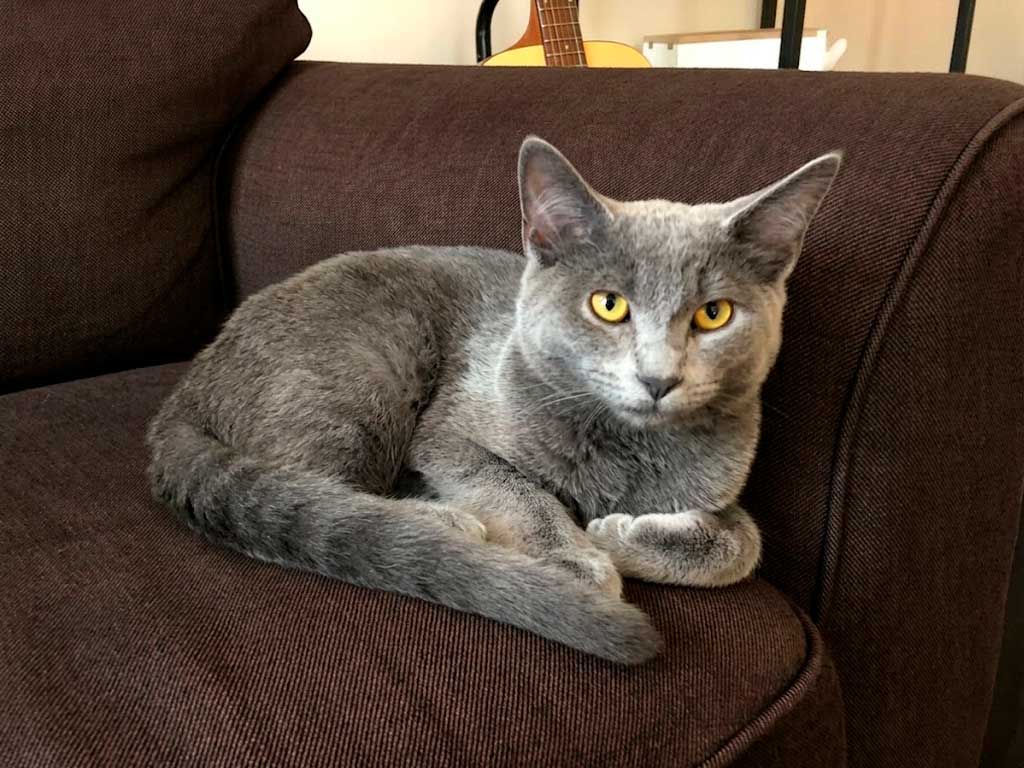
Your cat isn’t laughing at a joke you’re not in on — though a Russian Blue genuinely looks like it might be. CFA’s own breed description notes the face appears to be smiling at some secret amusement, and once you meet one, that description stops feeling like a stretch.
That expression comes attached to one of the sharpest minds in the cat world. Spoiler: if a cabinet, drawer, or sealed container goes mysteriously open in your house, don’t rule out your Russian Blue as the culprit before you’ve actually checked.
Quick Facts: Medium-sized, fine-boned, graceful body. Males rarely exceed 10 lbs, females 5-8 lbs. Short, dense, silver-tipped blue coat. Vivid green eyes that deepen with age. No allowable outcross breeds.
History: From the Archangel Isles to Post-War Reunification
The Russian Blue is believed to have originated on the Archangel Isles in northern Russia, though very little was documented about the breed before the late 1800s. Russian folklore describes these cats as good-luck charms with healing influence, and other accounts place them among the pets of Russian royalty — and, notably, two English queens.
Sailors are thought to have carried Russian Blues to England, where they competed in the earliest English cat shows under the name “Archangel Cats,” lumped in with other solid blue breeds of the time. From the early 1900s until World War II, Scandinavian breeders took the lead in refining the breed. After the war, American breeders began importing cats from Europe and combined the English and Scandinavian bloodlines to produce the Russian Blue recognized today.
CFA offers two of its own historical breed articles on the Russian Blue, written in 1994 and 2001, reflecting just how much documented interest this breed has attracted from fanciers over the decades.
The Blue Cat Trio: Russian Blue vs. British Shorthair vs. Chartreux
These three blue-gray breeds get mixed up constantly, and between them they cover most of the “is that a Russian Blue?” questions people ask about any solid blue cat. Our British Shorthair guide and Chartreux guide cover the other two members of this trio in more depth, but the short version: the British Shorthair carries the roundest face and comes in dozens of colors beyond blue, the Chartreux sits in between with a huskier, more “primitive” build and a woolly coat, and the Russian Blue is the most fine-boned and elegant of the three, with a distinctly angular, wedge-shaped face rather than a round one.
Coat texture is the fastest way to tell them apart in person: run your fingers through a Russian Blue’s coat and it’s dense enough to leave visible “footprints” behind, a texture unlike either of its blue-coated cousins.
Physical Characteristics
The head forms a smooth, medium wedge with a distinctive two-plane profile — the top of the skull runs long and flat, descending gently before continuing at a slight downward angle to the nose, with no break or stop along the way. Large, wide-set ears with thin, translucent skin sit far apart, almost as much on the side of the head as on top.
The coat is short, dense, and plush, standing out from the body thanks to its sheer density, with distinct silver tips creating a shimmering, glistening effect in sunlight. Eyes are a vivid green that typically deepens in intensity as the cat matures. Only one color is recognized — an even, bright blue, lighter shades preferred — with slate grey nose leather and lavender-pink paw pads.
The body itself is fine-boned, long, and firm, muscular and lithe without ever reading as tubular. Legs run long and fine-boned to match, ending in small, slightly rounded paws with five toes in front and four behind.
Personality: Brains, Charm, and a Talent for Escape Artistry
Your cat isn’t randomly curious about that sealed jar — a Russian Blue approaches every closed cabinet, shut drawer, or lidded container as a genuine puzzle to solve, and mechanical aptitude runs remarkably high in this breed. Puzzle toys and interactive games help redirect that problem-solving drive productively, though don’t be shocked to still find the occasional door standing open that you’re certain you closed.
Despite that independent streak, Russian Blues are deeply affectionate, seeking out laps or riding along on shoulders as readily as they investigate the house. It’s typical for one to duck under the sofa when a guest arrives, only for curiosity to win out and bring the cat back out to investigate the newcomer on its own terms.
This breed is notably sensitive to its owner’s moods — many will clown around to lift your spirits or offer gentle head-butts and quiet purrs to a crying child. They do especially well with older children who can let the cat set the pace for getting comfortable, and most adapt well to noisier households and other pets given time.
That intelligence pairs well with a genuinely calm temperament — this isn’t a breed that channels its cleverness into chaos so much as quiet, persistent investigation, which makes Russian Blues easier to live with than their problem-solving reputation might suggest.
Caring for a Russian Blue
This is a genuinely low-maintenance breed in the grooming department. Combing two or three times a month keeps shedding under control, and beyond that, routine nail trims and eye and ear cleaning cover the basics. Occasionally the coat can turn a bit oily or greasy, in which case a bath helps — check with your breeder for product recommendations, since coat texture varies slightly cat to cat.
Given the breed’s hearty appetite, portion-controlled feeding and interactive feeding toys work better than free-feeding, helping stretch out mealtime while naturally limiting how much a Russian Blue can eat in one sitting.
Health Conditions to Know
Russian Blues are a healthy, natural breed with no confirmed breed-specific genetic conditions, though some believe the relatively small founding gene pool may leave the breed somewhat more susceptible to certain diseases generally. The more practical concern is appetite: Russian Blues eat heartily, and without frequent, interactive exercise, they’re at real risk of obesity and the health problems that follow from it.
Health Disclaimer: This guide is for educational purposes only and doesn’t replace professional veterinary advice. Monitor food intake carefully and keep your Russian Blue active with regular play to help maintain a healthy weight.
Finding a Russian Blue: Price and Availability
This breed is popular worldwide, and demand currently outpaces the number of active breeders — expect a genuine wait for a kitten. A cat show remains the best way to connect with a breeder, and other breeders can often point you toward a Russian Blue specialist even if none show up at your local event. If you’re in a hurry, ask about adopting a retired adult, which is typically less expensive than a kitten and skips the more demanding early months.
CFA’s own breeder directory is a solid starting point if local shows come up short, and given the breed’s worldwide popularity, breeders outside your immediate region may still be a reasonable option worth exploring.
Is a Russian Blue Right for You?
This breed suits people who want a genuinely intelligent, affectionate cat that doesn’t need a lot of space to feel content. If the idea of a clever companion that solves puzzles, reads your mood, and eventually warms up to every guest sounds appealing, a Russian Blue delivers exactly that.
It’s a tougher fit for anyone who wants an instantly outgoing cat with no adjustment period, or a household unwilling to childproof cabinets against a genuinely determined problem-solver. Your cat isn’t going to trust strangers immediately. Once it decides you’re worth knowing, though, that quiet devotion runs deep.
Frequently Asked Questions
What’s the difference between a Russian Blue, British Shorthair, and Chartreux?
The Russian Blue has the most fine-boned, angular build and a wedge-shaped face; the British Shorthair has a rounder face and comes in many colors beyond blue; the Chartreux sits in between with a huskier, more primitive build and a woolly coat.
Are Russian Blue cats hypoallergenic?
No cat breed is truly hypoallergenic, though some allergy sufferers report tolerating Russian Blues better than other breeds — this isn’t scientifically guaranteed and varies by individual.
Why are Russian Blues so good at opening things?
The breed has genuinely high mechanical aptitude and intelligence, treating closed cabinets, drawers, and containers as puzzles to solve rather than barriers.
Are Russian Blues good with kids and other pets?
Yes, especially with older children who let the cat warm up at its own pace. Most adapt well to other pets and even noisier households over time.
How much does a Russian Blue cat cost?
Prices vary, but expect a real wait given that demand for this popular breed currently outpaces the number of active breeders. Retired adult cats are typically a more affordable option.
A Russian Blue carries centuries of folklore, royal favor, and genuine intelligence behind that faint, knowing smile. Give it time to trust you, and this breed rewards patience with a quiet, clever devotion unlike almost anything else in the cat world.
Browse more breed profiles in the full Cat Breeds guide.