Norwegian Forest Cat: Norway’s Mythical ‘Wegie’ Explained
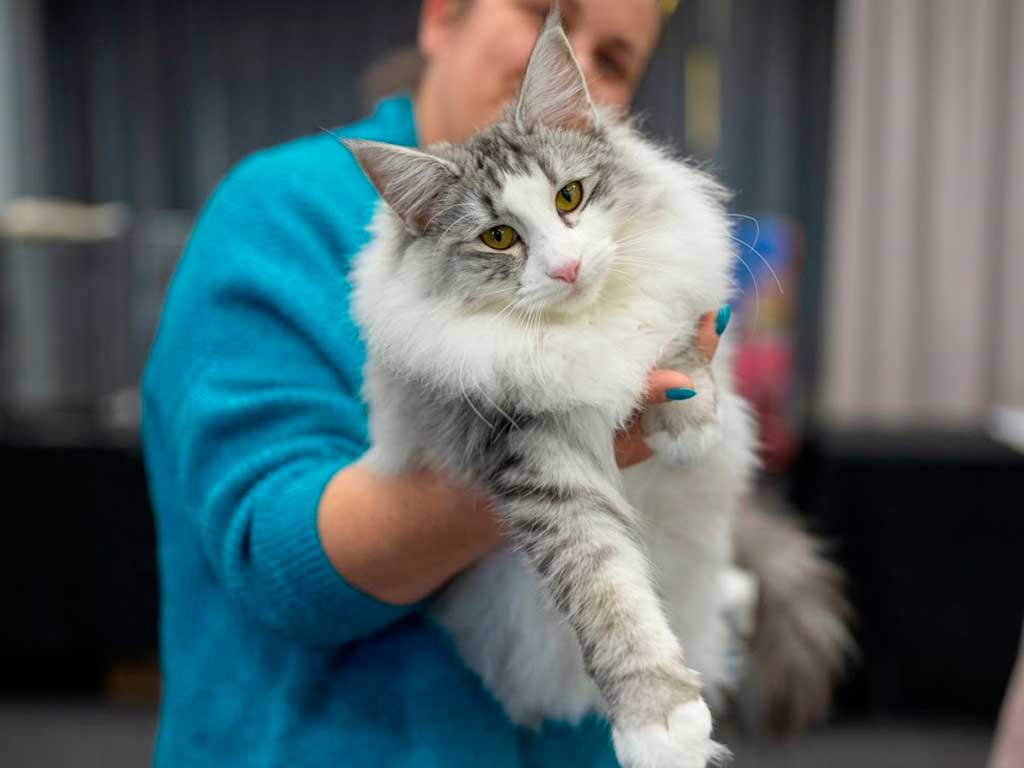
Your cat isn’t just fluffy — according to Norse mythology, the Norwegian Forest Cat pulled the chariot of Freya, the goddess of love, beauty, fertility, and health. Two gigantic “Skogkatts” were said to draw her through the sky, and honestly, looking at a full-grown Wegie in winter coat, it’s not hard to picture.
Whether you take the myth literally or see this breed as one of nature’s most perfectly engineered survivors, one thing is certain: this is a cat built by centuries of brutal Scandinavian winters, not by a breeder’s sketchbook. Spoiler: it’s also one of the most commonly confused breeds with America’s own giant, the Maine Coon.
Quick Facts: Large and sturdy. Males 12-16 lbs, females 9-12 lbs. Doesn’t reach full growth until around 5 years old. Water-resistant double coat. Equilateral triangle head shape.
History: 4,000 Years From Norse Myth to CFA Championship
The exact origins of the Norwegian Forest Cat aren’t fully documented, but the breed is thought to have emerged from Scandinavian forests roughly 4,000 years ago, gradually transitioning into life as a working farm cat and dedicated rodent-control specialist. Beyond the Freya legend, historians believe Viking explorers likely brought Forest Cats aboard their ships specifically to keep rodents away from food stores — meaning these cats may have reached the eastern coast of North America as early as the late 900s AD, centuries before European colonization.
King Olaf officially named the Norwegian Forest Cat the national cat of Norway in the 1970s, cementing a status the breed had informally held for generations. The first breeding pair arrived in the United States in 1979, and CFA granted the breed full championship status in 1993.
The breed nearly disappeared as a distinct type at one point, due to widespread interbreeding with local shorthair strays. It wasn’t until the mid-1970s that the first dedicated breed club formed in Norway, launching a careful breeding program built from selected non-pedigreed cats that were evaluated and certified for registration by a panel of judges — essentially rescuing the breed from disappearing into the general cat population.
Norwegian Forest Cat vs. Maine Coon: How to Tell Them Apart
These two giant, cold-weather breeds get mixed up constantly, and it’s easy to see why — both are large, longhaired, historically working cats built to survive brutal winters. Our Maine Coon guide covers America’s version of this story in more depth, but the clearest visual difference comes down to the head and coat: the Maine Coon carries a more rectangular head with a squared muzzle, while the Norwegian Forest Cat’s head forms a precise equilateral triangle with a straight profile from brow to nose tip, no break in the line.
Coat texture differs too. The Maine Coon’s coat is shaggier and less water-resistant; the Norwegian Forest Cat carries a true double coat with a glossy, smooth, genuinely water-repellent guard layer — a functional difference rooted in each breed’s specific climate history. Temperament also splits a bit: Maine Coons tend to run more overtly social and floor-bound, while Norwegian Forest Cats lean more independent and drawn to high places, though both breeds are famously gentle giants at heart.
Physical Characteristics
The head is the breed’s calling card: a true equilateral triangle when measured from the base of each ear to the point of the chin, with a straight nose profile and no pronounced break. Large, almond-shaped eyes add a striking, almost mysterious quality to an already captivating face.
Everything else about the build says winter survival gear. The double coat consists of a dense undercoat topped by long, glossy, water-resistant guard hairs, with a frontal ruff at the neck and chest. Heavily furnished ears, tufted paws, and a long bushy tail all work together to deflect wind and snow. This is a genuinely slow-maturing breed — full growth isn’t reached until roughly five years of age, notably even later than the similarly slow-growing Maine Coon.
Eye and coat color come in a huge range — nearly every color and pattern is accepted, with the notable exception of colors showing evidence of hybridization, like chocolate, lavender, cinnamon, or Himalayan-style pointed markings.
Personality and Temperament
Your cat isn’t clingy, and it’s not going to pretend otherwise — Norwegian Forest Cats are independent and self-sufficient by nature, a direct legacy of their working history. That said, they genuinely will seek out companionship if left alone too long, and they can absolutely be lap cats. It just has to be entirely their decision when to get on, and when to leave.
Moderately active with random bursts of energy, this breed entertains itself with toys, running, hiding, and ambushing imaginary prey with real enthusiasm. Vocally, expect a range from soft purring to bird-like chirps when excited. Wegies stay near their people and sometimes help with whatever’s happening — right up until they remember something more interesting to do on their own.
Given a genuine fondness for high places, tall scratching posts or a sturdy cat tree matter more for this breed than most — without one, don’t be surprised if the top of the kitchen cabinet becomes its favorite spot. Norwegian Forest Cats get along well with other cats, dogs, and children.
Caring for a Norwegian Forest Cat
Despite that impressively thick double coat, grooming stays surprisingly manageable. Regular combing with a stainless-steel comb handles most tangles, and the coat is generally more resistant to matting than other long-haired breeds — a trait that helped these cats survive outdoors in the first place. Extra attention matters in spring, when the dense winter coat sheds out for a lighter summer version.
If you plan to bathe your Norwegian Forest Cat, check with your breeder for the right products and technique first. That water-repellent coat is genuinely engineered to resist moisture, which means it takes a long time to get properly wet — and even longer to dry afterward.
Diet needs scale with this breed’s large size and slow, multi-year growth period — kitten-appropriate nutrition matters for longer than with most breeds, given how many years it takes to reach full adult size.
Health Conditions to Know
Norwegian Forest Cats are generally healthy, but two hereditary conditions are worth knowing. Hypertrophic cardiomyopathy (HCM), a thickening of the heart muscle, has occurred in the breed, and regular cardiac screening helps catch it early. Glycogen storage disease, a rare inherited metabolic disorder, has also appeared historically. Breeders now routinely test for both conditions and work to remove carrier cats from breeding programs.
Health Disclaimer: This guide is for educational purposes only and doesn’t replace professional veterinary advice. Ask breeders for HCM and glycogen storage disease testing results on both parents, and keep up with regular cardiac screening as your cat ages.
Finding a Norwegian Forest Cat: Price and Availability
A cat show remains the best way to connect with a breeder and get a feel for the breed in person. If you’re seeking a specific color or sex, expect a wait, but CFA notes that finding a Norwegian Forest Cat kitten generally shouldn’t prove especially difficult given the breed’s steady popularity.
Is a Norwegian Forest Cat Right for You?
This breed suits people who want a large, independent, genuinely gentle companion that doesn’t need constant attention to feel content. If the idea of a cat that supervises from the top of a cat tree, chirps when excited, and curls up on your lap strictly on its own schedule sounds appealing, a Norwegian Forest Cat delivers exactly that.
It’s a tougher fit for anyone wanting an instantly needy, floor-bound lap cat, or a household without room for serious vertical cat furniture. Your cat isn’t going to ask permission to reach the top shelf. It’s going to get there, survey the room, and decide when it’s ready to come down.
Frequently Asked Questions
What’s the difference between a Norwegian Forest Cat and a Maine Coon?
The clearest visual differences are head shape (equilateral triangle vs. more rectangular) and coat texture (genuinely water-repellent vs. shaggier). Temperament also differs slightly, with Norwegian Forest Cats leaning more independent and Maine Coons more overtly floor-oriented and social.
Why is the Norwegian Forest Cat linked to Norse mythology?
Norse legend describes the breed as sacred to Freya, goddess of love and fertility, with two giant “Skogkatts” pulling her chariot. The breed was later officially named Norway’s national cat by King Olaf in the 1970s.
How big do Norwegian Forest Cats get?
Males typically weigh 12-16 lbs and females 9-12 lbs, with the breed not reaching full size until around 5 years old — one of the slowest maturation timelines in the cat world.
What health problems are Norwegian Forest Cats prone to?
The main concerns are hypertrophic cardiomyopathy (HCM) and glycogen storage disease. Responsible breeders test for both conditions.
How much does a Norwegian Forest Cat cost?
Prices vary, and finding a kitten generally isn’t difficult, though a specific color or sex may involve a longer wait.
A Norwegian Forest Cat carries four thousand years of Scandinavian survival into every tufted paw and water-repellent guard hair. Myth or not, this is a breed that earned its legendary reputation the hard way — one brutal winter at a time.
Browse more breed profiles in the full Cat Breeds guide.