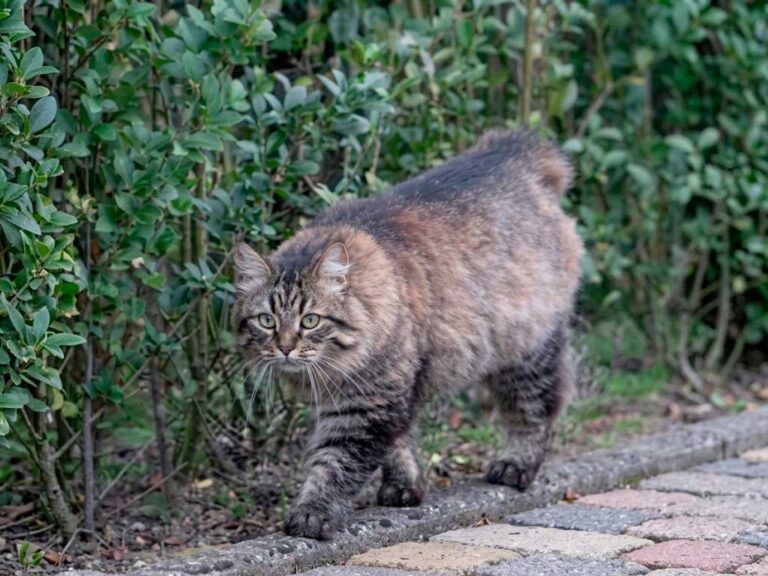
Chartreux Cat: The Blue ‘Silent Monk’ Breed of France

Your cat isn’t taking a vow of silence — though for centuries, people genuinely believed that’s exactly what it was doing. A popular legend claims the Chartreux cat once lived in French monasteries and adopted the monks’ quiet, contemplative lifestyle, right down to staying silent.
It’s a charming story, and it’s not true. But here’s the twist: the legend stuck around this long because it’s not entirely wrong either. Chartreux really are quieter than most cats, with a calm, dignified presence that would fit right in at a monastery, vow or no vow.
Quick Facts: Robust, muscular build. Males up to 14 lbs, females smaller. Takes 3-5 years to reach maturity. Blue coat only, with copper to gold eyes and a natural “smiling” expression.
History: Monks, Wool, and a Very French Naming Tradition
References to blue cats in France date back to the 16th century. For years, the breed’s name was assumed to come from the Carthusian monks who reportedly kept them, but historians now think it more likely traces to a type of Spanish wool that traders called “Chartreux” — a fitting comparison, given how woolly the cat’s coat actually feels.
Deliberate breeding began in France in the 1920s, drawing from natural colonies of blue cats that already showed consistent type and calm, hardy temperaments despite rough outdoor conditions. The breed reached North America in 1970 and has stayed remarkably close to its original standard since, thanks to breeders focused on preservation over trend-chasing.
North American breeders still follow a French naming tradition here too: kittens born in a given year all get names starting with the same letter, cycling through a set list that skips K, Q, W, X, Y, and Z. It’s the same system used for several French-origin breeds, including the Birman.
Whichever origin story is true, the breed’s survival through harsh outdoor conditions for centuries before formal breeding began speaks to genuine hardiness — early breeders specifically praised these cats for staying healthy and even-tempered despite a life that offered no guarantees.
Physical Characteristics
Everything about the Chartreux reads husky and capable — a broad, rounded head, powerful jaw, and a build breeders describe as “primitive,” meaning neither cobby nor sleek, just naturally strong. Despite that solid frame, the breed moves with real agility rather than clumsiness.
The coat comes in exactly one color: blue-gray, ranging from ash to slate, with a slight silver sheen. It’s dense, somewhat water-resistant, and genuinely woolly in texture — CFA’s official standard even says it should “break like a sheepskin” at the neck and flanks. Whisker pads give every Chartreux a permanent hint of a smile, and the eyes range from copper to a striking deep orange-gold.
Legs are comparatively fine-boned relative to that heavy body, and the feet look almost dainty by comparison — a detail that surprises people expecting proportionally sturdy legs to match the substantial frame.
Personality: Quiet, Not Silent
Your cat isn’t ignoring your call — it might just answer with a look instead of a sound. Many Chartreux have a genuinely tiny voice they use sparingly, and some are functionally mute, communicating instead through murmurs, chirps, expressive eyes, and body language. A gentle paw touch might mean “let me up,” while a toy dropped at your feet means it’s playtime.
Despite the quiet reputation, this is a famously playful, dog-like breed. Many Chartreux learn to walk on a leash, retrieve toys, and respond to their own names — throw a toy and expect an enthusiastic game that runs until the cat’s energy genuinely taps out.
They’re loyal without being needy, following their people from room to room and settling into comfortable routines and rituals with the household. Polite rather than demanding, a Chartreux tends to ask for what it wants rather than insist on it.
That reflex speed shows up in play more than anywhere else — Chartreux are famously fast and precise when chasing a toy, a trait breeders attribute to generations spent as working mousers before formal breeding ever began.
Caring for a Chartreux
Grooming follows a seasonal rhythm: light maintenance most of the year, with heavier shedding in spring and fall that calls for more frequent combing. A wide-spaced metal comb prevents mats and cuts down on loose hair around the house. Bathing is rarely necessary and genuinely difficult given how water-resistant the coat is — consult your breeder before attempting one.
One important note for allergy-sensitive households: the abundance of woolly undercoat makes this breed a poor match for anyone with cat allergies, even compared to some other shedding breeds.
Diet and weight deserve attention as this breed ages. A Chartreux should carry a solid, muscular body feel rather than true fat, and mature cats can be prone to weight gain, ask your breeder or vet for specific diet guidance if your cat struggles to maintain a healthy condition.
Nail trims, ear checks, and dental care round out the routine on a standard schedule, nothing unusual, just consistency over the years this breed is likely to be part of your household.
Health Conditions to Know
Chartreux are generally a healthy, robust breed. The main condition worth knowing is patellar luxation, a heritable kneecap issue that can affect mobility. Vets can screen kittens and adult cats for it; mild cases often don’t cause real mobility problems, though affected cats shouldn’t be used for breeding.
Because this remains a genuinely rare breed in CFA shows, breeders work to maintain genetic diversity by exchanging cats internationally rather than relying on a narrow domestic gene pool.
Health Disclaimer: This guide is for educational purposes only and doesn’t replace professional veterinary advice. Ask breeders about patellar luxation screening, and discuss weight management with your vet as your Chartreux matures.
Because males mature so much more slowly than females, taking the full three to five years to fill out — don’t be surprised if a young male Chartreux still looks noticeably lean well past his first birthday.
Finding a Chartreux: Price and Availability
This is one of the rarer breeds shown in CFA competitions, so a cat show remains the best way to connect with a breeder — check with the sponsoring club ahead of time to confirm Chartreux will actually be represented, since not every show draws every breed.
Given the breed’s rarity and the international effort involved in maintaining genetic diversity, expect a wait and a real application process rather than an easy same-week pickup.
If you’re open to color or sex, the wait tends to be shorter than chasing a very specific coat shade though with only one recognized color, variation within the breed comes down to subtle differences in the exact tone of blue-gray rather than anything more dramatic.
Is a Chartreux Right for You?
This breed suits people who want a calm, dignified companion with genuine playfulness underneath a cat that follows a routine, communicates through subtle cues rather than constant meowing, and rewards patience with real loyalty.
It’s a poor match for anyone with cat allergies, given the dense woolly undercoat, or for households hoping for a chatty, vocal companion. Your cat isn’t taking a vow of silence. It’s just decided that most things don’t need to be said out loud.
Working households where the cat spends real time alone tend to work fine too, since Chartreux are naturally independent and self-sufficient without becoming aloof — a trait carried over from generations of surviving without much human help.
Chartreux vs. British Shorthair vs. Russian Blue: The Blue Cat Mix-Up
All three get confused constantly since they share a similar blue-gray coat. The easiest tells: the British Shorthair has a rounder, chubbier face and comes in many colors beyond blue; the Russian Blue is finer-boned with a more angular face; the Chartreux sits in between, huskier than a Russian Blue but less round-faced than a British Shorthair, and is the only one of the three restricted to blue as its sole recognized color.
Frequently Asked Questions
Did Chartreux cats really live in monasteries?
It’s a popular legend without solid historical backing. The breed’s actual name likely comes from a type of wool traders called Chartreux, not from Carthusian monks.
Are Chartreux cats hypoallergenic?
No — the opposite, in fact. The dense woolly undercoat makes this breed a particularly poor choice for allergy sufferers.
What colors do Chartreux cats come in?
Only one: blue-gray, ranging from ash to slate. No other colors are recognized in the breed standard.
Are Chartreux cats good with kids and other pets?
Yes — their calm, adaptable nature and dog-like playfulness generally make them a good fit for families and multi-pet households.
How much does a Chartreux cat cost?
Prices vary, but expect a premium and a wait given how rare the breed remains, even at CFA shows.
A Chartreux cat never actually took a vow of silence, but it’s spent centuries being quietly, confidently itself anyway — a French treasure with a smile built into its face and a whole lot more going on beneath that calm exterior than the legend ever gave it credit for.
Browse more breed profiles in the full Cat Breeds guide.