Devon Rex: Meet the Pixie-Faced Cat That Follows You Everywhere
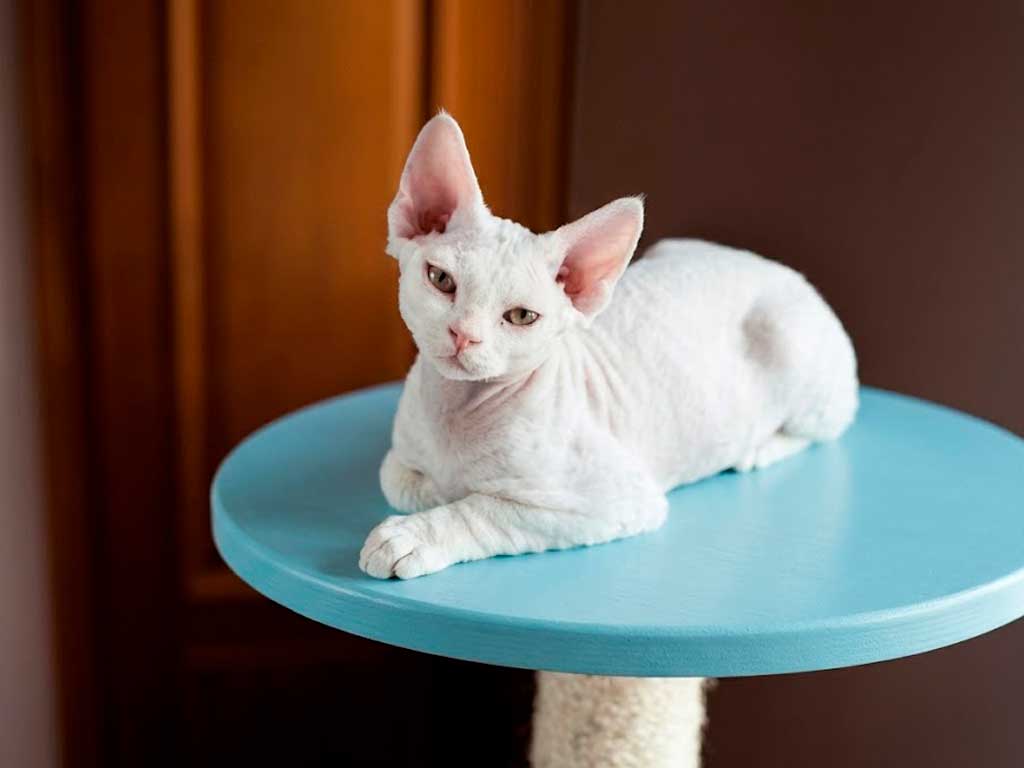
Your cat isn’t part elf — it just looks that way. Enormous ears, huge eyes, and a mischievous little face give the Devon Rex an appearance so unusual that first-time visitors sometimes ask, genuinely, whether they’re looking at a cat at all.
Here’s the part that surprises people more than the ears: this breed doesn’t just tolerate closeness, it actively pursues it. Don’t be shocked if yours tries to join you in the shower. Spoiler: that’s completely normal Devon Rex behavior.
Quick Facts: Small to medium, surprisingly muscular. Typical weight 6-9 lbs, males somewhat larger. Sparse, wavy, guard-haired coat that sheds less than most breeds. Not hypoallergenic despite popular belief.
History: A Second Curly Cat That Wasn’t the First One
In 1959, a stray tomcat in Devon, England fathered a litter that included one curly-coated kitten. Beryl Cox took him in and named him Kirlee. Given that the Cornish Rex curl mutation had already been documented nearby just a few years earlier, everyone assumed Kirlee carried the same gene.
Test breedings proved that assumption wrong. Kirlee’s curl came from an entirely separate, unrelated mutation — genuinely a second, independent “Rex” gene arising in the same corner of England within a decade of the first. Breeders bred Kirlee to his own offspring to establish the trait, then outcrossed extensively over the following years, which is part of why the Devon Rex today offers one of the widest color and pattern ranges of any recognized breed.
Devon Rex vs. Cornish Rex: A Quick Refresher
Two independent curl mutations surfacing in neighboring English counties within a decade of each other is a genuinely unusual piece of feline genetic history — rare enough that breed historians still reference it as a notable coincidence in the cat fancy.
We cover this comparison in more depth in our Cornish Rex guide, but the short version: Devon Rex retains some fine guard hairs in the coat, giving a slightly coarser, sparser texture than the completely guard-hair-free Cornish Rex. Devon Rex also carries the more classically “pixie” face, with lower-set, wider ears and a shorter muzzle.
Genetically, breeding a Devon Rex to a Cornish Rex won’t reliably produce either breed’s specific curl — the two mutations simply don’t interact predictably, which is one more reason the two are treated as entirely separate breeds despite the shared naming convention.
Physical Characteristics
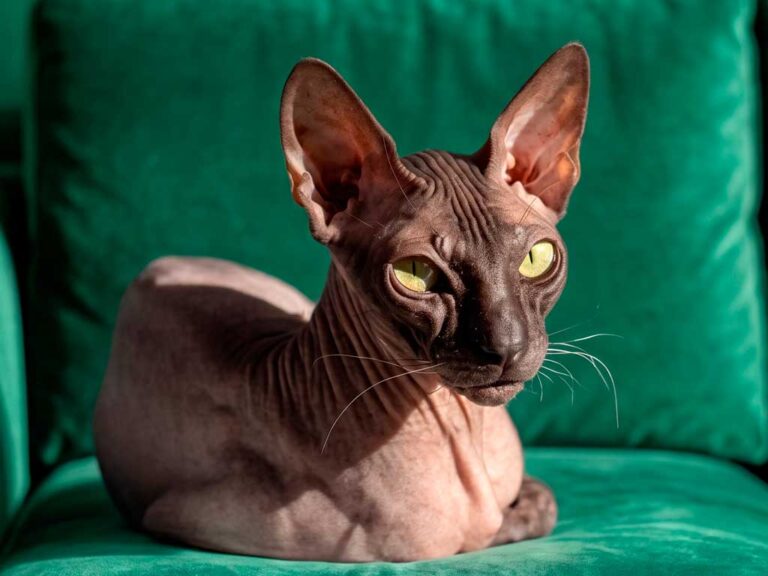
The head is a modified wedge shape with prominent cheekbones and a distinct whisker break, but the ears are what people notice first — strikingly large, set very low and wide on the head, tapering to rounded tops. Large, wide-set oval eyes complete the elfin look CFA’s own standard leans on heavily.
Underneath that delicate appearance, Devon Rex cats carry genuine muscle. The chest is broad, and front legs are often held in a distinctive “bulldog” stance. Even the curly eyebrows and whiskers are fragile and may break off into short stubs — a normal breed trait, not a health problem.
Toe count follows the same standard as other Rex breeds — five in front, four behind — and an incorrect count is grounds for disqualification in the show ring, a small but firmly enforced detail.
Personality: Part Court Jester, Part Soulmate
Your cat isn’t just curious about your day — it wants a role in it. Devon Rex cats are intensely people-focused, learning to respond to their names, following owners from room to room, and settling in for the night pressed right up against you rather than at a polite distance.
This intelligence comes paired with genuine mischief: expect a cat that investigates every bag, tries to help with every task, and treats bath time as a group activity rather than a spectator sport. Appetite runs surprisingly broad too — fruit and vegetables can be just as appealing to a Devon Rex as chicken or fish.
Talkative without being loud, this breed communicates in soft chirps, trills, and peeps rather than insistent meowing. Every guest is treated as a new friend to be won over, and most Devon Rex cats get along easily with dogs, other cats, and kids — tolerating dress-up games and tea parties with real patience.
That same intelligence makes Devon Rex cats genuinely trainable — many take to leash walking, simple tricks, and puzzle toys with real enthusiasm, which helps burn off the curiosity that would otherwise go toward less convenient targets.
Caring for a Devon Rex
Grooming is genuinely easy: this breed sheds less than most, and a quick wipe-down or occasional bath keeps the coat looking its best. These are true wash-and-wear cats. Despite the popular belief that low shedding equals hypoallergenic, that’s not accurate — allergy proteins live in saliva and skin, not just shed fur, so allergy-sensitive visitors should still spend time with the breed before committing.
Because the coat can run thin in spots, watch for bare or “sueded” patches, particularly around the temples — usually not a health concern, but worth mentioning to your vet if it seems to worsen. Round out care with regular nail trims and dental checkups.
That thin coat also makes Devon Rex cats a bit more sensitive to cold than a fully-furred cat, so a warm sleeping spot or the occasional sweater in a chilly house is worth considering, especially for kittens and seniors.
Health Conditions to Know
Thanks to a genetically varied background from decades of outcrossing, Devon Rex enjoys relatively few widespread health concerns — with one significant exception worth understanding before breeding or buying: this breed carries an unusually high incidence of blood type B.
If a type-A male breeds with a type-B female, the resulting kittens can face fatal blood incompatibility with their mother unless caught early and hand-raised. This is purely a breeding consideration rather than something pet owners need to manage day to day, but it’s exactly why genetic testing matters so much for anyone involved in producing Devon Rex litters.
Health Disclaimer: This guide is for educational purposes only and doesn’t replace professional veterinary advice. If you’re purchasing a kitten, ask the breeder about blood type testing on the parents as standard due diligence.
Finding a Devon Rex: Price and Availability
This breed has ranked among CFA’s top ten for years and was recently named the single most popular shorthaired breed by registration numbers — which sounds like it should make kittens easy to find, but reputable breeders still often have waitlists.
Retired adult cats are sometimes available through breeders and tend to cost less than kittens while skipping the more demanding early months. A cat show remains one of the best ways to meet breeders and ask detailed questions about a specific litter.
Ask any breeder directly about blood type testing on the parents — given how significant the type-B incidence is in this breed, a reputable cattery should have a clear, ready answer rather than treating it as an unusual question.
Is a Devon Rex Right for You?
This breed suits people who genuinely want to be owned by their cat, not the other way around. If constant company, shower crashing, and a permanently mischievous expression sound like a feature rather than an inconvenience, a Devon Rex is a near-perfect match.
It’s a poor fit for anyone who’s away from home for long, unpredictable stretches — this breed dislikes extended alone time and does noticeably better with a companion cat when left solo often. Your cat isn’t going to give you space. It’s going to be right there, ears first.
Apartment living suits this breed well too, since it’s more interested in being near you than in having outdoor space — a comfortable perch and consistent daily attention matter far more than square footage.
Frequently Asked Questions
Is a Devon Rex the same as a Cornish Rex?
No. The two curl mutations arose independently and are genetically unrelated, despite both originating in England within a decade of each other. Devon Rex has some guard hairs and lower-set ears; Cornish Rex has none and a leaner build.
Are Devon Rex cats hypoallergenic?
No, despite popular belief. They shed less than most breeds, which some allergy sufferers tolerate better, but allergens come from saliva and skin, not just fur.
Why does blood type matter for Devon Rex breeding?
The breed has a high incidence of blood type B. Breeding a type-A male to a type-B female can cause fatal incompatibility in kittens unless identified and managed early.
How much does a Devon Rex cost?
Given the breed’s popularity, expect a waitlist even at established catteries. Retired adult cats are sometimes available for less than kitten pricing.
Do Devon Rex cats get along with dogs and kids?
Yes — they’re known for readily accepting dogs and other pets as companions and getting along well with children.
A Devon Rex was built, almost by genetic accident, to look like something out of a fairy tale — and then to spend its entire life proving that the resemblance goes both ways: mischievous, devoted, and never quite willing to let you out of its sight.
Browse more breed profiles in the full Cat Breeds guide.