Japanese Bobtail: The Cat Behind Japan’s Lucky Cat Statues
Your cat isn’t waving at you though if you own a Japanese Bobtail, you already own the real-life version of one of the most recognizable good-luck symbols in the world. That raised-paw “beckoning cat” figurine sitting in restaurant windows across the globe is widely believed to be modeled on this exact breed.
Beyond the cultural fame, this cat comes with a genuinely one-of-a-kind tail, every single one shaped differently, like a fingerprint. Spoiler: it’s not the result of breeding for looks. It’s a natural, dominant gene that’s been part of Japan’s cat population for well over a thousand years.
Quick Facts: Medium size, lean and elegant, long legs. Short pom-pom tail, no two alike, extending no more than 3 inches. Shorthair and longhair varieties. Nearly every color and pattern recognized.
History: From Silk Farms to American Show Rings
Bobtailed cats appear in Japanese scrolls, prints, and carvings dating back to the Middle Ages, with some historians tracing their arrival from Korea as far back as the sixth century. For centuries, ownership stayed restricted to the Japanese imperial court.
Everything changed in 1602, when an imperial edict ordered all cats released into the streets. A rodent infestation was threatening the country’s silk industry, and these cats went to work protecting the silkworms. In the process, they spread across Japan, interbreeding with local street cats until the dominant bobtail trait became part of the signature look of cats throughout the country.
The first Japanese Bobtails reached the United States in 1968. CFA granted championship status to the shorthair division in 1976, with the longhair division following in 1993.
That thousand-year interbreeding period across Japan is a big part of why the bobtail gene became so widespread, it’s less a rare mutation preserved by a handful of breeders and more a trait that quietly took over an entire national cat population.
The Tail: A Genetic Fingerprint
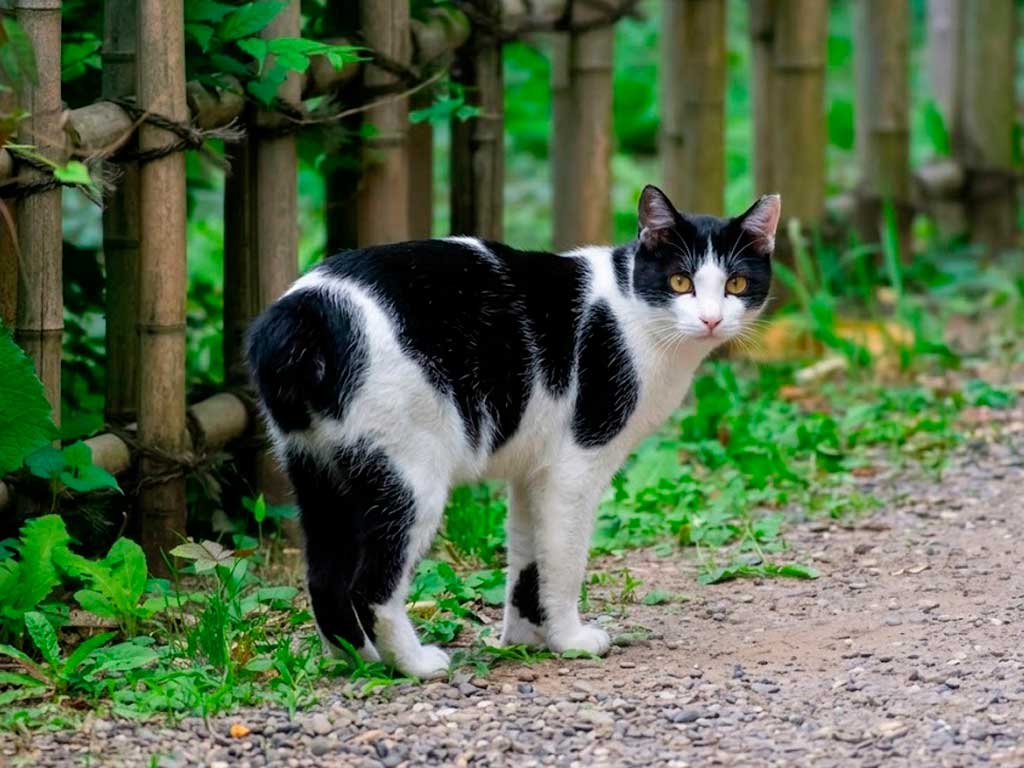
This is a natural, dominant genetic trait — not the result of any docking or cropping. Each cat’s tail is genuinely unique, made up of curves, angles, or kinks in combinations that vary from one Bobtail to the next. Some tails sit rigid, others move expressively, but breed standards require the visible tail bone extend no more than three inches from the body, fanning out with hair to create the breed’s signature pom-pom look.
Despite lacking a long tail for balance, Japanese Bobtails are remarkably athletic. Their powerful hind legs let them jump to impressive heights, especially when a toy is involved.
Handling matters here too — regardless of how rigid or flexible a particular cat’s tail is, it remains sensitive and should always be touched gently rather than tugged or grabbed.
Physical Characteristics
The head forms an almost perfect equilateral triangle when viewed straight on, with high cheekbones, a long, well-defined nose, and a noticeable whisker break. Large, upright ears sit wide apart, tilting slightly forward. The eyes are large, oval rather than round, and set at a distinctive slant.
Body type runs long, lean, and elegant rather than cobby or tubular, with fine boning and long legs — hind legs noticeably longer than the front, angled to keep the torso level when the cat stands relaxed. Paws carry five toes in front and four behind.
Nearly every color and pattern is accepted, though bicolor and mi-ke (calico-style tricolor) were historically the most popular looks when the breed was first introduced to the West.
Allowance is made for fuller jowls in mature male cats, a detail worth expecting if you’re comparing littermates of different sexes side by side.
Personality and Temperament
Your cat isn’t sitting still for long — Japanese Bobtails are active, intelligent problem-solvers with a short attention span and near-constant motivation to investigate, play, or compete for a toy. Many excel at feline agility, channeling that athleticism into an actual sport.
They get along well with dogs and children of all ages, though other resident cats sometimes need extra time adjusting to a newcomer that appears to be missing its tail. This breed asks for real attention and interaction, and will make its opinion known if it isn’t getting enough.
Vocally, Japanese Bobtails communicate through a soft, varied voice — genuinely charming conversation rather than loud, persistent meowing.
That intelligence pairs well with training too — many Japanese Bobtails pick up tricks and games quickly, and channeling that sharp mind into structured play tends to head off the mischief a bored, understimulated cat might otherwise get into.
Caring for a Japanese Bobtail
Grooming is easy across both coat types, since the breed carries no real undercoat and sheds only minimally. Shorthairs need just a few combing sessions a month with a flea comb to remove dead hair and keep the coat healthy. Longhairs need slightly more frequent combing with a fine, long-tooth comb, though the coat resists tangling and matting far better than most long-haired breeds.
An occasional bath is worth planning for, and longhairs benefit from a blow-dry afterward to maintain that breezy, windswept coat texture the breed is known for.
Nail trims and dental care follow standard schedules — nothing breed-specific there, just the usual consistency every cat benefits from over a long, active life.
Health Conditions to Know
CFA describes the Japanese Bobtail as a sturdy, natural breed with no specific health concerns tied to the distinctive tail or otherwise — a genuinely reassuring track record. Because the breed remains somewhat rare, breeders work to maintain genetic diversity, and U.S. catteries have long imported Japanese street cats into their breeding programs to keep the gene pool healthy, alongside modern genetic testing.
Health Disclaimer: This guide is for educational purposes only and doesn’t replace professional veterinary advice. Routine wellness exams and standard preventive care are all this generally healthy breed typically needs.
No allowable outcross breeds exist for the Japanese Bobtail in CFA’s standard, which makes those Japanese street-cat imports the primary tool breeders have for keeping the gene pool from narrowing over time.
Finding a Japanese Bobtail: Price and Availability
This remains a genuinely rare breed, and CFA itself notes you’re unlikely to find one at every local cat show. Contact the sponsoring club ahead of time to check whether Bobtails will actually be entered, or whether they know of breeders in your area.
CFA’s Find-a-Breeder directory is a reliable starting point if your local show doesn’t have the breed represented, and given the rarity, don’t be surprised if the search takes longer than it would for a more established breed.
Whether you end up with a shorthair or longhair often comes down to availability more than firm preference, given how few dedicated Japanese Bobtail breeders exist in any given region.
Is a Japanese Bobtail Right for You?
This breed suits people who want an active, engaged, genuinely playful cat that thrives on interaction and doesn’t mind a bit of daily chatter. If the idea of a cat that treats every toy like a competition and greets your dog like an old friend sounds appealing, a Japanese Bobtail delivers exactly that.
It’s a tougher fit for anyone wanting a quiet, low-key lap cat, or a household without the time to keep up with an attention-hungry, high-energy breed. Your cat isn’t going to blend into the background. It’s going to be doing something, and it wants you involved.
Households already home to a dog also tend to work especially well, given how naturally this breed accepts canine companionship — introductions with resident cats may just take a little more patience.
One last detail worth knowing: because color and pattern are so open in this breed, don’t expect a kitten’s final coat to look exactly like its littermates — variety is genuinely part of what makes the Japanese Bobtail interesting to collect within a single litter.
Frequently Asked Questions
Is the Japanese Bobtail related to the maneki-neko lucky cat?
The famous beckoning cat figurine is widely believed to be modeled on this breed, though the exact historical connection is more folklore than documented fact.
Are Japanese Bobtail cats born without tails?
No — they’re born with a naturally short, unique tail caused by a dominant gene, not the result of docking, cropping, or a missing tail.
Do Japanese Bobtails have health problems related to their tail?
No known abnormalities are associated with the breed’s tail, and CFA describes the Japanese Bobtail as a sturdy, natural breed with no specific health concerns.
Are Japanese Bobtails good with dogs and kids?
Yes — they’re known for getting along well with dogs and children of all ages, though other cats in the household may need time to adjust.
How much does a Japanese Bobtail cost?
Prices vary, but expect a premium and a real search given how rare the breed remains, even at CFA cat shows.
A Japanese Bobtail carries centuries of Japanese folklore in a tail that’s genuinely one of a kind, wrapped around a personality too playful and engaged to ever sit still for long. Between the culture and the character, this is a breed with a story worth knowing before you even meet one.
Browse more breed profiles in the full Cat Breeds guide.