Siamese Cat: The Breed That Built the Modern Cat Fancy
Here’s what’s really going on when your Siamese narrates your entire evening from the next room: it isn’t background noise, it’s the most direct line of communication any cat breed offers. The Siamese cat is often called the most vocal, most intelligent, and most emotionally demanding breed in the fancy, and the Cat Fanciers’ Association puts it plainly — the cat fancy as we know it today likely wouldn’t exist without this breed’s arrival in the West.
History and Origin
Siamese cats appear in a collection of Thai cat poems dating to the Ayutthaya period, roughly 1350 to 1767, making them one of the oldest documented cat breeds anywhere. Legend holds they served as temple guardians in the Kingdom of Siam, perched on columns and ready to knock an intruder down, though nobody can confirm the story is more than folklore.
The first documented sighting in the West may go back further than most people realize. German naturalist Peter Simon Pallas described a black-eared, black-pawed, black-tailed cat during his 1700s expeditions near the Caspian Sea, a description that lines up closely with a pointed cat. The breed’s real Western debut came later: a breeding pair named Pho and Mia arrived in England in 1884, and their kittens were shown at the Crystal Palace show in 1885. The first Siamese in the United States arrived in 1878 as a gift to President Rutherford B. Hayes from the American Consul in Bangkok.
The breed became one of the founding breeds recognized at CFA’s establishment in 1906, and its first Best-in-Show win came just a year later. Seal point was the only recognized color at first; blue point followed in 1934, chocolate point in 1952, and lilac point in 1955. Popularity stayed modest until after World War II, when Siamese registrations jumped to the top of the list almost overnight.
Physical Characteristics
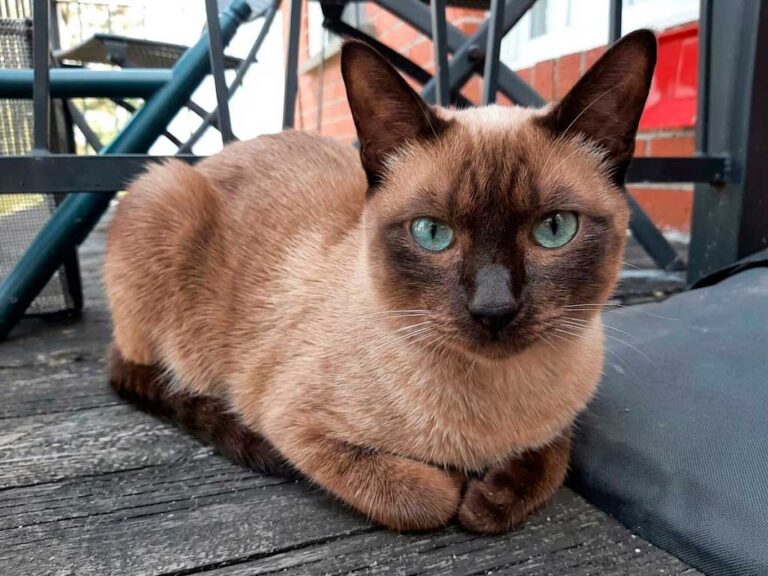
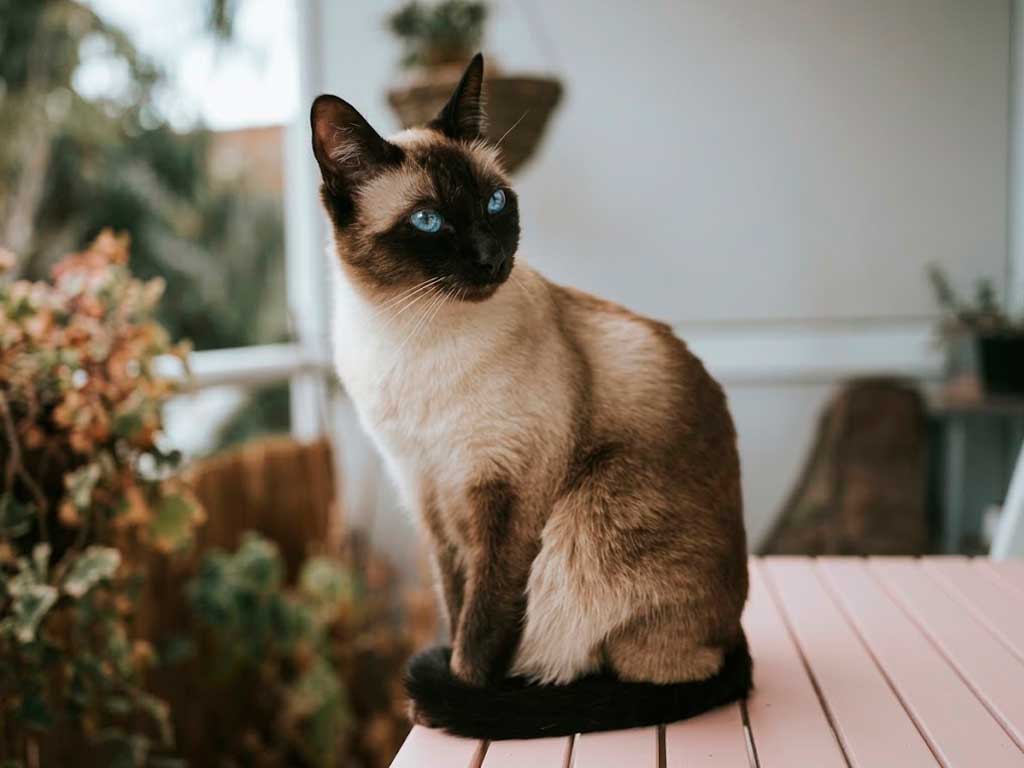
Every Siamese carries what breeders call color restriction, or pointing: a pale body color that deepens into a darker mask, ears, legs, tail, and feet. The four traditional CFA colors are seal, chocolate, blue, and lilac point, though lynx point, flame point, and tortie point variations also circulate widely, particularly outside the show ring. All four traditional colors pair with the breed’s signature vivid blue eyes. Kittens are born nearly white, since the pointing pattern is heat-sensitive and only develops as the extremities cool relative to the body.
The modern show standard calls for a long, tubular body, a wedge-shaped head forming a clean triangle from nose to ear tips, large ears, and almond-shaped eyes set at a slant. Nearly everything about the cat is long except its fine, short coat.
Applehead vs. wedge head, explained. During the 1950s demand boom, breeders produced cats with rounder heads, heavier bones, and lighter eye color to keep up with volume, a look now nicknamed “applehead” or “traditional.” CFA and most modern registries kept breeding toward the original, more extreme wedge-shaped standard instead. Today, TICA recognizes the rounder-headed, stockier version as a separate breed called the Thai, while CFA’s Siamese standard remains the long, angular wedge-head look. Neither version is more “authentic” than the other; they simply diverged from a shared ancestor, similar to how the Persian split into traditional and modern show lines.
Temperament and Personality
Your cat isn’t ignoring the couch cushion in favor of your lap by accident — it’s chasing warmth, and CFA notes that Siamese love you partly because you’re warm, not just because you’re theirs. That heat-seeking instinct combines with a genuine emotional need for closeness that goes well beyond a typical cat’s affection level.
Expect near-constant conversation. This breed communicates through an enormous vocal range and isn’t shy about loud protest if it’s left alone too long or denied attention. Siamese rank among the most trainable cats too, often walking on a leash or learning tricks, though their intelligence comes with a strong independent streak: they’ll learn what you teach only if it also happens to interest them.
Care Guide
Diet and Nutrition
That long, lean body shows weight gain fast. A single day of overindulging can produce a visible pot belly, so portion control matters more here than with a stockier breed. Stick to a quality, protein-forward diet and resist the urge to free-feed.
Exercise Requirements
Siamese are enthusiastic jumpers who genuinely love height, so cat trees and window perches earn their keep with this breed. Daily interactive play isn’t optional — an under-stimulated Siamese gets loud about its boredom fast.
Grooming Needs
This is one of the easiest breeds to groom. The short coat needs little more than a damp hand run over it to remove loose hair, and most Siamese treat brushing sessions as bonus affection rather than a chore.
Training and Education
Leash training tends to go smoothly with this breed, and food puzzles or trick training give that considerable intelligence somewhere productive to go. Consistency matters more than volume of training here — a bored Siamese will happily train you instead if you let it.
Health and Longevity
Siamese are a generally healthy breed with two conditions worth knowing about. Progressive retinal atrophy, an inherited condition that can cause blindness, follows a recessive pattern and is detectable through genetic testing, which lets responsible breeders remove carriers from breeding lines. Amyloidosis, which affects the liver, is harder to screen for since research into the responsible genes is still ongoing; asking a breeder about family history of the condition is worthwhile.
Health Disclaimer: This guide is for educational purposes only and doesn’t replace professional veterinary advice. Ask about genetic testing history when buying from a breeder, and keep regular wellness exams on the calendar either way.
Is This the Right Cat for You?
A Siamese rewards someone who wants a genuine two-way relationship with their cat — constant conversation, real demands for attention, and an emotionally present companion rather than a background pet. If you’re gone most of the day or prefer a quieter household, the volume and neediness here can wear thin fast.
Because the breed is so common, Siamese and Siamese mixes turn up in shelters far more often than rarer breeds on this list, which makes adoption a genuinely realistic path alongside buying from a breeder.
Frequently Asked Questions
What’s the difference between a traditional Siamese and a modern Siamese?
“Traditional” or “applehead” refers to the rounder-headed, stockier body type bred during the 1950s demand boom. The modern CFA standard kept the original longer, wedge-shaped head instead. TICA now registers the rounder type as its own breed, the Thai.
Are Siamese cats hypoallergenic?
No. Short hair doesn’t reduce allergens, which come primarily from proteins in saliva and skin.
Why are Siamese cats so vocal?
It’s a genuine breed trait tied to their intelligence and need for interaction. Siamese use a wide vocal range specifically to communicate wants and needs to their people.
Do Siamese kittens change color?
Yes. Kittens are born nearly white because the pointing pattern is heat-sensitive and only darkens on the cooler extremities as they mature.
How long do Siamese cats live?
Typically 8 to 12 years, sometimes longer with good preventive care and weight management.
Few breeds have shaped the modern cat fancy the way the Siamese has — a century of showmanship, a genuinely two-way relationship with its people, and a look that’s remained instantly recognizable since Pho and Mia first stepped into a London show ring.
Browse more breed profiles in the full Cat Breeds guide, including the Oriental Shorthair and Himalayan, two breeds that trace directly back to the Siamese.