Ragdoll Cat: The Breed With a Genuinely Controversial Origin
Your cat isn’t limp because something’s wrong — a Ragdoll going soft and relaxed the moment you pick it up is exactly the trait the breed was named for. It’s also, depending on who you ask, either a genuine genetic quirk or a myth that got a little out of hand.
Few breeds carry an origin story as genuinely contested as this one. Spoiler: the woman who created the Ragdoll made claims about her founding cat that even her own breed’s later historians openly describe as unproven — and in some cases, flatly false.
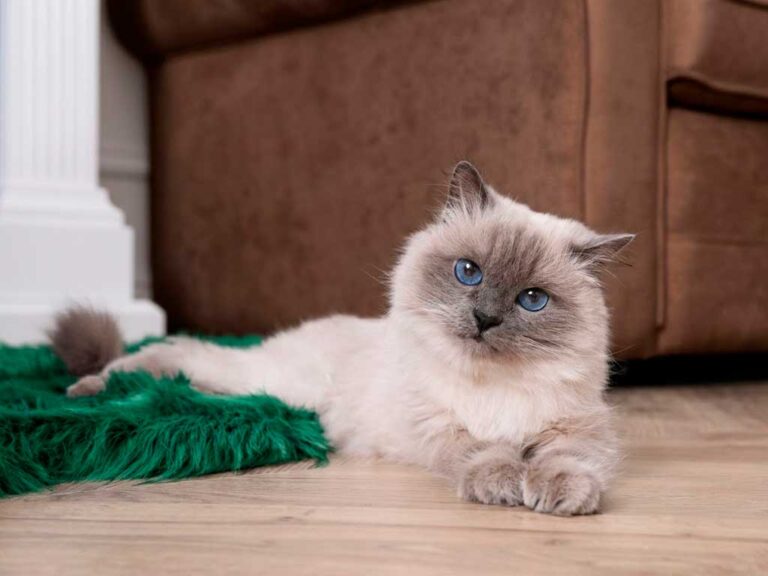
Quick Facts: Large, muscular, semi-long coat. Males 14-20+ lbs, females 9-13 lbs. Blue eyes only. Slow-maturing, taking up to 4 years to reach full size. Three coat patterns: colorpoint, mitted, and bicolor.
History: Ann Baker, Josephine, and a Genuinely Disputed Legend
The Ragdoll’s story begins in Riverside, California, in the early 1960s, with breeder Ann Baker and a white, semi-feral, Persian-Angora-type cat named Josephine who belonged to a neighbor. According to Ann’s own account, Josephine was struck by a car while pregnant, and after recovering, her kittens were unusually docile, floppy, and relaxed — traits Ann attributed directly to the accident, sometimes describing it as a kind of genetic change.
That specific claim has never held up. A clinical examination of Ragdolls conducted in the early 1990s found them to be entirely normal members of the domestic cat family, and most breed historians today treat the accident-caused-mutation story as exactly what it is: an unverified claim from a breeder known for dramatic origin tales, rather than established fact. The gentle, floppy temperament that defines the breed is far more plausibly the result of deliberate selective breeding for calm, people-oriented cats.
Ann Baker went further still, at times suggesting her cats carried unusual DNA or had reduced sensitivity to pain — claims with no scientific basis that nonetheless became part of the breed’s colorful, and controversial, folklore.
Ann bred Josephine’s offspring — including foundation cats Daddy Warbucks, Fugianna, and Buckwheat — into the breed she named Ragdoll, and founded the International Ragdoll Cat Association in 1971 to control it. Her approach was notably restrictive: breeders had to sign contracts granting her rights over the bloodline. In the late 1960s and 1970s, a group of breeders led by Denny and Laura Dayton broke away from Ann’s control, working instead toward recognition through mainstream cat associations.
The RagaMuffin Connection
That breakaway group is the same one that eventually founded an entirely separate breed. As covered in our RagaMuffin guide, a later generation of breeders who’d split from Ann Baker’s original registry developed the RagaMuffin specifically to expand the Ragdoll’s color range beyond pointed patterns. The two breeds share real, documented history — not just a similar temperament.
Understanding Ragdoll Patterns: Colorpoint, Mitted, and Bicolor
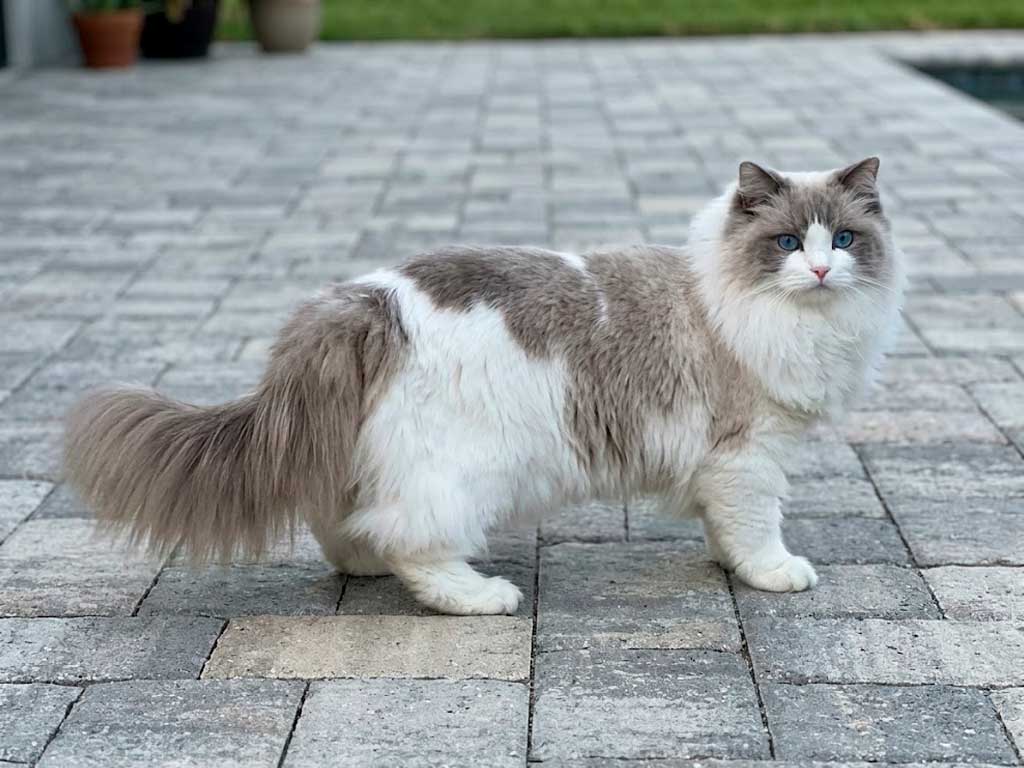
Three coat patterns define the breed. Colorpoint Ragdolls carry color concentrated on the face, ears, legs, and tail, with a lighter body — the classic Siamese-style look. Mitted Ragdolls add white “gloves” on all four paws, plus a white chin and belly stripe. Bicolor Ragdolls carry the most white overall, with an inverted white “V” across the face and white legs, chest, and belly.
Within those patterns, colors include seal, blue, chocolate, lilac, red, and cream, each also available in lynx (tabby) and tortoiseshell variations — a genuinely wide field for a breed that started with just a handful of founding cats.
Kittens are born white and develop their point color gradually over the first two years, a delayed reveal shared with other pointed breeds covered elsewhere in this cluster — don’t judge a young Ragdoll’s final shade too early.
Physical Characteristics
Everything about the Ragdoll reads substantial: a large, muscular, rectangular body with broad chest and shoulders, carried on medium-length legs with large, round, tufted paws. The head is a modified wedge with full cheeks and a flat plane between the ears. Eyes are always blue, large and oval, contributing heavily to the breed’s famously sweet expression.
The coat is semi-long, plush, and silky, longer around the neck for a ruff effect and shorter on the face. This is a notably slow-maturing breed — full size and coat development aren’t reached until around four years old, and mature males can exceed 20 pounds, especially once neutered.
Toes are large and round, well tufted, giving the paws a distinctly padded, substantial look that matches the rest of the breed’s proportions.
Personality: The ‘Puppy Cat’ Reputation
Your cat isn’t just tolerating being carried — a Ragdoll will often go genuinely limp and relaxed in your arms, the trait the breed is named for. Gentle, docile, and deeply people-oriented, Ragdolls are frequently described as dog-like, following their owners from room to room and greeting them at the door.
This breed tends to have a notably low prey drive and stays relatively calm even in busy households, making it a strong match for families with kids and other pets. Because Ragdolls are so trusting and physically relaxed, most breeders and rescues strongly recommend keeping them strictly indoors — that same easygoing nature offers little natural defense against outdoor dangers.
That said, individual personalities do vary — not every Ragdoll goes fully limp on cue, and some are noticeably more independent than the breed’s reputation suggests. Vocally, most communicate in soft, quiet tones rather than persistent meowing.
Caring for a Ragdoll
The semi-long coat resists matting better than a true longhair like the Persian, but it still needs regular attention — a thorough combing two to three times a week keeps it looking its best and prevents tangles from setting in, especially around the legs and britches. Occasional bathing helps maintain that signature silky texture.
Round out care with regular nail trims, ear checks, and dental hygiene. Given the breed’s size and slow growth, kitten-appropriate nutrition matters for an extended period compared to faster-maturing breeds.
Diet should scale with the breed’s slow, multi-year growth window — kitten formulas remain appropriate longer than for faster-maturing breeds, and adult diets should support joint health given the substantial adult size this breed eventually reaches.
Health Conditions to Know
Ragdolls are generally healthy, but a few hereditary conditions are worth knowing. Hypertrophic cardiomyopathy (HCM), a thickening of the heart muscle, occurs in the breed, and a genetic test exists to screen for one associated mutation. Polycystic kidney disease (PKD) and a tendency toward urinary bladder stones are also worth discussing with breeders and monitoring with your vet.
Health Disclaimer: This guide is for educational purposes only and doesn’t replace professional veterinary advice. Ask breeders for HCM and PKD testing results on both parents, and watch for signs of urinary discomfort throughout your cat’s life.
Finding a Ragdoll: Price and Availability
This is one of the most popular pedigreed breeds in the world, and kittens are widely available through registered breeders, with prices varying by pattern, color, and lineage. Given the breed’s popularity, it’s also frequently available through rescue organizations — worth checking if you’re open to an adult cat.
A cat show remains a solid way to meet breeders in person and compare patterns and colors side by side, and given the breed’s popularity, most major shows will have several Ragdolls represented.
Is a Ragdoll Right for You?
This breed suits people who want a large, genuinely affectionate, dog-like companion that follows them around and relaxes completely when held. If the idea of a cat that greets you at the door, gets along with kids and other pets, and stays calm through household chaos sounds appealing, a Ragdoll delivers exactly that.
It’s a tougher fit for anyone hoping for an independent, low-contact cat, or a household planning to let their cat roam outdoors. Your cat isn’t going to defend itself against outdoor risks the way a more streetwise breed might. Keep it indoors, and this breed rewards you with years of genuine devotion.
Frequently Asked Questions
Why do Ragdoll cats go limp when picked up?
It’s a genuine breed temperament trait from decades of selective breeding for calm, relaxed cats — not, despite the breed’s own founding legend, the result of any car accident or genetic mutation.
Is the origin story about Ann Baker and Josephine true?
Parts of it are documented — Ann Baker did found the breed using a cat named Josephine and her offspring. But the specific claim that a car accident genetically altered Josephine’s kittens has never been verified and is widely considered a myth.
What’s the difference between colorpoint, mitted, and bicolor Ragdolls?
Colorpoint carries color only on the face, ears, legs, and tail. Mitted adds white paws, chin, and belly stripe. Bicolor carries the most white, including an inverted white V on the face.
What health problems are Ragdolls prone to?
The main concerns are hypertrophic cardiomyopathy (HCM), polycystic kidney disease (PKD), and a tendency toward urinary bladder stones.
How much does a Ragdoll cat cost?
Prices vary widely by pattern, color, and breeder. Given the breed’s popularity, rescue and adoption are also realistic options.
A Ragdoll cat carries one of the most genuinely disputed origin stories in the entire cat fancy, and yet the breed itself is about as straightforward as cats get: big, gentle, and devoted to whoever’s holding it. Myth or not, the floppy hug is entirely real.
Browse more breed profiles in the full Cat Breeds guide.