Halfmoon Plakat (HMPK): The Best of Both Betta Worlds
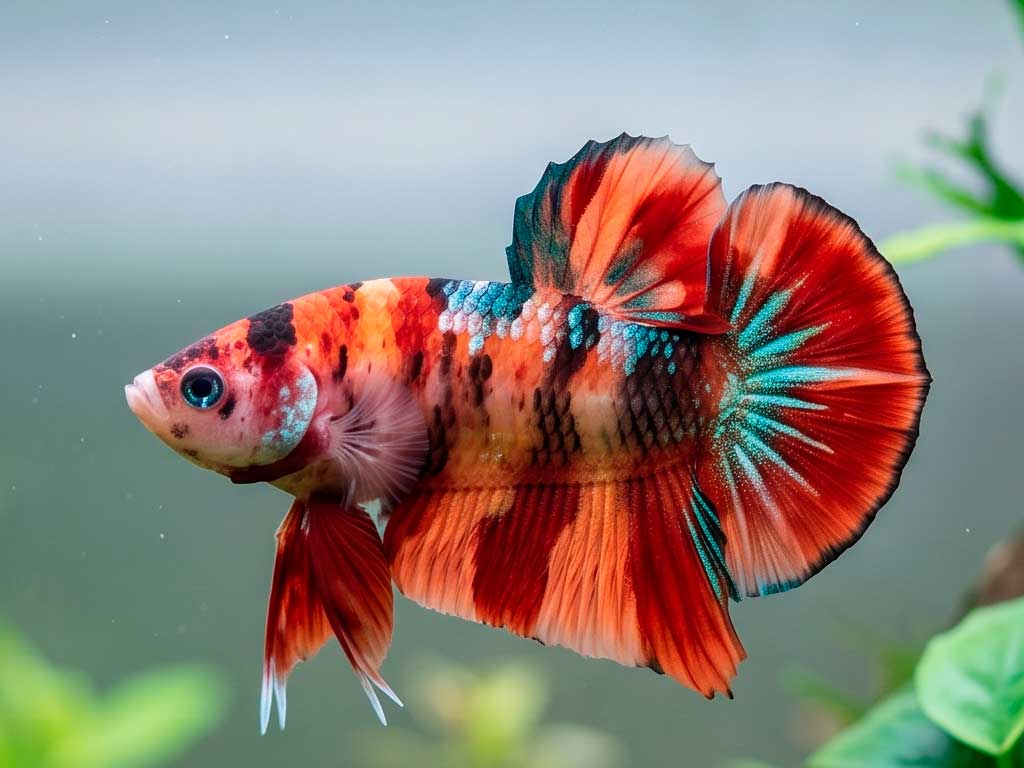
Talk to breeders who have kept both standard halfmoons and plakats for years, and a pattern comes up again and again: that gorgeous 180-degree spread is genuinely hard on the fish carrying it. The fin is heavy, it drags, it’s more exposed to rot, and more than one experienced keeper has watched their halfmoons live noticeably shorter lives than their short-finned plakats as a result.
The halfmoon plakat exists because breeders got tired of that tradeoff and decided to engineer their way around it.
Quick answer: The halfmoon plakat (HMPK) crosses the halfmoon’s full 180-degree tail spread with the plakat’s short, sturdy fin structure. It keeps the dramatic geometric flare show judges look for while avoiding much of the fin rot risk, muscle fatigue, and shortened lifespan that can come with a standard long-finned halfmoon. It’s increasingly the preferred choice among breeders who want the halfmoon look without the halfmoon’s downsides.
This guide covers what actually distinguishes HMPK from both its parent types, why it solves a real problem rather than just looking different, and what to expect if you’re choosing between the three. For general betta fundamentals, see our betta fish care guide.
What Makes HMPK Different from Both Parent Types
A standard halfmoon, covered in our halfmoon betta guide, achieves its full 180-degree spread with long, flowing fins. A standard plakat, covered in our plakat betta guide, keeps fins short but doesn’t typically reach anywhere near that same spread. HMPK takes the geometric target of the first and applies it to the compact build of the second: short fins, but bred specifically to flare into that same dramatic half-circle when the fish displays.
This isn’t simply “a plakat that happens to spread wide.” It’s a deliberately bred combination, requiring the same careful line-breeding that produces a good standard halfmoon, just aimed at a shorter fin target. That breeding effort is real, and it shows in the price, generally above a standard plakat, though usually still below a top-tier long-finned halfmoon.
The Real Problem HMPK Was Bred to Solve
Long-finned halfmoons carry a lot of fin tissue for a small fish to manage. Experienced breeders consistently report that this extra weight strains the muscles responsible for holding the fin up and flaring it, especially in fish bred aggressively for maximum spread over sheer fin health. That same fin tissue is also simply more exposed surface area for fin rot and physical damage to take hold, and several longtime breeders report their long-finned halfmoons living noticeably shorter lives on average than their short-finned plakats kept in identical conditions, sometimes by a year or more.
HMPK addresses this directly by keeping the fin short while preserving the spread genetics. Less fin mass means less strain on the muscles behind it, less exposed surface for rot to start, and generally easier, faster recovery if damage does happen. You still get the geometric drama that makes a halfmoon a halfmoon; you’re just not asking a delicate long fin to carry it.
Does HMPK Actually Flare as Wide as a Standard Halfmoon?
A well-bred HMPK genuinely can hit the full 180-degree spread, and top specimens are judged by the same geometric standard as long-finned halfmoons in competitive settings. That said, achieving it consistently is still demanding breeding work, arguably requiring just as much precision as standard halfmoon lines, just applied to a shorter fin structure. Expect real variation between individual fish and breeders, the same way you would with standard halfmoons.
HMPK vs. Standard Plakat: Still a Real Difference
Both are short-finned, but a traditional plakat, bred closer to the species’ original fighting-fish proportions, generally doesn’t flare as wide or as symmetrically as an HMPK bred specifically for that geometric target. If you want the compact, sturdy body of a plakat without any particular emphasis on flare shape, standard plakat is the simpler, usually more affordable choice. If you want that same sturdy build but with a show-quality spread when the fish displays, HMPK is worth the extra cost.
Care Notes
Standard betta care applies across the board: a minimum 5-gallon tank, water held between 76 and 82 degrees F, and a protein-rich diet, all covered in our betta fish care guide. HMPK inherits the plakat’s tolerance for slightly stronger water flow and its faster, more confident swimming, so you have a bit more flexibility in filter choice than you would with a long-finned halfmoon. Give the fish room and soft decor to flare against without snagging, the same courtesy any flaring variety appreciates.
Frequently Asked Questions
What does HMPK stand for?
Halfmoon Plakat, a betta bred to combine the halfmoon’s 180-degree tail spread with the plakat’s short, compact fin structure.
Is HMPK healthier than a standard halfmoon?
Many breeders report exactly that. Less fin mass generally means less strain on the muscles supporting the flare, lower fin rot risk, and often a longer lifespan compared to long-finned halfmoons kept in similar conditions.
Does an HMPK flare as wide as a regular halfmoon?
A well-bred HMPK can achieve the same full 180-degree spread and is judged by the same standard in competitive settings, though consistently hitting that geometry still requires careful, deliberate breeding.
Is HMPK the same as a regular plakat?
No. Both are short-finned, but a standard plakat doesn’t flare as wide or symmetrically as an HMPK, which is bred specifically to hit the halfmoon’s 180-degree spread target.
Is HMPK more expensive than a standard plakat?
Generally yes, since achieving a full, symmetrical spread on a short-finned fish takes the same careful line-breeding a standard halfmoon requires. It typically still costs less than a top-tier long-finned halfmoon, though.
Why would I choose HMPK over a long-finned halfmoon?
If you want the dramatic 180-degree flare without the fin rot risk, muscle strain, and potentially shorter lifespan that can come with long fins, HMPK offers a genuine middle ground many breeders have come to prefer.
HMPK isn’t a compromise so much as a correction, breeders looking at what made the halfmoon beautiful and asking whether the fish carrying it actually needed to pay that price in health and lifespan. For a lot of keepers and breeders alike, the answer turned out to be no.