Lampeye Killifish Care Guide: Tank, Diet & Breeding Tips
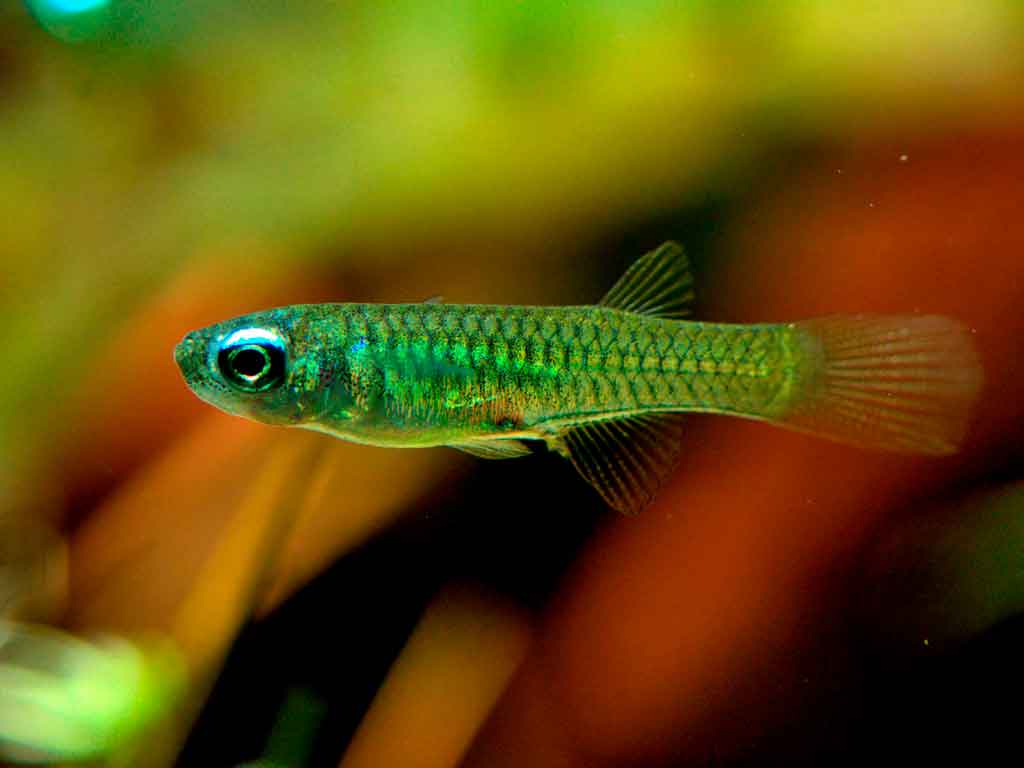
Quick Facts: Lampeye Killifish (Poropanchax normani)
- Also called: Norman Lampeye Killifish, African Lampeye, Sobat Lampeye
- Size: Up to 1.5 inches (4 cm)
- Minimum tank size: 15 gallons (60 liters)
- Water temperature: 73°F to 82°F (23°C to 28°C)
- pH range: 6.5 to 8.0
- Lifespan: Approximately 3 years
- Care level: Easy, great for beginners
- Temperament: Peaceful, active schooling fish
Watch a shoal of lampeye killifish catch the light just right, and you will see tiny electric-blue flashes dancing across your tank. This effect is not a trick of the camera. We cover everything below: tank setup, water parameters, diet, and the surprisingly simple breeding process for this West African gem, sometimes sold as the Norman lampeye killifish.
One quick warning before you buy a single fish, though. These killies are enthusiastic jumpers, so a loose-fitting lid will cost you a fish within days. Get that detail right, and this species rewards you with one of the easiest, most rewarding shoals in the hobby.
What Is a Lampeye Killifish? The Secret Behind Its Glow
Norman’s Lampeye belongs to the large killifish family, though its history carries some naming confusion. Scientists once classified it as Aplocheilichthys normani, while modern taxonomy places it firmly in the Poropanchax genus.
That glow is not bioluminescence, interestingly enough. A layer of reflective cells sits along the upper iris, and it bounces light back as a vivid blue or green flash. Consequently, an entire shoal moving together looks like a cluster of tiny flashlights sweeping the tank.
Unlike many killifish species, this one is non-annual. It does not depend on seasonal rain cycles to complete its life, so you can expect roughly 3 years of company under good care.
Natural Habitat: Built for Adaptability
Wild lampeyes come from West African countries like Senegal, Nigeria, and Ivory Coast. There, they inhabit everything from slow rivers to swamps and even temporary puddles.
This wide range of native habitats explains their forgiving nature in captivity. Generally, they favor calm, well-vegetated water where they hunt insects near the surface.
Lampeye Killifish Tank Setup and Water Parameters
Stability matters more than precision for this species. Start with a tank of at least 15 gallons (60 liters) to comfortably house a shoal of 6 to 8 fish.
For a larger, more spectacular group of 15 to 20 individuals, size up your setup accordingly. The Tetra 20 Gallon Complete Tropical Fish Tank Kit in the 20-gallon size comes with smart filtration and LED lighting built in, which suits a full lampeye shoal alongside floating plants perfectly.

FROM AMAZON.COM
Tetra 20 Gallon Complete Tropical Fish Tank Kit
Everything included: 20-gallon glass tank with hinged hood, LED light, filter, filter cartridge, and décor. Ready for freshwater fish.
Buy on Amazon.comAs an Amazon Associate, Happy Pet Zone earns from qualifying purchases, at no extra cost to you.
A tight-fitting lid is not optional here. These fish jump readily, especially when startled, so seal every gap you can find.
Ideal water parameters:
- Temperature: 73°F to 82°F (23°C to 28°C)
- pH: 6.5 to 8.0, with a slight lean toward neutral or alkaline
- Hardness (GH): 5 to 19 dGH, tolerant of soft to moderately hard water
- Ammonia/Nitrite: Always 0 ppm, since sensitivity here is high despite their overall hardiness
Decoration: Making the Glow Pop
Dark substrate and driftwood create the best backdrop for that signature eye-shine. Floating plants like Frogbit or Salvinia dim overhead light and add a real sense of security.
Leave open swimming space near the surface, though. This species spends most of its time patrolling the top of the water column.
Behavior and Lampeye Killifish Tank Mates
Despite being a killifish, this species stays remarkably peaceful. It occupies the mid-to-upper level of the tank, filling a space that often sits empty in community setups.
Males may chase each other occasionally over territory, but real injuries are rare. A ratio of more females than males, such as two males to four females, keeps things calm.
Excellent tank mates include:
- Small rasboras, including the Galaxy Rasbora
- Neon, Cardinal, and Ember Tetras
- Corydoras and Otocinclus for the bottom level
- Endler’s Livebearers
- Neocaridina shrimp and snails
Feeding: Diet of a Surface Micropredator
That upward-facing mouth tells the whole story. In the wild, these fish patrol the surface for insects and small crustaceans that fall into the water.
In your tank, they accept a wide variety of foods without any fuss.
- Dry food: High-quality flakes or slow-sinking micro-pellets, sized small enough for their mouths
- Frozen or freeze-dried food: Daphnia, brine shrimp, and bloodworms
- Live food: Freshly hatched brine shrimp and daphnia, ideal for boosting color and breeding activity
Breeding Guide: Surprisingly Easy Egg Scatterers
Few beginner-friendly fish breed as effortlessly as this one. Females scatter adhesive eggs daily among fine-leaved plants like Java moss or a spawning mop.
Unlike many species, the parents rarely hunt their own eggs or fry, particularly when well fed. Eggs hatch in 7 to 14 days depending on temperature, and the fry emerge large enough to eat baby brine shrimp right away.
For maximum survival, move egg-covered plants to a separate tank with a sponge filter. Otherwise, a species-only setup will often grow its population on its own.
Common Health Problems in Lampeye Killifish
This species stays hardy overall, though a few issues appear with poor water quality.
- Fin damage from jumping or chasing: Usually cosmetic and heals quickly once water stays clean.
- Ich (white spot disease): Triggered by stress or sudden temperature shifts. Treat promptly with a gradual temperature increase and medication if needed.
- Loss of color intensity: Often signals stress, insufficient shoal size, or a tank that lacks the dark substrate needed to make their glow pop.
This guide provides general care information and does not replace advice from an aquatic veterinarian. Consult a professional if illness persists.
Lampeye Killifish vs. White Cloud Mountain Minnow: Which Surface Schooler Fits Your Tank?
Both species fill the upper water column and suit beginners well, though their needs differ slightly.
| Feature | Lampeye Killifish | White Cloud Mountain Minnow |
|---|---|---|
| Size | Up to 1.5 in | Up to 1.5 in |
| Min. tank size | 15 gallons | 10 gallons |
| Temperature range | 73-82°F (tropical) | 64-72°F (cool water) |
| Jumping risk | High, needs tight lid | Low |
| Breeding difficulty | Easy | Easy |
Choose the White Cloud if you run an unheated tank. Pick the lampeye killifish for warmer setups and that unmistakable eye-shine.
Is the Lampeye Killifish Right for You?
This fish suits beginners who want an active, low-maintenance shoal without sacrificing visual interest. Secure your lid first, then build out a planted tank with dark substrate to really showcase that glow.
Start with a group of at least six, add floating plants for security, and let the shoal settle in for a week before judging their color. For more community tank inspiration, check out our Galaxy Rasbora care guide for another peaceful nano species that pairs beautifully with this one.
Frequently Asked Questions
How big do lampeye killifish get? They reach about 1.5 inches (4 cm) at full maturity, making them one of the smaller killifish species in the hobby.
Why do lampeye killifish jump out of tanks? They startle easily and instinctively jump when frightened. A tight-fitting lid with no gaps prevents almost all losses.
What are good tank mates for lampeye killifish? Peaceful small fish work best, including Galaxy Rasboras, Ember Tetras, Corydoras, and Endler’s Livebearers. Avoid anything large enough to see them as food.
Are lampeye killifish safe to keep with shrimp? Adult shrimp stay perfectly safe with this species. However, they may eat newly hatched shrimplets, similar to most small community fish.
What do lampeye killifish eggs look like? The eggs are adhesive and surprisingly large for the fish’s size. Females scatter them daily among fine-leaved plants like Java moss.
What is the lifespan of a lampeye killifish? Around 3 years with stable water quality and a varied diet, since this species is non-annual unlike most killifish.
Is Poropanchax normani the same fish as the lampeye killifish? Yes. Poropanchax normani, Norman Lampeye Killifish, and African Lampeye all refer to the same species.
What tank size does a lampeye killifish need? A minimum of 15 gallons for a small shoal, with 20 gallons or more recommended for larger groups of 15 to 20 fish.
Some links in this article are Amazon affiliate links. We may earn a small commission at no extra cost to you if you make a purchase through them.