Fish Tank Maintenance: The Complete Care Guide
Fish tank maintenance is the single biggest factor between a thriving aquarium and one full of cloudy water and stressed fish. Get it right, and your tank practically runs itself. Get it wrong, and you’re chasing algae blooms and sick fish every other week.
In this guide, you’ll learn exactly what to do daily, weekly, and monthly to keep your aquarium healthy plus the equipment you actually need (and the mistakes that quietly wreck most tanks).
Key Takeaways
- A consistent routine matters more than any single “fix.”
- Aquarium water changes are the most important recurring task aim for 10–20% weekly.
- Never clean everything at once; you’ll wipe out the beneficial bacteria your tank depends on.
- Freshwater and saltwater tanks share the basics but diverge on the details.
What Does Fish Tank Maintenance Actually Include?
Fish tank maintenance isn’t just feeding your fish and topping off the water. It’s a set of routine and periodic tasks daily checks, weekly water changes, monthly testing that work together to keep the water chemistry stable and the environment clean.
This guide focuses on freshwater tank maintenance, since freshwater and saltwater setups require different tools and testing routines. We’ll cover exactly where they differ further down.
Essential Equipment for Fish Tank Maintenance
Before you start any maintenance routine, gather these basics:
- Water test kit — monitors pH, ammonia, nitrites, and nitrates.
- Fish net — for handling fish safely during tank work.
- Siphon or gravel vacuum — for substrate cleaning and water changes.
- Towels — to catch splashes and keep the area dry.
For testing, the Tetra EasyStrips cover freshwater and saltwater tanks in one box, so they’re worth having even if you plan to expand later. A fine nylon fish net makes handling far less stressful for your fish than a stiff, cheap one. And a set of large cotton towels will save your floor during every water change.
Daily Fish Tank Maintenance Routine
Daily maintenance takes a couple of minutes but catches problems before they escalate.
- Visual inspection. Look for signs of illness or stress: clamped fins, unusual spots, gasping at the surface.
- Feeding. Feed only what your fish can finish in two to three minutes. Overfeeding is the number one cause of ammonia spikes and cloudy water.
Weekly Fish Tank Maintenance Routine
This is where the real work and the real payoff happens.
Aquarium Water Changes
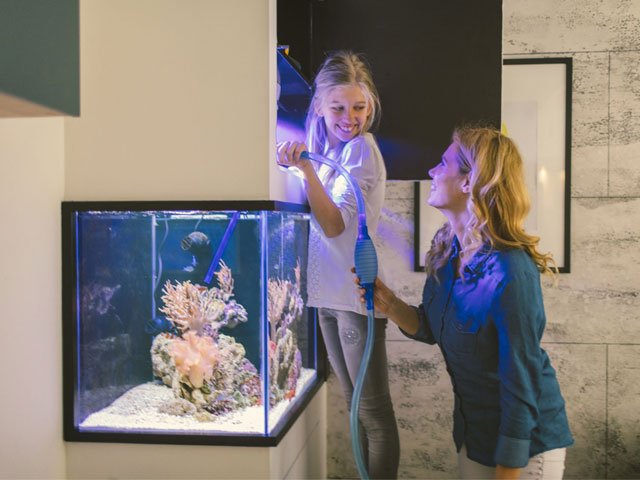
Partial aquarium water changes are the backbone of any fish tank maintenance schedule. Change 10% to 20% of the water weekly to remove accumulated toxins and refresh the environment.
Never empty the tank completely. Doing so wipes out the beneficial bacteria that keep ammonia and nitrite at safe levels, which can trigger a mini-cycle and stress your fish. As a hard rule, never change more than 40% of the water at once, even if levels look bad bring them down gradually over a few days instead.
The Aqueon Aquarium Fish Tank Water Changer makes this task dramatically faster since it connects straight to your faucet. If you prefer a manual option, a gravel vacuum siphon works just as well and doubles as your substrate cleaner. For conditioning new tap water, Tetra’s water maintenance kit removes chlorine and heavy metals before the water touches your tank.
Aquarium Filter Cleaning
Rinse your filter media in aquarium water never tap water — to avoid killing the beneficial bacteria that colonize it. Tap water contains chlorine, which will destroy that bacterial colony instantly.
Do this task over a bucket in the yard or bathroom sink, not next to the tank. Squeeze the sponge gently in a bucket of removed tank water until it runs mostly clear, then put it back. Full filter maintenance like this only needs to happen every one to two weeks, depending on your bioload.
Glass Cleaning
Use a sponge or magnetic algae scraper to keep the glass clear. When cleaning the inside surface, avoid dragging gravel across the glass loose substrate can scratch acrylic and glass tanks alike.
Monthly Fish Tank Maintenance Tasks
Once a month, go deeper than your weekly routine:
- Full water testing. Check pH, ammonia, nitrite, and nitrate, and adjust as needed.
- Equipment check. Inspect the heater, lights, and filter for wear, and replace any failing parts before they fail on you.
Monthly checks catch slow drift in water parameters that a quick weekly glance can miss.
Substrate Cleaning Tips
Leftover food and fish waste settle into the substrate over time, where they break down and release ammonia. Vacuum the substrate with a siphon during your weekly water change to prevent this buildup you’ll pull out debris and old water in the same motion.
A dedicated gravel pump vacuum is the easiest way to do this without disturbing your fish or your plants’ root systems.
Algae Control in Your Aquarium
Algae thrives on light and excess nutrients, so the fix starts there. Keep the tank away from direct sunlight, and limit artificial lighting to six to eight hours a day. Algae-eating fish or invertebrates, like otocinclus or nerite snails, also help keep growth in check naturally.
If algae is already established, Tetra’s algae control tablets and API ALGAEFIX both treat outbreaks without harming most fish species always check compatibility with your specific stock first. For a gentler, ongoing approach, Fluval’s biological water treatment helps break down the organic waste that feeds algae in the first place.
Fish Health Checks
Roll fish health checks into your daily inspection rather than treating them as a separate task. Watch for changes in color, unusual spots, or erratic swimming — these are usually the earliest signs something’s wrong.
Some species need specific care beyond the basics. Research your fish’s ideal temperature range and diet before assuming a generic routine will work for every tank.
Aquarium Plant Care
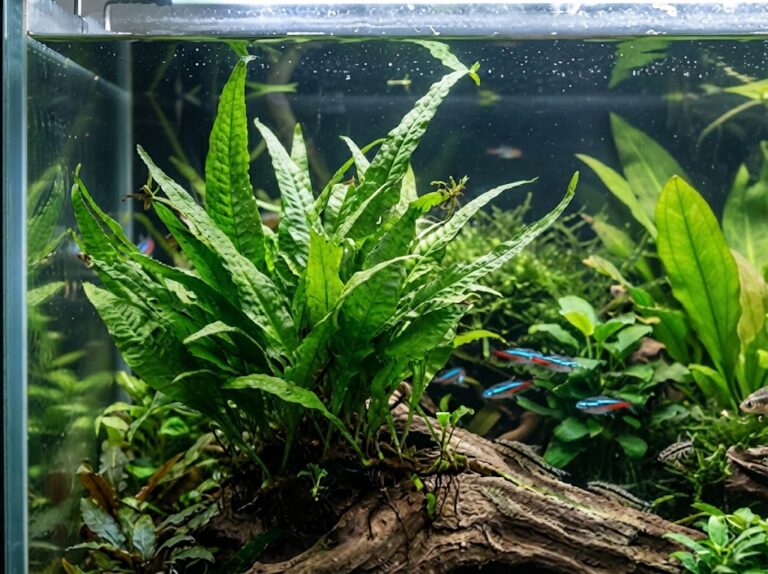
Live plants aren’t just decoration they absorb nitrates and help stabilize water quality, which means less work for you. Prune dead or overgrown leaves regularly, and provide root tabs or liquid fertilizer if your plants show yellowing or stunted growth.
Freshwater vs. Saltwater Tank Maintenance: Key Differences
The routines in this guide apply directly to freshwater aquariums. Saltwater and reef tanks share the same core principles regular water changes, filter care, and testing but add layers this guide doesn’t cover: salinity and specific gravity checks, protein skimmer maintenance, and calcium/alkalinity dosing for coral health.
If you’re running or planning a marine setup, treat it as its own system rather than adapting freshwater habits. We’re building a dedicated saltwater and reef tank maintenance guide check the Aquariums category for updates.
Common Fish Tank Maintenance Mistakes to Avoid
- Overcrowding. Too many fish in too little space overloads your filter and your water chemistry.
- Using soap or detergent. Never use either in or around your aquarium even trace residue is toxic to fish.
- Skipping compatibility research. Check species compatibility before adding new fish, not after.
- Rinsing filter media under tap water. This kills the bacteria that keep your tank cycled.
- Panicking and doing a 100% water change. This causes more harm than the problem you’re trying to fix.
Frequently Asked Questions
Consistency beats intensity here. A tank that gets a proper weekly water change and a two-minute daily check will outperform one that gets an occasional deep clean every few months.
Start with the weekly water change — it’s the single task that has the biggest impact on your tank’s health. Once that’s a habit, layer in the monthly testing and equipment checks, and your aquarium maintenance routine will practically run on autopilot.
Want to keep your water chemistry dialed in beyond the basics? Check out our guide on mastering aquarium water chemistry next.