Leopard Gecko Care: The Complete Beginner Guide
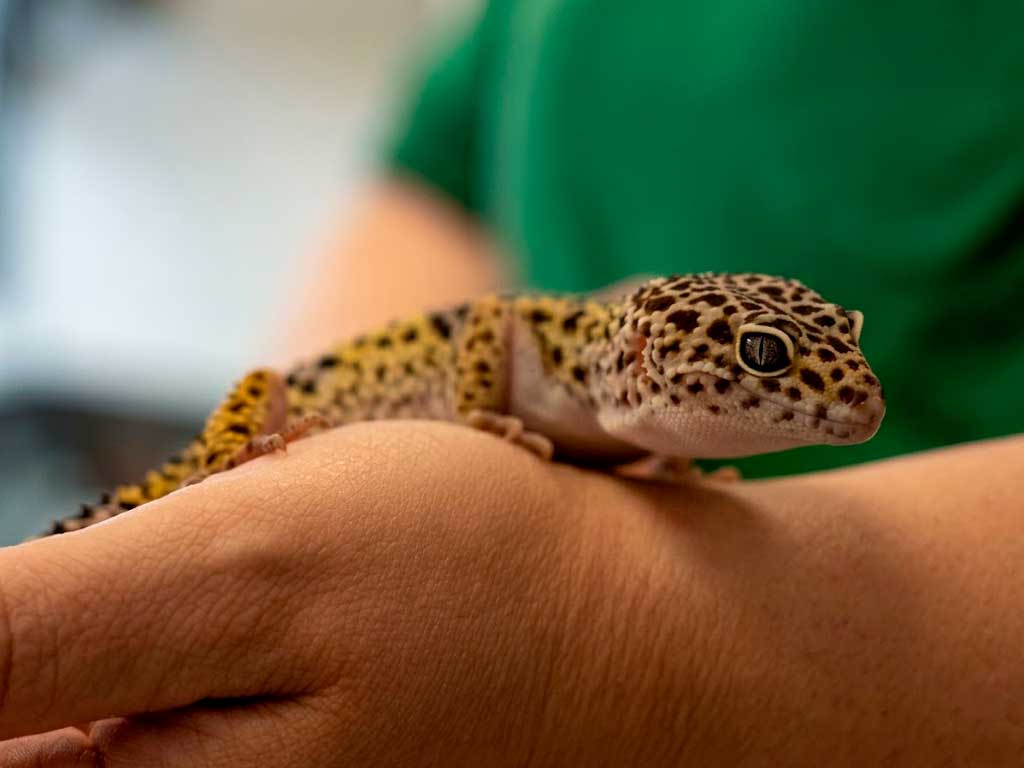
Contrary to what a lot of long-time keepers still believe, leopard gecko care isn’t a UVB-free hobby just because these lizards are active at dawn and dusk. T
hat’s an outdated rule of thumb that’s been quietly walked back over the last decade, and it’s one of several myths that make leopard gecko care sound simpler than it should.
I’ve kept everything from bearded dragons to blue-tongue skinks, and leos are genuinely one of the more forgiving species right up until someone skips the details that actually matter.
Quick facts: Leopard geckos (Eublepharis macularius) are native to the rocky, dry regions of Pakistan, Afghanistan, Iran, and northwest India, growing 7-11 inches long and living 10-20 years with good care.
They’re crepuscular, strictly insectivorous, and one of the few gecko species with movable eyelids, which is part of why they’re such a popular first reptile.
Choosing a Leopard Gecko and What It Costs
Buy from a reputable breeder or a store with clean, well-stocked enclosures rather than the cheapest listing you can find. A healthy leopard gecko has clear eyes, a plump tail, and moves with energy when approached rather than lying flat and unresponsive.
The cost of a leopard gecko itself is usually the smallest part of the budget. Expect to spend more on the enclosure, UVB fixture, thermostat, and heat source combined than on the gecko, and factor in ongoing costs for feeder insects and UVB bulb replacements every 6-12 months.
Common color morphs like normal, tangerine, and mack snow tend to cost less than rarer designer morphs, but price differences between morphs come down to breeding rarity, not care requirements.
Enclosure and Housing
A 20-gallon long tank is the standard minimum for one adult leopard gecko, and bigger is always fine since leos are terrestrial and use floor space more than height.
A screen top matters here too, since it supports airflow and lets UVB through without the blocking problem solid lids create.
Unlike a lot of reptiles, female leopard geckos can sometimes cohabit peacefully if they’re a similar size and the enclosure is large enough, though it still requires close monitoring for bullying.
FROM AMAZON.COM
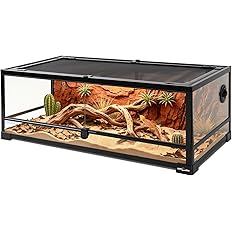
REPTI ZOO 35 Gallon Full Glass Reptile Tank — 36″ × 18″ × 12″
Wide and low front-opening terrarium with top screen ventilation and anti-escape lid. Fits lizards, geckos, tortoises, and snakes.
Buy on Amazon.comAs an Amazon Associate, we earn from qualifying purchases. Happy Pet Zone may earn a commission when you click through to Amazon.com, at no extra cost to you.
Adult males are a different story entirely they’re territorial and will fight if housed together, so a single male per enclosure is the only safe option.
Give your gecko two or three hides distributed across the warm and cool ends, plus low branches or flat rocks for the occasional climb.
Leopard geckos lack toe pads, so they can’t climb glass the way crested geckos can, which is actually useful to know when you’re deciding how much vertical space really matters here.
Substrate: Keep It Simple
Paper towels or reptile carpet are the safest substrate for any leopard gecko under 5-6 inches long, since younger geckos are far more prone to impaction from ingested substrate.
Some experienced keepers move adult geckos onto a fine, calcium-based sand later on, but that comes with real risk if temperatures or hydration aren’t dialed in first.
FROM AMAZON.COM
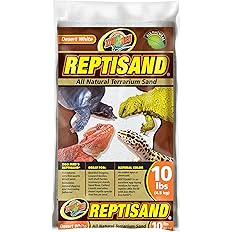
Zoo Med ReptiSand — Desert White, 10 lbs
Natural, chemical-free desert sand for bearded dragons, leopard geckos, and other arid species. Supports digging, burrowing, and egg laying.
Buy on Amazon.comAs an Amazon Associate, we earn from qualifying purchases. Happy Pet Zone may earn a commission when you click through to Amazon.com, at no extra cost to you.
Skip loose substrates entirely if there’s any doubt, including corncob, walnut shell, gravel, or wood shavings none of them are worth the impaction risk for a gecko that’s still learning its environment.
Reptile carpet or paper towel just isn’t glamorous, but it’s the substrate that ends fewest emergency vet visits.
Setting Up Temperature
Leopard geckos need a warm side around 80-85°F with a basking surface closer to 88-90°F, and a cool side sitting around 70-75°F. That gradient lets the gecko move between zones and self-regulate rather than being stuck at one temperature all day.
An under-tank heater on one side works well for ambient warmth, paired with a thermostat so the heat source never runs unchecked.

FROM AMAZON.COM
TFNN Reptile Heat Lamp — Double-Head UVA UVB Light, 25W + 50W
Clamp-on dual-head lamp with intelligent cycle timer. Covers both UVA and UVB needs for turtles, bearded dragons, lizards, and more.
Buy on Amazon.comAs an Amazon Associate, we earn from qualifying purchases. Happy Pet Zone may earn a commission when you click through to Amazon.com, at no extra cost to you.
Heat rocks are worth avoiding altogether, since they run hotter than they look and cause more burns in leopard geckos than almost any other piece of gecko gear.
At night, temperatures can drop into the high 60s without an issue, since leos naturally experience a cooler night cycle in the wild. Keep the room itself above roughly 68°F though, or the ambient drop can undercut the whole setup.
The UVB Myth, Cleared Up
Here’s the myth: that leopard gecko care doesn’t need UVB because they’re crepuscular and mostly avoid direct sun.
That belief made sense decades ago, but current best practice recommends a low-output 2-5% UVB tube anyway, since even limited natural exposure appears to support long-term bone health.
Position the UVB over part of the enclosure rather than the whole thing, so the gecko can choose to bask in it or retreat to shade. Replace the bulb every 6-12 months regardless of whether it still produces visible light, since UVB output fades long before the bulb looks dim.
What Should Leopard Geckos Eat?
Leopard geckos are insectivores, so their diet should consist of insects rather than fruit or vegetables. Crickets, dubia roaches, and mealworms are common feeder choices. Silkworms and other suitable feeder insects can add variety, while waxworms and superworms are best offered sparingly.
Choose captive-raised feeder insects and gut-load them with a nutritious diet for at least 24 hours before feeding. Lightly dust the insects with a phosphorus-free calcium supplement immediately before offering them. According to VCA Animal Hospitals, appropriate feeder insects, gut-loading, and calcium supplementation are important parts of leopard gecko nutrition. Read VCA’s leopard gecko care and feeding guide.
FROM AMAZON.COM
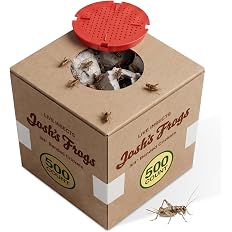
Josh’s Frogs 3/4″ Banded Feeder Crickets for Pets (500 Count)
Long Storage Protein Food Crickets, Healthy Active Prey for Leopard Geckos, Bearded Dragons, Tree Frogs, Frogs, Birds, Bats
Buy on Amazon.comAs an Amazon Associate, we earn from qualifying purchases. Happy Pet Zone may earn a commission when you click through to Amazon.com, at no extra cost to you.
How Often Should You Feed a Leopard Gecko?
Young leopard geckos generally need more frequent meals than adults. VCA recommends feeding juveniles every one to two days and adults two to three times per week. Offer appropriately sized insects and adjust portions to your gecko’s growth and body condition.
Regular weighing is especially helpful for juveniles. There is no single monthly growth target that applies to every leopard gecko, so track weight over time rather than assuming a slow-growing gecko is necessarily underfed. Persistent poor growth, weight loss, or a reduced appetite warrants an assessment by a reptile-experienced veterinarian.
Remove uneaten live insects after the feeding session. Crickets and other feeder insects can bite a resting gecko if left roaming in the enclosure.
A quick safety check: Keep fresh water available every day, and never rely on a supplement label alone to determine how much calcium or vitamin D3 your gecko needs.
The Tail-Drop Reflex
Never grab a leopard gecko by the tail. It’s a defense mechanism called autotomy, and the tail will detach on its own if the gecko feels threatened or is handled roughly, leaving it to squirm on the ground as a distraction while the gecko escapes.
The tail does grow back, typically over 30-40 days, but it usually looks shorter and stubbier than the original. It also costs the gecko significantly, since leopard geckos store fat reserves in their tails, and losing one means starting that reserve over from close to nothing.
Shedding and the Humid Hide
Leos shed in large pieces rather than one continuous layer, and they typically eat the shed skin once it’s off. A humid hide a small enclosed space with damp moss or paper towel gives the gecko somewhere to soften old skin before it comes loose.
Stuck shed around the toes or eye caps is the main thing to watch for, since it can cut off circulation or trap debris against the eye. If shed won’t come off with a gentle soak, that’s a reptile vet visit, not something to peel off by hand.
Handling: What to Do and What to Avoid
Scoop gently from below rather than grabbing from above, supporting all four feet so the gecko feels secure rather than trapped.
Wait until a gecko is at least 5-6 inches long before regular handling, since younger animals stress more easily and handling too early can slow their growth.
Quick safety note: leopard geckos, like most reptiles, can carry salmonella even when they look perfectly healthy.
Wash your hands before and after handling, and keep that habit consistent even on days when nothing seems off.
Fascinating Leopard Gecko Behavior
Leopard geckos communicate partly through their tails a slow tail shake signals that one gecko has noticed another, while a fast shake from a male usually means he’s spotted a female. It’s a small detail, but it explains a lot of behavior that otherwise looks random.
Here’s a genuinely wild fact: incubation temperature determines the sex of leopard gecko hatchlings.
Eggs incubated around 79°F produce mostly females, 85-87°F produces a roughly even split, and 90°F skews heavily male. Breeders use this deliberately, though it’s not something a pet owner needs to manage day to day.
Health Red Flags and When to See a Vet
Book an annual checkup with a reptile-experienced exotic vet, including a fecal check for parasites, even when the gecko seems completely fine.
Leopard geckos hide illness well, and problems like early bone density loss or internal parasites often show no obvious symptoms until they’re advanced.
Watch for a thin or shrunken tail, which usually signals inadequate fat reserves rather than a normal body type.
Lethargy, appetite loss lasting more than a few days, stuck shed that won’t resolve with soaking, and any swelling or limping all warrant a call to the vet rather than a wait-and-see approach.
This guide provides general educational information and isn’t a substitute for veterinary care. If your leopard gecko shows any of the signs above, a reptile-experienced exotic vet is the right call, not a home remedy.
Frequently Asked Questions
Getting Leopard Gecko Care Right From the Start
Every mistake covered here traces back to the same handful of gaps: substrate that’s too risky, a UVB setup skipped because of an outdated myth, or handling that starts before the gecko is ready for it. Fix those and leopard gecko care turns out to be exactly as manageable as its reputation suggests.
Not as scary as it sounds, once the basics are actually in place.