Double Tail Betta: The Beauty and the Genetic Tradeoff
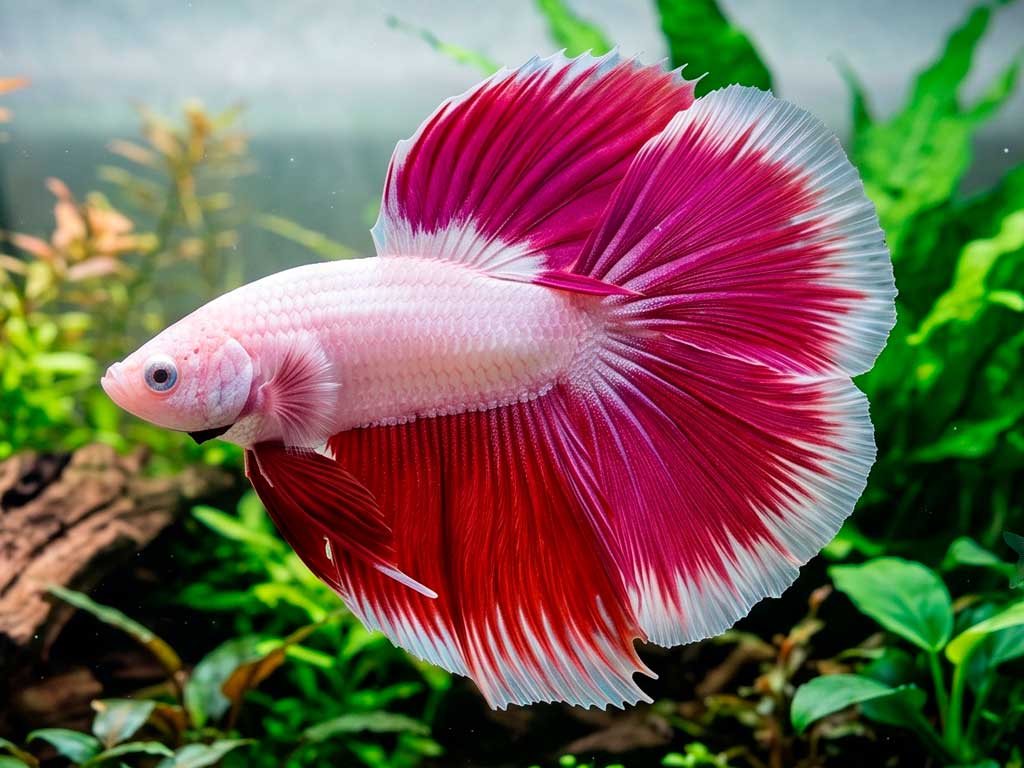
Before anything else in this guide: a double tail betta’s dramatic split caudal fin comes from the same genetic mutation that also tends to shorten its body and compress its spine slightly.
That’s not a reason to avoid the variety, plenty live full, healthy lives, but it’s a genuine tradeoff worth understanding before you buy one, and it’s the one honest detail most sales listings skip entirely in favor of just showing you how striking the double fin looks.
Quick answer: The double tail betta has a caudal fin split all the way to the base into two distinct, even lobes, along with a doubled or enlarged dorsal fin. The same gene responsible for the split also tends to shorten the body slightly, which can affect swim bladder function and overall robustness in some individuals. It’s a genuinely beautiful variety, just one worth buying from a breeder who selects for body health alongside fin symmetry.
This guide covers what actually defines the double tail trait, the health consideration in real detail, and what to look for in a well-bred specimen. For general betta fundamentals, see our betta fish care guide.
What Actually Defines a Double Tail
A double tail betta’s caudal fin splits completely down to the base, forming two separate, symmetrical lobes rather than one continuous fin. The trait rarely shows up alone: most double tail bettas also carry a noticeably wider, taller, or doubled dorsal fin, giving the whole fish a fuller, more elaborate silhouette than a single-tail variety of the same fin type. The gene responsible is genuinely dominant enough to combine with other tail traits, producing double tail halfmoon (DTHM) and double tail plakat (DTPK), among other pairings.
The Health Consideration Most Sellers Skip
The double tail trait is caused by a single gene that, when present, doesn’t just split the caudal fin, it also tends to shorten the spine and compress the body cavity slightly. In practical terms, that compressed body sometimes crowds the swim bladder enough to affect buoyancy control, and shortened-body individuals can be somewhat less robust overall than a standard-body betta. This is why double tail bettas show up more often than average in discussions about swim bladder disorder, fish that struggle to stay level, float nose-down, or sink when they should hover.
None of this means every double tail betta struggles, most live perfectly normal lives, but it does mean the trait carries a real biological cost alongside its visual appeal, unlike a purely cosmetic trait such as color. Responsible breeders actively select against the most extreme body shortening while keeping the fin trait, which is exactly why buying from a breeder who understands and screens for this matters more with double tail than with most other varieties.
What to Look For in a Well-Bred Double Tail
Symmetry is the first quality marker: both caudal lobes should be even in size and shape, not one noticeably larger or shorter than the other. Beyond the fins, look at the body itself. A healthy double tail, even with some natural shortening, should still swim levelly and hold its position in the water without visibly struggling, floating, or sinking involuntarily. Ask the seller directly whether the line has a history of swim bladder issues if you’re buying from a dedicated breeder rather than a general pet store, since a breeder who takes the question seriously is generally the same breeder actively selecting for body health.
Care Notes
Standard betta requirements apply: a minimum 5-gallon tank, water held between 76 and 82 degrees F, gentle filtration, and a protein-rich diet, all covered in our betta fish care guide. If your double tail shows any signs of buoyancy trouble, feeding smaller, more frequent portions can ease pressure on the swim bladder, and keeping the water level a bit lower with easy access to the surface helps a fish that struggles to swim gain access to air without exhausting itself.
Frequently Asked Questions
Are double tail bettas unhealthy?
Not necessarily, but the gene responsible for the split tail also tends to shorten the body slightly, which can affect swim bladder function in some individuals. Buying from a breeder who selects for body health alongside fin symmetry meaningfully reduces this risk.
Why does my double tail betta float oddly or struggle to swim level?
This can be a form of swim bladder disorder linked to the body shortening that often accompanies the double tail trait. Smaller, more frequent feedings and a lower water level for easier surface access can help manage mild cases.
What is DTHM or DTPK?
Double Tail Halfmoon and Double Tail Plakat, combinations of the split-tail trait with halfmoon spread genetics or plakat’s short fin structure, respectively. Both are commonly bred and sold under these abbreviations.
What should I look for when buying a double tail betta?
Even, symmetrical caudal lobes, a fish that swims levelly without visible struggle, and ideally a breeder who can speak knowledgeably about swim bladder health in their line rather than only the fin appearance.
Does a double tail betta need special tank setup?
Standard betta setup works for most individuals. If yours shows swim bladder symptoms, a slightly lower water level makes reaching the surface for air easier and less tiring.
Can double tail be combined with other tail types?
Yes. The trait is dominant enough to pair with halfmoon, plakat, and other fin types, producing combinations like double tail halfmoon and double tail plakat that are widely available in the trade.
A double tail betta is one of the clearest examples in this whole series of why knowing the biology behind a trait matters as much as appreciating how it looks. Buy thoughtfully, watch how the fish actually swims, and a double tail can be every bit as long-lived and rewarding as any other variety in this hobby.