Protein Skimmers for Beginners: Do You Need One?
If you moved into saltwater from freshwater, the protein skimmer is probably the first piece of equipment you have never heard of, and also the one experienced reefers treat as non-negotiable.
Tanks running one and tanks running without one behave noticeably differently over time, and the difference usually shows up as fish stress and struggling coral in the tanks that skip it.
This guide covers what a protein skimmer actually does, whether your setup needs one, how to size and set one up, and the maintenance habits that keep it working. If you are still planning your first tank, start with our saltwater aquarium setup guide for beginners first.
Quick answer: A protein skimmer removes dissolved organic waste from saltwater before it breaks down into nitrate, using a column of fine bubbles that waste particles stick to. Reef tanks with corals need one. Fish-only tanks benefit from one but can run without it with more frequent water changes. Freshwater tanks don’t use them at all, since the chemistry that makes skimming work depends on saltwater’s surface tension.
What Is a Protein Skimmer and How Does It Work?
Every living thing in your tank produces waste: uneaten food, fish excretion, and organic compounds released by corals and bacteria. Left alone, this waste breaks down into ammonia and eventually nitrate, adding to the load your biological filtration has to handle.
A protein skimmer intercepts a large share of that waste before it ever gets the chance to decompose.
It works through a property called surface tension, the same effect that gives soap bubbles their oily, colorful film. Inside the skimmer, a pump draws in water and air together and forces the mixture through a needle wheel impeller, which shreds the incoming bubbles into an enormous number of tiny ones.
Dissolved waste particles cling to the surface of these bubbles as they rise through the skimmer body. The bubbles collect into foam, climb the skimmer’s neck, and burst once they reach the top, dropping the waste they carried into a removable collection cup.
You empty that cup periodically, and the thick, dark, genuinely unpleasant-smelling liquid inside it (called skimmate) is waste that never had the chance to pollute your tank in the first place.
Do You Actually Need One?
This depends on what you’re keeping, covered in more depth in our saltwater setup guide.
- Reef tanks with corals: Treat a skimmer as essential. Corals are far more sensitive to dissolved organic buildup than fish are, and tanks running without one consistently show more coral health problems and algae issues.
- Fish-only and FOWLR tanks: A skimmer still helps significantly, but a lightly stocked fish-only tank can run without one if you compensate with more frequent water changes and closer nutrient monitoring.
- Freshwater tanks: Skip it entirely. Protein skimming depends on saltwater’s surface tension to work, and freshwater doesn’t produce the same bubble-and-foam effect.
The Parts of a Protein Skimmer
Understanding the parts makes troubleshooting and maintenance far less mysterious later.
- Needle wheel impeller: Shreds incoming air into the fine bubbles that give the skimmer its surface area for waste to stick to. More surface area means more waste collected per pass.
- Venturi (air and water intake): A narrowing pipe that speeds up water flow and drops pressure enough to pull air in alongside it, feeding the air-water mixture to the impeller.
- Bubble diffuser: Smooths out the turbulent flow coming off the impeller so bubbles can rise calmly instead of bursting immediately.
- Adjustment valve: Controls how much water sits inside the skimmer body, which determines how “wet” or “dry” your skimming is.
- Collection cup: Catches the waste-laden foam once it bursts at the top of the neck. This is the part you empty regularly.
Types of Protein Skimmers
Internal (In-Sump) Skimmers
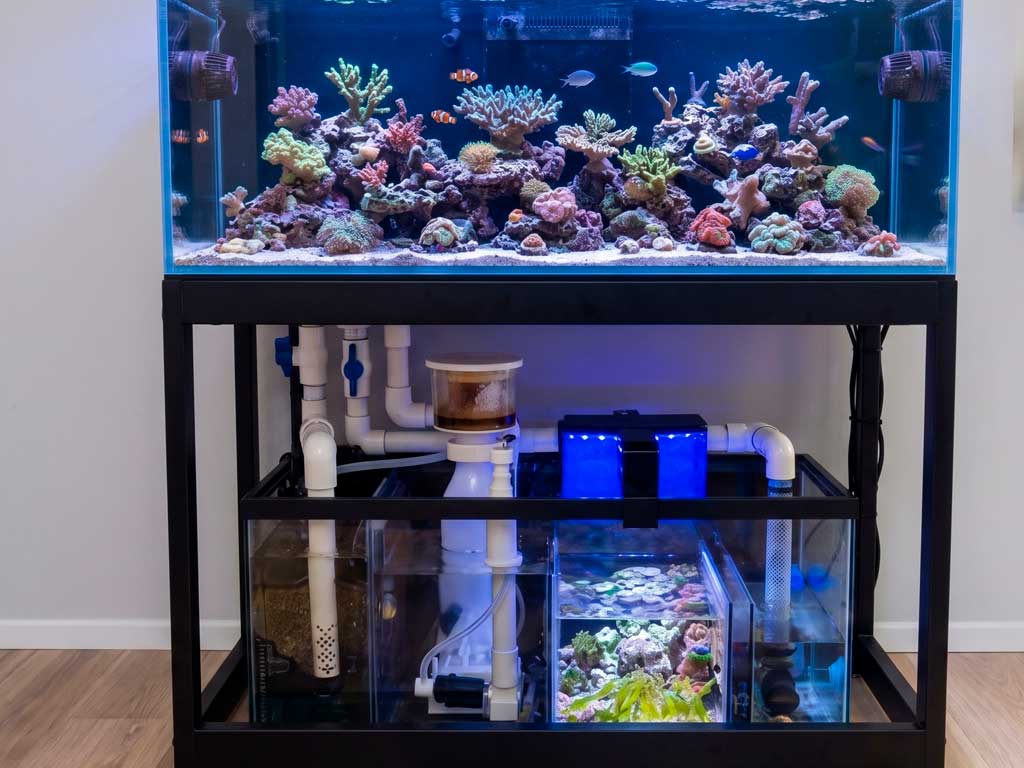
The most common choice for anyone running a sump, and generally the recommended starting point. The skimmer sits directly in the sump chamber, so if it ever overflows, the mess drops right back into the sump rather than onto your floor.

FROM AMAZON.COM
Reef Octopus Classic 110-INT Needle Wheel Protein Skimmer
Powered by Hailea OTP pumps with new pinwheel impellers — up to 100% improved foam production compared to older models.
Buy on Amazon.comAs an Amazon Associate, Happy Pet Zone earns from qualifying purchases, at no extra cost to you.
The Reef Octopus Classic 110-INT is a solid example of this type, built with a needle wheel design suited to small-to-medium reef and fish-only tanks.
External Skimmers
Built for larger tanks or setups without room in the sump. These can run bigger pumps and wider bodies to handle serious water volume, but you need to watch the collection cup closely, since an overflow outside a sump can create a genuinely unpleasant cleanup.
FROM AMAZON.COM
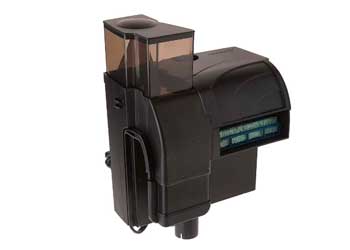
Coralife Marine Salt Water Filter and Protein Skimmer, Up to 30 Gallons
A compact all-in-one filtration and skimming unit designed for nano and small saltwater tanks up to 30 gallons.
Buy on Amazon.comAs an Amazon Associate, Happy Pet Zone earns from qualifying purchases, at no extra cost to you.
HOB (Hang-On-Back) Skimmers
Designed for tanks without a sump. These hang discreetly on the back of the aquarium, pulling water in, processing it, and returning it directly. They work well for tanks up to roughly 100 gallons, though their compact design makes them somewhat less efficient than a full recirculating in-sump unit.
How to Size a Protein Skimmer
Match the skimmer to your total system volume, tank, sump, and any connected frag tanks combined, plus your bioload. A heavily stocked tank with large, messy fish needs more skimming capacity than a lightly stocked tank of the same size.
Bigger is not automatically better here, and this trips up a lot of beginners who assume oversizing is the safe choice. A skimmer that is too large for your tank can strip dissolved organics out of the water faster than your tank produces them, leaving nothing left for the bubbles to grab onto.
The result is a skimmer that cycles on and off producing inconsistent foam, which leads to unstable water parameters rather than the stability you were trying to buy. Choose a skimmer rated for your actual system volume rather than sizing up for a safety margin.
Wet vs. Dry Skimming
Adjusting the water height in the skimmer’s neck changes how “wet” or “dry” your skimmate comes out. A higher water level produces wetter skimmate, more liquid, less concentrated waste, removed faster.
A lower level produces drier skimmate, thicker and more concentrated, but produced more slowly. Most reefers settle on the drier side, since a rich, dark, strong-smelling skimmate is generally the sign of a well-tuned skimmer.
Keep an eye on salinity if you run wet, though, since pulling out a lot of liquid regularly and topping off with fresh water alone will gradually dilute your salt level.
Setting Up and Breaking In a New Skimmer
Every new skimmer goes through a break-in period. Manufacturing residue, mold-release oil left over from production, needs time to work its way out of the plastic, and this can take anywhere from a few days to a few weeks.
Expect messier, less predictable foam production during this window, and expect to adjust the valve more often than you will once things settle.
Run your skimmer throughout your tank’s initial cycle rather than waiting until after, the same way you would run every other piece of equipment. It gives the skimmer time to break in alongside the rest of your system finding its balance.
Protein Skimmer Maintenance
Skimmer upkeep is one of the most commonly neglected saltwater maintenance tasks, and it’s exactly the kind of thing covered in depth in our saltwater aquarium maintenance checklist. The essentials specific to your skimmer:
- Wipe the neck daily or every few days. A film builds up on the neck walls over time, and rough or scummy surfaces cause bubbles to burst before they reach the cup, quietly tanking your skimmer’s efficiency.
- Keep the air intake free of salt creep. Dried salt narrows the venturi opening over time, which raises the water/bubble height and reduces bubble production. Letting the intake draw water instead of air for a few minutes once a month dissolves the buildup.
- Clean the pump and needle wheel impeller monthly. Detritus accumulates in the needles specifically and gradually reduces the fine-bubble production that makes the whole system work.
- Do a full vinegar soak yearly. Baked-on coralline algae and calcium deposits build up in places daily cleaning can’t reach. A soak in warm water and white vinegar dissolves this, followed by a thorough rinse before the skimmer goes back into service.
Troubleshooting Common Problems
My Skimmer Isn’t Producing Any Foam
If it’s brand new, this is often just the break-in period running its course. Otherwise, check the air line, silencer, and venturi for blockages first. In a newly stocked tank, there may simply not be enough dissolved organic waste yet to produce meaningful foam, which resolves itself as your bioload grows.
My Skimmer Keeps Overflowing
A blocked air intake is the most common cause. Beyond that, certain medications (cyanobacteria treatments especially) can send a skimmer into overdrive temporarily, and even airborne substances like air freshener or scented candles near the tank can disrupt surface tension enough to cause overflow. Adjust the valve down and give it time to settle before assuming something is broken.
My Skimmate Looks Watery, Not Thick and Dark
You’re likely running wet rather than dry. Lower the water level with the adjustment valve to concentrate the waste further before it overflows into the cup.
Frequently Asked Questions
A well-tuned protein skimmer runs quietly in the background for months at a time, and the maintenance it needs is minor compared to the stability it buys you. Get the sizing right, give it a fair break-in period, and stay on top of the small weekly and monthly habits, and it becomes one of the least demanding parts of your whole system.