Bearded Dragon Care: The Complete Beginner Guide
Contrary to what most pet stores tell you, bearded dragon care isn’t hard to get right it’s just easy to get almost right, and “almost right” is exactly what causes most of the health problems I see.
I’ve kept everything from leopard geckos to blue-tongue skinks, and bearded dragons are genuinely one of the more forgiving species once the setup is dialed in.
Here’s the myth: that any 20-gallon tank with a heat lamp counts as proper bearded dragon care. It doesn’t, and this guide walks through exactly what does, from picking a healthy hatchling to reading the warning signs that mean a vet visit.
Quick facts: Bearded dragons (Pogona vitticeps) are native to the arid regions of Australia, grow to 18-24 inches including the tail, and live 10-15 years with proper care. They’re diurnal, omnivorous, and generally tolerate handling well once settled, which is a big part of why they’re one of the most popular pet reptiles worldwide.
Choosing a Healthy Bearded Dragon
Buy from a reputable breeder or a store that keeps its animals in clean, well-maintained enclosures, not a bin stacked on top of ten others. A healthy hatchling has clear eyes, a rounded (not sunken) tail base, and moves with energy rather than lying flat and unresponsive.
Ask the seller what the dragon has been eating and how old it is. Dragons under three months are fragile and better left with an experienced keeper a little longer, so don’t feel pressured into taking home the youngest animal in the enclosure.
Quick safety note: avoid dragons showing black toes, swollen limbs, or a visibly soft jaw. Those are signs of existing health problems, sometimes early Metabolic Bone Disease, and buying one anyway means starting your bearded dragon care journey with a vet bill.
Budget for more than just the animal itself. A hatchling typically costs less than the enclosure, UVB fixture, thermostat, and heat source combined, and that upfront setup usually runs a few hundred dollars before the dragon even arrives. Ongoing costs for feeder insects, greens, and UVB bulb replacements add up too, so factor those into the decision rather than budgeting for the purchase price alone.
Setting Up the Enclosure
Tank size scales with age, and undersizing is the single most common bearded dragon care mistake I see repeated. A 10-gallon tank works for a hatchling, a 20-gallon for a juvenile, and adults need a minimum of 40 gallons — though a 4x2x2 foot enclosure gives a full-grown dragon genuinely comfortable room to move, bask, and explore.
Glass tanks with a screen top are the standard choice, since they hold heat well and let UVB through without the light-blocking problem that glass lids create. Wire mesh cages can irritate a dragon’s toenails over time, so they’re worth avoiding even though they’re marketed as reptile-appropriate.
Give your dragon something to climb and a basking platform positioned close enough to the heat source to matter. Bearded dragons are naturally arboreal baskers, and a flat tank floor with nothing to climb on doesn’t match how they’d actually use space in the wild.
Substrate: What’s Actually Safe
Loose sand, including products marketed as “reptile-safe” or “calci-sand,” causes real impaction risk because dragons lick their environment constantly and will ingest it while hunting insects. This isn’t a minor risk either — impaction from sand ingestion is one of the more common reasons bearded dragons end up in emergency surgery.
Paper towels, reptile carpet, or tile are the safer defaults, especially for juveniles who are more prone to impaction than adults. Experienced keepers sometimes move to a bioactive substrate once they understand a specific dragon’s habits well, but that’s a step to grow into, not a starting point.
Lighting, Heat, and UVB
Bearded dragons need a basking spot between 95-110°F depending on age, with younger dragons tolerating and needing the higher end of that range. The cool side of the tank should sit around 75-85°F, giving the dragon room to thermoregulate by moving between zones.
UVB isn’t optional. Without it, a dragon can’t synthesize the vitamin D3 needed to use dietary calcium, and that gap is exactly what leads to Metabolic Bone Disease, one of the most preventable and most common health problems in captive reptiles. Use a 10-12% UVB linear tube spanning most of the tank’s length, replace it on the manufacturer’s schedule, and never place it behind glass, which blocks nearly all UVB output.
At night, temperatures can drop into the high 60s to low 70s degrees F without issue, since bearded dragons don’t need heat around the clock the way some tropical species do. A thermostat on the basking bulb prevents overheating, which is a bigger risk than most first-time keepers expect from a single bulb.
Bearded Dragon Diet
Diet ratios shift dramatically with age, and getting this backwards is another common bearded dragon care mistake. Juveniles need roughly 60-70% insects and 30-40% greens, while adults flip that ratio, eating mostly greens with insects as a smaller supplement.
Gut-load feeder insects with a nutrient-dense diet for 24-48 hours before offering them, then dust with a calcium supplement at nearly every meal for juveniles and a few times a week for adults. Crickets, dubia roaches, and phoenix worms all work well, and phoenix worms in particular carry a naturally strong calcium-to-phosphorus ratio.
For greens, rotate collard greens, mustard greens, dandelion greens, and turnip greens rather than relying on one type. Limit spinach and iceberg lettuce, since spinach binds calcium and iceberg offers close to no nutritional value despite looking like a reasonable salad base.
Foods That Are Dangerous for Bearded Dragons
A few foods cross the line from “not ideal” into genuinely dangerous, and this list rarely gets the attention it deserves. Fireflies are toxic enough to kill an adult bearded dragon from a partial bite, thanks to a compound called lucibufagin that most reptiles can’t process.
Avocado, chocolate, onion, garlic, and rhubarb all belong on the same never-feed list. Wild-caught insects are risky too, since they may carry pesticide residue or parasites picked up outside, so stick to feeder insects raised specifically for reptile consumption.
Bringing Your Dragon Home: The First Week
Set up and run the enclosure for about a week before the dragon arrives, so temperatures and humidity stabilize before it’s actually living in there. Rushing this step means introducing a new animal to an environment that’s still fluctuating, which adds stress on top of the move itself.
Keep handling minimal for the first few days and let the dragon settle in on its own terms. A dragon that backs away or puffs its beard when you reach in isn’t ready yet, and pushing past that signal usually just extends how long it takes to build trust.
Handling and Reading Bearded Dragon Behavior
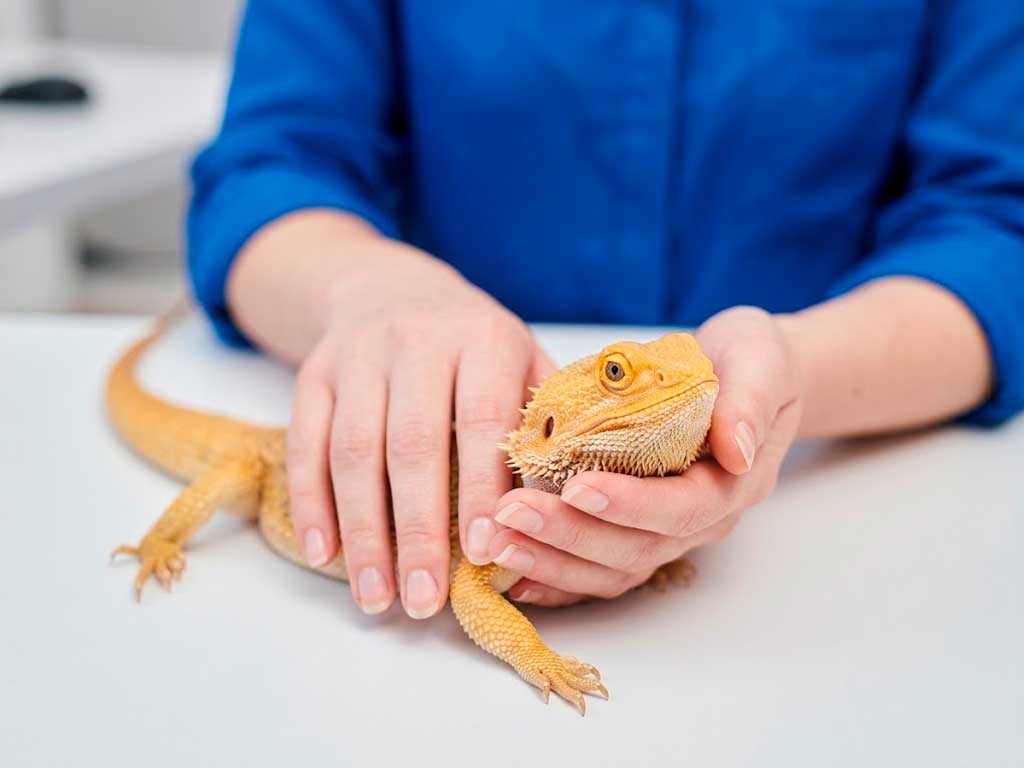
Scoop rather than grab, supporting all four legs and the tail rather than picking the dragon up from above, which can read as a predator attack. Sessions of 10-15 minutes are plenty for a young or newly settled dragon.
A black or dark beard usually signals stress or, in males, a display of dominance. An arm wave is a submissive gesture, oddly cute-looking but actually a sign the dragon doesn’t feel fully secure. Head bobbing can mean either dominance or mating interest depending on speed and context, so it’s worth watching the fuller picture rather than reading one gesture in isolation.
During cooler months, some dragons slow down significantly, sleep more, and eat less. This is brumation, a lizard version of a seasonal slowdown, and it’s normal as long as the dragon isn’t losing weight. A dragon that stops eating entirely and keeps losing weight during brumation needs a vet check, not just patience.
Here’s a myth worth clearing up: female bearded dragons can lay eggs even without ever being near a male. Those clutches are infertile and won’t hatch, but a female laying eggs alone isn’t a medical emergency by itself — she just needs a digging box available, or she risks becoming egg-bound, which is a genuine emergency.
Common Bearded Dragon Colors and Morphs
Classic or “normal” bearded dragons have tan-to-brown coloring, and they’re the baseline every other morph gets compared against. Red and citrus morphs carry warmer, more saturated tones and are some of the most commonly bred color variants.
Hypomelanistic (“hypo”) and translucent morphs have reduced pigment, giving them a lighter, sometimes almost see-through appearance in young dragons. Leatherback morphs have smoother, reduced spikes, while silkback morphs take that further and have essentially no scales at all — which looks striking but leaves them more vulnerable to sunburn and skin injury, so silkbacks need extra care around UVB exposure and handling.
German Giant lines are bred for larger adult size rather than color, and they’re worth knowing about if space and enclosure size are already a consideration.
Health Red Flags and When to See a Vet
Book an annual checkup with a reptile-experienced exotic vet, including a fecal exam, even when nothing looks wrong. Bearded dragons hide illness well, and a baseline visit catches problems like early bone density loss long before obvious symptoms show up.
Watch for lethargy, a swollen or soft jaw, tremors in the limbs, and any dragging or difficulty moving — these are classic signs pointing toward MBD specifically. Sudden appetite loss lasting more than a week in an adult, unusual stool changes, and visible weight loss despite normal eating all warrant a call to the vet rather than a wait-and-see approach.
This guide provides general educational information and isn’t a substitute for veterinary care. If your bearded dragon shows any of the signs above, a reptile-experienced exotic vet is the right call, not a home remedy.
Frequently Asked Questions
How big of a tank does a bearded dragon need?
A 10-gallon tank works for hatchlings, 20 gallons for juveniles, and adults need a minimum of 40 gallons, ideally a 4x2x2 foot enclosure for comfortable adult movement.
How long do bearded dragons live?
With proper bearded dragon care, most live 10-15 years, though some individuals with excellent care and genetics have lived even longer.
What temperature should a bearded dragon’s basking spot be?
Between 95-110°F depending on age, with younger dragons tolerating and often needing the higher end of that range.
Do bearded dragons need UVB light?
Yes, without exception. UVB allows a bearded dragon to synthesize vitamin D3, which it needs to actually use the calcium in its diet.
What can bearded dragons not eat?
Fireflies, avocado, chocolate, onion, garlic, and rhubarb are all dangerous. Wild-caught insects should also be avoided due to pesticide and parasite risk.
How often should I feed my bearded dragon?
Juveniles eat several small meals a day heavy in insects, while adults typically eat once daily with a diet shifted toward mostly greens.
Can two bearded dragons live in the same tank?
No, bearded dragons are solitary and territorial, and housing them together usually leads to stress, fighting, or resource competition.
Why is my bearded dragon’s beard turning black?
A black beard usually signals stress or, in males, a dominance display. It’s worth noting the context rather than assuming the worst immediately.
What is brumation in bearded dragons?
A seasonal slowdown similar to hibernation, where a dragon sleeps more and eats less during cooler months. It’s normal as long as significant weight loss isn’t happening alongside it.
Are bearded dragons good pets for beginners?
Generally yes, since they tolerate handling well and are more forgiving of minor husbandry mistakes than many reptile species, though they still require a genuine UVB and diet commitment.
Getting Bearded Dragon Care Right From Day One
Every mistake covered here traces back to the same handful of gaps: undersized housing, missing or expired UVB, or a diet ratio that never adjusted as the dragon grew. Fix those four things and most of what makes bearded dragon care feel complicated simply disappears.
Not as scary as it sounds, once the basics are actually in place.