Saltwater Aquarium Maintenance: The Complete Checklist
Most saltwater aquarium maintenance guides repeat the same short list: test the water, change some of it, wipe the glass.
That covers the basics, but it skips the quiet tasks that actually cause the expensive failures, a clogged skimmer neck nobody wipes, a fan inside your light fixture nobody blows out, salt crust slowly seizing up a pump.
This guide covers both layers: the routine upkeep every tank needs, and the overlooked maintenance that separates a stable tank from one lurching from crisis to crisis.
If you’re still building your system, our saltwater aquarium setup guide for beginners covers equipment and cycling. This guide picks up once your tank is running and focuses entirely on keeping it that way.
Quick answer: Saltwater aquarium maintenance breaks down into daily checks (temperature, salinity, skimmer neck), weekly tasks (water testing, a 10 to 20% water change, glass cleaning), and monthly to quarterly deep tasks (pump and skimmer disassembly, filter media rinsing, plumbing checks). The tasks most people skip, skimmer upkeep and equipment cleaning, are usually the ones that cause the biggest crises later.
Daily Tasks
- Check temperature and salinity. A quick glance with a reliable salinity hydrometer catches evaporation drift before it becomes a real swing.
- Top off evaporated water with plain freshwater, never saltwater, since only water evaporates and topping off with salt mix concentrates salinity over time.
- Wipe the protein skimmer neck with a paper towel if you’re running one. This takes seconds and is one of the most overlooked habits in the hobby. As scum builds up on the neck, foam struggles to climb over it into the collection cup, and skimmer efficiency quietly tanks until you’re stuck doing a full breakdown clean instead of a ten-second wipe.
- Just watch the tank. Set aside a few minutes separate from feeding or testing to simply observe. Fish behave more naturally when they aren’t anticipating an activity, which makes this the best time to notice a fish being picked on, hiding more than usual, or nibbling on coral it shouldn’t.
Weekly Tasks
Test ammonia, nitrite, nitrate, and salinity weekly while your tank is still young, tapering the frequency once it proves stable over several months. A kit that covers multiple parameters in one strip, like the Pawfly 5-in-1 test kit, keeps this from becoming a chore that gets skipped. Full explanations of what each reading means and how they interact live in our water chemistry guide.
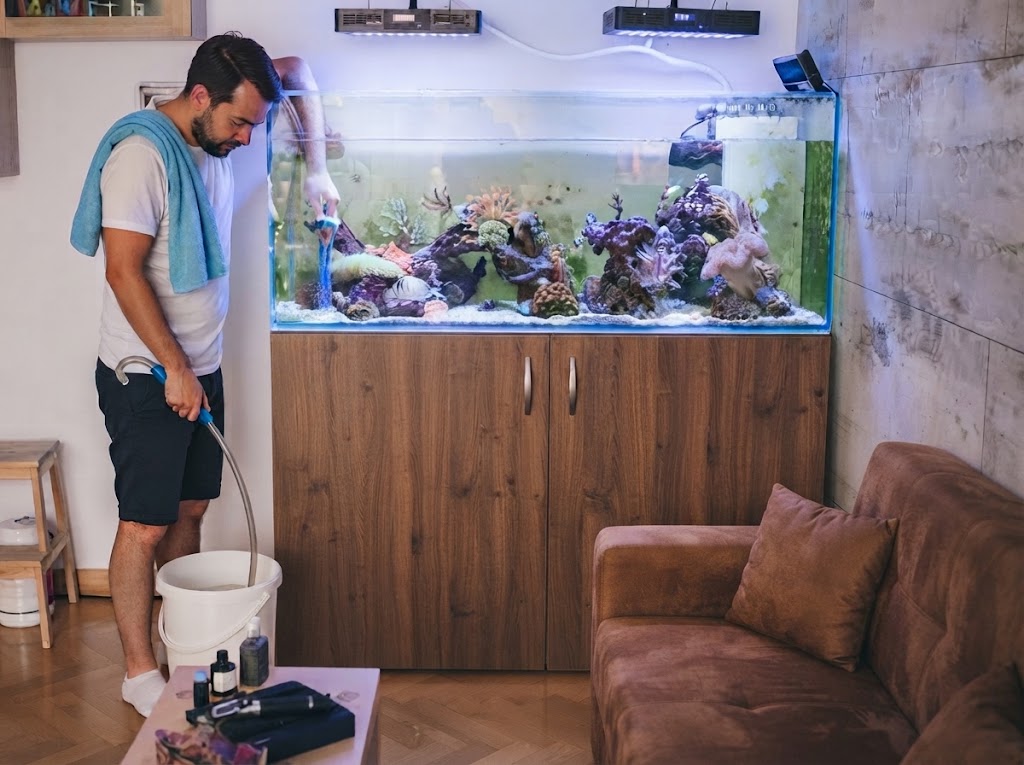
Perform a 10 to 20% water change using freshly mixed Instant Ocean Sea Salt, matched to your tank’s temperature and salinity before it goes in. After a larger-than-usual water change, a dose of Seachem SureStart helps your beneficial bacteria population bounce back faster than waiting it out alone.
A gravel siphon makes this a two-in-one task, since you pull old water and vacuum detritus out of the substrate in the same motion, removing waste before it has a chance to break down and feed nuisance algae.
Clean the glass or acrylic with a dedicated aquarium-safe tool. A multi-tool kit like the UPETTOOLS 6-in-1 cleaning set covers algae scraping, scrubbing, and detail work without needing separate purchases for each job.
Monthly Tasks
- Rinse mechanical filter media in removed tank water, never tap water, to avoid killing the beneficial bacteria colonizing it. Only clean 80 to 90% of biological media at once, covered in more depth in our filter media guide.
- Clear salt crust from your skimmer’s air intake. Over time, dried salt narrows the opening where the venturi draws in air. Once a month, let the intake hose draw in water instead of air for a few minutes, which dissolves the buildup without any scrubbing.
- Blow out the fans in your LED fixture with a can of compressed air. Fixture fans commonly fail before the LEDs themselves, and once they stop, the light can overheat and fail soon after, since many fixtures aren’t designed with replaceable fans.
- Dose a bacterial cleaner aid like Brightwell Aquatics MicroBacter Clean if you’re seeing organic buildup on rock or in hard-to-reach corners, since it supports the breakdown of waste your mechanical filtration can’t physically reach.
Quarterly and Twice-a-Year Tasks
This is the layer of saltwater aquarium maintenance most guides skip entirely, and it’s exactly where expensive equipment failures quietly build up.
- Disassemble and clean return pumps and powerheads. Detritus and calcium deposits build up inside pumps over months, slowing flow gradually enough that you might not notice until it’s significant. A soak in warm white vinegar or citric acid dissolves calcium buildup that scrubbing alone won’t touch, followed by a thorough freshwater rinse before the pump goes back in.
- Clean skimmer pump impellers if you’re running a needle-wheel skimmer, since detritus tends to accumulate in the needles specifically and gradually reduces the fine bubble production that makes the skimmer effective.
- Check plumbing and overflow boxes for detritus buildup. Pipes and overflow boxes make comfortable homes for bristleworms and other organisms that can slow or fully clog flow over time. Assembling plumbing with unions makes this an occasional disassembly job instead of a saw-it-open emergency.
- Deep-clean LED fixtures with isopropyl alcohol and cotton swabs, taking care around the electronics, to remove salt creep and dust that build up despite monthly compressed-air cleaning.
- Coat metal hood hinges with petroleum jelly. Even stainless steel hardware corrodes eventually in a saltwater environment, just more slowly, and a thin protective coating every six months meaningfully extends its life.
- Clean your saltwater mixing container. Sludge accumulates in mixing vats and tubs the same way it does anywhere else water sits, and it’s easy to obsess over source water quality while ignoring the container it passes through right before entering your tank.
The Maintenance Mistakes That Cause Most Failures
- Only cleaning the skimmer cup, never the neck. Emptying the cup feels like maintenance, but a scummy neck is what actually tanks skimmer efficiency over time, forcing a full breakdown clean that a daily wipe would have prevented.
- Over-cleaning biological filter media. Rinsing every bit of buildup off your media at once wipes out the beneficial bacteria colony along with it, which can trigger an ammonia spike right after a maintenance session meant to help.
- Ignoring salt creep near electronics. Dried salt is corrosive and conductive. Left to accumulate around outlets, pump housings, and light fixtures, it shortens equipment life and occasionally causes outright failures.
- Reacting to maintenance only during emergencies. Waiting until a pump audibly struggles or a skimmer overflows means you’re doing the hardest version of that task, under time pressure, instead of the easy version on your own schedule.
Build a Maintenance Log
A simple log, whether it’s a phone app, a spreadsheet, or a notebook by the tank, turns maintenance from guesswork into a system. Record your test results, water changes, and anything you add or change, from a new brand of salt to a lighting schedule adjustment. When something shifts in your tank weeks later, a log lets you trace it back to a specific change instead of guessing.
Logging also works well for tracking how long equipment actually lasts in your specific tank, so you can set reminders before a UV bulb or skimmer pump fails rather than after. Set recurring reminders for the tasks that are easy to forget precisely because they only come up once every few months.
Reduce Your Maintenance Load: Choose Low-Maintenance Livestock
Some of your maintenance burden is baked in by what you choose to keep, not just how well you keep it. Fish-only and FOWLR tanks tolerate more parameter drift than a reef packed with sensitive SPS corals, which directly translates to a lighter testing and dosing schedule. Hardy soft corals and easygoing fish species let you keep a genuinely satisfying tank without the near-daily dosing routine that demanding reef setups require. If a lower-maintenance tank fits your lifestyle better, building your stocking list around resilience is a completely valid way to enjoy the hobby without it consuming your week.
Saltwater Aquarium Maintenance Checklist by Frequency
| Frequency | Key Task |
| Daily | Check temp/salinity, top off, wipe skimmer neck |
| Weekly | Test water, 10-20% water change, clean glass |
| Monthly | Rinse filter media, clear skimmer air intake, clean LED fans |
| Quarterly | Clean pumps, skimmer impellers, plumbing, LED deep clean |
| Twice a year | Oil hinges, clean mixing container, replace aging bulbs |
Maintenance ties directly into the other systems covered across our saltwater content. Circulation and flow, covered in our water pump guide, keeps detritus suspended long enough for filtration to catch it instead of settling into the pockets that create the biggest cleanup jobs. And if algae becomes a recurring problem despite a consistent maintenance routine, our filamentous algae guide covers causes specific to both freshwater and reef systems.
Frequently Asked Questions
Consistent small maintenance beats occasional heroic maintenance every time. A tank kept on a steady routine rarely needs the disruptive, all-day emergency clean that a neglected one eventually forces on you.
For a deeper look at how a skimmer works and how to size one correctly, see our protein skimmers for beginners guide.