Plakat Betta: The Closest Thing to a Wild Fighting Fish
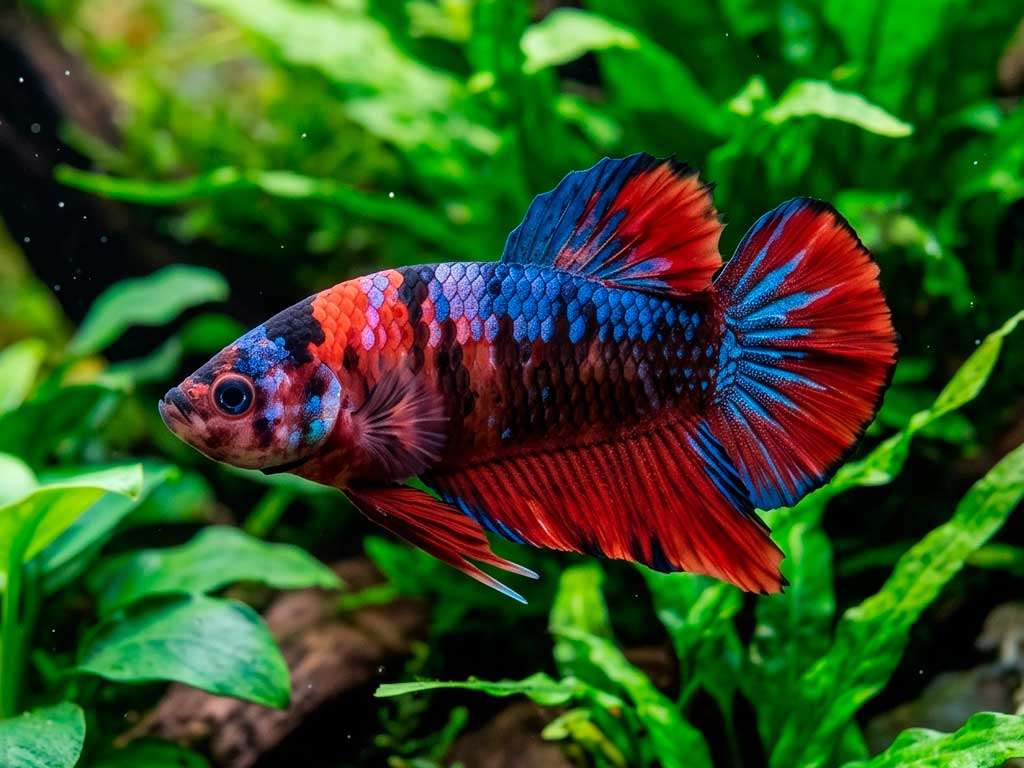
“Plakat” comes from the Thai for “biting fish,” and unlike every other tail type in this series, it isn’t really a modern invention at all. Short, sturdy fins are the closest thing left to what wild bettas, and the traditional Thai fighting fish bred from them, actually looked like before hobbyists started selecting for longer and longer finnage.
Everything else, veiltail, halfmoon, crowntail, all descend from breeders stretching that original short-finned form out. The plakat is what happens when breeders instead work on refining it.
Quick answer: The plakat betta has short, compact fins closest to the species’ original wild and traditional fighting-fish form. That shorter finnage means faster, stronger swimming, less fin damage risk, and a genuinely harder time telling males from females at a glance, since fin length is the main visual cue long-fin varieties rely on. Otherwise, care matches standard betta requirements.
This guide covers what actually sets a plakat apart, the sexing difficulty specific to this variety, and how it behaves differently in a community setting. For general betta fundamentals, see our betta fish care guide.
What Makes a Plakat Different
Short, rounded fins that barely extend past the body define the plakat, a sharp contrast to the trailing veils and wide fans covered in the rest of this series. That compact build isn’t a lesser version of a fancy tail type, it’s genuinely closer to how wild Betta splendens and the historical fighting-line bettas actually looked, before generations of ornamental breeding stretched fin length out for display purposes.
Modern plakat breeding still splits into its own sub-styles. Traditional plakat sticks close to the original fighting-line proportions. Show plakat, developed more recently for ornamental competition, adds a bit more fin spread and color refinement while staying short overall, sometimes blurring into halfmoon plakat territory, covered in our halfmoon betta guide.
Why Plakats Swim Differently
Less fin means less drag, and plakats are noticeably faster, stronger swimmers than any long-finned variety in this series. That speed shows up directly in community tank compatibility discussions among betta keepers: a plakat can actually keep pace with quick tankmates like tetras, where a heavy-finned halfmoon simply can’t catch what it might otherwise chase. Some owners read that as plakats being more prone to bothering tankmates specifically because they’re physically capable of it, while long-finned varieties are sometimes accidentally protected from their own aggression just by being too slow to catch anything.
The honest, well-supported answer from experienced keepers, echoed across countless forum threads on the subject, is that individual personality matters more than fin type or sex here. Some plakats settle into a community tank without incident. Others harass tankmates regardless of how peaceful they seemed at the store. A commonly cited rule of thumb: some chasing and nipping in the first 48 hours after introduction is normal territorial behavior, but if it hasn’t calmed down by then, separate the fish rather than hoping it resolves on its own. Adding the betta last, after other tankmates have already settled in, also reduces how much territory it feels entitled to defend.
The Sexing Problem Unique to Short Fins
With long-finned varieties, fin length itself is the fastest way to guess sex: males trail dramatically longer fins than females. Plakats remove that shortcut almost entirely, since both sexes carry short fins by definition. This genuinely trips people up, including experienced keepers, occasionally badly enough that a fish sold and kept as a “female” turns out to be male only once it wraps around a tankmate during a breeding embrace.
More reliable cues for a plakat specifically: look for an egg spot (a small white or pale bump between the pelvic and anal fins, more consistently visible on females), body shape (females tend to look a bit rounder, especially when carrying eggs), and beard size, the small membrane under the gill plate that flares during a threat display, which typically runs larger and more visible on males even at rest. None of these are perfectly reliable alone, but combined they beat guessing from fin length on this variety. If two plakats you believed were both female start displaying breeding behavior toward each other, wrapping, squeezing, chasing that looks more purposeful than territorial, that is a strong sign one of them was misidentified, and it is worth separating them immediately to confirm sex properly before assuming anything else is wrong.
The Fighting Tradition Behind the Name
Long before betta fish were an ornamental hobby anywhere outside Southeast Asia, Thai communities kept and bred short-finned bettas specifically for organized fighting matches, with real wagers riding on the outcome. Short, sturdy fins mattered enormously in that context: they tear less easily than long fins, which meant matches were typically judged on stamina and technique rather than which fish looked more damaged afterward. A plakat descends fairly directly from that lineage, closer in build and temperament to those historical fighting fish than any of the fancy tail types bred later purely for visual display. Even the compact, rounded shape of a plakat’s fins reflects that history directly: rounded edges are simply harder for an opponent to grab and tear during a match than the pointed or flowing edges seen on later ornamental varieties.
That history is worth knowing, but it does not mean a modern pet plakat is somehow wilder or harder to keep than other varieties. Selective breeding for temperament alongside form has continued for generations since organized fighting became far less common, and a well-bred plakat today is simply a betta, not a specialized fighter. The fighting-line ancestry mostly shows up now in build and swimming strength rather than in day-to-day behavior toward its owner.
How Plakat Compares to Wild Betta Relatives
Since plakat sits closest to the ancestral form, it is also the tail type most often compared to genuinely wild Betta species rather than Betta splendens alone, covered in our betta fish care guide. Species like Betta imbellis and Betta mahachaiensis carry a similar short-finned build naturally and have a reputation among experienced keepers for being notably peaceful compared to heavily domesticated splendens lines. That comparison is a useful reminder that aggression in this species is not simply a matter of fin length or breeding history, wild and semi-wild relatives with short fins are often calmer than a short-finned plakat descended from fighting stock, which points back to the same conclusion covered above: individual temperament and breeding line matter more than any single physical trait.
Care Notes: What Actually Changes
Short fins genuinely simplify a few things. Fin rot and physical damage happen less often and heal faster on a plakat, since there’s simply less delicate tissue exposed to snag or infect. Strong water flow, a real concern for long-finned varieties, barely bothers a plakat at all, giving you more flexibility in filter choice without needing to baffle the outflow as carefully. Everything else stays the same: a 5-gallon minimum tank, water held between 76 and 82 degrees F, and a protein-rich diet, all covered in full in our betta fish care guide.
Frequently Asked Questions
What does “plakat” actually mean?
It comes from the Thai term for “biting fish,” referencing the variety’s close relationship to the traditional short-finned fighting bettas historically bred in Thailand.
Are plakats more aggressive than other betta types?
Not inherently. They’re faster swimmers, which means they’re physically more capable of chasing tankmates than a slower, long-finned betta, but individual personality varies enormously regardless of tail type or sex.
How can I tell if my plakat is male or female?
Fin length won’t help, since both sexes have short fins. Look instead for an egg spot near the anal fin (more common on females), a rounder body shape, and beard size under the gill plate, which tends to be larger and more visible on males.
Is a plakat good for a community tank?
It can be, with the same caveats as any betta. Add it last, watch for chasing beyond the first 48 hours, and be prepared to separate it if aggression doesn’t settle down, since personality varies fish to fish.
What is the difference between plakat and halfmoon plakat?
Standard plakat stays close to traditional short-fin proportions, while halfmoon plakat is bred for the same 180-degree spread geometry as a full halfmoon, just in a compact, short-finned package.
Do plakats get fin rot less often than long-finned bettas?
Generally yes. Less exposed fin tissue means fewer opportunities for damage and infection to take hold, and any damage that does occur tends to heal faster than on a long-finned variety.
The plakat is a reminder that “fancy” and “original” aren’t the same thing in this hobby. A well-kept plakat swims stronger, heals faster, and carries a direct link back to the wild fish this whole species descends from, no fin-stretching required.