Somali Cat: The Long-Haired Abyssinian Breeders Once Hid
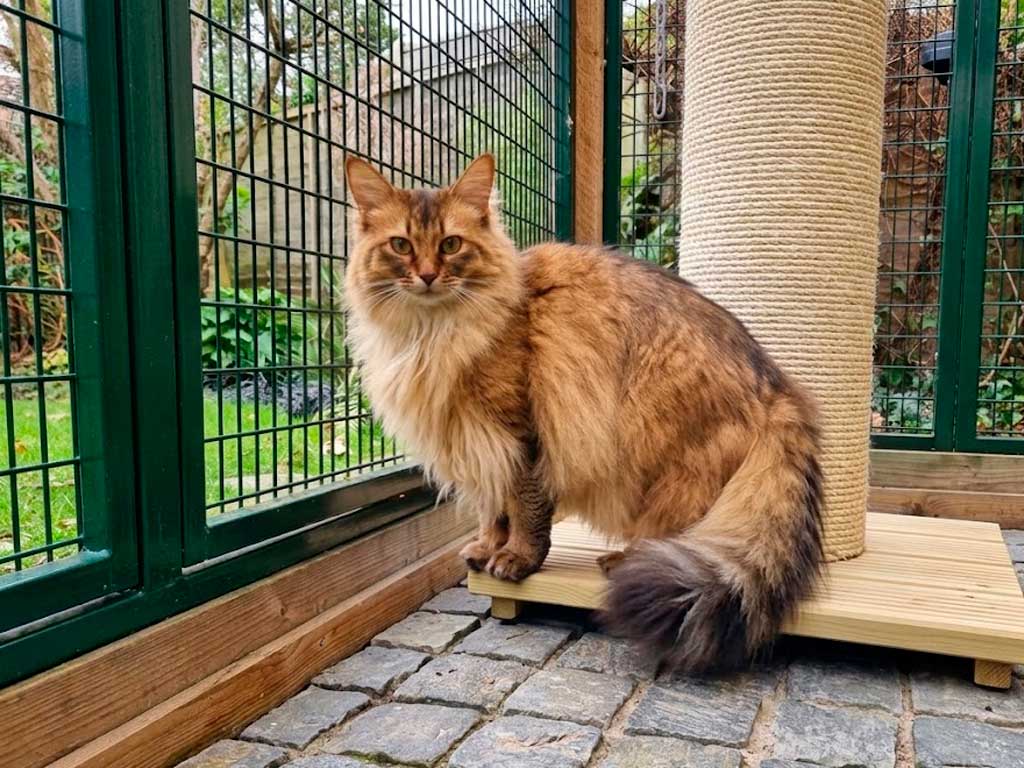
Here’s what’s really going on with that bushy, fox-like tail: it’s not a separate breed’s quirk, it’s a recessive gene that Abyssinian breeders spent decades trying to breed out. The Somali cat is, genetically, simply a long-haired Abyssinian — and for a long time, that made it an accident nobody wanted to admit to.
Quick Facts: Medium size, males 8-10 lbs, females 6-8 lbs. Semi-long, soft, silky ticked coat. Life expectancy 10-19+ years. Colors: ruddy, cinnamon (often called red), blue, fawn, chocolate, and lilac, plus silver versions of each. Nicknamed the “fox cat” for its bushy tail.
Getting Started: What You’ll Need
Despite the longer coat, the shopping list here is short. A comb for occasional use covers grooming, since Somalis rarely mat or tangle on their own. What actually matters more: tall cat trees, window perches near a bird feeder, and interactive toys, since this breed treats every surface in the house as something to investigate. TICA jokingly calls Abyssinians and Somalis the “preposition cats” — they’ll be above, below, in, under, and through everything you own, though somehow rarely knocking anything over in the process.
Where the Longhair Gene Came From
Nobody documented exactly how it happened, but the trail points to World War II. Barely a dozen Abyssinians reportedly survived the war in Britain, and many post-war litters had unclear parentage, which is likely how a recessive longhair gene slipped into the gene pool undetected. When longhaired kittens started appearing in otherwise short-haired Abyssinian litters, most breeders quietly rehomed them rather than admit to producing a “flawed” cat.
A stubborn few thought differently. In the mid-1960s, breeder Evelyn Mague worked with one of the first documented longhair Abyssinians, a cat named George, and named the developing breed Somali, after the country bordering Ethiopia, formerly known as Abyssinia. Recognition took time: CFA didn’t begin registering Somalis until 1976, and championship status followed in 1979.
Personality and Daily Life
Your cat isn’t just being nosy if it’s a Somali — full-time investigation is the whole personality. This breed is intelligent, athletic, and endlessly curious, following family members from room to room and matching their energy: settling in to purr at your feet while you work, then exploding into play the moment you get up. Communication tends to be more physical than vocal, through body language and headbutts rather than constant meowing.
Somalis genuinely crave company and do best with an active household, whether that’s people around for much of the day or another energetic cat to play and cuddle with. They’re also famously fascinated by running water, and turning on a faucet just to watch it drip is a common party trick.
Health Considerations
Genetic testing has let responsible Somali and Abyssinian breeders largely screen out two inherited conditions: progressive retinal atrophy and pyruvate kinase deficiency, both detectable through DNA testing. Harder to screen for is renal amyloidosis, a kidney condition seen in some lines, so it’s worth asking a breeder about family history. Somalis also run a slightly higher risk of early periodontal disease and patellar luxation, and this breed tends to overeat if food is left out all day, so portion control matters more here than with a lower-appetite cat.
Health Disclaimer: This guide is for educational purposes only and doesn’t replace professional veterinary advice. Ask breeders about genetic testing history, and start dental care early given this breed’s tendency toward gum issues.
Mistakes to Avoid
Don’t assume the longer coat means heavy grooming — over-brushing isn’t necessary and most Somalis barely need more than an occasional comb. Don’t free-feed, either; this breed’s hearty appetite means it will happily overeat given the chance, so scheduled meals work better than a bowl left out all day. And don’t mistake the constant exploring for destructiveness: Somalis investigate everything but rarely actually knock things over, so there’s usually no need to cat-proof as aggressively as the activity level might suggest.
Frequently Asked Questions
Is a Somali cat the same as an Abyssinian?
Genetically, yes — the Somali is simply the long-haired version of the Abyssinian, carrying a recessive longhair gene. They’re recognized as separate breeds today but share the same colors, temperament, and origin.
Does the Somali cat actually come from Somalia?
No. The name honors Somalia’s location bordering Ethiopia (formerly Abyssinia), symbolically connecting the breed to the Abyssinian, but there’s no genuine geographic origin there.
Do Somali cats shed a lot?
Not especially. The soft, silky coat resists matting and tangling and needs only occasional combing, without heavy shedding beyond normal seasonal changes.
Are Somali cats good with kids?
Generally yes, especially with older children who can keep up with and help entertain such an active, playful cat.
How long do Somali cats live?
With good care, 10 to 19-plus years, similar to the Abyssinian’s typical lifespan.
What breeders once tried to hide turned out to be the whole appeal — the Somali took a genetic “accident” and built a devoted following around it, fox tail and all.
Browse more breed profiles in the full Cat Breeds guide, including the Abyssinian, the short-haired sibling this breed descends from.