Himalayan Cat: Persian Body, Siamese Points Explained
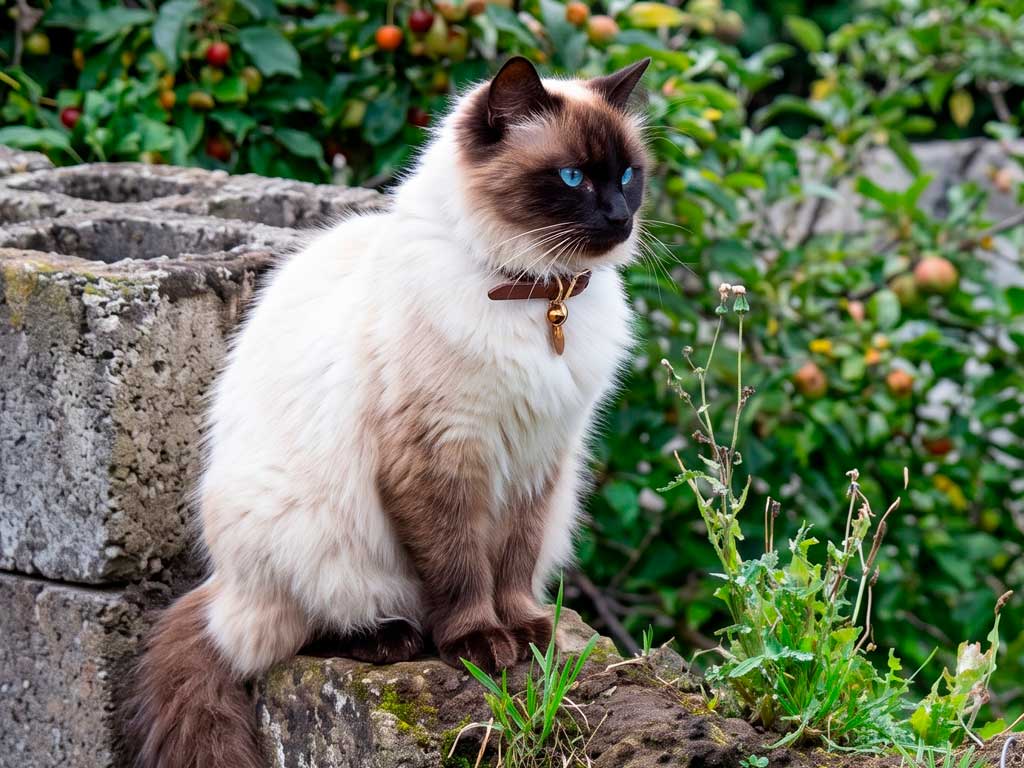
Your cat isn’t confused about which breed it belongs to — it’s genuinely both. The Himalayan cat was deliberately engineered to combine a Persian’s plush body with a Siamese’s striking color points and deep blue eyes, and the result looks like nothing else in the cat world.
This isn’t a natural breed that happened to develop this way. Breeders spent decades chasing this exact combination on purpose. Spoiler: it took two separate research programs, on two different continents, before anyone actually pulled it off.
Quick Facts: Medium to large, cobby, heavily boned. Round head, large deep-blue eyes. Long, flowing coat. Lifespan 8-11 years. Available in seal, blue, chocolate, lilac, red, cream, tortie, and more point colors.
History: Two Breeding Programs, One Goal
Virginia Cobb and Dr. Clyde Keeler launched an experimental breeding program in 1931 aimed at combining Persian type with Siamese coloring, producing the first documented kitten of this kind, named Newton’s Debutante. Around the same time period, in 1950s Canada, breeder Ben Borrett worked independently on a similar longhaired colorpoint project.
Marguerita Goforth became a key figure in getting the breed formally recognized, starting her own program with a longhaired, seal-point cat named Princess Himalayan Hope. Britain’s GCCF recognized the breed as the Colorpoint Longhair in 1955, and American cat associations followed in 1957 under the name we use today: Himalayan, borrowed from the same pointed coloring pattern seen in Himalayan rabbits.
Persian-type cats themselves have an even longer history behind them — depicted in hieroglyphics dating back to roughly 1684 BCE, though the Himalayan’s specific color-point combination is a distinctly 20th-century creation layered onto that much older foundation.
Himalayan vs. Persian vs. Exotic Shorthair: The Persian Group
TICA groups these three breeds together for good reason — they share the same cobby body, round head, and overall structure. The differences come down to coat and color. The Persian carries long fur in any solid color or pattern, with no color-point restriction. Our Exotic Shorthair guide covers the short-coated member of the group, which shares the round face and body but trades long fur for an easy-care plush coat.
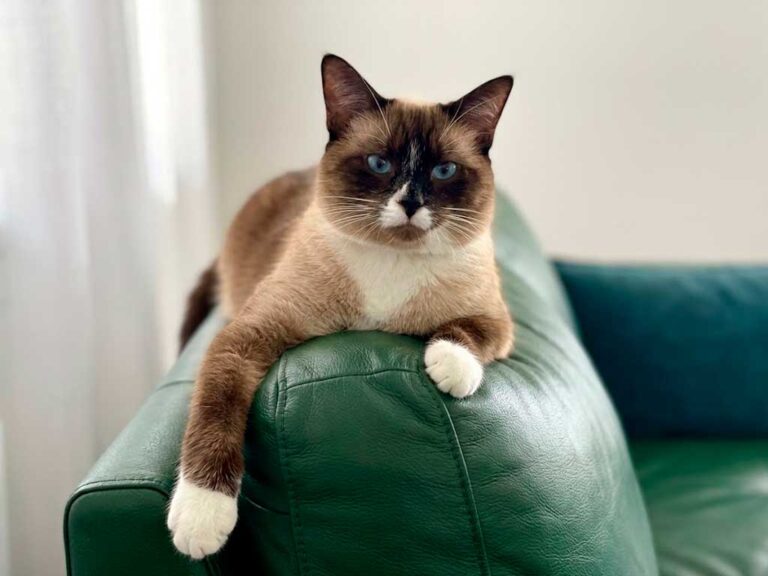
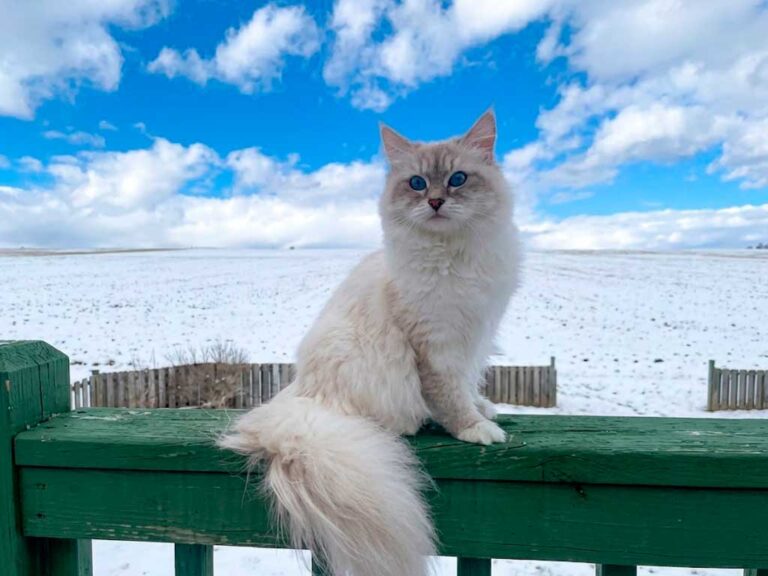
The Himalayan is essentially the color-point version: same Persian body and coat length, but restricted to the pointed pattern — a lighter body with darker ears, face, legs, and tail — plus the striking blue eyes that come with it. Some registries, including CFA, actually classify the Himalayan as a Persian division rather than a fully separate breed.
Point Colors and Patterns Explained
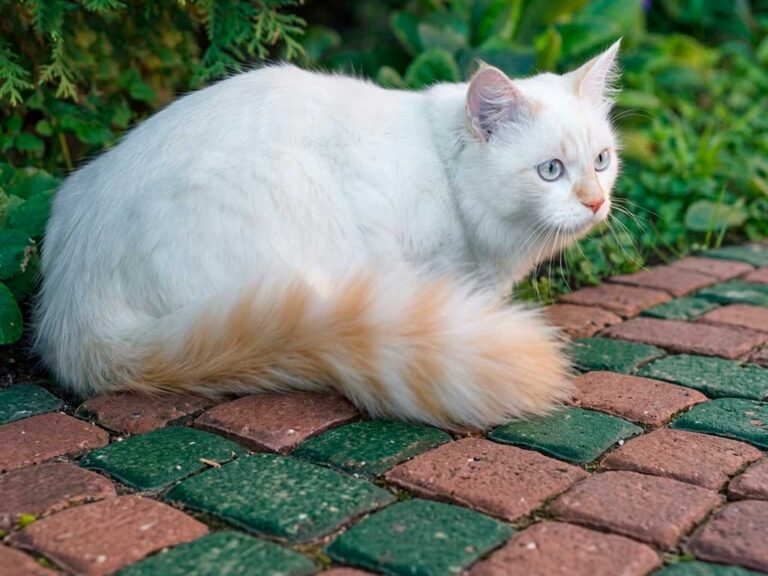
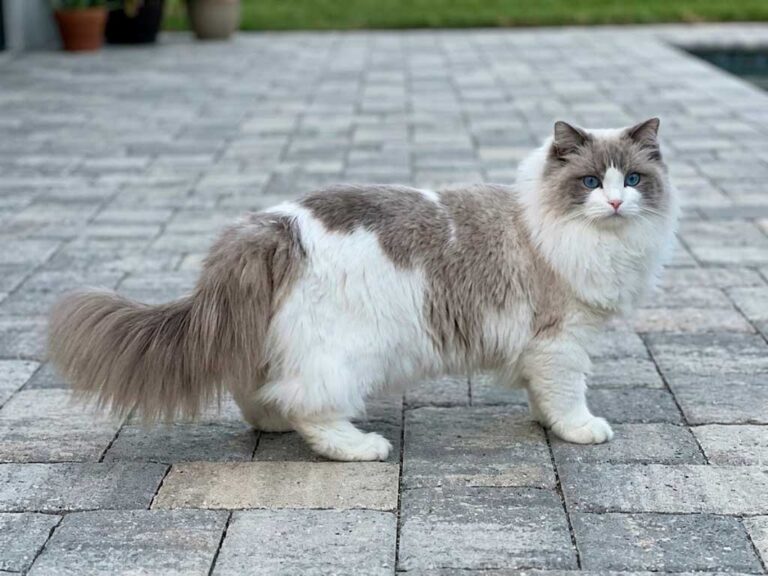
Point color is where the Himalayan really shows its range. Recognized colors include seal, blue, chocolate, lilac, red, cream, and tortoiseshell, plus a blue-cream combination. Beyond solid points, the breed also comes in tabby (lynx) point, bicolor point, tricolor point, smoke point, and shaded point patterns — a genuinely wide field of options for anyone drawn to a specific look.
Seal point — dark brown points against a cream body — remains the most classic and widely recognized look, but flame (red) and blue point cats have their own dedicated followings among Himalayan fans.
Physical Characteristics
The Himalayan carries a large, round, smoothly domed head on a short, thick neck, with a short, snub nose and a distinct break centered between large, round, wide-set eyes. That face is built for a sweet, gentle expression, and it delivers.
The body is short and cobby, equally substantial across the shoulders and rump, with heavy boning that makes this breed feel surprisingly solid to pick up. The coat is long, flowing, and dense with undercoat — genuinely beautiful, and genuinely demanding to maintain, covered in more detail below.
Ears are small, rounded at the tip, and set low and wide on the head — proportionally smaller than you’d expect, which actually helps emphasize the roundness of the face rather than competing with it.
Personality and Temperament
Your cat isn’t going to climb your curtains — this breed would much rather cuddle. Himalayans are poised, sweet, and deeply affectionate, tuning into your mood and responding with quiet companionship rather than constant demands for attention.
They’re genuinely intelligent and communicate through soft meows and expressive looks from those big blue eyes rather than persistent vocalizing — breeders often describe them as chattier than a Persian but nowhere near as talkative as a Siamese. Despite the generally placid nature, expect sudden bursts of kitten-like energy: sound asleep one minute, tearing across the room the next.
Adaptable and easygoing, Himalayans do well with gentle handling from kids and get along with other pets, settling comfortably into most household routines without much fuss over change.
Caring for a Himalayan
This is where the Himalayan asks the most of an owner. The coat requires daily brushing and combing to prevent the dense undercoat from matting — this isn’t a breed you can groom occasionally and hope for the best. The flat face also needs regular, careful cleaning, since tear staining is common and builds up quickly if ignored.
Nail trims run weekly for kittens, tapering to every two to three weeks in adulthood, alongside regular tooth brushing. Since this breed tends toward weight gain after spaying or neutering, monitor both food quality and quantity closely, particularly as activity naturally slows with age.
Water matters more than people expect too — place the bowl at least three feet from food, since the smell can discourage drinking, and consider a water fountain, which many Persian-group cats prefer and which helps keep chin and chest fur drier than a still bowl.
Health Conditions to Know
The Himalayan is considered a generally healthy breed, but shares several conditions common across the Persian group. Polycystic kidney disease (PKD) causes progressive kidney damage and can be screened for via genetic testing. Progressive retinal atrophy (PRA) leads to gradual vision loss. Hypertrophic cardiomyopathy (HCM), a thickening of the heart muscle, is also worth screening for in breeding lines.
Health Disclaimer: This guide is for educational purposes only and doesn’t replace professional veterinary advice. Ask breeders for PKD, PRA, and HCM screening results on both parents, and keep up with regular wellness exams as your cat ages.
Finding a Himalayan: Price and Availability
As one of the most popular breeds in the Persian group, Himalayans are reasonably accessible compared to rarer breeds in this cluster, though prices vary by point color and lineage — rarer colors like blue or lilac point sometimes command a premium over classic seal point.
A cat show remains a reliable way to meet breeders in person and get a feel for the grooming commitment before bringing one home — seeing a well-maintained coat up close says more than any photo can.
Is a Himalayan Right for You?
This breed suits people who want a gentle, affectionate lap cat and are genuinely prepared for daily grooming — not a nice-to-have, but a real, ongoing commitment. If you love the Persian look but want the drama of Siamese-style points and blue eyes, a Himalayan delivers exactly that combination.
It’s a poor fit for anyone hoping for a low-maintenance coat or a highly active, acrobatic cat. Your cat isn’t going anywhere fast, and it isn’t going to groom itself well enough to skip your help. In exchange, you get one of the most strikingly beautiful, genuinely sweet-natured breeds around.
Apartment living suits this breed well too, since it isn’t a climber or a jumper by nature — a comfortable spot on the sofa or bed satisfies most of what a Himalayan wants out of its territory.
One last thing worth flagging before you commit: the grooming routine is a genuine daily task, not a weekly one — if that level of upkeep doesn’t fit your schedule, the short-coated Exotic Shorthair from the same Persian group is worth a look instead.
Frequently Asked Questions
Is a Himalayan a Persian or a separate breed?
It depends on the registry. Some organizations, including CFA, classify the Himalayan as a color-point division of the Persian rather than a fully separate breed; others, like TICA, list it independently within the same Persian breed group.
What point colors do Himalayan cats come in?
Seal, blue, chocolate, lilac, red, cream, and tortoiseshell, plus tabby (lynx), bicolor, tricolor, smoke, and shaded point patterns.
How much grooming does a Himalayan need?
Daily brushing and combing are genuinely required to prevent matting, along with regular face cleaning to manage tear staining.
What health problems are Himalayans prone to?
Polycystic kidney disease, progressive retinal atrophy, and hypertrophic cardiomyopathy are the main conditions to screen for, all shared with the broader Persian group.
How much does a Himalayan cat cost?
Prices vary by point color and lineage, with rarer colors like blue or lilac point sometimes priced higher than classic seal point.
A Himalayan cat is proof that sometimes the most striking results come from patience rather than accident — decades of deliberate breeding across two continents, all in pursuit of one specific, unmistakable look. Once you’re signed up for the grooming routine, what you get back is one of the gentlest, most devoted companions in the cat world.
Browse more breed profiles in the full Cat Breeds guide.