Savannah Cat: Life With a Serval Hybrid at Home
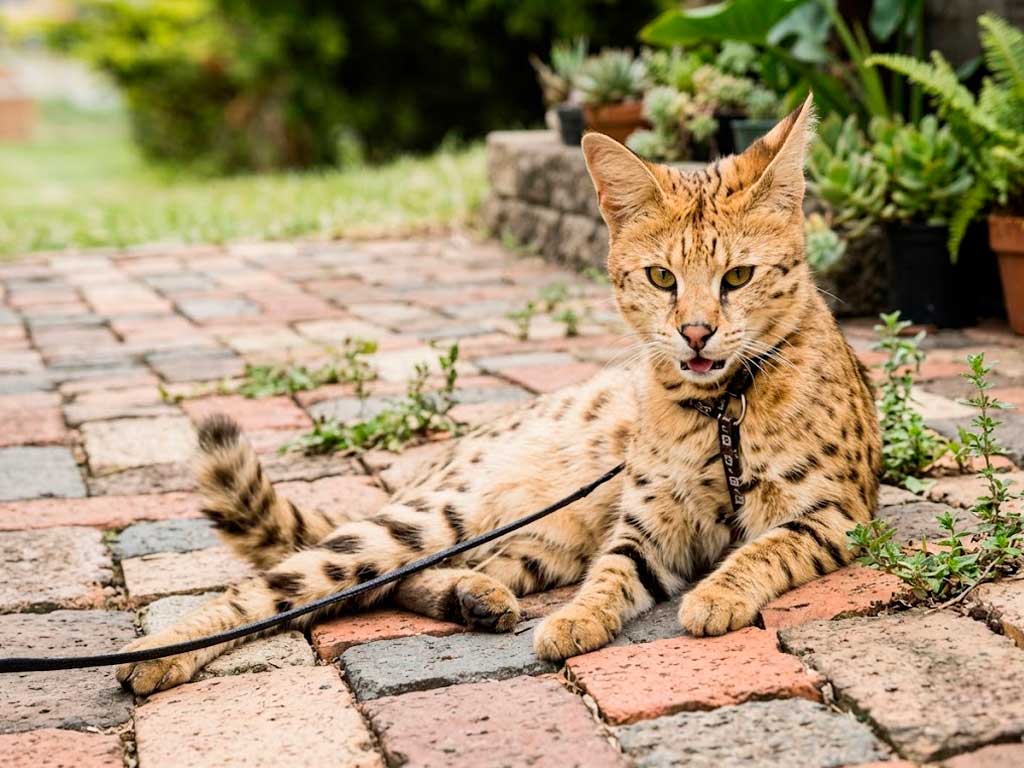
A cat that clears the top of your fridge in one jump and then chirps at you like a bird isn’t showing off. It’s just being a Savannah cat. Here’s what’s really going on: this breed carries enough African Serval ancestry that “typical house cat behavior” doesn’t really apply, and that’s exactly why people either fall hard for it or realize fast it’s not for them.
The Savannah cat is a domestic breed created by crossing an African Serval with a domestic shorthair, Egyptian Mau, or Oriental Shorthair. Breeder Judee Frank produced the first documented Savannah kitten in 1986, and TICA accepted the breed for registration in 2001, reaching full Championship status in 2012. What resulted from that pairing looks like it wandered off a nature documentary and often behaves like it never got the memo about being domesticated.
Quick Facts: Medium-to-large, tall and lean build. 12-25 lbs, with height doing most of the visual work. Life expectancy 12-20 years. A hybrid of a domestic cat and the African Serval. Generation (F1 through SBT) affects size, temperament, and legality. Restricted or banned in several U.S. states.
What Makes Savannah Cats Unique
The ears are the giveaway before anything else registers. Tall, wide-based, and set almost on top of the head, they mirror the Serval’s radar-like hearing. Add a long neck, long legs, and a lean, muscular build, and you get a cat that photographs bigger than it actually weighs — most adults land somewhere around 12 to 25 pounds, with height doing most of the visual work rather than mass.
Temperament is where the Serval really shows through. Savannahs are famously described as dog-like, and not as a cute exaggeration — they fetch, they walk on a harness, and they greet people at the door before following them from room to room. Don’t expect a lap cat, though. This is a breed that shows affection standing up, headbutting you on its own schedule rather than yours. Many chirp instead of meow, particularly in early generations, a trait inherited straight from the Serval side.
Your cat isn’t broken if it does none of this once it settles in — individual temperament varies a lot by generation and by how the kitten was raised. But the baseline expectation with a Savannah cat should always be high-energy and highly intelligent, occasionally destructive if bored, rather than a chill lap warmer.
Savannah Cat Generations, Explained
Here’s what actually trips people up when shopping for a Savannah cat: the F-number. It refers to how many generations removed the cat is from its Serval ancestor, and it changes almost everything — size, temperament, legality, and price.
Expect to pay $16,000 or more for an F1, since it sits only one generation removed from the Serval and carries the highest care demands. F2 typically runs $6,000 to $10,000, F3 drops to roughly $3,000 to $5,000, and an SBT or purebred cat — four or more generations removed — often starts around $1,500.
F1 and F2 males are typically sterile, a quirk of hybrid genetics that also explains why F1 kittens stay rare: breeders can’t simply pair two F1s and get more F1s. By the time a line reaches SBT status, three or more consecutive Savannah-to-Savannah generations, the cat behaves much closer to an unusually athletic domestic cat, which is the version most first-time owners are actually looking for, even if they don’t know to ask for it by name.
Common Challenges and How to Handle Them
Is it even legal where you live? This is the question people skip until it’s too late. Because of the Serval ancestry, several states restrict or outright ban Savannah ownership, particularly earlier generations — Georgia, Hawaii, Massachusetts, New York, and a handful of others have laws that can catch Savannahs in wording meant for exotic pets generally. Rules vary by state and sometimes by county, and they change, so check your local and state regulations before falling for a listing.
The energy isn’t an exaggeration, either. A bored Savannah will open cabinet doors, turn on faucets, and figure out latches you assumed were cat-proof. Interactive toys, puzzle feeders, and genuine daily play sessions aren’t optional extras with this breed — they’re closer to a maintenance requirement.
Multi-pet households need a plan, too. Savannahs retain a strong prey drive, and most vet guidance flags them as a poor match for homes with rabbits, birds, or other small pets. Dogs and other cats can work, especially with later-generation Savannahs, but introductions should be slow and supervised, the way you’d introduce any high-prey-drive animal to something smaller.
Daily Care Essentials
Space and Enrichment
Savannahs need more vertical and horizontal room than the average apartment cat. Tall cat trees, window perches, and secure climbing routes aren’t decoration here — they’re outlets. A secure outdoor enclosure, sometimes called a catio, gets used constantly if you can manage one. Left without enough stimulation, that same energy gets redirected into knocking things off shelves purely to watch what happens.
Diet and Grooming
Nutritionally, a Savannah cat is still a cat, and it needs the same high-quality, protein-forward diet any active cat does — no special hybrid formula required, whatever a breeder’s marketing might imply. Grooming, by contrast, is genuinely easy: a short coat with minimal undercoat means an occasional brush covers most of it, with a bit more frequency during shedding season.
Health Considerations
Savannahs are generally a healthy breed, but two conditions are worth screening for with your veterinarian: Pyruvate Kinase Deficiency, an inherited condition affecting red blood cells, and hypertrophic cardiomyopathy, a heart condition seen occasionally in the line. DNA testing exists for the first; there’s currently no reliable screening test for the second, so regular veterinary checkups matter more here than they might for a lower-risk breed.
Health Disclaimer: This guide is for educational purposes only and doesn’t replace professional veterinary advice. Keep vaccinations and parasite prevention current, and talk to your vet about heart screening given the breed’s occasional history with HCM.
Is a Savannah Cat Right for You?
A Savannah cat rewards exactly the kind of owner who’d also do well with a working dog breed — someone with time, space, and genuine interest in training and enrichment, not someone hoping for a low-maintenance lap companion. If that’s you, an SBT or later-generation Savannah gets you most of the look with a far more manageable temperament and price tag than an F1.
If it’s not you, there’s no shame in that. I say this as someone who’s built her whole household around what her own cats actually need rather than what looked good in a listing — Miso would never survive a Savannah’s energy level, and honestly, neither would my curtains.
If the exotic-hybrid look interests you but the price tag or space requirements don’t, the domestic-only Bengal cat delivers a similar spotted coat without the Serval-level care demands.
Frequently Asked Questions
How much does a Savannah cat cost?
It depends almost entirely on generation. Expect $16,000 or more for an F1, dropping to roughly $1,500 and up for an SBT-status cat several generations removed from the Serval line.
Is a Savannah cat legal in my state?
Not everywhere. Several states restrict ownership, particularly of early generations. Confirm current rules with your state’s department of agriculture or wildlife office before pursuing a purchase.
Are Savannah cats good with kids?
Generally yes with older, calmer kids who can respect boundaries. Savannahs aren’t cuddle-on-demand cats, and they tend to do best with families who have older children rather than toddlers.
How big do Savannah cats actually get?
Weight typically runs 12 to 25 pounds, but the breed’s height creates an illusion of much greater size. A Savannah named Arcturus Aldebaran Powers holds the Guinness World Record for tallest domestic cat, at just over 19 inches.
Do Savannah cats get along with dogs?
It varies by generation. F1s tend to be more standoffish, while F3 and later generations often play with dogs readily, especially with a proper introduction.
A Savannah cat carries the look of a wildcat and the loyalty of a working dog into one deliberately bred package — chirps, fetch, and fridge-top vantage points included. Once you understand that the wild appearance comes with genuinely wild-adjacent needs, the decision gets a lot easier to make honestly.
Browse more breed profiles in the full Cat Breeds guide.