Munchkin Cat: The Short-Legged Breed Named After Oz
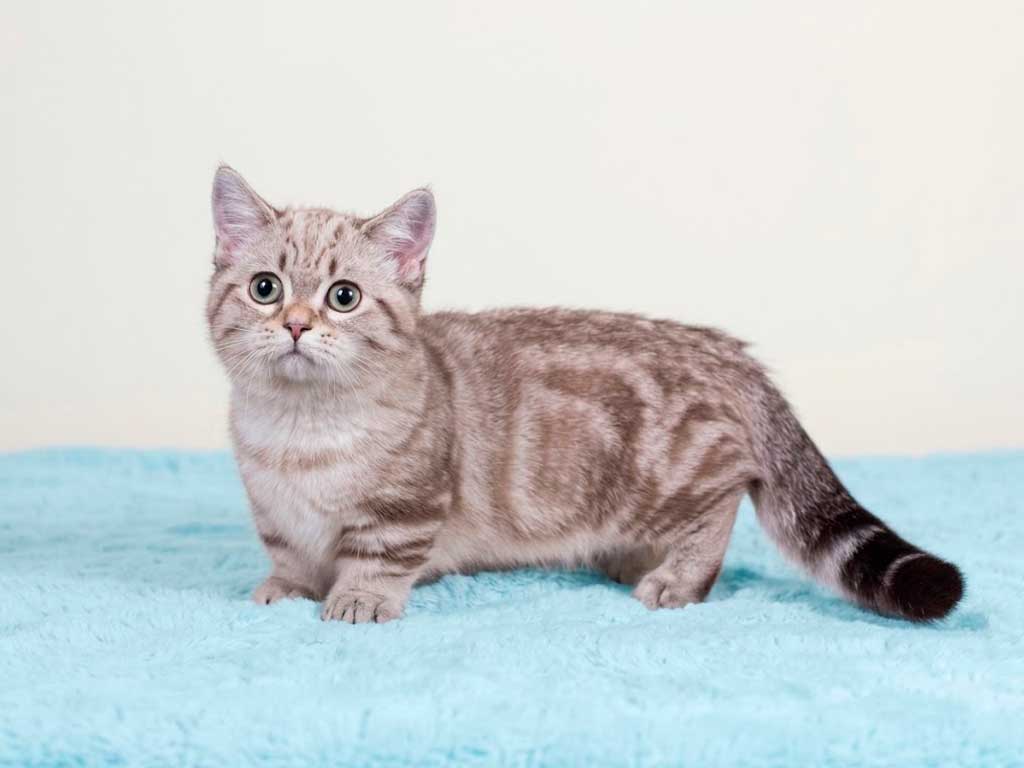
Your cat isn’t stuck in kitten mode — despite looking permanently small, a Munchkin grows to an entirely normal adult body size. Only the legs stay short, a genetic quirk that gives the breed its name, borrowed from L. Frank Baum’s diminutive Munchkin City residents in his 1939 Wizard of Oz novel.
Those short legs haven’t slowed anyone down. Munchkins run fast, corner tight, and jump nearly as well as any other cat — they just take a slightly different route to get there. Spoiler: one Munchkin even holds a genuine Guinness World Record.
Quick Facts: Medium-sized body, short legs only. Females 5-7 lbs, males 7-10 lbs. Lifespan 15-18+ years — notably long. Shorthair and longhair varieties. Available in every color and pattern.
History: A Mutation That Kept Reappearing
Short-legged cats aren’t a new invention — they’ve been documented sporadically around the world for decades. A British veterinary report from 1944 described four generations of short-legged cats in the UK, including a healthy 8-year-old female; that particular line disappeared during World War II. Similar short-legged cats turned up in Stalingrad in 1956, New England in 1970, and Louisiana in the 1980s.
The modern breed traces to 1983, when Sandra Hockenedel found a pregnant short-legged stray in Louisiana and named her Blackberry. Blackberry became the breed’s foundation cat, and a male from one of her litters, Toulouse, went to Sandra’s friend Kay LaFrance — together, their cats formed the basis of today’s Munchkin, developed using domestic cat outcrosses to keep the gene pool genuinely diverse.
TICA accepted the Munchkin into its New Breed development program in September 1994, tracking pedigrees and breeding data under genetics committee oversight throughout the process. The breed reached full TICA Championship status in May 2003.
The Short-Leg Gene: What the Research Actually Shows
The short legs come from a spontaneous autosomal dominant mutation that shortens the long bones — a single copy of the gene is enough for a kitten to inherit short legs and pass the trait to its own kittens. It’s genetically similar to the mutation behind short-legged dog breeds like Dachshunds and Corgis.
The key difference: according to TICA’s breed standard, a cat’s spine is structured differently than a dog’s, and the Munchkin’s spine remains unaffected by the leg-shortening mutation — unlike some short-legged dog breeds where spinal issues are a documented concern. TICA states Munchkins are not more prone to arthritis and don’t experience mobility problems beyond what’s typical for cats generally as they age, and that years of research haven’t turned up debilitating genes tied to the breed.
That said, this remains a genuinely debated topic among veterinarians and cat welfare organizations more broadly, given that the mutation does affect skeletal structure. If you’re considering a Munchkin, it’s worth discussing the current research directly with your vet alongside anything a breeder tells you.
Munchkin Hybrid Breeds: Minuet and Minskin
The Munchkin’s short-leg gene has been deliberately combined with other breeds to create entirely new ones. The Minuet (also called the Napoleon) crosses Munchkin with Persian or Himalayan lines, producing a short-legged cat with a rounder face and plusher coat. The Minskin combines Munchkin with Sphynx, Devon Rex, and Burmese ancestry, resulting in a short-legged, mostly hairless cat with a warm, suede-like coat concentrated at the points.
Neither of these hybrids is simply a “Munchkin mixed with another breed” in an informal sense — both are established, TICA-recognized breeds with their own dedicated standards. If you’ve seen a short-legged cat with a Persian-style face or a Sphynx-style coat, one of these hybrids is almost certainly what you’re looking at, rather than an unofficial mix.
Physical Characteristics
Despite persistent assumptions, Munchkins do not stay kitten-sized their whole lives — body size is entirely average for a domestic cat, and only the legs are shortened. Weight typically runs 5-7 lbs for females and 7-10 lbs for males once fully grown.
In 2013, Guinness World Records named a tortoiseshell Munchkin named Lilieput, from Napa, California, the world’s shortest living cat, standing just 5.25 inches tall from paw to shoulder — a genuine extreme example of the breed’s short-leg trait, well beyond what’s typical.
Both shorthair and longhair varieties exist, distinguished only by coat length. Shorthairs carry a medium-length, plush, all-weather coat; longhairs carry a semi-long, silky version of the same weather-resistant coat, with no heavy undercoat to manage.
Personality and Temperament
Your cat isn’t hiding that shiny bottle cap for no reason — Munchkins are famous hoarders, often nicknamed “magpies” for their habit of collecting and stashing small, shiny objects for later. Combine that with real curiosity, and don’t be surprised to find a small private collection tucked somewhere unexpected.
Playful and highly sociable, Munchkins love running, chasing, and playing with toys, and many learn to play fetch or walk on a leash with real enthusiasm. A signature quirk: this breed will sit up on its hind legs, meerkat-style, to get a better look at anything that’s caught its attention.
Those short legs are genuinely no obstacle to speed — Munchkins corner tightly and run fast, closer to a squirrel’s quick, low-slung sprint than anything hampered. They may not clear a bookcase in one leap the way a taller cat would, but they’ll find a multi-step path to get there just the same, jumping stepwise with real determination. This breed does well with kids, dogs, and other pets, and tends to enjoy company of every kind.
Caring for a Munchkin
Grooming stays simple for both coat lengths. Shorthairs need weekly combing with a fine-tooth comb to remove dead hair; longhairs do best with twice-weekly combing using a wide-tooth comb or brush to prevent tangles, though the coat lacks a heavy undercoat and resists matting reasonably well. Occasional bathing helps with general hygiene.
One detail specific to this breed: because of those short legs, a low-sided water bowl or a fountain works better than a tall, deep one, which can be awkward to drink from comfortably. Keep the water bowl a few feet from food, since the smell of food nearby can discourage some cats from drinking enough.
Diet doesn’t require anything specialized — quality dry kibble covers the basics, with occasional wet food for variety. Round out care with regular nail trims, ear cleaning, and tooth brushing, plus a sturdy, appropriately-sized scratching post.
Health Conditions to Know
According to TICA, a pedigreed Munchkin generally shouldn’t need testing for breed-related diseases beyond what any cat needs, unless it’s one of the hybrid breeds covered above. The main practical consideration is weight management — those shortened legs still carry the same body weight a full-legged cat of the same size would, so keeping a Munchkin lean matters for long-term comfort and mobility.
Health Disclaimer: This guide is for educational purposes only and doesn’t replace professional veterinary advice. Discuss the current research on short-legged cat mutations with your vet, and keep your Munchkin at a healthy weight throughout its life.
Finding a Munchkin: Price and Availability
This is a well-established, reasonably popular breed, making kittens more accessible than some rarer breeds in this cluster, though prices vary by color, coat length, and lineage. A cat show remains a solid way to meet breeders in person, and TICA’s breeder directory is a reliable starting point for a more targeted search.
Is a Munchkin Right for You?
This breed suits people who want a genuinely playful, sociable, slightly mischievous cat with an unmistakable silhouette. If the idea of a fast, curious cat that hoards shiny objects, sits up like a meerkat, and gets along with practically everyone sounds appealing, a Munchkin delivers exactly that.
It’s worth informed research for anyone with lingering concerns about the leg-shortening mutation, even though TICA’s own data points to a healthy, active breed. Your cat isn’t going to move any slower than a full-legged one. It’s just going to look a little different doing it.
Frequently Asked Questions
Do Munchkin cats stay kitten-sized forever?
No — this is a common misconception. Munchkins reach a completely normal adult body size; only the legs remain short throughout life.
Is the Munchkin’s short leg gene bad for its health?
According to TICA, the spine is unaffected by the mutation, unlike in some short-legged dog breeds, and years of research haven’t identified debilitating genes tied to the breed. It remains a topic some veterinarians and welfare groups continue to discuss.
What’s the difference between a Munchkin and a Minuet or Minskin?
The Minuet crosses Munchkin with Persian or Himalayan lines for a rounder face and plusher coat. The Minskin crosses Munchkin with Sphynx, Devon Rex, and Burmese for a short-legged, largely hairless cat. Both are separately recognized breeds, not informal mixes.
Can Munchkin cats jump and run normally?
Yes — they’re fast runners with excellent cornering ability and can climb to high places using a multi-step path rather than one large leap.
How much does a Munchkin cat cost?
Prices vary by color, coat length, and lineage. As a well-established breed, Munchkins are generally more accessible than rarer breeds in this cluster.
A Munchkin cat borrowed its name from a children’s fantasy novel and turned it into one of the most recognizable silhouettes in the cat world. Short legs and all, this is a breed built for speed, curiosity, and stealing your attention — one shiny object at a time.
Browse more breed profiles in the full Cat Breeds guide.