Symphysodon Discus: Care Guide for the True Heckel Discus
Symphysodon discus is the fish that gave an entire genus its name, and it’s also the least commonly kept of the three species that name actually covers. In practice, nearly everything sold as “discus” in the aquarium trade, from marlboro reds to blue diamonds to pigeon bloods, descends from a different, hardier relative rather than this species specifically.
This guide covers what makes true Heckel discus genuinely different, why its water requirements sit at the extreme end even by discus standards, and one of the more unusual parenting behaviors in the entire aquarium hobby.
Quick Identity Card
| Trait | Detail |
| Scientific name | Symphysodon discus (Heckel, 1840) |
| Common names | Red Discus, Heckel Discus |
| Family / Order | Cichlidae, Cichliformes |
| Origin | Amazon Basin, Brazil, near the mouth of the Rio Negro, lower Abacaxis and Trombetas rivers |
| Adult size | Up to 12.3 cm SL, around 20 cm total length |
| Diet | Opportunistic omnivore, invertebrates, small fish, plant matter |
| Temperament | Peaceful, social, strong pair-bonding |
| Water temperature | 28.8 to 32°C (84 to 90°F), warm even for a tropical fish |
| pH | 4.8 to 6.2, genuinely acidic |
| GH (hardness) | Extremely soft, near 0 to 0.27°dH |
| Minimum tank | Tall aquarium, kept in groups of 6 or more |
| Breeding | No confirmed captive breeding reports for wild-type stock |
| IUCN status | Least Concern |
Origin and Natural Habitat
Symphysodon discus occupies a genuinely small corner of the Amazon Basin in Brazil, restricted to the area near the mouth of the Rio Negro, along with the lower Abacaxis and Trombetas rivers. That’s a narrow range compared to its two relatives, Symphysodon aequifasciatus and Symphysodon tarzoo, both of which spread across much wider stretches of the Amazon.
This species sticks almost exclusively to blackwater habitats, genuinely clear water despite its dark tea-like tannin staining, with visibility often running 120 to 200 cm. Its relatives tolerate whitewater and clearwater habitats too, but true S. discus stays specialized to this one water type, which is a large part of why its captive-care requirements run so strict.
Identification
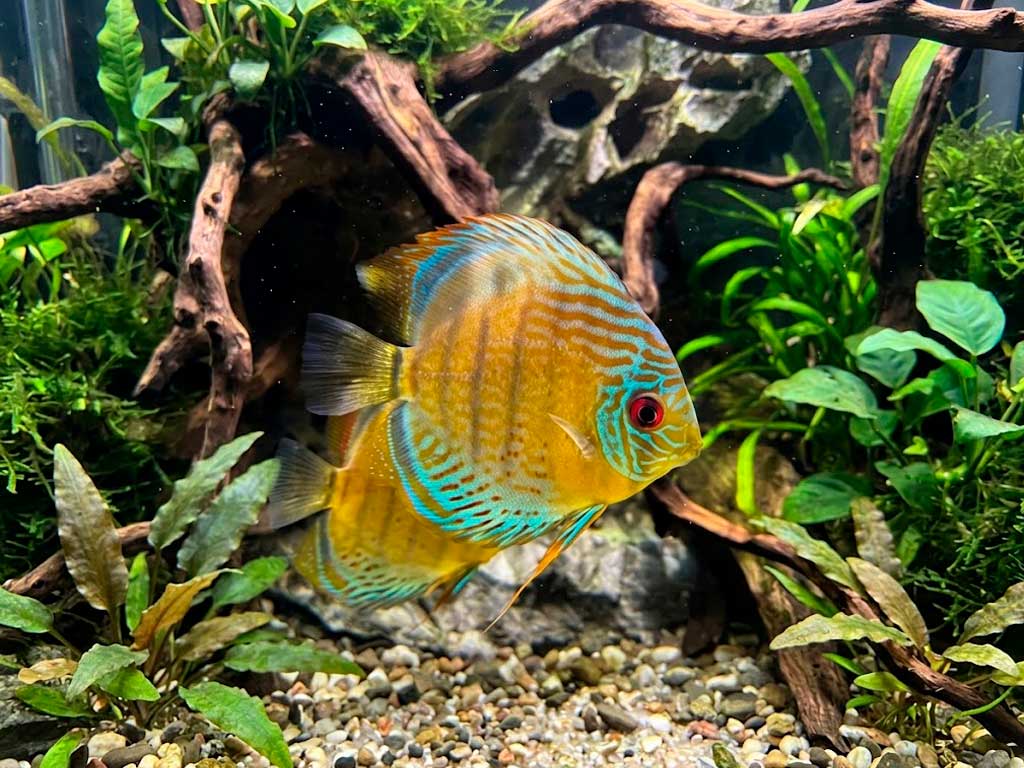
The body reads unmistakably discus: round, laterally compressed, and disc-shaped, lacking the extended fins that give the related genus Pterophyllum (angelfish) their more elongated silhouette. Wild coloration runs in shades of red, brown, and blue, patterned with the vertical bars typical of the genus, which help the fish blend into shaded, root-tangled flooded forest.
Genus-wide, Symphysodon carries an unusual dental feature, a distinctive symphysis (fusion point) of the teeth, which is actually where the genus name comes from: Greek odon, tooth.
Behavior and Temperament
This species reads as calm and genuinely social, moving with the slow, deliberate style discus keepers often describe as almost meditative to watch. Strong pair-bonding is a defining trait, and groups of six or more tend to show the most natural behavior, reducing stress on any single pair or individual.
Because of its calm, unhurried nature, this isn’t a fish that competes well with fast, boisterous tankmates. Compatible species need to share a similarly relaxed temperament and, critically, the same demanding water parameters.
An Unusual Parenting Behavior
Here’s what actually matters for anyone new to this genus: discus parents secrete a mucus-like substance directly from their skin, and newly hatched fry feed on it during their first few days of life. Both parents appear to take part in this “nursing” behavior, taking turns caring for the brood.
Reproduction follows the standard cichlid pattern otherwise: several hundred eggs deposited on stones or plants, with both parents actively defending eggs and larvae against intruders. That said, no confirmed captive breeding reports exist specifically for wild-type S. discus, a genuine gap given how much more documented breeding is for the domesticated, aequifasciatus-derived strains that dominate the hobby.
Diet and Feeding
In the wild, this species works as an opportunistic omnivore, taking worms, crustaceans, insects, and plant matter as it forages through the flooded forest. That flexibility carries over into aquarium care, though consistency matters more here than variety alone.
A rotation of high-quality flake or pellet food, frozen bloodworm, and occasional beef heart preparations covers this species well. The feeding guide for ornamental fish covers building that kind of balanced rotation, though water stability during and after feeding matters just as much as the food itself for this genus.
Tank Requirements and Water Parameters
This is the section that matters most before buying this fish. True Symphysodon discus needs genuinely extreme water parameters even by discus standards: temperature between 28.8 and 32°C (84 to 90°F), warmer than almost any other freshwater aquarium fish covered on this site, pH between 4.8 and 6.2, firmly acidic, and general hardness near zero, some of the softest water any commonly kept aquarium fish requires.
A tall aquarium suits this species’ body shape and swimming style well. Given how unforgiving these parameters are, and how much waste a group of six or more discus produces, the water chemistry guide and the filtration systems guide are both worth reading closely before committing to this species. Stability matters as much as hitting the exact numbers, since sudden shifts stress discus severely.
Tankmates and Compatibility
Compatible tankmates need to share this species’ calm temperament and, non-negotiably, its water chemistry. Warm, soft-water-tolerant tetras and other slow-moving, peaceful blackwater species make the most realistic companions, while anything requiring harder or cooler water simply isn’t compatible regardless of temperament.
Given the strict conditions this species demands, many experienced keepers choose a dedicated discus-only tank rather than attempting a broader community setup.
How It Differs From the Discus Sold in Most Shops
Here’s the honest reality worth knowing before shopping: the overwhelming majority of “discus” available in the trade, including nearly every fancy color strain named in typical retail listings, descend from Symphysodon aequifasciatus rather than true S. discus. These domesticated lines were selectively bred over generations partly because aequifasciatus tolerates a wider range of water conditions, making it dramatically more practical for captive breeding at scale.
True wild-type Heckel discus stays rare in the trade specifically because its native water chemistry is so extreme and specific. Some limited hybridization between the two species has occurred in both wild and captive contexts, but they maintain separate evolutionary trajectories overall. Anyone specifically seeking true S. discus should expect a specialist source, a notably higher price, and water demands well beyond what a typical “discus” purchase implies.
Conservation Status
The IUCN Red List classifies Symphysodon discus as Least Concern, assessed in 2018. The species is considered frequent and abundant within its native range, appearing in both regional fisheries and the aquarium trade without any currently identified significant threat to its wild populations.