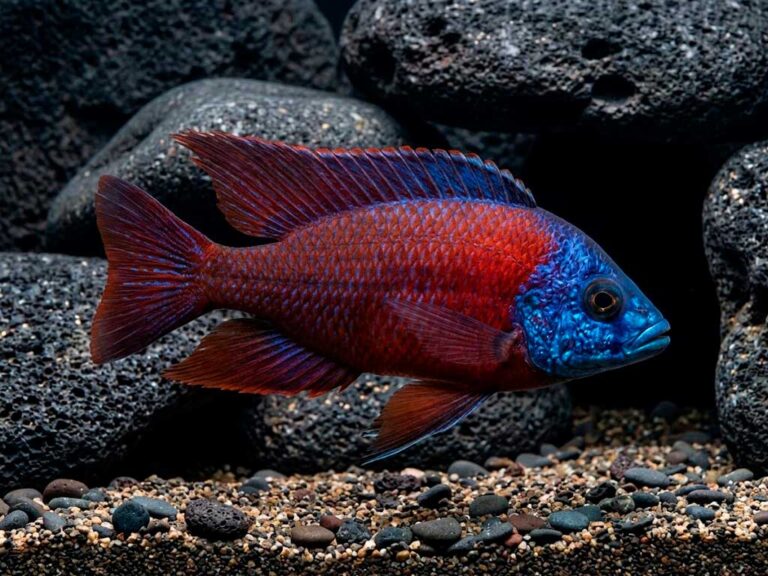
Copadichromis chrysonotus Care: Complete Guide to the Open-Water Utaka
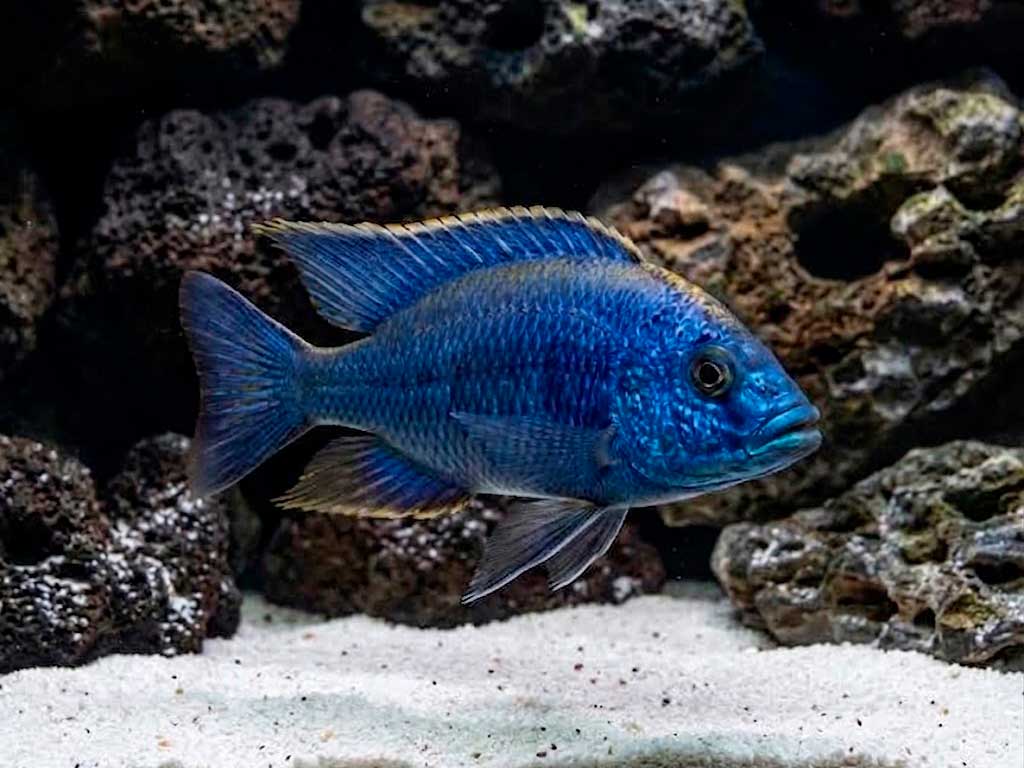
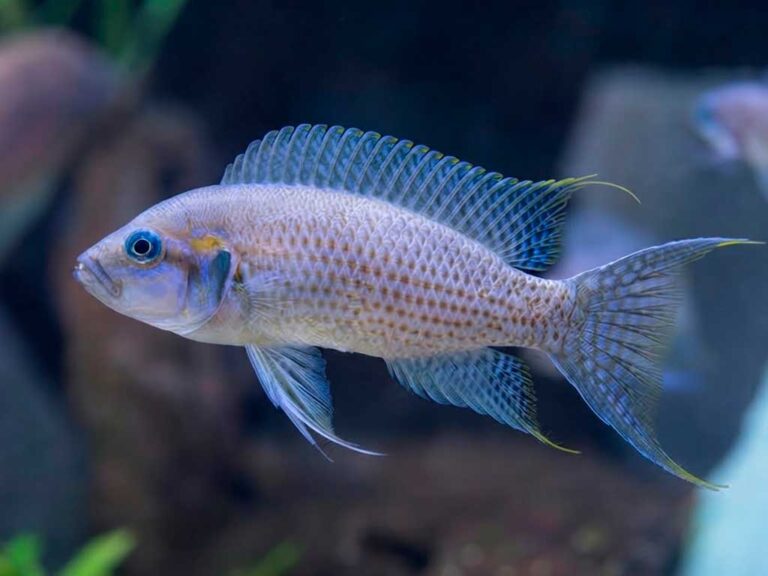
Lake Malawi is famous for rock-dwelling Mbuna, but the open-water column holds some of the most spectacular cichlids in African freshwater systems. Copadichromis chrysonotus stands out even among those pelagic species. Known naturally as a true Utaka, this cichlid abandons the constant rock scraping seen in typical Malawi setups and trades it for fluid, mid-water schooling.
Keeping them healthy in captivity requires understanding how their natural habitat shapes their behavior. In the wild, they aggregate in vast shoals to feed on plankton floating through the water column. Bringing that dynamic into a home aquarium requires space, precise water parameters, and the right tankmates.
Here is what actually matters when housing Copadichromis chrysonotus.
Natural Habitat and Wild Behavior
In Lake Malawi, Copadichromis chrysonotus occupies the upper layers of the water column, often near rocky reefs or open drop-offs. Unlike Mbuna, which cling tightly to caves and rock faces for protection, this species relies on open space and shoaling for safety.
They are zooplankton feeders by design. Their protrusible mouths create a suction effect, allowing them to vacuum tiny invertebrates right out of the current. During non-breeding periods, huge groups float above the reef structure without showing aggressive territoriality toward neighboring fish.
When breeding season starts, adult males transform. They construct or claim spawning sites on top of large boulders or construct subtle sand bowers depending on local substrate conditions. Their peaceful open-water nature shifts into active courtship, displaying intense dark blue and metallic coloration to attract females passing overhead.
Aquarium Size and Setup Requirements
The numbers don’t lie: open-water swimmers need horizontal swimming space above all else. A tight tank or a display packed end-to-end with rockwork will stress Copadichromis chrysonotus quickly.
| Setup Requirement | Minimum / Standard Parameter | Preferred Setup |
|---|---|---|
| Minimum Tank Size | 75 Gallons (4 feet length) | 125+ Gallons (6 feet length) |
| Substrate | Fine aquarium sand | Soft silica or river sand |
| Decoration Type | Minimalist rock clusters | Rocks at the back/sides, open middle |
| Filtration Rate | 6x–8x tank turnover per hour | High-flow canister or sump system |
In practice, aim to leave at least 60% of the upper and middle aquarium volume completely free of rocks. Place stacked rockwork near the back or sides to offer retreat zones, but preserve the upper water column for swimming.
Sand is mandatory. These fish occasionally sift through the substrate or build shallow spawning depressions. Sharp quartz or coarse gravel will damage their mouths and gills during natural feeding movements.
Water Parameters and Quality
Like all endemic species from Lake Malawi, Copadichromis chrysonotus demands clean, alkaline, and hard water. Standard tropical parameters will lead to systemic stress, faded color, and poor long-term survival.
- Water Temperature: 24°C to 27°C (75°F to 81°F)
- pH Range: 7.8 to 8.6
- Hardness: 10–20 dGH (150–350 ppm)
- Nitrate Levels: Keep strictly under 20 ppm
Because open-water species are sensitive to dissolved organic waste, robust filtration and routine water changes are vital. Aim for weekly 30% to 50% water changes using a quality water conditioner and a Malawi buffer salt if your tap water lacks sufficient mineral hardness.
Diet and Feeding Strategy
Feeding Copadichromis chrysonotus requires a balanced approach. In nature, they eat small crustaceans and zooplankton, meaning they need higher protein levels than herbivorous Mbuna, but still benefit from dietary fiber.
Avoid heavy mammal-based proteins like beef heart, which can cause digestive blockage in African cichlids. Instead, focus on small, slow-sinking granules and fresh frozen options.
Preferred Foods
- High-grade cichlid pellets (1.5mm to 2mm slow-sinking)
- Frozen Mysis shrimp, Daphnia, and brine shrimp
- Cyclops or enriched bloodworms (as occasional treats)
- Spirulina-enriched flakes to support overall digestive health
Feed them two small meals daily rather than one large feeding. Since they capture food in mid-water, ensure the food remains suspended long enough for the shoal to feed naturally before it settles into the gravel or overflow filters.
Tankmates and Compatibility
Choosing the right community is critical. Copadichromis chrysonotus is a mild-mannered African cichlid that will easily get bullied by overly aggressive tankmates.
Ideal Tankmates
- Peacocks (Aulonocara species): Shares similar temperament and water column needs without aggressive competition.
- Other Peaceful Haps/Utaka: Species like Protomelas, Placidochromis, or Cyrtocara moorii (Blue Dolphin Cichlid).
- Bottom Dwellers: Synodontis multipunctatus or Synodontis petricola catfish to handle food remnants near the substrate.
Fish to Avoid
Do not mix this species with hyper-aggressive Mbuna like Metriaclima, Labeotropheus, or Pseudotropheus. The hyper-territorial behavior of Mbuna will keep Copadichromis constantly stressed, suppressing their natural blue coloration and preventing healthy feeding habits.
Breeding Behavior and Fry Care
Copadichromis chrysonotus is a maternal mouthbrooder. Breeding them in a home setup is straightforward if water quality is high and the male-to-female ratio is managed correctly.
Keep these fish in a group ratio of 1 male to 3 or 4 females. Having multiple females prevents a dominant male from continuously chasing a single mate.
When ready to spawn, the male intensifies his blue pigmentation and displays to females over a flat rock or sand bower. The female lays her eggs, immediately picks them up in her mouth, and snaps at the egg-spots on the male’s anal fin to trigger fertilization right inside her mouth.
Brooding females hold eggs and fry for roughly 20 to 24 days. During this period, the female will refuse solid food and can be identified by a swollen bucco-pharyngeal cavity.
If you plan to raise the fry, carefully relocate the holding female to a dedicated 20-gallon nursery tank during her third week of mouthbrooding. Once she releases the free-swimming fry, remove her back to the main display so she can recover and feed while the young consume freshly hatched brine shrimp and finely powdered fry food.
Frequently Asked Questions (FAQ)
Final Care Checklist
- Provide a tank at least 4 feet long (75+ gallons) with ample open swimming room.
- Maintain an alkaline pH between 7.8 and 8.6 with low nitrates.
- Feed a varied zooplankton-based diet with slow-sinking small pellets.
- House them with peaceful Malawian Peacocks or Haplochromines, avoiding rough Mbuna.
- Maintain a harem ratio of 1 male to multiple females to support natural breeding.