Veiltail Betta: Why It’s Everywhere and How to Care for One
Walk into almost any pet store and the betta staring back at you from a little cup is probably a veiltail. There’s a genetic reason for that, not just popularity. The gene behind this tail shape is dominant, which means breeding veiltails is easy and predictable in a way that halfmoon and crowntail simply aren’t. That single fact explains the price tag, the availability, and honestly a bit of the tail type’s reputation too.
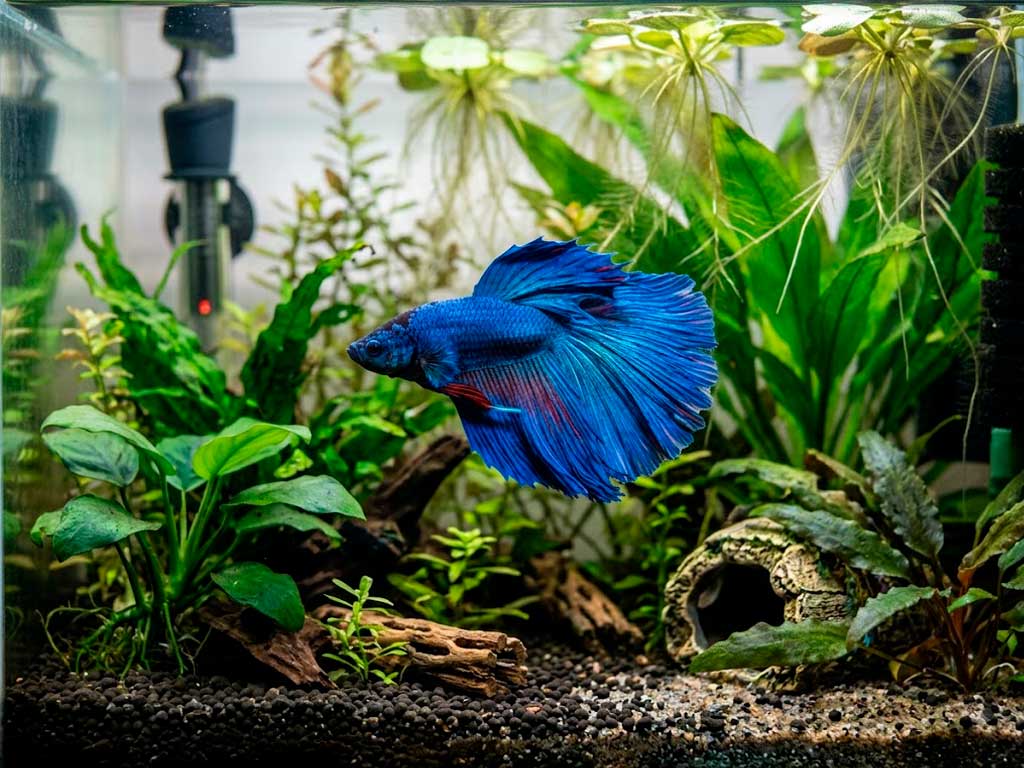
Quick answer: The veiltail betta has a long, asymmetrical tail that droops downward from behind the body, caused by a dominant genetic trait that makes this variety easy and predictable to breed. That’s why veiltails sell for $2 to $6 while fancier tail types can run into the hundreds. Males show longer fins and brighter color than females, and the trailing tail shape carries its own care considerations around fin health that other, more compact tail types don’t face as often.
This guide covers the veiltail specifically. For the full rundown on tank setup, water parameters, and general betta care that applies across every tail type, see our betta fish care guide.
What Actually Makes a Tail a “Veiltail”
The defining feature is asymmetry. Unlike a halfmoon’s symmetrical 180-degree fan or a crowntail’s spiky, evenly spaced rays, a veiltail’s caudal fin has one or more rays that grow noticeably longer than the rest, pulling the whole tail into a long, swooping droop that falls from just behind the body. It’s less structured, less “designed” looking than the fancy tail types, which is part of its charm for a lot of owners even if breeders and show judges moved on from it decades ago.
Look closely at a swimming veiltail and you’ll notice the tail moves almost like a ribbon caught in a light current, a fluid, trailing motion that a rigid, symmetrical halfmoon fan simply can’t replicate. That movement is part of why so many owners describe the variety as having more personality in motion, even if it loses points on paper for symmetry.
Why Veiltails Are Everywhere
Genetics does most of the explaining here. The veiltail trait is dominant, meaning a veiltail bred with almost any other tail type will still produce mostly veiltail offspring. Halfmoon and crowntail traits require far more careful, deliberate line-breeding to maintain, which takes generations of selective work and a lot of culling along the way. That difference in breeding effort shows up directly in price: veiltails commonly sell for $2 to $6, while a quality halfmoon or crowntail from a dedicated breeder can run into the hundreds, sometimes more for a genuinely exceptional specimen.
There’s a quieter side to this story too. Veiltails became so common that most betta shows dropped a dedicated judging category for them entirely, treating the variety as a given rather than something to compete over. Dedicated veiltail breeders still exist and still take real pride in refining the variety, but the tail type’s ubiquity worked against its prestige even as it kept the price accessible for everyone else.
Male vs. Female Veiltail Betta
The difference between the sexes is more pronounced in veiltails than in some other tail types, largely because so much of the variety’s visual appeal comes from fin length, and that trait is heavily sex-linked.
- Males: Long, dramatically flowing fins and saturated, vivid color. This is the classic veiltail image most people picture, and it’s almost always a male in that mental picture.
- Females: Noticeably shorter fins and more muted coloring, though still recognizably veiltail in shape. Females are the better choice if you’re considering a sorority setup, a small group of females housed together, since males cannot safely be kept with other males at all.
Temperament differs less than appearance does. Both sexes carry the species’ characteristic feistiness toward their own kind, and both are generally fine, sometimes even described as unusually outgoing, around other calm community fish once properly introduced.
Size differs too, though less dramatically: males typically reach the upper end of the species’ 2 to 3 inch range, while females tend to stay closer to the lower end, a difference that becomes more obvious once both are fully grown at around 6 months old.
Care Considerations Specific to That Long Tail
General betta care applies here, but the veiltail’s finnage adds a couple of wrinkles worth knowing about specifically.
That long, heavy tail takes real energy to haul around, and it can make swimming genuinely more tiring than it is for a short-finned plakat. Keep current gentle for this reason even more than you would for other tail types, since fighting a strong flow with that much trailing fin wears a veiltail down faster.
The trailing shape also drags lower and closer to decor than a compact tail does, which raises the odds of snagging on a sharp edge. Run the pantyhose test on every piece of decor before it goes in the tank: drag a piece of pantyhose across the surface, and if it catches, it will catch your betta’s tail too.
Fin rot, already the most common betta health issue, tends to show up first at the tips of the longest rays, so keeping an eye on tail edges specifically is a good early-warning habit for this variety.
Color Varieties Within the Veiltail Type
Tail shape and color genetics are separate systems, so veiltails come in essentially the full range of betta colors and patterns: solid red, blue, black, and white, along with patterned varieties like koi (mottled orange, black, and white) and dumbo ear (distinguished by oversized pectoral fins rather than color). None of these change the care requirements above, color is purely cosmetic here, so pick based on what genuinely catches your eye rather than assuming one pattern is hardier than another.
Marble-patterned veiltails deserve a specific mention: their coloring can genuinely shift over months as the fish ages, a trait linked to a jumping gene that periodically reactivates pigment cells. It is a well-documented quirk rather than a sign of illness, so do not be surprised if your marble veiltail looks noticeably different a year from now.
Common Mistakes Owners Make With Veiltails
- Assuming ‘common’ means ‘low maintenance.’ A veiltail needs exactly the same water quality, temperature stability, and tank size as a halfmoon or crowntail. Its low price has nothing to do with how easy it is to keep alive, only how easy it is to breed.
- Overcrowding decor around the tail. Because the tail droops and trails, dense plastic plants or jagged decorations sit right in its path in a way they wouldn’t bother a shorter-finned fish. Favor open swimming space with a few soft, well-spaced hiding spots instead.
- Buying on color alone without checking fin condition. A vivid, striking color can distract from early signs of fin damage or clamped fins at the store. Look past the color to the edges of the tail itself before deciding a fish is healthy.
- Skipping quarantine because the fish was cheap. Price has no bearing on whether a new betta might be carrying parasites or disease from crowded store conditions. Quarantine and careful acclimation matter just as much for a $3 veiltail as they do for a $300 halfmoon.
What Dedicated Veiltail Breeders Actually Select For
Even without a competitive show category, serious veiltail breeders still work toward a real standard. The goal is a long, evenly flowing tail without excessive curling or twisting, fins held up and spread confidently rather than clamped or dragging, and rich, even color saturation across the body and fins. A poorly bred veiltail tends to show uneven ray length, a pinched or asymmetric droop, or fins that look thin and sparse rather than full, sometimes alongside a body shape that looks slightly pinched or undersized relative to the fin display.
If you’re buying from a dedicated breeder rather than a big-box pet store, expect to pay somewhat more than the typical $2 to $6 range for a specimen bred with this level of care, though still nowhere near halfmoon or crowntail prices. The fish behaves and lives exactly the same either way; the difference is purely in how closely it matches that visual standard, and whether that difference matters to you is entirely a matter of personal taste rather than a real welfare consideration.
Quick Tank Setup Notes
A veiltail needs the same foundation as any other betta: a minimum 5-gallon tank, water held between 76 and 82 degrees F, gentle filtration, and plenty of soft hiding spots. Our betta fish care guide covers the full setup, water parameters, and feeding routine in depth, since none of that changes based on tail type.
How Long a Veiltail Actually Lives
Most sources quote 2 to 4 years for a betta, but that number reflects average care more than the species’ actual ceiling. A veiltail kept in stable, warm water with a real filtration setup and a varied, protein-rich diet regularly reaches 5 years, and well-documented individuals have pushed past that, occasionally into the 6 to 7 year range under exceptional, consistent care. The gap between the average and the ceiling is almost entirely explained by housing quality in the fish’s first year, which is exactly why the bowl-versus-tank decision matters so much more than its low price tag might suggest.
Age also changes what to expect from the tail itself. Older veiltails often slow down, spend more time resting near the surface or tucked into a favorite plant, and may show a bit of fin curling that wasn’t there in youth. None of that is necessarily a health problem on its own, it’s a normal part of aging in a fish that has spent years hauling around that much fin, but a sudden change is always worth investigating rather than writing off as “just getting older.”
Frequently Asked Questions
Why are veiltail bettas so cheap compared to other types?
The veiltail trait is genetically dominant, so it breeds true easily without the careful, multi-generation line-breeding that halfmoon and crowntail varieties require. That lower breeding effort keeps prices low, typically $2 to $6.
Are veiltail bettas lower quality than other tail types?
No, they’re simply more common. “Quality” in the show sense refers to symmetry and refinement, categories veiltails aren’t judged on anymore, but a healthy, well-cared-for veiltail is every bit as good a pet as a halfmoon.
How can I tell if my veiltail betta is male or female?
Males have noticeably longer, more dramatic fins and more saturated color. Females carry shorter fins and more muted coloring, though the overall drooping veiltail shape is still present in both.
Do veiltail bettas need a bigger tank than other tail types?
Not strictly, the 5-gallon minimum applies across tail types. That said, the extra fin length makes gentle water flow even more important, since a strong current is more tiring to swim against with a long, trailing tail.
Why does my veiltail’s tail look ragged at the edges?
Fin rot is the most likely cause, and it tends to appear first at the tips of the longest rays in veiltails specifically. Check water parameters immediately and look for sharp decor edges the tail may have snagged on.
Can two female veiltail bettas live together?
Females can sometimes live in a sorority group of five or more in a large enough tank, generally 10 gallons or more, though compatibility still varies by individual temperament. Never house two males together under any circumstances, and even a divided tank setup, a common workaround some owners try, still risks stress from the visible presence of a rival on the other side of the barrier.
What colors do veiltail bettas come in?
Essentially the full range available in the species, including solid red, blue, black, and white, plus patterned varieties like koi and dumbo ear. Color genetics are independent of tail shape, so no combination is off-limits.
Are veiltail bettas easy to breed at home?
Yes, relatively speaking. The dominant tail-shape gene means offspring reliably come out veiltail, removing one major variable that makes breeding fancier tail types far more unpredictable.
The veiltail’s ubiquity is exactly what makes it a genuinely good starting point for a first betta: affordable, widely available, and just as capable of turning into a spoiled, well-loved fish as any fancier variety twenty times the price.