Seachem Prime vs Amguard: Which One Do You Actually Need?
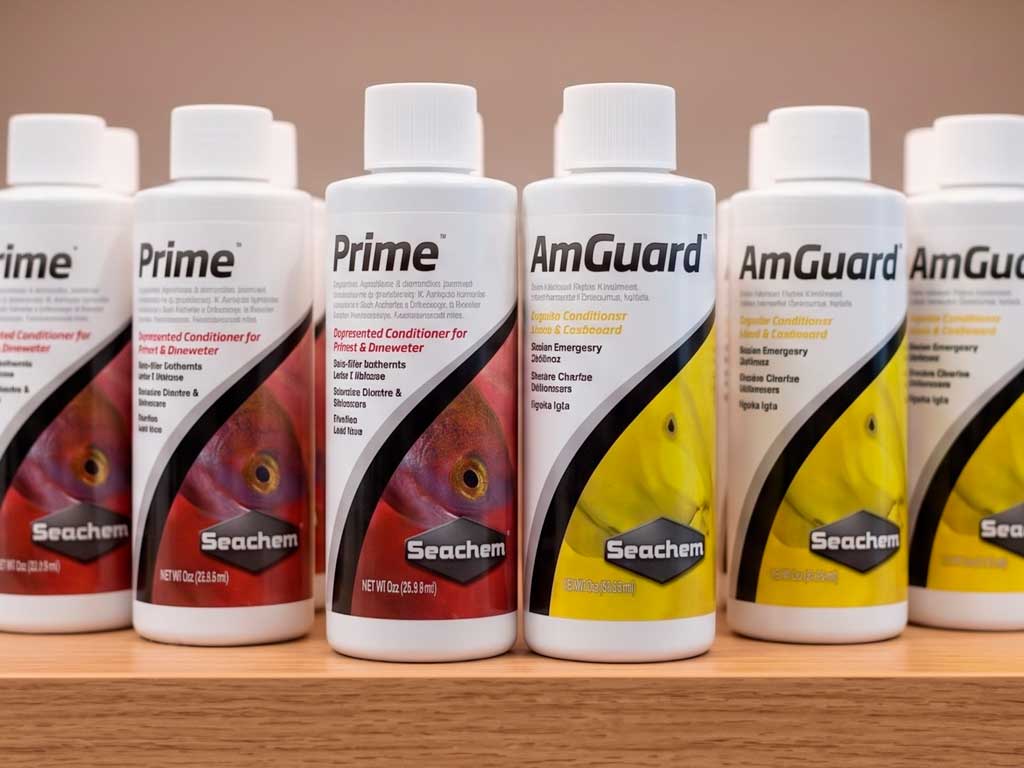
Seachem Prime is the single most-searched product in the entire Seachem line, and for good reason: it’s the water conditioner most people dose every single water change without thinking twice.
Amguard looks like a stronger version of the same thing, but the real difference isn’t strength, it’s what each one is actually built to handle. This guide covers what each product does, where they overlap, and when you genuinely need both.
I keep both on hand, but I reach for Prime constantly and Amguard almost never, which tells you something about how most tanks actually run day to day. In practice, knowing the one real difference between them saves you from buying the wrong bottle.
Frequently Asked Questions
FROM AMAZON.COM
Seachem Prime 500 mL / 17 fl. oz.
Concentrated water conditioner that removes chlorine, chloramine, and detoxifies ammonia and nitrite. A staple product for every freshwater and saltwater tank.
Buy on Amazon.comAs an Amazon Associate, we earn from qualifying purchases. Happy Pet Zone may earn a commission when you click through to Amazon.com, at no extra cost to you.
What Seachem Prime Actually Does
Prime’s core job is dechlorination: it neutralizes chlorine and chloramine in tap water, which is the reason almost every tank owner doses it during water changes regardless of anything else going on. On top of that, it detoxifies ammonia, nitrite, and nitrate up to a moderate level, and it converts heavy metals into a harmless form.
The standard dose is 1 mL per 10 US gallons for treating tap water, and it’s safe to dose at that rate every time you do a water change.
Seachem Prime also triggers the fish’s natural slime coat production, which offers some added protection during stressful moments like transport or a water change itself.
What Amguard Does Differently
Seachem Amguard is built around one specific job: detoxifying ammonia at higher concentrations than Prime is designed to handle. Where Prime tops out at roughly 2 ppm of ammonia detoxification, Amguard is formulated to treat several times that amount, which makes it the product for genuine emergencies rather than routine use.
It doesn’t carry the broader feature set Prime has. Amguard isn’t your dechlorinator and doesn’t cover nitrite or nitrate the way Prime does, so it’s not a replacement for Prime in everyday water changes, only a supplement for when ammonia specifically spikes hard.
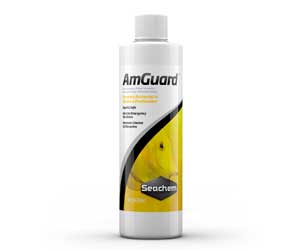
FROM AMAZON.COM
Seachem AmGuard Ammonia Detoxifier
Detoxifies ammonia, nitrite, and nitrate while removing chlorine and chloramine — a go-to for keeping water parameters stable between changes.
Buy on Amazon.comHappy Pet Zone may earn a commission when you click through to Amazon.com, at no extra cost to you. As an Amazon Associate, we earn from qualifying purchases.
Prime vs Amguard: The Actual Difference
The real distinction comes down to concentration, not overall strength. Prime handles chlorine, chloramine, moderate ammonia, nitrite, nitrate, and heavy metals all in one product, which is why it’s the one people dose constantly. Amguard does one thing, high-concentration ammonia detox, better than Prime does at that same job.
If your ammonia reading is at or below 2 ppm, Prime alone handles it along with everything else it’s already doing. Once ammonia climbs meaningfully higher than that, typically during a rough cycling period or a sudden bioload spike, Amguard becomes the more effective tool for bringing that specific number down fast.
When to Use Amguard Instead (or Together)
A cycling tank with a fish-in start, a filter that’s been wiped out by medication, or an overstocked tank that’s spiked hard are the situations where Amguard earns its place. These aren’t routine water-change scenarios, they’re emergencies where ammonia has climbed well past what Prime alone is built to neutralize.
For a genuinely severe spike, dose Amguard first to bring the ammonia number down, then follow with Prime about an hour later. That sequence lets Amguard handle the heavy ammonia load while Prime picks up nitrite detoxification and the rest of its usual water-conditioning job.
For the full breakdown of what causes ammonia and nitrite spikes in the first place, our common aquarium problems guide covers the underlying causes this pairing is treating.
Building Your Water-Change Routine
Here’s what actually matters for most tanks: Prime belongs in every water change, no exceptions, dosed at 1 mL per 10 gallons of treated tap water. Amguard belongs in your emergency kit, not your weekly routine, and you’ll know you need it when a test kit shows ammonia climbing well past what a normal water change and Prime dose would explain.
That’s the whole decision tree. For how Prime and Amguard fit into the rest of the Seachem lineup, our Seachem products guide ties this back to the full system.
This guide covers general water conditioning reference. For a severe or unexplained ammonia spike that doesn’t respond to treatment, test your full water parameters and consider a partial water change alongside any product dosing.