Halfmoon Betta: The Precision-Bred Show Fish Explained
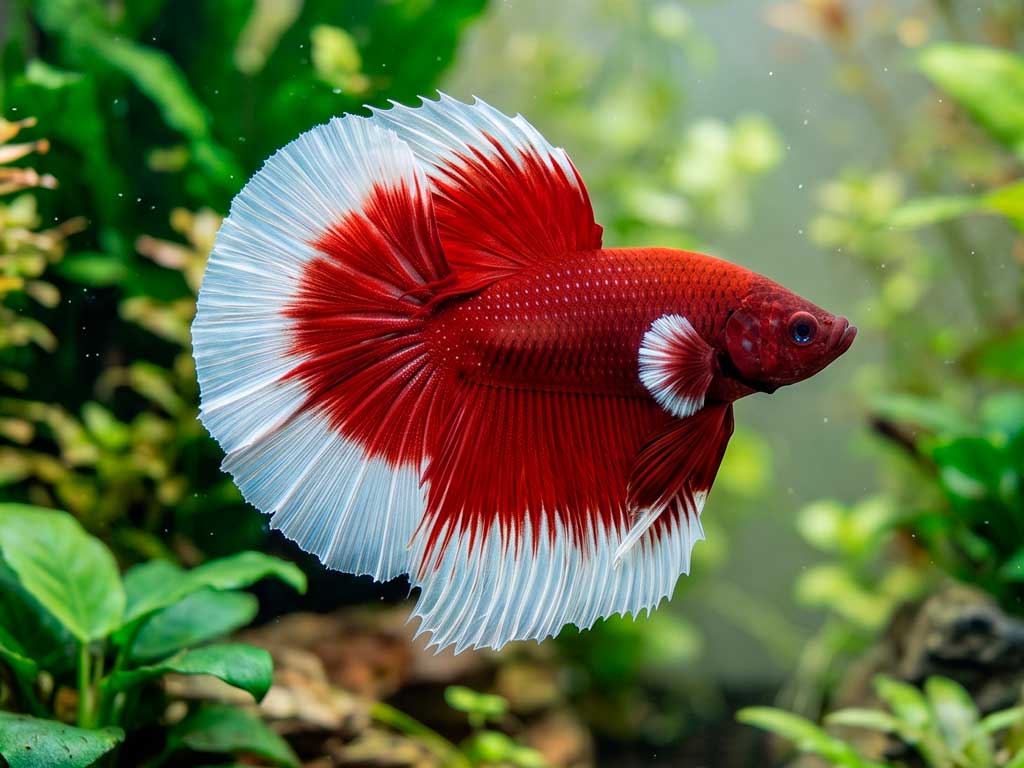
If the veiltail is what genetics gives you for free, the halfmoon is what generations of deliberate, patient line-breeding earns you. Getting a tail to open into a perfect, symmetrical half-circle isn’t a dominant trait that shows up on its own.
It takes breeders selecting for exact spread, exact symmetry, and exact fin structure across many generations, culling anything that doesn’t measure up. That difference in effort is the whole reason a halfmoon costs what it costs.
Quick answer: A true halfmoon betta flares its caudal fin into a symmetrical 180-degree half-circle, a D-shape, when fully spread. It’s one of the most demanding tail types to breed correctly, which keeps prices well above common veiltails. Males typically achieve the full spread more reliably than females, and the same genes pushed further produce the rosetail, a beautiful but health-compromised variant worth understanding before you buy one.
This guide covers what defines a genuine halfmoon, the male-female spread difference, the rosetail variant and its real health tradeoffs, and what changes about day-to-day care with a fin this large. For the full betta care fundamentals, see our betta fish care guide.
What Actually Defines a Halfmoon
The name refers to the shape the caudal fin makes when fully flared: a symmetrical half-circle, a full 180 degrees from top tip to bottom tip, with the top and bottom lobes meeting the dorsal and anal fins to form one continuous, D-shaped edge. Anything less than that spread technically falls into the “super delta” category instead, a near-halfmoon that doesn’t quite reach the full 180. Breeders and show judges take this distinction seriously, since hitting the exact geometry consistently is genuinely difficult.
Ray branching also matters for judging quality. A well-bred halfmoon shows even, symmetrical branching across the fin with no overlapping rays or uneven gaps, giving the flared tail a smooth, almost solid-edged look rather than a ragged one.
Male vs. Female: The Spread Gap
This is where halfmoon males and females diverge more sharply than in most other tail types. Males consistently achieve the full 180-degree spread more reliably, which is why nearly every halfmoon you see in marketing photos and store displays is male. Females carry the same genetics but typically flare to a smaller degree, often closer to 90-160 degrees even at their best, with shorter fins overall.
This isn’t a flaw in the female, it’s simply how the trait expresses across sexes, and it’s worth knowing going in if you specifically want to watch that dramatic full flare regularly. A female halfmoon is every bit as capable a breeder and every bit as healthy a pet; she just won’t put on quite the same visual show a male does when startled or displaying.
Rosetail: When the Halfmoon Gene Goes Further Than It Should
Breeders eventually pushed the halfmoon’s ray-branching trait past 180 degrees, and past simple symmetry, into something new: the rosetail, where excessive branching makes the fin edge ruffle and layer like flower petals. It’s genuinely stunning to look at, and it’s also a variant worth approaching with open eyes rather than pure excitement.
That much extra fin tissue is heavy, and heavy fins are tiring to swim with, more so than even a standard halfmoon’s already-large spread. Rosetails are also more prone to a specific problem called fin biting, where the fish nips at its own excess finnage, sometimes out of irritation, sometimes for reasons that aren’t fully understood. The ruffled, overlapping fin structure creates more surface area where damage, infection, and fin rot can take hold too. None of this means a rosetail can’t make a wonderful pet, plenty do, but go in knowing you’re taking on a variant bred for extremity rather than balance, and budget extra attention to fin health as a result.
Halfmoon Plakat: The Short-Fin Cousin
Cross a halfmoon’s wide, symmetrical spread with a plakat’s short fins, and you get the halfmoon plakat, often shortened to HMPK in the trade. It keeps the same 180-degree geometry but in a compact, short-tailed package that swims more easily and generally handles wear and tear better than its long-finned relative. Our halfmoon plakat guide covers this combination in full, including why breeders increasingly prefer it over the standard long-finned halfmoon.
Popular Halfmoon Color and Pattern Combinations
Tail shape and color genetics operate independently, so halfmoons come in essentially every pattern the species offers. A few names come up constantly in the halfmoon world specifically: mustard gas (a dark body paired with yellow or orange-tipped fins), koi (a mottled orange, black, and white pattern echoing actual koi fish), dragon scale (thick, metallic-looking scales that give an armored appearance), galaxy (a sparkling, multicolored iridescent effect), and dumbo ear, which describes oversized pectoral fins rather than a color at all and can be paired with a halfmoon tail for an even more dramatic silhouette. None of these change the tail-shape care considerations above.
Why Halfmoons Cost More Than a Veiltail
The math is straightforward once you understand the breeding side. Veiltail’s drooping shape comes from a dominant gene, so it shows up reliably in most offspring with minimal selection required. Halfmoon’s 180-degree spread requires careful line-breeding across multiple generations, with breeders culling fish that don’t hit the geometry and pairing only the best spreads together repeatedly to lock the trait in. That labor shows up directly in price, and it’s also why a genuinely excellent halfmoon, one with perfect symmetry and clean branching, commands a real premium even among other halfmoons.
A Relatively Recent Invention
Unlike the veiltail, which has existed for as long as ornamental betta breeding itself, the halfmoon is a genuinely modern development. Breeders in the United States began deliberately selecting for a wider, more symmetrical spread in the late 1980s and through the 1990s, eventually stabilizing the full 180-degree trait well enough to establish it as its own recognized category in competitive shows. That relatively short breeding history is part of why halfmoon genetics still take real skill to work with consistently, the trait simply hasn’t had the centuries of refinement that shaped other tail types.
Care Notes for That Much Fin
A fully flared halfmoon carries even more surface area than a veiltail’s drooping tail, which means gentle water flow matters just as much, if not more. Keep decor soft-edged and give the fish open space to flare without snagging fins on anything sharp. Watch for excessive flaring at a mirror or reflective surface. It’s a natural display behavior, but prolonged, repeated flaring from constant exposure to a perceived rival can genuinely stress the fish, so limit deliberate flaring sessions to a few minutes at a time rather than leaving a reflective surface in constant view.
Frequently Asked Questions
What makes a betta a true halfmoon?
A full 180-degree spread of the caudal fin when flared, forming a symmetrical half-circle. Anything less falls into the “super delta” category, a common near-miss that still looks impressive but doesn’t meet the strict halfmoon standard.
Why don’t female halfmoons flare as wide as males?
The trait simply expresses differently across sexes. Females typically reach a smaller maximum spread with shorter fins overall, which is normal and not a sign of poor breeding or health.
Is a rosetail betta bad for the fish?
Not inherently, but the extra fin tissue is heavier to swim with and more prone to fin biting and damage than a standard halfmoon’s fin. Owners should pay closer attention to fin condition and water quality with this variant.
What is the difference between halfmoon and halfmoon plakat?
Both share the same 180-degree spread geometry, but halfmoon plakat (HMPK) has short fins similar to a plakat, while standard halfmoon has long, flowing fins. The shorter-finned version is generally easier to keep and more resistant to fin damage.
Why are halfmoon bettas more expensive than veiltails?
The halfmoon’s spread requires careful, multi-generation line-breeding to achieve consistently, unlike the veiltail’s dominant gene that breeds true with little effort. That breeding labor is reflected directly in price.
Does flaring hurt a halfmoon betta?
Occasional flaring is a natural display behavior and not harmful. Prolonged or constant flaring, such as from an unblocked mirror left in view all day, can cause real stress and is worth limiting to short, deliberate sessions.
Do halfmoon bettas need a bigger tank than other tail types?
The same 5-gallon minimum applies, but the fully flared fin takes up real space and drags through the water more than a compact tail, so gentle flow and open swimming room matter even more than usual.
A halfmoon is proof of what patient, deliberate breeding can do with a species that started out modest and wild. Whether you go for a textbook-perfect 180-degree male or a shorter-flaring female, you’re keeping a fish that represents generations of careful selection, and it deserves care that matches that effort.