Marimo Moss Ball Care Guide: Light, Water & Growth
A marimo moss ball grows only a few millimeters per year, yet a healthy specimen can remain in an aquarium for many years with surprisingly little maintenance. That slow growth is part of what makes it different from almost every other aquarium plant.
The name causes some confusion. Marimo is neither a true moss nor a conventional aquatic plant. It is a spherical growth form of the green alga Aegagropila linnaei, shaped by water movement in cold freshwater lakes.
That biology explains almost everything about its care. You do not plant it, you do not need to inject CO2, and you should not treat it like a fast-growing stem plant. The important variables are temperature, light, cleanliness and occasional rotation.
This guide covers how to keep a marimo moss ball healthy, where to place it, how to clean it, why it turns brown or floats, how quickly it grows, and which aquarium setups make the most sense.
What Is a Marimo Moss Ball?
Marimo moss balls are rounded colonies of filamentous green algae. In nature, the spherical form develops where gentle currents repeatedly roll the algae along the bottom of suitable lakes.
The species is commonly identified as Aegagropila linnaei. The familiar round shape is unusual even within the species because the algae can also grow as loose filaments or mats under different conditions.
For aquarium keepers, the distinction matters because Marimo has no root system, rhizome or crown that needs to remain exposed. You simply place the ball where you want it.
That also makes it unusually easy to rearrange. If you change your aquascape, you can move the ball without worrying about disturbing roots or causing a planting setback.
Temperature: The Most Important Factor
Marimo moss balls prefer cool freshwater. A practical target is roughly 64–75°F (18–24°C), with cooler conditions generally being preferable for long-term health.
Some specimens survive in warmer community aquariums, but sustained temperatures around 78–80°F can create problems over time. Browning, softening and deterioration become more likely as the temperature rises.
This is why Marimo deserves a little more thought than its reputation as an effortless aquarium plant suggests.
If your aquarium normally stays around 76°F or below, temperature is unlikely to be your main problem. If it sits at 80°F year-round, I would choose a different plant.
Lighting Requirements
Marimo moss balls have modest lighting requirements. Low to moderate aquarium lighting is generally enough, and strong direct sunlight should be avoided.
A ball sitting directly beneath an intense aquarium fixture can develop pale or brown areas on the exposed surface. Direct sunlight can also heat a small aquarium surprisingly quickly.
The easiest solution is simple placement.
Put the Marimo somewhere that receives normal aquarium light without sitting directly under the strongest part of the fixture. In a brighter planted tank, a little shade from driftwood or taller plants can be useful.
Light also affects how you maintain its shape. If one side remains against the substrate for months, that surface receives less light and can gradually become discolored or flattened.
Does a Marimo Moss Ball Need CO₂?
No. CO₂ injection is unnecessary for normal Marimo care.
This is an extremely slow-growing organism, so it has very different carbon demands from demanding carpeting plants or fast-growing stems. A properly maintained aquarium already provides the carbon source Marimo needs for photosynthesis.
If you run pressurized CO₂ for other plants, you do not need to adjust the system specifically for the Marimo.
The bigger concern is the environment created by a high-tech planted aquarium. Very bright lighting, warm water and aggressive fertilization can create conditions that are poorly suited to this particular organism.
Does Marimo Need Fertilizer?
Usually, no dedicated fertilizer is necessary.
Marimo obtains nutrients from the water column and grows extremely slowly. In a normally stocked aquarium, dissolved nutrients from fish waste and regular feeding can provide part of what it needs.
If the aquarium contains other plants, you may already be using a general liquid fertilizer. That does not automatically mean you need an additional product for the Marimo.
FROM AMAZON.COM
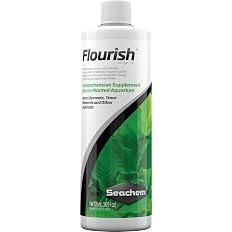
Seachem Flourish Freshwater Plant Supplement
A comprehensive plant supplement with minerals, trace elements, and vitamins to support healthy growth in freshwater planted tanks.
Buy on Amazon.comHappy Pet Zone may earn a commission when you click through to Amazon.com, at no extra cost to you. As an Amazon Associate, we earn from qualifying purchases.
Seachem Flourish Comprehensive is a general micronutrient supplement containing elements such as calcium, magnesium and iron. It does not add nitrogen or phosphorus.
For a Marimo-only setup, I would not add fertilizer simply because the ball is present. If you are dosing for other aquarium plants, follow the needs of the entire planted system rather than trying to accelerate Marimo growth.
How to Add a Marimo Moss Ball to Your Aquarium
There is no planting procedure.
Rinse the ball gently in clean, dechlorinated aquarium water, inspect it, and place it on the substrate. You can leave it loose or position it beside suitable hardscape where it will remain visible.
Avoid wedging it tightly into sharp rocks. The outer filaments can become damaged when the ball is repeatedly pressed against rough surfaces.
Marimo also does not need to be glued to wood or stone. Products such as plant adhesives are useful for rhizome plants and attached mosses, but a Marimo ball is meant to remain loose.
A foreground position usually works best because you can easily reach it during maintenance.
How to Roll and Clean a Marimo Moss Ball
Rolling is one of the few maintenance tasks that actually matters for Marimo.
During a water change, place the Marimo in a container of removed aquarium water.
Gently squeeze it underwater to release trapped debris and then roll it between your palms. The goal is to restore a rounded shape without crushing the filaments.
Afterward, return it to the aquarium and place it in a different position if possible.
Maintenance routine: Remove the Marimo during a water change. Gently squeeze it in old aquarium water. Roll it between your hands. Inspect the surface. Return it to a different position.
Why Is My Marimo Moss Ball Floating?
Floating is usually harmless.
Photosynthesis can produce oxygen bubbles that become trapped within the dense filaments of the ball. Those bubbles can make the Marimo surprisingly buoyant.
A new specimen may also float because air remains trapped inside it.
If you want it to sink, hold the ball underwater and gently squeeze it several times. Once the trapped air escapes and the ball becomes saturated with water, it should settle again.
There is no reason to permanently weigh down a healthy Marimo simply because it floats occasionally.
Why Is My Marimo Turning Brown?
Brown Marimo is a warning sign worth investigating.
The first thing I would check is temperature. Warm water is one of the most common reasons a Marimo starts deteriorating, particularly when the aquarium remains above its preferred range for long periods.
Next, look at lighting. A ball sitting directly beneath an intense fixture can develop localized discoloration.
Position also matters. If one side has been pressed against the substrate for a long time, that surface may receive very little light.
Check temperature, lighting, position, cleanliness and overall condition before adding products or attempting treatment.
A small brown patch does not automatically mean the entire ball is lost. Correct the environmental problem first and monitor how the affected area develops.
Can Marimo Moss Balls Live With Shrimp and Fish?
Marimo is generally compatible with many peaceful freshwater aquarium inhabitants, especially shrimp and small community fish.
Shrimp are particularly interesting tankmates because they frequently graze on the biofilm and microorganisms found on surfaces.
The bigger issue is often temperature rather than aggression. A fish may be completely peaceful toward the Marimo while still requiring water that is too warm for the ball long term.
Goldfish and some larger or more curious fish can also damage, move or eat parts of the ball. Large crayfish can create similar problems.
For a community aquarium, evaluate behavior and temperature separately.
How Fast Does a Marimo Moss Ball Grow?
Very slowly.
A commonly cited growth rate is around 5 mm per year, although growth varies with environmental conditions. This means a small Marimo can remain almost unchanged in appearance for a surprisingly long time.
Large specimens therefore represent years of growth.
Do not buy a Marimo expecting to watch it double in size during a single aquarium season. The appeal is longevity and form rather than rapid development.
If you want several balls, purchasing multiple specimens is much faster than trying to grow one large ball from scratch.
Can You Propagate a Marimo Moss Ball?
Yes. Marimo can be divided into smaller pieces.
The simplest approach is to separate a healthy ball into smaller portions and shape those pieces by hand. Over time, the pieces can develop into smaller rounded growths.
The result will not be a perfectly spherical ball immediately. Regular rolling helps maintain a rounded shape as the pieces continue developing.
Because natural growth is slow, propagation is better viewed as a long-term project than a quick way to produce a large colony.
Marimo Moss Ball vs. Other Aquarium Mosses
The word “moss” creates an easy source of confusion.
Java moss is a true aquatic moss that develops branching growth and can be attached to driftwood, rocks and other surfaces.
Marimo behaves completely differently. It forms a compact spherical mass, requires no attachment and is primarily valued for its unusual shape and very slow growth.
If you want a textured green surface covering driftwood, Java moss is a more suitable choice. If you want a rounded foreground accent that requires almost no planting work, Marimo fills a very different role.
Common Marimo Moss Ball Problems
- Brown surface: Check temperature and lighting first, then examine whether one side has been kept permanently against the substrate.
- Floating: Usually trapped air or oxygen bubbles. Gently squeeze the ball underwater.
- Flattening: The same side has probably remained against the substrate for too long. Roll and reposition it.
- Debris trapped in the ball: Squeeze it gently in removed aquarium water during maintenance.
- Loose or damaged surface: Reduce rough handling and check whether fish or invertebrates are picking at it.
- Very slow growth: This is normal. A few millimeters per year is a realistic expectation.
Frequently Asked Questions
If you want to keep a marimo moss ball healthy, concentrate on the variables that actually matter: keep the water reasonably cool, provide gentle lighting, rinse it during maintenance, and roll it periodically.
For a simple target, aim for 64–75°F (18–24°C), low to moderate light and a gentle roll during your regular water-change routine.
That is enough to keep this unusual freshwater alga healthy without turning its care into another complicated aquarium project.