Crowntail Betta: Ray Types, Fin Biting & Real Care
In the early 1990s, an Indonesian breeder named Achmad Yusuf started selecting for betta fins with reduced webbing between the rays, chasing a spikier, more dramatic look than anything on the market at the time.
By the end of the decade, the crowntail had spread through Southeast Asia and into the international hobby, and it remains one of the few major tail types with a documented origin story and a name attached to it, rather than simply emerging from generations of anonymous selective breeding.
Quick answer: The crowntail betta has dramatically reduced webbing between its fin rays, giving it a spiky, crown-like edge instead of a solid fin margin. It’s classified by how extended the rays are, single ray, double ray, or cross ray, and it carries a genuine tendency toward fin biting that other tail types deal with less often. Otherwise, care matches standard betta requirements: a 5-gallon minimum, gentle filtration, and a protein-rich diet.
This guide covers the ray classification system breeders actually use, the fin-biting tendency specific to this variety, and what changes about day-to-day care. For general betta fundamentals, see our betta fish care guide.
What Makes a Tail “Crowntail”
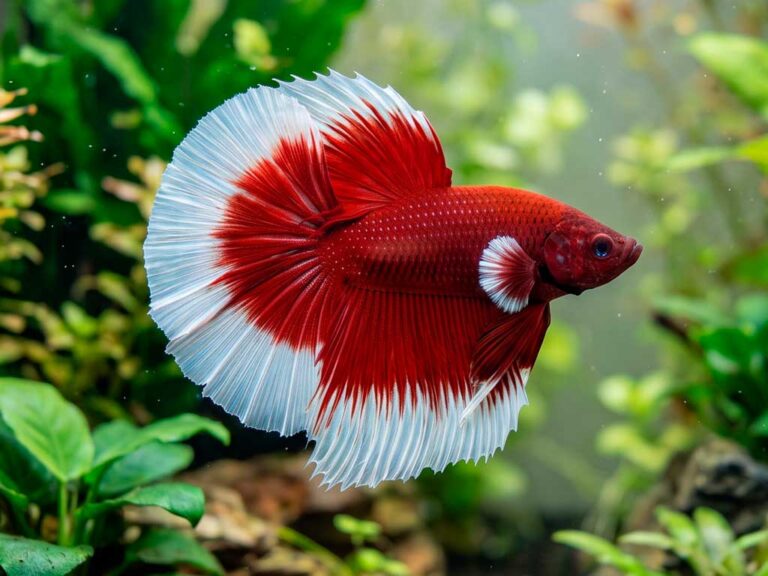
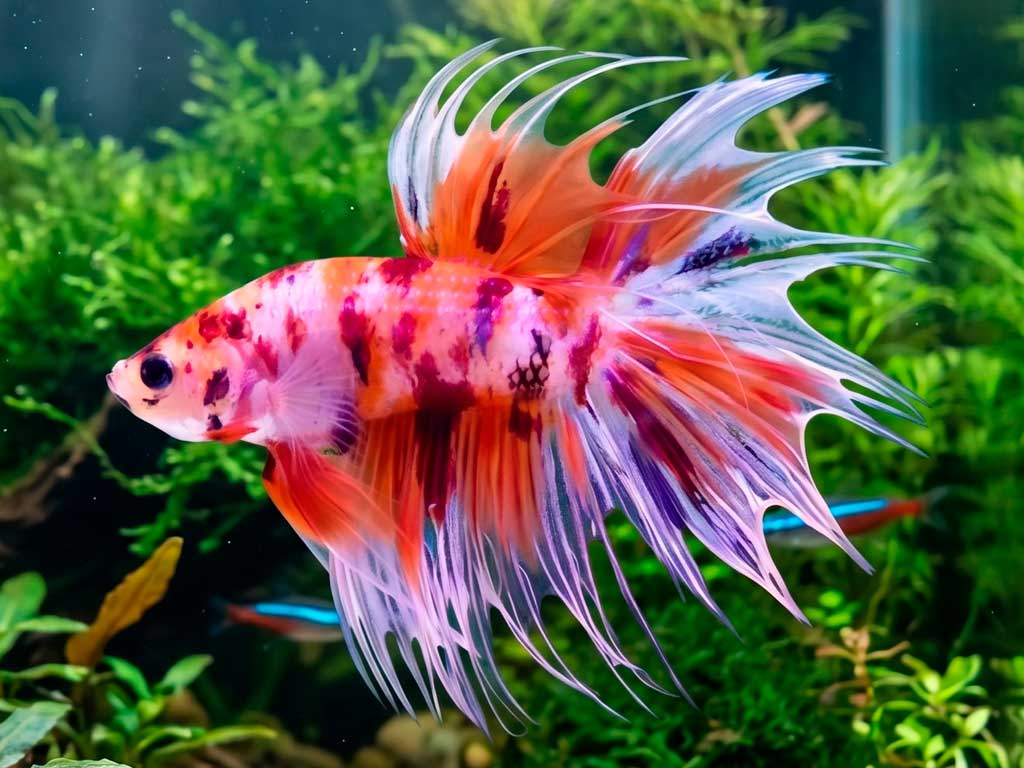
Every betta fin is built from a webbed membrane stretched between individual rays. A crowntail’s webbing is reduced dramatically, sometimes to less than half the coverage of a standard fin, leaving the rays themselves exposed and extending past the remaining membrane like spikes radiating out from the body. The effect is genuinely crown-like, especially on a fully flared male, and it’s unmistakable even to someone who has never heard the variety’s name before.
The Ray Classification System Most Guides Skip
Not all crowntails show the same degree of spiking, and serious breeders classify them accordingly rather than treating “crowntail” as one uniform look.
- Single Ray (SR): One ray extends per group, producing a cleaner, more moderate spiking effect. This is the most restrained expression of the trait.
- Double Ray (DR): Two rays extend together per group, giving a fuller, more layered spike pattern than single ray specimens.
- Cross Ray: Rays extend and cross over one another rather than staying parallel, creating an especially wild, chaotic-looking spike pattern that some collectors specifically seek out.
- Combination or “Crown” grade: A mix of ray types across the same fin, generally considered the most visually complex and, among dedicated breeders, the most prized.
Knowing this scale matters if you’re buying from a breeder rather than a general pet store, since it explains why two fish both labeled “crowntail” can look meaningfully different in person, and why some command a higher price than others.
Fin Biting: The Crowntail’s Particular Risk
Crowntails have a documented tendency toward fin biting, nipping at their own extended rays, more so than most other tail types. Nobody has a fully settled explanation for why. Some keepers point to boredom or understimulation, others to the exposed rays simply being easier to reach and irritate than a solid fin edge, and it’s likely some combination of both plus individual temperament.
Whatever the cause, the practical fix is the same: keep the tank genuinely enriching rather than bare, with plants, gentle current variation, and something to explore, and rule out stress factors like poor water quality or an uncomfortable reflection before assuming it’s simply the fish’s personality. A crowntail that suddenly starts biting after months of leaving its fins alone is usually telling you something changed in its environment.
Reading Fin Damage on a Crowntail
Fin rot and physical damage look different on a crowntail than on a solid-edged tail type, and that difference trips up owners used to other varieties. On a veiltail or halfmoon, rot shows up as a receding, often discolored edge along a continuous fin margin. On a crowntail, watch the individual ray tips instead: rot or damage typically appears as shortened, frayed, or clubbed ray ends rather than a uniform receding line, since there’s no continuous edge to recede in the same way. Catching it early means checking ray tips specifically during routine observation, not just glancing at overall fin shape.
Temperament and Tank Mates
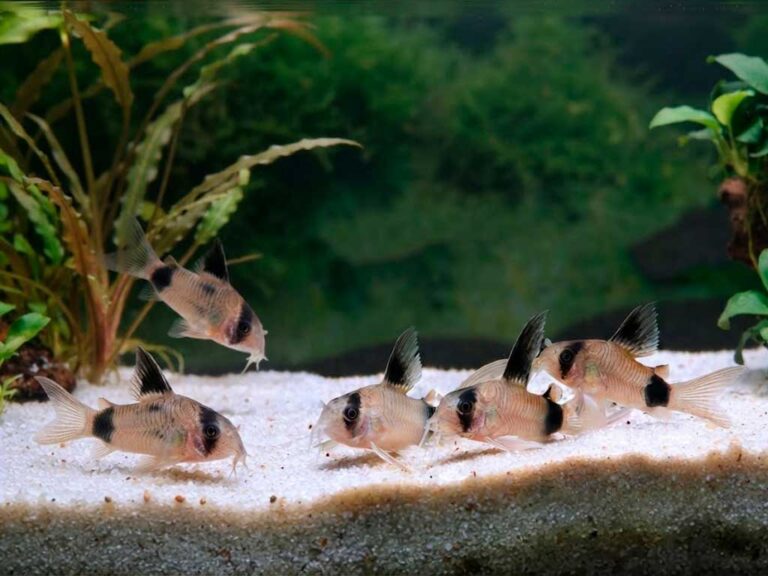
Crowntails carry a reputation for being a bit more assertive than some other tail types, though individual temperament varies plenty. Never house two males together under any circumstances. Peaceful bottom dwellers and calm community fish, snails, corydoras, and select shrimp species, generally make safe tank mates. Avoid known fin nippers like barbs and many tetra species specifically with this variety, since the already-exposed, spiky rays make an easy and tempting target for a nippy tankmate in a way a compact plakat tail wouldn’t.
Color and Pattern Varieties
Ray structure and color genetics operate independently, so crowntails come in the same broad range of colors and patterns available across the species: solid red, blue, and black, along with butterfly (a distinct band of color at the fin edge), dragon scale, and marble patterns. None of these change the ray classification or care considerations above, so choose based on appearance rather than assuming a particular color pairs better with the crowntail trait.
Quick Tank Setup Notes
Standard betta requirements apply: a minimum 5-gallon tank, water held between 76 and 82 degrees F, gentle filtration, and soft plants or decor the exposed rays won’t snag on. Our betta fish care guide covers full setup and water parameters in depth.
Frequently Asked Questions
What is the difference between single ray and double ray crowntails?
Single ray crowntails show one extended ray per group, giving a cleaner, more restrained spike pattern. Double ray crowntails show two rays extending together per group, producing a fuller, more layered look.
Why does my crowntail betta bite its own fins?
This variety has a documented tendency toward fin biting, likely tied to boredom, understimulation, or simple irritation from the exposed ray structure. Enriching the tank and ruling out water quality issues are the standard first responses.
Who created the crowntail betta?
An Indonesian breeder named Achmad Yusuf is credited with developing the crowntail in the early 1990s, selecting specifically for reduced webbing between the fin rays.
Are crowntail bettas more aggressive than other tail types?
They have something of a reputation for it, though individual temperament varies widely regardless of tail type. Standard betta aggression rules still apply: never house two males together.
How do I tell if my crowntail’s fins are damaged versus naturally spiky?
Check individual ray tips rather than the overall fin edge. Frayed, shortened, clubbed, or discolored ray ends signal damage or rot, while healthy rays simply taper to a clean point regardless of how spiky the overall pattern looks.
What is a cross ray crowntail?
A crowntail where the extended rays cross over one another instead of staying parallel, creating a especially dramatic, chaotic-looking spike pattern that some collectors seek out specifically.
The crowntail is one of the few tail types with a real name and a real decade attached to its creation, and thirty years later it’s still one of the most instantly recognizable bettas in the hobby. Get the ray classification straight, watch those tips for early damage, and it’s every bit as rewarding a fish as any pricier variety.