Leonese Shepherd Dog: The Complete Breed Guide to Spain’s Carea Leones
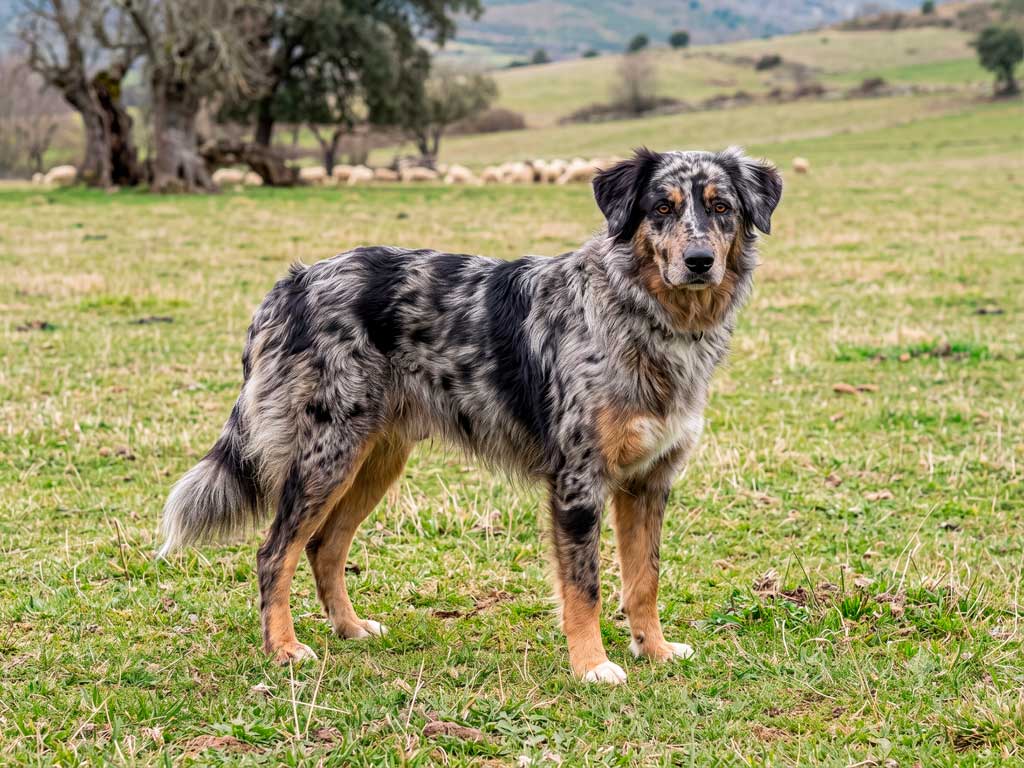
Leonese Shepherd is a Spanish sheepdog officially registered as Perro Leonés de Pastor, with Carea Leonés as its best-known synonym, and it is one of the few breeds whose standard is approved by a regional government rather than by the FCI. Spain added the Leonese Shepherd to the national catalogue of pure breeds in 2016, Castilla y León approved its breed standard in 2018, and the FCI still does not recognise it.
That unusual paperwork is the reason most English profiles get the dog wrong. The official standard describes one coat type and a much narrower size range than the pages you will find quoted elsewhere. This guide works from the published standard, sets out the recognition chain in full, and separates what is documented from what has been copied.
What Is a Leonese Shepherd?
The Leonese Shepherd is a medium-sized, rustic sheepdog from the province of León, built to work sheep in extensive farming on the hard ground and extreme continental climate of the Castilian plateau. The official standard describes a dog that is austere and strong, always alert, and unalterable in its work under the most adverse weather.
These are the official figures, taken from the approved standard rather than from breed websites.
| Official name | Perro Leonés de Pastor |
| Synonyms in the standard | Perro Carea Leonés, Perro de Pastor Leonés, Perro de Aqueda |
| Origin | León, Spain |
| Zootechnical function | Shepherd dog |
| Spanish recognition | 2016, national catalogue of pure breeds |
| Regional standard | Approved by Castilla y León in 2018 |
| FCI status | Not recognised |
| Height | Males 49 to 50 cm, females 47 to 48 cm, with 1 cm tolerance either way |
| Weight | Males 17 to 21 kg, females 15 to 19 kg |
| Coat | One type: medium length, soft, straight or slightly wavy, with dense undercoat |
| Colours | Black, cervato, merle, including merle tricolour |
| Best for | Owners with stock, land or a serious working outlet for a herder |
Is the Leonese Shepherd a Recognised Breed?
Yes in Spain, and no almost everywhere else. The breed entered the Spanish catalogue of pure canine breeds through Orden AAA/1357/2016 of 29 July, published in the BOE on 9 August 2016, on the proposal of the Asociación de Criadores del Perro Leonés de Pastor. That order lists the breed and contains no standard, so anyone quoting official measurements from the BOE is quoting something that does not exist.
Two years later the regional government went further. The Junta de Castilla y León approved the breed standard by Orden AYG/1170/2018 of 16 October, published on 5 November 2018 in the regional gazette, and it approved the breed’s stud book in a parallel order.
The full picture is worth setting out because it changes what a pedigree means:
| Body | Status |
|---|---|
| FCI | Not recognised, in any spelling |
| Spanish state | Recognised since 2016 |
| Junta de Castilla y León | Standard and stud book approved in 2018 |
| RSCE | Breed page exists, filed under the heading for breeds not recognised by the FCI |
| AKC, UKC, Kennel Club | Not recognised |
One detail is worth knowing before you read any English page about the breed. Several of them end the story at not yet recognised by the FCI, with efforts under way at the Spanish kennel club. The FCI part is still true, and the Spanish part went stale in 2016.
A second status line matters for anyone thinking about the breed’s future. The RSCE currently lists the Perro Leonés de Pastor among Spanish breeds considered vulnerable for the period from 1 May 2026 to 30 April 2027. That is a conservation category, not a recognition category, and it tells you more about the dog’s prospects than any pedigree claim.
How Many Leonese Shepherds Are There?
Nobody has published a census, and the two figures in circulation do not measure the same thing. A 2018 field report in the regional press said the breed association had counted around a hundred dogs that year, with about sixty people involved and a target of 250 typified dogs by the following summer. A figure of 500 specimens also circulates, attributed to University of León studies with no date attached.
The gap is wide enough that neither number should be quoted as a census. What can be said with confidence is that this is a numerically small breed with a stud book, a breed association and a regional government behind it, and that the RSCE classifies it as vulnerable.
How Big Is a Leonese Shepherd?
This is where the published standard for the Leonese Shepherd differs most sharply from the figures in circulation. The official heights are narrow, with a stated tolerance of one centimetre either side.
| Measurement | Official standard |
|---|---|
| Height, males | 49 to 50 cm, with 48 to 51 cm accepted |
| Height, females | 47 to 48 cm, with 46 to 49 cm accepted |
| Weight, males | 17 to 21 kg |
| Weight, females | 15 to 19 kg |
| Proportions | Slightly longer than tall, ratio 1 to 1.13 in males and 1 to 1.14 in females |
| Other ratios | Skull to muzzle 1 to 0.86; chest perimeter to height 5 to 4 |
Compare that with the ranges commonly published, which extend to 51 cm and 27 kg. A dog at 27 kg is six kilos above the standard’s ceiling for a male, and a dog at 46 cm is at the very edge of the female tolerance. Those pages are not describing a bigger breed, they are describing a wider spread than the breed actually has.
What Does the Standard Say About the Leonese Shepherd’s Coat?
There is one Leonese Shepherd coat type, and the standard is explicit about it: medium length, semi-long, soft, straight or with slight waves, always shorter on the face and the front of the limbs, with fringes behind the limbs, on the chest, belly and tail, and a dense undercoat suited to cold winters.
Colour is where the breed becomes distinctive, and there are three fundamentals:
- Black coat. Black throughout, with small white patches permitted on the chest and the lower part of the limbs.
- Cervato coat. A black coat with two clearly defined spots above the eyes in a tone ranging from very pale fawn to fire, plus the same colour fading through the muzzle, part of the face, chest and lower limbs.
- Merle coat. Irregular black patches on a grey base formed by a mixture of black and white hairs, with or without white patches, and including merle with cervato fading and a merle tricolour variant.
The merle dogs come with a detail that no English profile mentions. The standard states that in merle animals the eyes are lighter in keeping with the pigmentation, and that they sometimes carry a bluish-white patch in the iris of one or both eyes, which it names as heterochromia.
Head and tail details are specific too. The ears are set at or above the eye line and are folded over themselves, dropped, or folded forward, and can be semi-erect when the dog is alert, which is not the same as an erect-eared shepherd. The tail hangs slightly past the hock at rest and becomes sabre-shaped in action, and the standard states firmly that it is never curled over the back.
Why Is It Called Carea?
Because the Leonese Shepherd works stock at close quarters, in the way the word describes. The official name is Perro Leonés de Pastor, and the approved standard lists Perro Carea Leonés among its synonyms, alongside Perro de Pastor Leonés and Perro de Aqueda.
The word comes from the verb. The Real Academia Española defines carear as driving livestock in a given direction, which is exactly what this dog is for. The name describes the job rather than the appearance, and the job is not the same as the one done by a dog that fetches sheep from a hillside at a distance.
That distinction matters if you are choosing a herder. A carea dog works close to the shepherd and to the stock, listening for signals and shifting the flock a few metres at a time. Breeds selected for outrunning a paddock and gathering from four hundred metres are a different tool entirely.
Is the Leonese Shepherd a Sheepdog or a Guard Dog?
The Leonese Shepherd is a sheepdog, and the standard’s preamble explains exactly how. The breed is traditionally integrated as a sheepdog in the extensive sheep farming of Castilla y León, working the plateaus, and its current function is the handling of sheep, mainly in extensive and semi-extensive systems.
The same preamble describes the partnership in terms that are unusually warm for official paperwork. The breed has a strong temperament, reads the shepherd’s signals with great ease, keeps a striking relationship of submission and obedience with its master, and responds to orders with liveliness and lightness, working with joy while never losing attention.
One detail from breed historians is worth adding, because it explains the mouth on this dog. A history published on herdingontheweb records that Leonese shepherds valued dogs that had a good mouth and would grip cattle when needed, and that this trait became part of the breed’s genetics. That is a stock dog with a bite when the job requires it, which is a serious consideration for any household with children or other animals.
Two practical conclusions follow. This is a dog that wants to be told what to do by someone it respects, which is different from a dog that works alone for hours. And its historical range has shrunk: the standard notes that it once occupied a much wider territory and is now practically restricted to Tierra de León and Tierra de Campos.
Shop for Your Breed

Just Food For Dogs – Fresh Frozen
Fresh meals. Gently cooked, then frozen to lock in nutrients. 100% Human Grade Ingredients. Gently Cooked in the USA. #1 Vet-Recommended Fresh Food.
Shop on JustFoodForDogs
Raw Paws Pet Food – Frozen Raw Pet Food
Feeding your pet a frozen raw pet food diet is a simple way to deliver real, whole-food nutrition in its most natural form.
Shop on RawPawsPetFood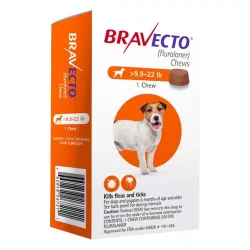
Bravecto Chews for Dogs
Bravecto is a long-lasting flea and tick protection option for your dog. 1 dose of Bravecto chew provides up to 12 weeks of powerful protection, which is nearly 3 times longer than a monthly treatment.
Shop on BestVetCare.com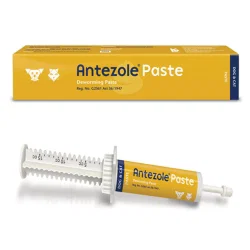
Deworming Treatments for Dogs
BestVetCare offers you a wide range of worm treatments which come in a variety of forms such as oral paste, tablets, granules, and liquid solutions.
Shop on BestVetCare.comHappyPetZone participates in various affiliate programs with brands and retailers. We may receive a commission on purchases made through our links, at no extra cost to you.
What Is the Leonese Shepherd’s Temperament Like?
The standard’s behaviour section is short and entirely about work. It describes an innate disposition for the demands of herding, a great capacity for attention and learning, tirelessness in work, and constant attention to its owner.
Notice what is absent. The standard does not describe a suspicious or aggressive dog, and it does not describe a breed kept for guarding. English pages that call the Carea Leonés an excellent guard dog with wariness of strangers are adding a claim the official document does not make.
What the standard does penalise is instability. An unbalanced character is listed among the serious faults, which tells you what generations of shepherds selected against. A dog that cannot settle to work is not correct for this breed.
What Faults Does the Standard List?
The standard divides faults into three tiers, and the list is the clearest summary of what this dog is meant to be.
- Light faults: a missing premolar, a pincer bite, a slightly dipped or roached back line, slight depigmentation of the nose and mucous membranes, or a tail curled over the croup.
- Serious faults: moderate undershot or overshot jaw, more than one missing premolar, generalised depigmentation, tailless or docked dogs, incorrect or deviated legs, a croup notably higher than the withers, an unbalanced character, excessive white in the coat, or two blue eyes.
- Eliminatory faults: defects of vision, deafness, monorchidism or cryptorchidism, and excessive undershot or overshot jaw.
One line is worth reading twice. The standard says that the hind feet exceptionally carry a simple dewclaw, which is the opposite of the neighbouring Catalan Sheepdog, where double hind dewclaws joined by a membrane are required and their absence disqualifies.
How Much Exercise Does a Leonese Shepherd Need?
The official Leonese Shepherd standard sets no exercise figure, and the popular ranges of one to two hours a day are reasonable but unsourced. What the standard does establish is a dog built for long days of work on hard ground, moving at a trot, which is a different requirement from a two-hour walk.
- Two walks a day, one of them long and varied, because the breed’s natural gait is the trot and it covers ground easily.
- Daily short training sessions, since the standard emphasises attention to the handler and responsiveness to signals.
- A structured sport such as agility, rally, obedience or treibball, which gives the working drive a legal outlet.
- Socialisation and handling practice through the first year, because a dog bred to live with one shepherd needs practice at living with more people than that.
On wet days, indoor games keep the routine intact, and these ways to tire out a high-energy dog suit a herder’s brain.
How Do You Groom a Leonese Shepherd?
The coat is medium length and soft, with a dense undercoat, so the routine is brushing rather than trimming.
- Brush two or three times a week to the skin, with extra attention to the fringes behind the limbs, on the chest and on the tail.
- Expect a heavier shed once or twice a year, when daily brushing pays for itself.
- Bathe only when genuinely dirty, and never shave the dog, because the undercoat insulates in both directions.
- Check ears, eyes and paws after country walks, since the fringes collect seeds.
What Health Problems Do Leonese Shepherds Have?
There is no Leonese Shepherd health survey, screening scheme or published condition list in the public record. That is a finding rather than a gap in searching, and it means any confident disease list you read for this breed is borrowed from other dogs.
The closest thing to health guidance in the official documents is the fault list. Deafness and defects of vision are eliminatory faults, and so is monorchidism or cryptorchidism, which tells you the breed regulations care about function rather than about screening.
Practically, four questions are worth asking a breeder:
- Whether the litter is registered with the association that maintains the breed, and what the registration document shows.
- How closely related the parents are, because a breed this small is a closed population.
- Whether the parents work, since working stock is where this breed’s selection pressure comes from.
- What the breeder knows about the grandparents’ working lives and longevity, because no published data exists to fall back on.
Any dog that collapses, struggles to breathe, bleeds heavily or shows sudden severe pain needs a vet immediately. This guide is educational and does not replace veterinary advice for the dog in front of you.

Lemonade Pet Insurance
Explore customizable pet insurance coverage and learn whether Lemonade is the right fit for your dog or cat.
- Customizable coverage options
- Online policy management
Is a Leonese Shepherd Right for You?
The Leonese Shepherd suits an owner who wants a close-working partner, not a dog that entertains itself. It is built for someone who will train daily, give it stock or a sport, and accept a reserved, watchful dog that attaches hard to one person.
It works if all of these are true:
- You have work for a herding brain, whether that is sheep, cattle or a structured sport.
- You want a dog that listens and responds fast, and you are willing to be consistent about what you ask.
- You are comfortable buying from a small breed population and asking about inbreeding.
- You understand that the pedigree is Spanish and regional, not FCI recognised, and you do not need it to be.
Look elsewhere if any of these apply:
- You want an outgoing dog that greets every visitor.
- You need a breed with a published health and longevity record.
- You want a dog that is easy to source outside Spain.
- You are looking for a guarding breed, because this is a stock dog.
If the appeal is a rare Spanish herder, the Catalan Sheepdog guide covers the neighbouring breed with the opposite dewclaw rule, and the Basque Shepherd Dog guide covers another breed with a complicated recognition file. The Pastor Garafiano guide adds a Canary Islands shepherd to the set.
For a familiar working comparison, the Border Collie guide covers the gathering dog this breed is not. Otherwise, compare the full field in our Dog Breeds hub.