
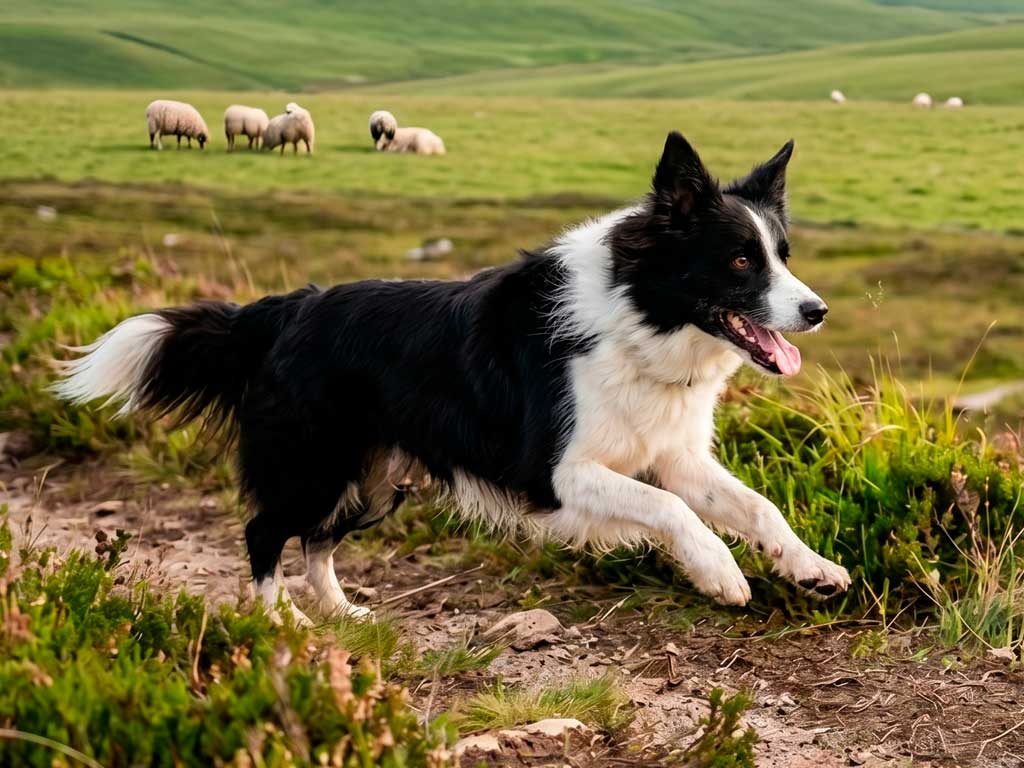
If you’ve ever watched a Border Collie work a flock of sheep, you already know there’s something extraordinary about this breed.
No other dog on the planet combines raw intelligence, relentless drive, and emotional sensitivity quite like the Border Collie. Consistently ranked as the world’s most intelligent dog breed, it’s a companion that will challenge you, amaze you, and absolutely wear you out — in the best possible way.
In this guide, you’ll find everything you need to know: from the breed’s fascinating origins to its health profile, training needs, and whether this dog is truly the right match for your life.
History and Origin
The Border Collie’s story begins on the rugged borderlands between Scotland and England, where shepherds needed a dog that could do more than just follow commands.
They needed a dog that could think.
For centuries, farmers in this remote terrain selectively bred working sheepdogs based on a single criterion: performance. Appearance didn’t matter. Pedigree didn’t matter. What mattered was the dog’s ability to herd livestock efficiently, often working independently across vast, difficult terrain. The result of this relentless functional breeding was a dog of extraordinary mental capacity and physical endurance.
The name “Border Collie” wasn’t officially used until 1915, though the breed had existed in various forms for hundreds of years before that. The word collie is believed by many to derive from the Scottish Gaelic word for “useful” — a fitting tribute to a dog that earned its keep every single day.
Formal kennel club recognition came surprisingly late. The breed wasn’t officially acknowledged until 1995, largely because many working dog advocates feared that show-ring standards would undermine the herding abilities that defined the breed. That tension between working lines and show lines still exists today, and it’s something any prospective owner should understand.
Physical Characteristics
The Border Collie is a medium-sized dog with an unmistakably athletic build — lean, well-balanced, and built for stamina rather than power.
Males typically stand between 48 and 53 cm at the withers and weigh between 14 and 20 kg. Females are slightly smaller. Every aspect of the body is designed for endurance and agility: a deep chest, strong hindquarters, and a gait that is smooth, tireless, and effortless-looking even at speed.
The coat comes in two varieties: smooth (short) and rough (medium-length). Both have a dense outer coat and a soft, thick undercoat that provides excellent weather protection. The rough coat forms a visible mane around the neck and chest, while the smooth variety is lower-maintenance and sleeker in profile.
Color is where Border Collies offer the most variety. The classic black-and-white pattern is the most recognized, but the breed also comes in blue merle, red, chocolate, tricolor, and sable combinations — always with white markings. The eyes are typically a striking dark brown, though blue eyes or even heterochromia (two different-colored eyes) are common in merle individuals.
The ears are semi-erect with naturally folded tips, giving the dog its perpetually alert, focused expression. That expression — intense, concentrated, watchful — is one of the most characteristic features of the breed.
Temperament and Personality
Here’s what you need to know about the Border Collie’s personality before anything else: this dog is always switched on.
There is no neutral gear. The Border Collie processes its environment constantly, looking for something to do, something to herd, something to solve. This isn’t hyperactivity — it’s intelligence combined with an unmet need for work. When that need is met, the Border Collie is one of the most devoted, responsive, and genuinely joyful companions you’ll ever own. When it isn’t, the same dog becomes anxious, destructive, and hard to live with.
With its family, the Border Collie is deeply affectionate and forms powerful bonds. It tends to attach closely to one primary person, though it is warm with everyone in the household. It is sensitive by nature and highly attuned to the moods and signals of the people around it — a quality that makes it exceptional in training but also means it does not respond well to harsh handling or raised voices.
With children, the picture is nuanced. The Border Collie can be wonderful with kids who are calm and respectful, but its herding instinct is strong and hardwired. Running children often trigger that instinct automatically — the dog will attempt to round them up, nipping at heels or circling aggressively. This is not aggression in the traditional sense; it’s a deeply ingrained working behavior. Families with young children should train this out early and never leave the dog unsupervised with toddlers.
With other pets, socialization from puppyhood is essential. Border Collies can coexist peacefully with other dogs and even cats when properly introduced early, but the herding drive may surface with smaller animals.
Care Guide
Diet and Nutrition
The Border Collie is an active, medium-sized dog with a metabolism that reflects its working heritage. It needs high-quality nutrition that supports sustained energy output rather than short bursts of activity.
Look for a diet where quality animal protein appears as the primary ingredient. Given the breed’s activity level, foods formulated for active or working dogs are often the best fit. Two measured meals per day is the standard approach — avoid free-feeding, which can lead to weight gain and makes it harder to monitor appetite changes that might indicate health issues.
Fresh water should always be available, particularly after exercise sessions. As the dog ages or if activity levels change (due to injury, seasonal shifts, or lifestyle changes), calorie intake should be adjusted accordingly with veterinary guidance. Maintaining a lean, healthy body condition is one of the most impactful things you can do for a Border Collie’s long-term joint and cardiovascular health.
Exercise Requirements
Two hours of physical activity per day is the minimum for an adult Border Collie — and that’s on quiet days.
Walking alone will not satisfy this dog. The Border Collie needs activities that engage its mind at the same time as its body. This is a breed that absolutely thrives in canine sports: agility, flyball, competitive obedience, herding trials, disc dog, and freestyle are all areas where Border Collies consistently dominate. These activities tap directly into what the breed was bred to do — respond to cues, solve problems, move with precision, and work in close partnership with a human.
Mental stimulation matters just as much as physical exercise. Puzzle feeders, scent work, hide-and-seek games, and advanced trick training all help burn the cognitive energy this dog generates constantly. A physically tired Border Collie that isn’t mentally stimulated will still find trouble.
Exercise needs change across the dog’s lifespan. Puppies should not be pushed into high-impact activities before their growth plates close (typically around 12–18 months), as this raises the risk of joint problems later. Senior Border Collies may slow down but still need daily movement to stay mobile and mentally engaged.
Grooming Needs
Grooming a Border Collie is more straightforward than the coat might suggest.
The rough (medium-length) coat requires brushing every two to three days to prevent matting, particularly around the ears, collar area, and behind the legs. The smooth coat needs brushing once a week. Both coat types shed moderately year-round, with heavier shedding during seasonal transitions in spring and autumn — during these periods, daily brushing keeps the coat manageable and reduces hair around the house.
Bathing every four to six weeks is typically sufficient, or when the dog gets genuinely dirty. Beyond coat care, ear checks should be done weekly for wax buildup or signs of infection, especially in dogs that spend time outdoors in long grass. Nails should be trimmed every three to four weeks. Dental hygiene — brushing two to three times a week — helps prevent the periodontal disease that affects many dogs across all breeds.
Training and Education
Stanley Coren, the American psychologist and dog behavior researcher, famously ranked the Border Collie as the most intelligent of all dog breeds — first out of 133 breeds evaluated. It wasn’t a close contest.
This intelligence makes Border Collies exceptionally trainable. They pick up new commands in very few repetitions, retain what they’ve learned reliably, and respond to subtle cues that other breeds simply miss. A Border Collie named Chaser became globally famous for recognizing the names of over 1,000 individual objects and demonstrating an understanding of basic grammar — a feat no other dog has matched.
However, “highly trainable” does not mean “naturally well-behaved.” The Border Collie’s default program is to herd everything in its environment — children, cars, cyclists, other dogs, joggers. Without structured training that channels this instinct appropriately, the behavior escalates into nuisance or dangerous territory.
Training should begin from the day the puppy arrives home, using positive reinforcement methods exclusively. This breed is sensitive, and punishment-based approaches cause anxiety and mistrust that can take months to repair. Short, varied training sessions of 10 to 15 minutes hold the dog’s focus better than long repetitive drills. Socialization — exposure to different people, animals, environments, and sounds — should begin at 8 weeks and continue consistently through the first year.
Finding a trainer with genuine experience in high-drive working breeds is worth the investment. A skilled trainer won’t just teach commands — they’ll help you understand how this specific dog thinks and what it needs to be a stable, happy companion.
Health and Longevity
The Border Collie is generally a healthy, robust breed with a life expectancy of 12 to 15 years. However, its genetic history as a closed working population means several hereditary conditions appear in the breed at higher-than-average rates.
Collie Eye Anomaly (CEA) is one of the most well-known — a hereditary developmental defect of the eye that ranges from mild (no impact on vision) to severe (blindness). DNA testing of breeding animals has made this condition increasingly manageable, but buyers should always ask for health test results from reputable breeders.
Hip dysplasia is a structural issue where the hip joint doesn’t develop correctly, leading to pain and reduced mobility over time. The Kennel Club runs a screening program specifically for this, and responsible breeders participate in it. Epilepsy also appears in the breed at a notable frequency; it is manageable in most cases but requires long-term veterinary involvement.
Additional conditions to be aware of include progressive retinal atrophy (gradual vision loss), trapped neutrophil syndrome (an immune system disorder), cerebellar abiotrophy (a neurological condition), and multidrug resistance MDR1 gene mutation, which causes heightened sensitivity to certain common medications. DNA testing can identify carriers for most of these conditions.
Annual veterinary checkups, up-to-date vaccinations, year-round parasite control, and genetic screening of breeding animals form the foundation of responsible Border Collie health management.
Is This the Right Dog for You?
The Border Collie is one of the most rewarding dogs you can own — but only if your lifestyle genuinely matches what this breed demands.
This dog is a great fit if you are physically active and can commit to two-plus hours of daily exercise, if you enjoy training and want to participate in dog sports or advanced obedience, if you work from home or have a schedule that allows you to be present and engaged with your dog throughout the day, or if you live in a rural or suburban environment with outdoor space. It’s also genuinely ideal for experienced dog owners who understand working breeds and know how to channel drive constructively.
On the other hand, the Border Collie is almost certainly the wrong choice if you work long hours and can’t provide adequate daily stimulation, if you want a calm, low-maintenance companion that is easy to manage without much effort, if you have very young children and aren’t prepared to manage herding behavior consistently, or if you’re a first-time dog owner who has underestimated the specific demands of a working breed.
Urban living is possible for a Border Collie, but it requires extraordinary commitment to daily exercise and enrichment. Many experienced Border Collie owners will tell you honestly: city life is genuinely stressful for this breed, and a dog kept in an apartment without adequate outlets will become a different animal entirely — anxious, loud, and difficult.
Get this match right, though, and you have something special. The Border Collie isn’t just a pet — it’s a partnership.
Frequently Asked Questions
Why is the Border Collie considered so intelligent?
The Border Collie was bred for over a century exclusively for working intelligence, not for looks or temperament. Farmers selected only the dogs that could think independently, read livestock behavior, and respond to complex commands at a distance. Generations of that selection pressure produced a brain unlike any other in the dog world. Unlike most breeds that were shaped by appearance standards, the Border Collie’s entire genetic history is a story of cognitive ability being the sole measure of value.
Is the Border Collie a good dog for first-time owners?
Generally, no. This breed requires a level of commitment, consistency, and understanding of working-dog psychology that most first-time owners aren’t prepared for. It’s not that the Border Collie is dangerous or unmanageable — it’s that an under-stimulated, under-trained Border Collie develops significant behavioral problems quickly, and these problems are hard to reverse once established. First-time owners who are deeply passionate about the breed, willing to invest in professional training, and fully informed about the demands involved can absolutely succeed — but it requires honest self-assessment.
Does the Border Collie bark a lot?
Yes. The Border Collie is a vocal breed that is highly reactive to visual movement. Anything moving quickly — joggers, cyclists, cars, children running — can trigger barking. This is a herding behavior rooted in instinct, not in territorial aggression or anxiety (though those can also cause barking if the dog’s needs aren’t met). Consistent training from an early age can teach the dog to manage this response, but it cannot be entirely eliminated.
Can a Border Collie live in an apartment?
Technically yes, if the owner is fully committed to meeting the dog’s exercise and mental stimulation requirements every single day without exception. In practice, apartment living is very challenging for this breed. Border Collies thrive with outdoor space, room to run, and proximity to environments where they can work or explore freely. Many experienced Border Collie owners and breeders actively advise against apartment placement.
How long do Border Collies live?
The typical Border Collie lifespan is 12 to 15 years. Dogs that receive high-quality nutrition, consistent exercise, regular veterinary care, and appropriate mental stimulation tend to live toward the higher end of that range. The breed’s generally athletic constitution works in its favor, though the hereditary conditions described in the health section above can affect both quality and length of life if not proactively managed.