Hungarian Puli: The Herding Dog With Dreadlocks
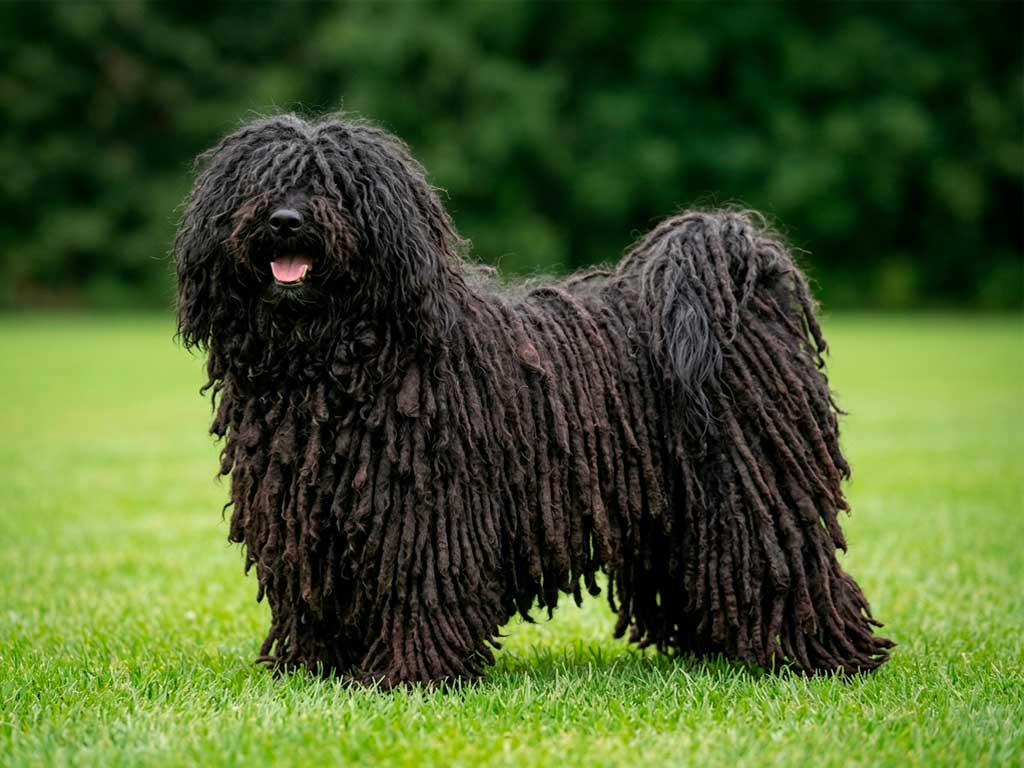
The Hungarian Puli is a medium-sized herding dog, square in build, lean under its coat, and covered in cords that form naturally as the puppy coat matures. It has worked Hungarian livestock for around a thousand years and still reads as a working dog once you put your hands on it.
The breed suits active owners who want a watchdog with a job to do and who will keep up with coat care. It is a poor match for anyone who wants a low-maintenance dog, and the cords are the smallest reason for that.
The sections below cover the breed’s history, the corded coat, temperament, grooming, exercise, training and health.
What Is a Hungarian Puli Bred For?
The Puli is an ancient Hungarian breed of Asiatic origin. One common account links it to the Tibetan Terrier, and it has been part of Hungarian shepherding life for a thousand years.
The herding system explains the dog. Larger, lighter-colored dogs were kept to guard flocks at night, while smaller, darker dogs, the Pulik, drove and herded sheep during the day. The Puli was the daytime worker, which is the job the breed’s build and movement still suit.
Recognition came slowly. The breed was first shown at the Budapest dog show in 1923 and was recognized by the United Kennel Club in 1948.
Hungarian Puli Quick Facts
The table below summarizes the breed’s practical details. Height figures follow the UKC standard.
| Detail | Hungarian Puli |
|---|---|
| Origin | Hungary |
| Group | Herding Dog Group (UKC), Pastoral (Royal Kennel Club) |
| Height | 16 to 18 inches for males, 14 to 16 inches for females |
| Weight | Roughly 22 to 33 pounds, depending on sex and lines |
| Coat | Corded, formed from a coarse topcoat and finer undercoat |
| Color | Black, rusty black, gray shades and white |
| Build | Compact, square, lean and muscular under the coat |
| Typical lifespan | 12 to 16 years commonly reported |
Color needs a note. The UKC standard lists black, rusty black, gray-reddish-black, all shades of gray and white. Apricot appears in some breed descriptions but not in that standard, so confirm the color rule with the registry your breeder works with before assuming a puppy qualifies.
Why Does the Puli Have Cords?
The cords are not a styling choice. They are the natural result of two coats growing at different rates and binding together as the dog matures.
A Puli puppy starts with a dense, wavy or curly coat. As the dog grows, that coat separates into tassels and then into cords, with a coarse outer coat and a finer undercoat locked together in the right ratio.
The pattern of cords follows the body. They grow longest over the loin, the croup and the back of the rear legs, and stay shortest on the head and limbs.
The breed was developed for outdoor work in extreme climate, and the coat is usually explained as an adaptation to that life. Whatever the original advantage, the result is a coat that protects the dog and hides its structure, which is why judges are expected to handle the dog rather than judge it by eye.
One point most owners never learn: the standard allows the Puli to be shown either corded or brushed. Cords are traditional, not compulsory, and a brushed coat is a legitimate choice for a pet.
What Is the Puli’s Temperament Like?
The UKC describes the breed as affectionate, intelligent and home-loving, and also aloof and sensibly suspicious. That combination is exactly what a livestock dog needs: warm with its own people, unconvinced by everyone else.
The result is an excellent watchdog. A Puli notices what is unusual, announces it, and does not treat a stranger as a friend by default.
Owners often report a strong bond with one person in the household. The dog stays friendly and engaged with the family, but its loyalty has a center, and that center is usually one human.
Expect alertness to turn into voice. The breed is quick to sound an alarm, which makes it useful on a farm and less welcome in a terraced house. Several other vocal dog breeds are selected for the same reason.
The independent streak also means training takes patience. A Puli learns quickly once a task makes sense to it, and stalls when the point of the exercise is not obvious.
Shop for Your Breed

Just Food For Dogs – Fresh Frozen
Fresh meals. Gently cooked, then frozen to lock in nutrients. 100% Human Grade Ingredients. Gently Cooked in the USA. #1 Vet-Recommended Fresh Food.
Shop on JustFoodForDogs
Raw Paws Pet Food – Frozen Raw Pet Food
Feeding your pet a frozen raw pet food diet is a simple way to deliver real, whole-food nutrition in its most natural form.
Shop on RawPawsPetFood
Bravecto Chews for Dogs
Bravecto is a long-lasting flea and tick protection option for your dog. 1 dose of Bravecto chew provides up to 12 weeks of powerful protection, which is nearly 3 times longer than a monthly treatment.
Shop on BestVetCare.com
Deworming Treatments for Dogs
BestVetCare offers you a wide range of worm treatments which come in a variety of forms such as oral paste, tablets, granules, and liquid solutions.
Shop on BestVetCare.comHappyPetZone participates in various affiliate programs with brands and retailers. We may receive a commission on purchases made through our links, at no extra cost to you.
How Much Grooming Does a Corded Coat Need?
Grooming is the defining cost of ownership, and it is a habit rather than an event.
Corded coats need regular separation. Each cord is checked by hand so it stays distinct, because a cord that mats into a solid lump cannot be repaired and has to be cut out.
A workable routine looks like this:
- Separate cords by hand two or three times a week, working from the skin outward.
- Check for debris after every walk in woodland, since twigs and burrs work into cords quickly.
- Bathe only when necessary, and only when the weather allows the coat to dry fully, which can take days.
- Dry the coat thoroughly and keep the dog warm afterwards, because a wet corded coat holds moisture against the skin.
- Trim around the eyes, ears and paws to keep the dog comfortable and clean.
Shaving the coat is the alternative many pet owners choose. It removes the cords entirely, makes grooming easy, and removes the breed’s most distinctive feature along with them. Show dogs keep the cords; pets can go either way, and both choices are legitimate.
What Tools Help With a Corded Coat?
A slicker brush is not the right tool for cords. The useful kit is simpler and cheaper than most owners expect.
- A wide-toothed comb with rounded tips for separating cords without scratching skin.
- A simple detangling spray for stubborn sections.
- Blunt safety scissors for trimming around eyes, ears and paws.
- A towel and a warm, dry space for the hours after a bath.
Buy nothing expensive until you have handled a corded adult dog. The coat feels nothing like a normal dog coat, and most people discover after ten minutes whether they want to maintain cords or clip the dog short.
How Much Exercise Does a Puli Need?
Plan for at least an hour of activity a day, and more when the dog is young or working.
The breed is vigorous, alert and quick, and it changes direction faster than most owners expect. A secure garden where the dog can run and turn suits it better than a long straight pavement walk.
What works well:
- Free running in enclosed space, where the dog can sprint and turn.
- Herding-style games with a ball or toy that can be chased and stopped.
- Short training sessions that ask the dog to think and move at the same time.
- Walks in new places, since novelty does the work that repetition cannot.
Mental activity matters here as much as in any working breed. A Puli with a job is settled; a Puli without one invents jobs, and they usually involve the garden. The guide on tiring out an active dog covers the mental side in more detail.
How Do You Train a Puli?
Training a Puli is a matter of earning agreement rather than enforcing obedience. The breed is intelligent and biddable once it understands why a behavior matters.
A sequence that works:
- Start with recall and settling at home, before adding any distractions.
- Use food and play together, since the breed responds to both and bores quickly with either alone.
- Keep sessions short and end them while the dog still wants more.
- Practice in new locations one at a time, because a Puli does not generalize a behavior across places.
- Teach a reliable “leave it” early, given how quickly the breed notices and reacts to movement.
- Socialize deliberately with people, dogs and noise while the dog is young, since the breed’s default is suspicion.
Herding instinct shows up in households with children. Some Pulik will try to move children around, which is normal for the breed and manageable with training rather than punishment.
Hungarian Puli Health Considerations
The breed is generally sturdy, and the health conversation centers on two areas.
Hip dysplasia is the structural concern. Ask any breeder what screening the parents have had and ask to see the results, since a verbal assurance tells you little.
Hereditary eye conditions are the other area worth discussing. Eye screening before breeding is the practical way breeders manage the risk, and a puppy buyer can ask the same question about both parents.
One honest caveat. A breed kept in modest numbers generates limited published veterinary data, and thin data is not the same as a clean health record.
This article offers general, informed guidance rather than a diagnosis. Talk to a licensed veterinarian about breed-specific screening and any health concerns specific to your dog. A dog with sudden lameness, eye discharge or a change in behavior needs a veterinary appointment rather than a wait-and-see approach.

Lemonade Pet Insurance
Explore customizable pet insurance coverage and learn whether Lemonade is the right fit for your dog or cat.
- Customizable coverage options
- Online policy management
Hungarian Puli vs Other Herding Breeds
Hungary produced more than one livestock dog, and the comparison is useful because the jobs differed. The table below sets the Puli against the country’s large guardian breed.
| Hungarian Puli | Hungarian Kuvasz |
|---|---|
| Medium, 14 to 18 inches at the shoulder | Large, considerably taller and heavier |
| Herds and drives stock by day | Guards flocks and property at night |
| Corded coat, high grooming commitment | Thick white coat, brushed rather than corded |
| Aloof with strangers, quick to alarm | Protective and territorial by design |
The Hungarian Kuvasz guide covers the guardian side of that tradition, which is a very different job with different consequences for a household.
For breeds in the same size band, the medium breed dog guides cover the alternatives, and the wider dog breed guides cover the rest of the site’s library.
Is a Hungarian Puli Right for You?
The honest answer depends on how you feel about coat care and noise, more than on space.
A Hungarian Puli is a good fit when:
- You want a watchdog that alerts to strangers without being aggressive.
- You are prepared to separate cords several times a week, or to clip the coat short.
- You can give the dog an hour or more of daily activity and something to think about.
- You like a breed with a strong bond to one person rather than a dog that greets everyone.
- You accept barking as part of the package rather than a habit to eliminate.
A Hungarian Puli is a poor fit when:
- You want a dog that can be left in a garden for hours without a job.
- Grooming is something you plan to outsource entirely, since cords need regular hands-on work.
- Neighbors will not tolerate an alert dog that announces visitors.
- You want instant friendliness with strangers.
- You are choosing the breed for the look alone.
Frequently Asked Questions
Is the Hungarian Puli Right for You?
The Puli is a working dog wearing an unusual coat, and the coat gets more attention than the temperament. Owners who want a watchdog with real presence, a strong bond to one person and a genuine job to do find the breed rewarding.
Owners who want a calm companion with an easy coat should look elsewhere, and the cords are the least of the reasons.
One concrete next step: before you commit to a puppy, spend an hour with an adult corded Puli and separate a few cords yourself. That hour tells you more about whether this breed fits your life than any amount of reading about the coat.