Finnish Lapphund: The Complete Guide to This Smiley Spitz
Thinking about bringing home a Finnish Lapphund? This guide covers everything from the breed’s reindeer-herding roots in Lapland to daily exercise needs and grooming routines.
Happy Pet Zone has researched dozens of Spitz breeds, and few match the Finnish Lapphund’s blend of intelligence and warmth. You’ll also learn why this breed’s naturally cheerful expression has earned it the nickname “the smiling dog.”
Keep reading to find out if a Finnish Lapphund fits your lifestyle.
History and Origin
For centuries, the Finnish Lapphund worked alongside the semi-nomadic Sámi people of Lapland. Herding reindeer was the breed’s main job, though early dogs likely doubled as hunters and guardians too.
Snowmobiles eventually reduced the need for herding dogs. Still, some Finnish Lapphunds continue that traditional role today.
The breed shares its working history with the Swedish Lapphund, a short-coated trotting cousin from the same region. Both breeds developed alongside reindeer herds, though breeders shaped them into distinct types over time.
DNA research places the Finnish Lapphund within a genetic subclade dating back more than 3,000 years. Scientists believe this lineage began when a wolf bred with an early domesticated dog. That ancient connection helps explain the breed’s rugged endurance and thick, weather-resistant coat.
Physical Characteristics
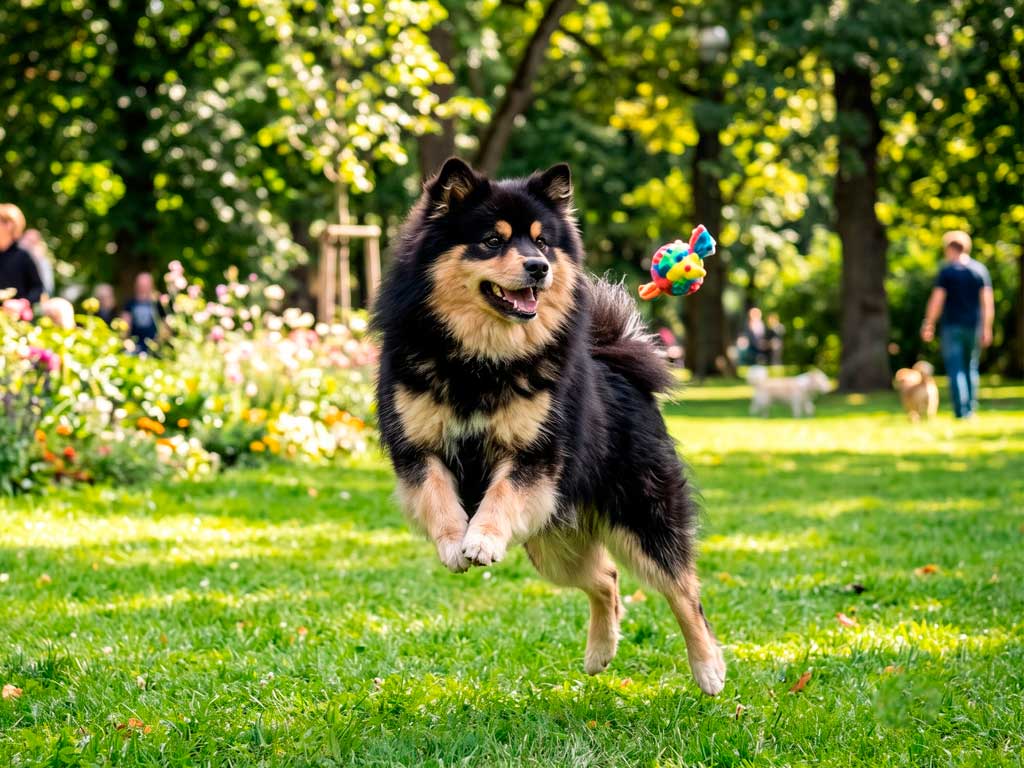
The Finnish Lapphund is a medium-sized Spitz-type dog built for cold climates. Males typically stand around 49 cm at the shoulder, while females measure closer to 44 cm. Most adults weigh between 17 and 19 kg.
This breed carries a thick double coat, with a long, straight outer layer and a soft, dense undercoat. Males often grow a heavier ruff of fur around the neck and chest.
Coat colors vary widely, covering nearly every shade except merle. Many Finnish Lapphunds show a subtle facial mask, which gives them their signature smiling look.
Their curled tail sits over the back, a classic Spitz trait. Paws feature extra fur between the pads, working like natural snowshoes across icy terrain.
| Quick Facts | |
|---|---|
| Life Expectancy | 12–15 years |
| Weight | 17–19 kg |
| Height | 44–49 cm |
| Size | Medium |
| Coat | Thick double coat, all colors except merle |
| Exercise Needs | About 1 hour daily |
Temperament and Personality
Beneath that smiling face is a dog with a strong herding instinct. The Finnish Lapphund watches everything, and that alertness makes for an excellent watchdog.
At home, expect a loyal, affectionate companion who bonds closely with family members. This breed thrives on connection and doesn’t do well left alone for long stretches.
Barking comes naturally to this breed. Early training helps a Finnish Lapphund learn when to quiet down on command.
Intelligence runs deep here too. Owners sometimes joke that their Finnish Lapphund is too smart for its own good, since bored dogs invent their own entertainment.
Because of their herding background, some individuals chase moving objects, including children or smaller pets. Supervision and structured socialization go a long way toward preventing that habit.
Care Guide
Diet and Nutrition
Feed your Finnish Lapphund a complete, balanced diet formulated for its age and activity level. Split meals into two feedings daily rather than one large portion.
Fresh water should stay available at all times. Active dogs like this breed burn through calories quickly during long walks or agility sessions.
Weigh your dog periodically and adjust portions if you notice weight gain, since a heavy coat can hide early signs of extra pounds. A veterinarian or canine nutritionist can help fine-tune a feeding plan for individual needs.
Exercise Requirements
Plan for roughly one hour of exercise every day. This breed loves activities that engage both body and brain, including agility courses and canicross.
Strong prey drive shows up during walks, so reliable recall training matters. A distracted Finnish Lapphund may chase wildlife if it spots something moving.
Mental stimulation matters just as much as physical activity. Puzzle toys, scent games, and herding-style exercises help satisfy this breed’s working instincts and prevent boredom-driven barking.
Grooming Needs
Brush your Finnish Lapphund’s coat two to three times weekly to prevent mats and tangles. During seasonal shedding periods, daily brushing keeps loose fur under control.
This breed is not hypoallergenic, so allergy sufferers should consider that before adopting. Regular brushing does help manage shedding around the house.
Bathe only when necessary, since over-bathing strips natural oils from the double coat. Nail trims, ear checks, and dental care round out a complete grooming routine.
Training and Education
Finnish Lapphunds respond best to positive reinforcement, the kind of reward-based training that builds trust rather than fear. Treats, praise, and play work far better than harsh corrections.
Start training early, since this breed’s herding instinct and vocal tendencies benefit from consistent guidance from puppyhood onward. Basic commands, leash manners, and a solid “quiet” cue should top the priority list.
Canine enrichment activities, like scent work or trick training, channel this breed’s sharp mind productively. A bored, understimulated Finnish Lapphund tends to develop unwanted habits, including excessive barking or destructive chewing.
Health and Longevity
Finnish Lapphunds generally live between 12 and 15 years. Like many purebred dogs, they can face certain hereditary conditions, including inherited eye disorders and hip dysplasia.
Hip dysplasia affects joint function and can lead to mobility issues over time. Responsible breeders screen breeding dogs with hip and eye examinations before pairing them.
This information is educational and doesn’t replace professional veterinary guidance. Always consult a licensed veterinarian for diagnosis, treatment, or specific health concerns about your dog.
Routine veterinary checkups catch potential issues early. Combined with a balanced diet and steady exercise, preventive care supports a long, active life for this breed.
Is This the Right Dog for You?
Consider a Finnish Lapphund if you have an active lifestyle and enjoy dog sports like agility or canicross. This breed does best with owners who have some prior dog experience.
Apartment living can work, provided daily exercise needs are met consistently. However, frequent barking might create friction with close neighbors.
Families with young children should supervise interactions closely, as recommended with any breed. Households with cats or small pets may need extra training to manage the Finnish Lapphund’s herding instincts.
First-time owners might find the combination of intelligence, vocal tendencies, and grooming needs challenging without guidance from a trainer or experienced breeder.
Frequently Asked Questions (FAQs)
Are Finnish Lapphunds good family dogs?
Yes, generally speaking. They’re affectionate and loyal, though supervision around young children and other pets is recommended, especially given their herding instincts.
Do Finnish Lapphunds shed a lot?
Yes. Their thick double coat sheds year-round, with heavier shedding during seasonal coat blows. Regular brushing helps manage loose fur.
How much exercise does a Finnish Lapphund need?
Around one hour daily, split between physical activity and mental stimulation like puzzle toys or scent games.
Are Finnish Lapphunds easy to train?
Yes, thanks to their intelligence, though their independent streak and vocal tendencies call for consistent, positive reinforcement training from an early age.
What health problems affect Finnish Lapphunds?
Hip dysplasia and inherited eye disorders are the main concerns. Regular veterinary screening in breeding dogs helps reduce these risks. Always consult a vet for individual health guidance.
Start with daily exercise and consistent training, since these two habits shape everything else about living well with a Finnish Lapphund. Get the routine right early, and the barking, herding instincts, and grooming needs become manageable rather than overwhelming.
For more Spitz-type breed profiles, check out our German Spitz guide on Happy Pet Zone.
For another breed from the same country with a very different volume level, the Finnish Spitz is Finland’s national dog and a genuine champion at official barking competitions.