German Shorthaired Pointer: Built for Adventure, Bred for Active Owners
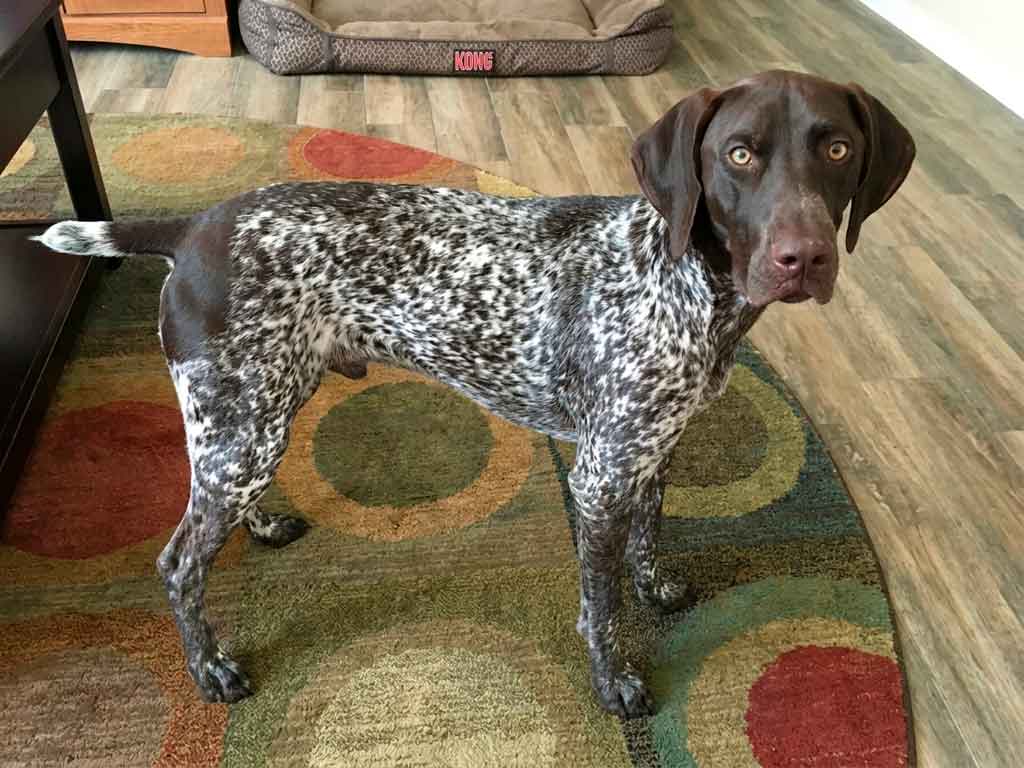
The German Shorthaired Pointer is a continental pointing dog in FCI Group 7, section 1.1. A working trial is compulsory, and the job description is two words: versatile hunting dog. Males measure 62 to 66 cm (24.4 to 26.0 in); bitches run 58 to 63 cm (22.8 to 24.8 in). The standard gives no weight at all.
The colour range is wider than most owners expect: solid brown, brown with white flecks, dark brown roan, light brown roan, white with brown head markings, the same set in black, and yellow tan markings permitted. The temperament clause is unusually restrained for a pointing breed: firm, balanced, reliable, neither nervous nor shy nor aggressive.
This is a working dog with an off switch, and the switch is installed by exercise and training, not by nature. It suits a household that will give it a job for eight or ten years.
A Stud Book Since 1897
The German studbook for the breed, the Zuchtbuch Deutsch-Kurzhaar, has been published since 1897, which makes this one of the better documented gundogs in Europe. The FCI standard even names the Deutsch-Kurzhaar-Club as the body that certifies bite and teeth at shows, an arrangement that tells you how closely the breed has been managed.
That management explains why the breed is so uniform across countries: the work came first, the look followed, and the clubs recorded both.
| Feature | German Shorthaired Pointer |
|---|---|
| FCI group | Group 7, continental pointing dogs |
| Official use | Versatile hunting dog |
| Working trial | Required |
| Height | Males 62 to 66 cm (24.4 to 26.0 in), bitches 58 to 63 cm |
| Weight | Not stated in the standard |
| Coat | Short, dense, water-resistant |
| Colour | Brown, brown roan, black, white with markings |
A short clip worth watching alongside this guide, without reading too much into any single moment of it.
The Neuter Decision
A 2024 study of joint disorders in the breed produced one of the most useful numbers in modern dog ownership. Among bitches neutered before six months of age, 38% developed at least one joint disorder, against 2% of intact bitches. The same pattern appears, less dramatically, in dogs neutered later: the earlier the surgery, the higher the risk.
That finding does not mean nobody should neuter a dog. It means the timing is a medical decision with a measurable cost, and that a blanket “before the first season” is not the neutral advice it was once presented as.
For a breed that will spend its life running, a joint that develops badly is a career sentence. The conversation with the vet should include the dog’s intended work, its growth curve and the family’s own management options.
Day Blindness
The breed carries an autosomal recessive form of cone degeneration, linked to a missense mutation in CNGB3. The cones are the cells that work in bright light, so an affected dog sees well at dusk and dawn and poorly in sunshine.
Owners describe it as a dog that hesitates at the door on a bright day, or that bumps into things in a sunlit garden while navigating a dim room perfectly.
There is a DNA test, and it is cheap relative to the alternative. Two carriers produce affected puppies, and the condition is progressive, so a young dog can pass its first year without an obvious sign.
In the House
The FCI temperament line is the useful guide here: firm, balanced, reliable and restrained, and not nervous. This is a dog that settles in the house once it has been worked, and does not settle if it has not.
| Situation | What to expect |
|---|---|
| A visitor at the door | A bark, a sniff, and then indifference |
| Children of the family | Good company, and a dog that plays hard |
| Another dog | Usually sociable, with friction over food |
| A cat or a rabbit | A chase, and a decision you have to make for it |
| A day alone | Tolerated by an adult, badly by a young dog |
The Health List
The breed’s official records are better than most. Orthopedic Foundation for Animals data cited in a 2024 study put abnormal hips at 3.8% and abnormal elbows at 1.2%, which is a good record for a dog of this size and drive.
The two DNA conditions above come next: cone degeneration and type 2 von Willebrand disease, the clotting disorder associated with a specific VWF variant found only in affected dogs. Both are testable, and a breeder should have both results.
Bloat is the emergency of every deep-chested dog, and the GSP is deep-chested. Retching that produces nothing, a hard belly and a dog that cannot settle mean a veterinary visit that night.

Lemonade Pet Insurance
Explore customizable pet insurance coverage and learn whether Lemonade is the right fit for your dog or cat.
- Customizable coverage options
- Online policy management
Short Coat, Long Ears, and a Docked Tail
Five Minutes of Coat
Short, dense and water-resistant. A rubber curry once a week, a towel after every wet walk, and nothing else.
Ears That Need Checking
The ears are set high and hang close, and a working dog’s ears get wet, dusty and warm. Look inside weekly and dry the canal after water work.
The Tail Question
The tail is traditionally docked in some countries and left whole in others, and the standard accepts the breed either way. What matters for the dog is the tip: a working pointer splits it on cover, and a bleeding tail tip is a common winter injury.
Training the Off Switch
The breed learns quickly and works for a partnership, which makes formal training easy and the off switch harder. A GSP that has had a two-hour run will sleep; one that has had an hour on the lead will look for a job to invent.
Field work, tracking, agility or canicross all give the dog the structure it expects. The best training for the house is the training that tires the nose.
Recall is a negotiation with a hunting dog. Long lines and enclosed ground are the practical tools, and a dog that comes back from a scent has been trained with patience, not volume.
Feeding a Working Pointer
The portion is set by the work: a dog in the field for a season eats far more than a dog on the sofa, and the same dog gains weight the week the season ends.
Two measured meals, and the bowl is removed between them, since a deep chest and a bolted dinner make a poor combination.
The body check is the same all year: ribs under the coat, a waist behind them, and the scales once a month to settle the argument.
Shop for Your Breed

Just Food For Dogs – Fresh Frozen
Fresh meals. Gently cooked, then frozen to lock in nutrients. 100% Human Grade Ingredients. Gently Cooked in the USA. #1 Vet-Recommended Fresh Food.
Shop on JustFoodForDogs
Raw Paws Pet Food – Frozen Raw Pet Food
Feeding your pet a frozen raw pet food diet is a simple way to deliver real, whole-food nutrition in its most natural form.
Shop on RawPawsPetFood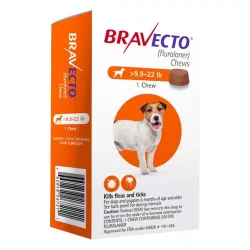
Bravecto Chews for Dogs
Bravecto is a long-lasting flea and tick protection option for your dog. 1 dose of Bravecto chew provides up to 12 weeks of powerful protection, which is nearly 3 times longer than a monthly treatment.
Shop on BestVetCare.com
Deworming Treatments for Dogs
BestVetCare offers you a wide range of worm treatments which come in a variety of forms such as oral paste, tablets, granules, and liquid solutions.
Shop on BestVetCare.comHappyPetZone participates in various affiliate programs with brands and retailers. We may receive a commission on purchases made through our links, at no extra cost to you.
The Decision
| What it asks | What you get |
|---|---|
| Two hours a day and a season in the field | A dog that is calm for the other twenty-two |
| A DNA panel on both parents | No cone degeneration and no bleeding disorder |
| A late neuter, decided with the vet | Joints that develop before the hormones are removed |
| A fenced field for the recall | A pointer that comes back from a scent |
| Acceptance that it is a hunter | The most versatile dog in the house |
If that list sounds like your week, the dog breeds hub gathers the pointing breeds.
The Other Pointers
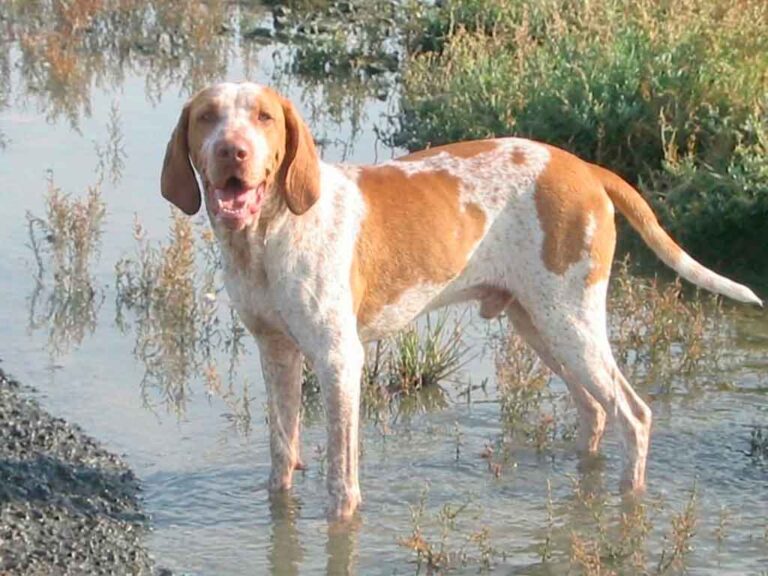
- The Bracco Italiano is the Italian pointer, older, heavier and slower on the turn.
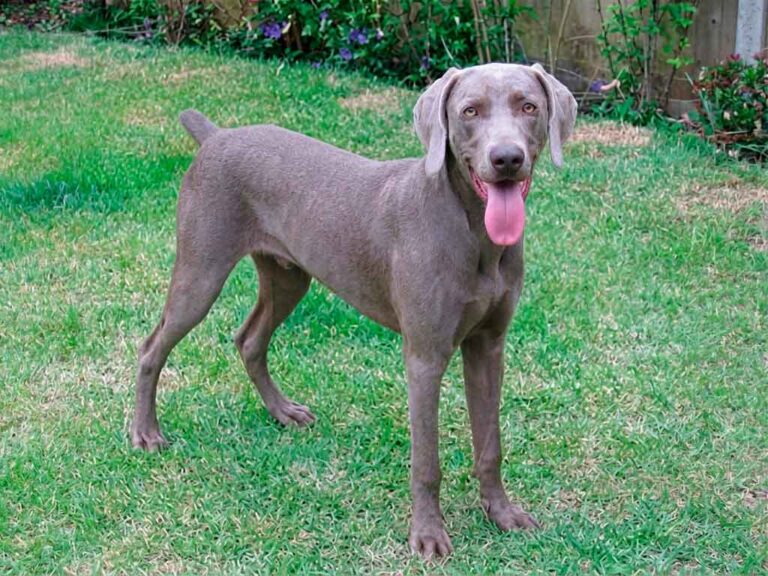
- The Weimaraner is the silver all-rounder, gentler in the house and equally relentless outside it.
- The German Wirehaired Pointer is the wire-coated sibling, tougher in cover and in weather.
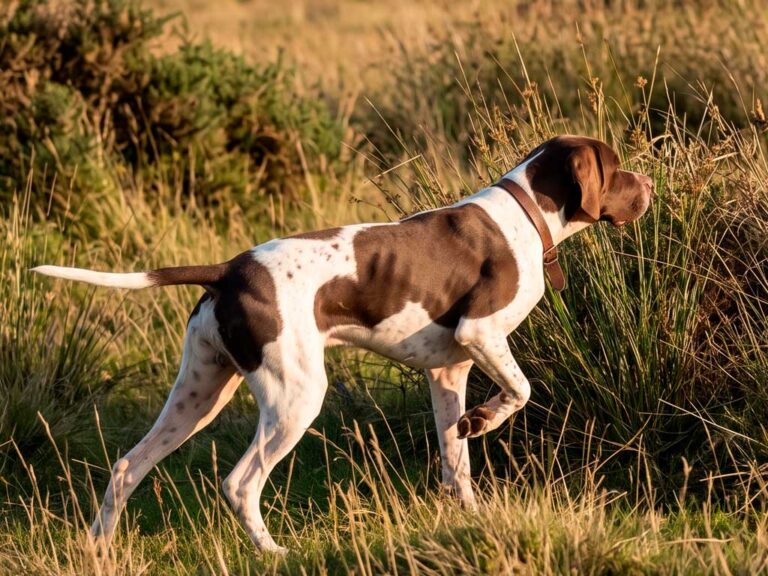
- The English Pointer is the pure specialist: faster, and with no interest in water at all.
Frequently Asked Questions
Sources
- Fédération Cynologique Internationale, German Shorthaired Pointer breed standard No. 119, full text (2000).
- Sidjanin, D. J. et al., CNGB3 mutation and cone degeneration in the German Shorthaired Pointer (2002).
- A VWF variant associated with type 2 von Willebrand disease in the German Shorthaired Pointer (2017).
- Joint disorders and neutering in the German Shorthaired Pointer (2024).