LaPerm Cat: How One Farm Cat’s Injury Started a Breed
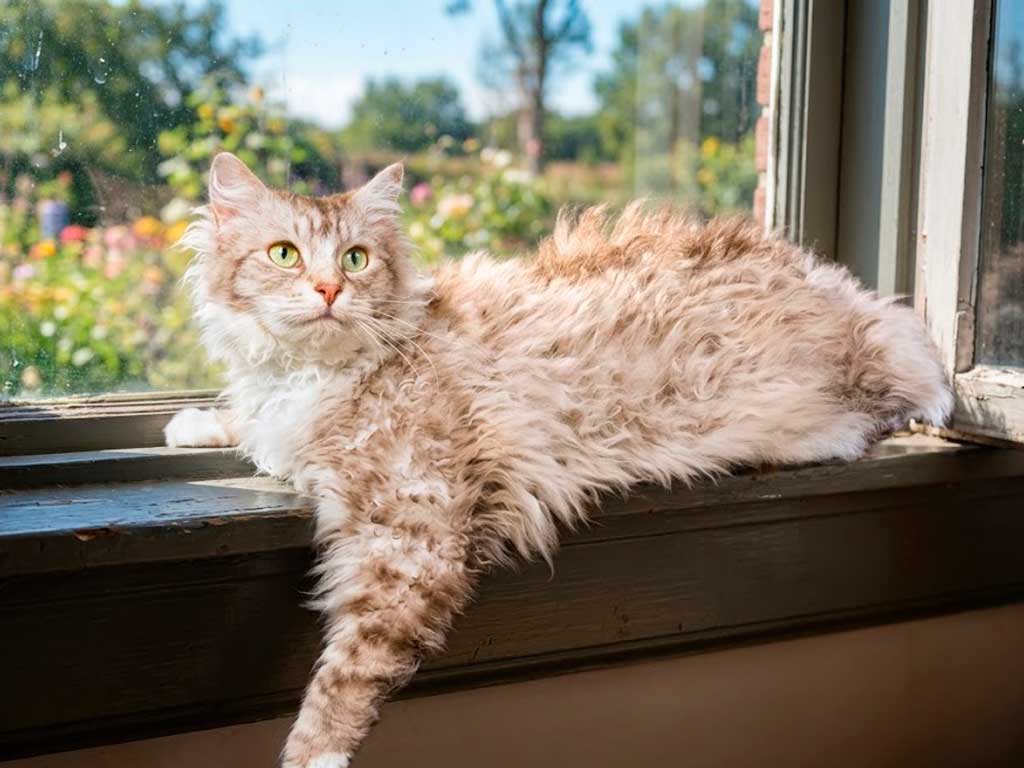
Your cat isn’t styled that soft, tousled wave is genuinely how a LaPerm grows its coat, no perm solution involved. The breed’s whole name is a nod to exactly that look, and it started with a single farm cat who survived something no kitten should have to.
In 1982, on an Oregon farm, a barn cat named Curly got caught in a truck engine and was badly injured. While recovering, she gave birth to a litter of five kittens all male, all born with an unmistakable curl to their coat. Spoiler: every LaPerm alive today traces back to that one recovering mother and her curly-coated sons.
Quick Facts: Medium-sized, muscular but not heavy. Both shorthair and longhair varieties. Dominant curl gene, genetically unrelated to other Rex breeds. Minimal shedding. Lifespan 10-15 years.
History: One Injured Farm Cat, Five Curly Kittens
Linda Koehl, the Oregon farmer who owned Curly, initially had no plan to start a breed the curly kittens were simply an unusual litter on a working farm. As she watched the trait persist and pass down through subsequent generations, she began showing the cats at local shows to get outside opinions.
Judges, breeders, and visitors were consistently struck by how different these cats looked from anything else in the ring. With support from key figures in established breed associations, the LaPerm earned recognition as its own breed, and a formal breeding program followed.
TICA adopted a preliminary standard in 1995, and FIFe officially registered the breed in 1997.
Genetically, the LaPerm’s curl comes from a dominant gene entirely unrelated to the recessive mutations behind the Cornish Rex, Devon Rex, or Selkirk Rex a case of the same general trait evolving independently, the same pattern seen with several curly and hairless breeds covered elsewhere in this cluster.
That farm-cat foundation gave the breed a naturally broad, healthy gene pool from the start unlike breeds built from a single narrow pairing, the LaPerm’s early population already carried real genetic diversity before formal breeding programs even began.
Today the breed is recognized by several major registries beyond TICA and FIFe, including CFA, giving LaPerm owners a genuinely wide range of shows and communities to connect with.
Physical Characteristics
The coat is everything with this breed: soft waves, ringlets, and loose curls that create a deliberately tousled, “bad perm” look. Curl pattern and intensity shift with the seasons and as a cat matures, and it’s most pronounced in the ruff around the neck and along the throat.
Both coat lengths exist within the breed. Longhairs carry a full, plumed, curly tail; shorthairs carry a tail that reads more like a bottle brush. Both varieties share curly whiskers, curled fur inside the ears, tufted ear tips, and longer curled “earmuff” fur behind the ears.
Color options run wide tabby, red, and tortoiseshell show up frequently thanks to the breed’s farm-cat origins, while rarer colors like lilac, chocolate, and colorpoint have persisted from the earliest breeding lines. Newer variety like ticked tabby and shaded patterns continue to expand the LaPerm’s color palette.
Kittens are sometimes born with straight fur or even bald patches before the curl fully comes in over the following weeks and months a normal, often surprising part of the breed’s development rather than a sign of anything wrong.
LaPerm vs. Cornish Rex vs. Devon Rex: Three Different Curls
All three breeds share that Rex-style texture, but the mutations are entirely unrelated. The Cornish Rex has zero guard hairs for a smooth, ultra-soft curl. The Devon Rex carries some guard hairs and a distinctive pixie face.
The LaPerm’s dominant gene produces a looser, more tousled wave, and it’s the only one of the three where the curl gene is dominant rather than recessive meaning just one copy from a parent is enough to produce curly kittens.
Personality and Temperament
Your cat isn’t just sitting nearby it’s actively choosing your company over anywhere else in the house. LaPerms are affectionate and loyal, forming genuine bonds with their people and expressing contentment through a notably loud, satisfied purr while curled up on the couch.
Curious and intelligent, this breed carries a playful, energetic streak that makes it a strong match for households with kids or other pets. Despite that affectionate nature, LaPerms retain real hunting instinct and agility a farm-cat heritage that never fully faded.
Vocally, expect a soft, melodious voice rather than persistent demanding meows, which only adds to the breed’s overall charm.
Caring for a LaPerm
La LaPerm is a low-maintenance cat breed with a naturally curly coat that sheds minimally and is less prone to tangling and matting than many other textured coats. Weekly gentle grooming is usually enough to keep her coat healthy and fluffy.
Grooming a LaPerm’s Curly Coat
Brush or comb your LaPerm gently once a week to remove loose hair and keep her curls looking their best. Avoid vigorous brushing, which can loosen the natural curl pattern. Give her a bath only when needed, rather than following a fixed bathing schedule.
Ear, Dental, and Nail Care
A LaPerm’s curly fur can trap wax and debris around the ears, so check them weekly and clean them when necessary. Regular tooth brushing helps maintain dental health, while routine nail trims keep her claws at a comfortable length.
Provide a scratching post, too. Scratching allows your cat to maintain her claws naturally and gives her an appropriate place to express this everyday feline behavior.
Diet and Daily Companionship
LaPerm cats generally do well on a balanced, high-protein cat food suited to their age and individual needs. Keep fresh water available at all times.
LaPerms can also adapt well to different household arrangements. They may enjoy being the only pet or living with other animals, depending on their individual temperament and how they are introduced. They appreciate human companionship without necessarily needing constant attention.
Health Conditions to Know
The LaPerm is generally considered a healthy breed with no widely confirmed breed-specific genetic conditions. Regular veterinary checkups remain the best way to catch and address any potential health issue early, as with any cat.
Health Disclaimer: This guide is for educational purposes only and doesn’t replace professional veterinary advice. Schedule routine wellness exams and keep vaccinations current throughout your cat’s life.
Weight management is worth mentioning too, separate from any breed-specific condition the muscular build can mask early weight gain, so a hands-on check at routine vet visits catches what a glance alone might miss.
Finding a LaPerm: Price and Availability
This breed remains relatively uncommon outside the Americas, where it’s bred most extensively, and genuinely rare in parts of Europe. Expect to search a bit and possibly wait for a kitten, particularly if you’re set on a specific coat length or color.
A cat show or a breeder directory from TICA or CFA is a solid starting point, and it’s worth asking directly about coat length and color availability before committing to a waitlist.
Is a LaPerm Right for You?
This breed suits people who want a genuinely affectionate, low-maintenance-coat cat with real personality underneath. If the idea of a curly-coated companion that purrs loudly, plays enthusiastically, and still carries a bit of farm-cat toughness sounds appealing, a LaPerm delivers exactly that.
It’s a less natural fit for anyone hoping for a purely decorative, low-energy lap cat with no hunting drive at all. Your cat isn’t going to ignore a moving toy, or a bug that wanders inside. It’s going to investigate first, then curl up next to you once the job is done.
Apartment living works fine too, since this breed doesn’t need outdoor space to feel content just consistent interaction and enough toys to keep that hunting instinct satisfied indoors.
One last practical note: because both coat lengths come from the same gene pool and can appear in the same litter, don’t assume a kitten’s final coat length is set until it’s a bit older breeders can usually tell earlier than most owners could on their own.
Frequently Asked Questions
A LaPerm’s entire existence traces back to one recovering farm cat and a litter nobody planned for. More than forty years later, that unplanned moment produced a breed known as much for its loyal, purring affection as for the tousled coat that started it all.
Browse more breed profiles in the full Cat Breeds guide.